
The Winter Olympics are over (Sunday, February 22nd). From a NYC perspective, we are now in the middle of a blizzard that makes this winter interesting if you have a home to hide in. It’s time to go back to my theme of global threats. I defined these in a blog from September 3, 2025, “The Broader Picture of Global Threats”:
As I have tried to show in the more than 12 years that I have been writing this blog, humanity is in the middle of at least 5 existential transitions; all of these started around WWII. They include climate change, nuclear energy, declining fertility, global electrification, and digitization. These transitions started around the time that I was born, but they will hopefully last (if some of them do not lead to extinction in the meantime) at least through the lifetime of my grandchildren (I call this time “now” in some of my writing).
This blog, and the few that follow, will try to focus on the timing of these threats. I will try to separate what I view as short-term trends from the broader threats so that I can look into the options for mitigation and adaptation.
We are all living in unsettling times right now. My sources of information, aside from professional sources, are the evening news (NBC, ABC, CBS), daily input from the NYT (both print and digital), weekly (now daily) input from The Economist, and the digital headlines from my digital providers. None of these claims to be objective; my sources reflect and reinforce my biases. I am not alone in this. Everybody else “suffers” from similar subjectivity.
As I said, I will try to stay clear of what I consider to be short-term fluctuations and focus instead on the long-term trends. To do this, I need to identify what I consider to be short-term trends, many of which are currently filling up the news. Examples of these trends are shown in the following list:
- Whatever Trump is doing
- Connections with Jeffrey Epstein
- Weather and climate – local weather storms
- The role of AI in our life
- (No short term for nuclear attack)
In the next few blogs, I will focus on the consequences of population decline. Then, the following set of blogs will focus on the impacts, adaptation, and mitigation of global demographic changes, coupled with AI and electrification in developing countries.
Figures 1 and 2 describe the projected changes (by country) of population growth (Figure 1) and the present (2025) decline in global birth rate that are at the center of the demographic changes.
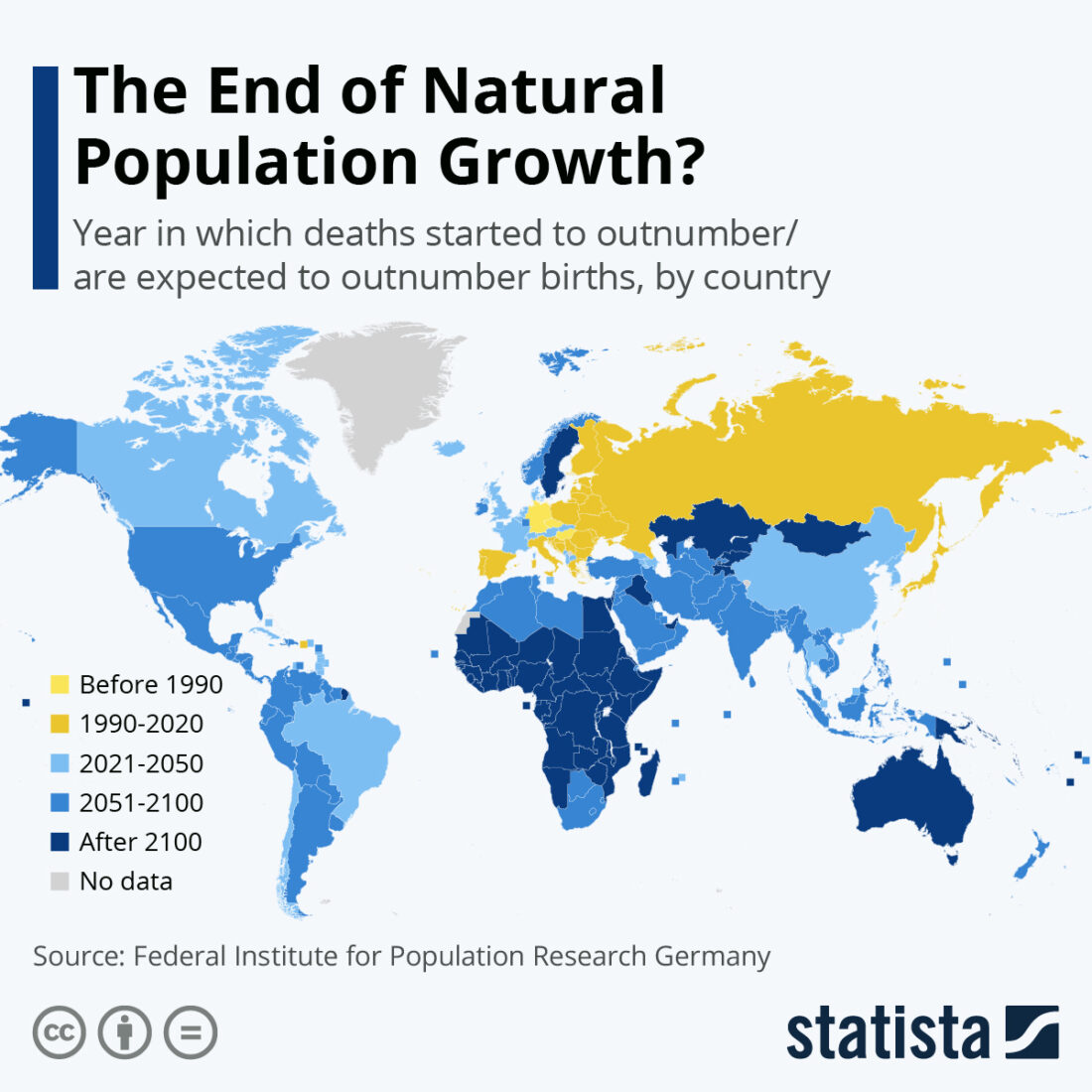
Figure 1 – Population growth or stagnation (Source: Statista on Facebook)

Figure 2 – Global birth rates (Source: Visual Capitalist)
Figure 3 shows an example of how human response and robotic response are starting to mingle through AI, in a way that is now penetrating all of my discussion subjects. References to all three phenomena (population growth, birth rates, and technology) will continue to show up in future blogs.
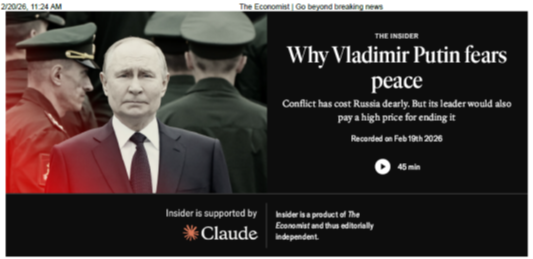
Figure 3 – This Economist article features both human reporting and the opportunity to interact with AI response (Source: The Economist)
The short-term trends that I am “discounting” in this series are not independent of the long-term threats that I discussed in previous blogs and summarized in the beginning of this blog. The five short-term trends listed above, that I will “discount,” fall into the following three categories:
- Short-term issues that are viewed as an early experience of the long-term ones—in this case, we can study the nature and extent of the long-term threats and experiment with remedies. These include weather and climate (climate change) and the role of AI and robotics in our life.
- Current short-term issues that many of us hope will disappear with no negative long-term consequences. These include almost everything that President Trump is doing and all the present attention to connections with Jeffrey Epstein.
- Long-term threats that do not have short-term counterparts, such as the actual use of nuclear weapons to attack a country.
Future blogs will try to follow developments on all these issues.
thisis a fantastic article, really nice created, i enjoy reading it, i will be back to check out for latest update, keep up the good work and applause. frompoo.com