
Last Sunday, June 28th, I was reading the NY Times and noticed the Opinion section dedicated to the 250th Independence Day celebrations. It included an article by my favorite reporter, Thomas Friedman, on his interpretation of the US national anthem. Relevant paragraphs of the piece are given below:
I was late in setting out, so I put the pregame show on the radio and was still in the car when Brandi Carlile sang “America the Beautiful.” I am a huge Carlile fan, and since I was alone I quietly sang along, which may explain why, for the first time, I was suddenly struck by the concluding verse: “And crown thy good with brotherhood / From sea to shining sea.” What does that mean? I asked myself. “To crown thy good with brotherhood. …”
Katharine Lee Bates, who wrote the poem that the song is based on, seemed to be saying that the reward for acting good was brotherhood. What an interesting formulation. Brotherhood for her was the greatest achievement of all — not “good.” Doing good was the means, but brotherhood was the crowning goal.
Either way, I found her elevation of brotherhood inspiring, and it helped reinforce my own version of “America first” on this 250th birthday of America. My version has two parts. America needs to be the first in corralling as many nations in the world as possible into a global coalition, a brotherhood, designed to ensure that we maximize the benefits and cushion the worst impacts of the great planetary-scale challenges we now face together as a species — specifically managing artificial intelligence, climate change, human migrations, nuclear and biological weapons and pandemics — so that we rise together and don’t fall together. This is America as the first among equals. For all of America’s failings, no other country possesses the same combination of military reach, technological innovation, financial depth, democratic traditions and rule of law to convene others into a global coalition.
But America needs to be first today in another way. We need to be the first nation to prove that we can take our founding motto — to forge “out of many, one” — and make it work in a country where the “many” are so much more diverse than our original 13 colonies. What is required is nothing less than forging a continental-scale, multiracial, genuinely equal democracy unlike any history has seen before.
The key expression that I extracted from his piece was “Out of many, one.” I was familiar with the expression, but not in this context. This new knowledge drove me to make some changes to the coming blogs. In last week’s blog, I promised to continue focusing on AI’s abilities to predict the future. I wrote there that I would look at how it understands climate change and examine some of the proposed guardrails for it, but I am changing my course.
Returning to Friedman’s piece, I recognized that in the phrase “out of many, one,” the word “many” has different meanings depending on the context; for a country, it can represent the world; for a state, it can represent a country; and for individuals, it can represent everybody. The question for me was what AI “thinks” of the issue, so I asked it (through Gemini) to construct an image that conveys the meaning of the statement. The result was a gate similar to the one shown in Figure 1, with a bunch of students congregated underneath. For all intents and purposes, it looked to me like the entrance to a typical college. I asked AI to try again with something a bit more abstract. What I got is Figure 1, with one side of the gate showing a bunch of international flags labeled “E Pluribus Unum” and the other side showing “unity in diversity.” This was closer to my thinking, but to be honest, the “one” looked to me more like a collective grave after a mass killing, than the constructive “one” I imagined. I tried to find a way to show that individuals can make contributions to the collective in doing something constructive, but got nowhere.
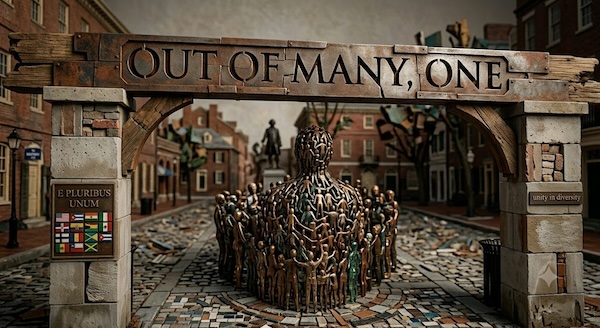
Figure 1 – Out of Many, One (By AI-Gemini)
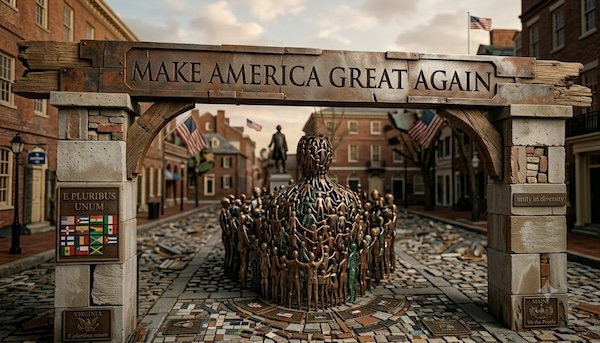
Figure 2 – Make America Great Again (by AI – Gemini)
Well, after that exercise, I asked AI for an image that would convey the meaning of another statement: “Make America Great Again.” The result is shown as Figure 2. As can be seen, Figure 2 is similar to Figure 1. The central figure didn’t change and the gate stayed the same except for the replacement of the writing on top and the addition of two state plaques. It also removed the trash can and added American flags in the background and several plaques on the floor. The “unity in diversity” and international flags stayed. Regardless of the number of plaques on the floor, one cannot escape from imagining that there are 13 and that the “again” in the statement brings us back to the Founding Fathers. I wonder what the Trump administration would think about this interpretation.
Thank you for highlighting the importance of unity in diversity this Independence Day. Ivs reflections are thought-provoking fnf . How do you see community actions evolving to strengthen this message?
What an insightful reflection on unity and independence! It’s fascinating how our challenges can bring tunnel rush together. How do you think we can channel this spirit into climate action?