
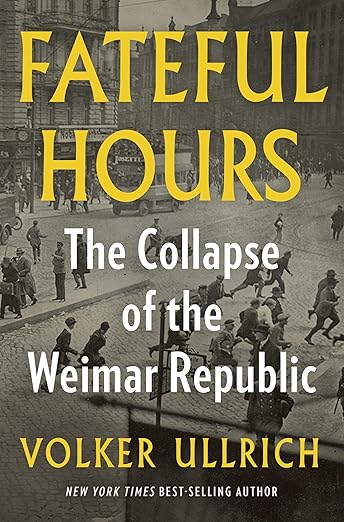
Figure 1 – The cover of the book (source: Amazon)
I finished last week’s blog with the following two sentences:
Around the same time, I ordered two recent books, Fateful Hours: the Collapse of the Weimar Republic by Volker Ullrich and 1929: Inside the Greatest Crash in Wall Street History—and how it shattered a Nation by Andrew Ross Sorkin and Penguin Audio. Both books took place just before the start of my now, with a hidden question mark about history repeating itself. In the last two blogs of this year, I will try to explore this same premise.
I just finished reading Fateful Hours. Germany, at the time of the Weimar Republic, was a mess. This was shortly after Germany’s loss in WWI and it was the country’s first experiment with democratic governance. It didn’t go well:
Ideological extremism and shortsighted political intrigue eroded German democracy and paved the way for Hitler’s ascension, according to this intricate study. Historian Ullrich (Germany 1923) argues that the Weimar Republic, which struggled through communist insurrections, right-wing terror campaigns, hyperinflation, and the Great Depression, was done in less by these upheavals than by dysfunctional and toxic political factors. These included the Weimar constitution itself, which granted the president undemocratic powers like dissolving the legislature and ruling by emergency decree; the government’s leniency toward far-right extremists; and the refusal of Germany’s Communist Party to cooperate with the moderate left. Ullrich shrewdly analyzes a succession of incidents that nudged the Republic toward the abyss: the Communists’ refusal to support the center-left candidate, for example, guaranteed the election of reactionary Paul von Hindenburg as president in 1925; and the refusal of both right and left to compromise on unemployment insurance reform brought down a coalition government and inaugurated a string of Hindenburg-appointed minority cabinets that ruled by decree (as Hitler would). Throughout, Ullrich emphasizes the contingency of events, the importance of individual decisions, and the failings of statesmen who put short-term expedience or doctrinal purity ahead of the greater good. The result is a resonant and sobering cautionary tale of how a democracy can die. (Nov.)
Some recommended the book as a tutorial on how democracies collapse, with lessons related to our present governance—both in the US and around the world. The collapse of the Weimar Republic was just outside my “Now” (see last week’s blog) but had a strong impact on many of us. Reading the book, I was surprised about one central aspect: I was trained in physics and chemistry; I also taught and did academic and industrial research in these fields. Many of the fundamentals of these disciplines were contributed by German scientists in the first half of the 20th century. However, I looked in the index of the book for the name of Einstein and couldn’t find it. So, the first part of this blog is a list of German Nobel Prize winners during the Weimar Republic, between 1919 and 1933 (List of German Nobel laureates – Wikipedia):
Peace Prizes:
| Gustav Stresemann | 1926 | 1878–1929 | Reconciliation with France to ensure peace in Europe |
| Ludwig Quidde | 1928 | 1858–1941 | Organization of peace conferences |
Literature:
| Thomas Mann | 1929 | 1875–1955 |
Chemistry:
| Walther Nernst | 1920 | 1864–1941 | Research on thermochemistry |
| Heinrich Otto Wieland | 1927 | 1877–1957 | Research on bile acids |
| Adolf Windaus | 1928 | 1876–1959 | “for merits regarding the research on the structure of sterines and their relationship with vitamins” |
| Hans von Euler-Chelpin | 1929 | 1873–1964 | “for research on sugar fermentation and the contribution of enzymes to this process” |
| Hans Fischer | 1930 | 1881–1945 | Hemin synthesis |
| Friedrich Bergius | 1931 | 1884–1949 | “for contributions to the discovery and development of chemical high-pressure processes” |
| Carl Bosch | 1931 | 1874–1940 | Development of chemical high-pressure processes |
Physics:
| Johannes Stark | 1919 | 1874–1957 | Discovery of the optical Doppler effect and the Stark effect |
| Albert Einstein | 1921 | 1879–1955 | “for his contributions to theoretical physics, especially for his discovery of the law of the photoelectric effect“ |
| James Franck | 1925 | 1882–1964 | Confirmation of the Bohr model of the atom |
| Gustav Hertz | 1925 | 1887–1975 | Confirmation of the Bohr model of the atom |
| Werner Heisenberg | 1932 | 1901–1976 | Founding of quantum mechanics |
Physiology and Medicine:
| Otto Fritz Meyerhof | 1922 | 1884–1951 | Research on metabolism in muscles |
| Otto Heinrich Warburg | 1931 | 1883–1970 | Research on cellular respiration |
I fully realize that some of the work for which the Nobel prizes were distributed was done before 1919. However, to my knowledge, most of the work was done within this time interval. Not many countries can claim such productivity. Is there a connection between governmental chaos and academic productivity? I don’t know, but I know that it is a question worth addressing.
One major issue that differentiates the present Trump administration from the chaos and destiny of the Weimar Republic is that the rise and fall of the latter are both in the past, while we are only in the beginning of the second Trump administration. Nevertheless, in order for people to compare, I asked AI (through Google) to list the “Similarities and differences between the Weimar Republic and the Trump administration.” This is what I got:
Historians and political analysts identify several unsettling similarities and crucial differences between the Weimar Republic’s political climate and the Trump administration in the U.S., cautioning that while historical parallels exist, the situations are not identical.
Similarities
-
-
-
- Political Polarization and Nationalism:Both eras saw significant political polarization, a rise in right-wing nationalism, and racialized identity politics.
- Charismatic Leadership and Populism:Both Adolf Hitler and Donald Trump utilized a populist, strongman persona to appeal to a population experiencing disenfranchisement and a rejection of the political status quo.
- Media Manipulation and Propaganda:A powerful right-wing media machine in Germany (like that of magnate Alfred Hugenberg) found a parallel in contemporary U.S. conservative media, which helped support an authoritarian movement and a preferred narrative.
- Attacks on Democratic Institutions and Norms:Both movements involved attacks on the press, the judiciary, and government bureaucracy. Both challenged the distinction between truth and falsehoods, promoting their own versions of reality.
- Scapegoating and Fear-mongering:Both movements used migrants and political opponents as scapegoats to stoke fear and consolidate power.
- Questioning Election Integrity:Trump’s challenges to the 2020 election and the peaceful transfer of power echo the political instability and questioning of the democratic process in the Weimar Republic’s final days.
-
-
Differences
-
-
-
- Constitutional and Institutional Strength:The primary difference lies in the resilience and longevity of the governing structure. The U.S. Constitution is the world’s oldest and has proven more robust, with specific guardrails (e.g., the federal system and division of powers) that have slowed attempts to consolidate autocratic power. The Weimar Constitution, in contrast, was new, fragile, and contained inherent weaknesses like Article 48, which allowed the president to rule by decree in an emergency, a provision Hitler exploited to gain total power via the Enabling Act.
- Ideology and Intentions:Historians note that Hitler was an open, ideological opponent of democracy and aimed for an open dictatorship from the start. Neither Trump nor the Republican party has openly sought to abolish elections, instead working within the existing framework to achieve their goals.
- Economic Context:The Weimar Republic experienced hyperinflation and a catastrophic post-WWI economic depression, making the populace more susceptible to extremist promises. The U.S. under the Trump administration did not face a comparable level of economic collapse.
- Unified Opposition:A significant factor in the Weimar Republic’s downfall was a fractured and disunified opposition that failed to stop the Nazis. The U.S. has seen more civic resistance, and the actions of various individuals and institutions (e.g., judges, election officials, Mike Pence) helped preserve democratic processes in specific instances.
- Level of Atrocity:While parallels in rhetoric and initial authoritarian moves exist, Trump’s presidency did not reach the level of systematic, industrialized brutality and mass murder that characterized the Third Reich and the Holocaust.
-
-
I also asked AI to summarize for me the correlations between the stock market crash in the US in 1929 and the collapse of the Weimar Republic. Here is what I got:
The US stock market crash of 1929 directly triggered the collapse of the fragile Weimar Republic by causing American banks to recall loans crucial for German economic recovery, leading to mass unemployment, poverty, and political extremism that the Nazi Party exploited to gain power. Germany’s reliance on US capital, intended to pay reparations, meant the crash swiftly created a severe depression, eroding faith in democracy and creating fertile ground for Hitler’s promises of stability, making the crash a pivotal catalyst for the Republic’s demise.
The next blog will explore this issue further.
I like the efforts you have put in this, regards for all the great content.
For the reason that the admin of this site is working, no uncertainty very quickly it will be renowned, due to its quality contents.