
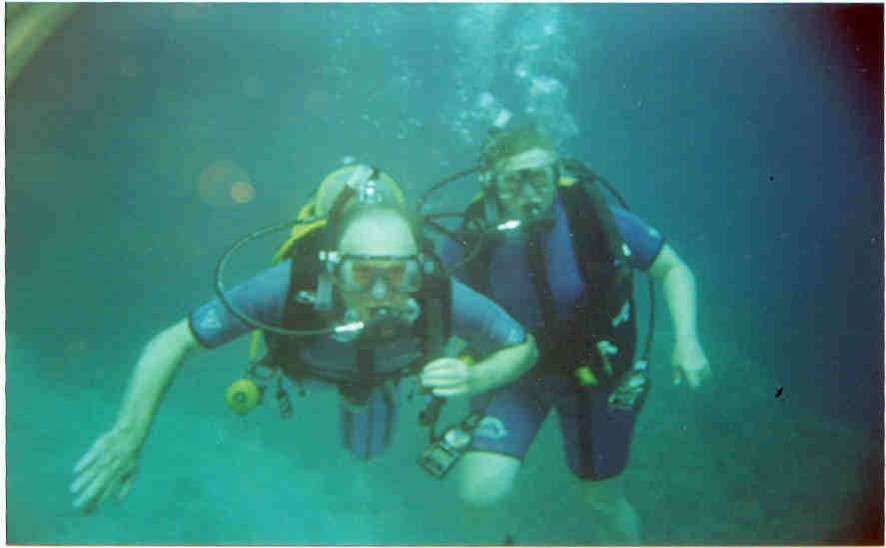
 Figure 1 – Diving in the Great Barrier Reef more than a generation ago (I was 60, my wife 50+)
The last two blogs have focused on non-academic mechanisms to immortalize and expand the concept of “never again” by supporting young people in both connecting to the Holocaust Institute and participating in an international trip focused on mitigating a different global threat. Last week’s blog focused on studying the threat of nuclear war through a joint program with one of the two cities that experienced the results of a nuclear attack: Hiroshima or Nagasaki. The combination in this blog will be more controversial — connecting it to climate change, through visits to one of the global barrier reefs that are now in the middle of anthropogenic (human-caused) climate change-based destruction processes. As mentioned in the previous blog, both climate change and global nuclear war fit the Lemke definition of genocide, with “group” in the definition being humanity and “intent” meaning that the science was aware of the consequences but we decided to ignore it.
My experiences of the Great Barrier Reef (GBR) in northeastern Australia, and its close connections to global climate change, were discussed in earlier blogs. The most extensive blog on the topic, “Vulnerabilities: Coral Reefs,” was posted on June 26, 2018. Below, I include a few paragraphs from this blog that also summarize earlier postings:
In one of my earliest blogs (July 31, 2012), I talked a little bit about the start of my interest in man-made contributions to global climate change. Up until that time my main academic interest was focused on energy use. I grew up in Israel, where energy played an important role in political development: almost all the energy that people used was powered by fossil fuels, a significant amount of which came out of Arab countries that were in a state of war with Israel. Many Israeli scientists worked hard to develop alternative energy sources, reducing the world’s dependence on fossil fuels and their suppliers. Sustainability didn’t play much of a role in these considerations because the resources seemed almost limitless.
Suddenly, in 1992 the world became aware of the impact of carbon dioxide on the climate. The Earth Summit (see the November 3, 2015 blog) and the famous Keeling-Whorf curve (December 1, 2015 blog) of the accelerating accumulation of carbon dioxide in the atmosphere showed CO2 levels to have major impacts on changing the chemical composition of the atmosphere, driving changes in the planetary energy balance with the sun. I spent the next five years after the Energy Summit trying to figure out how I could contribute to the study of this occurrence. In 1996–97 the world press was full of stories that a significant increase in sea-surface temperature affects almost all coral species, leading to global coral bleaching and mortality. Some of the bleached corals were more than 1,000 years old. 1997 was also the National Oceanic and Atmospheric Administration’s (NOAA) Year of the Coral Reef. At that time I had already decided that since the main imbalance in the carbon dioxide concentration comes from our use of fossil fuels, the only way that we can impact these emissions is by shifting our energy sources away from fossil fuels. I was also sure that these changes must be global and include as many people as possible in the decision making process. I started to work on a book to try to explain climate change to the general public, making sure to include descriptions of the bleached corals.
At that time I was already an advanced-middle-aged guy. My wife was younger but not by much. In the summer of 1997 she happened to have a conference in the Yucatan Peninsula in Mexico. I went along. We managed to find the time to take a diving course that gave us a diving certificate. The next year we went to Northern Queensland in Australia to spend a week diving around the Great Barrier Reef.
The top figure, which shows me and my wife scuba diving, was never shown.
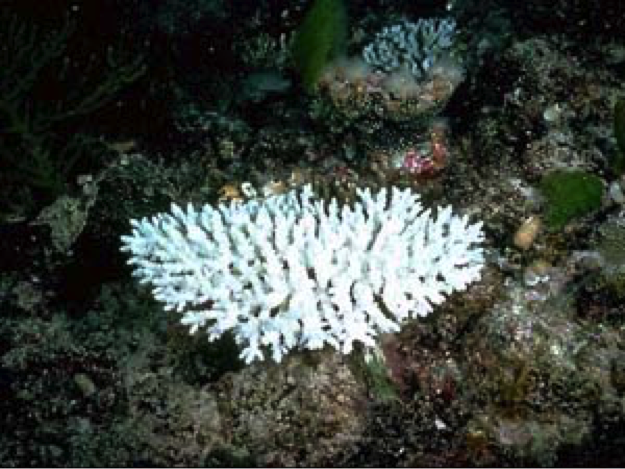 Figure 2 – Bleached coral in the Great Barrier Reef
Figure 2 shows a photograph that my wife took of a bleached coral in the GBR. The photograph ended up in my book, in the chapter dedicated to early signs of climate change. Here is what I wrote about the issue:
Corals are a large class of marine invertebrates characterized by a calcium carbonate– protected skeleton. Each stalk includes an individual animal called a polyp and has an opening at the top through which the polyp gathers some of the food that it eats, excretes its waste products, and during reproduction, excretes gametes that contain either eggs or sperm. Corals can reproduce both sexually and asexually. Most corals live in colonies that can constitute only males, only females, or mixed populations. Polyps usually live on the deposits of their predecessors along with symbiotic algae called zooxanthellae capable of photosynthetic activity. In most cases the algae give the corals their colors. The algae use sunlight and carbon dioxide to produce food and energy that they share with the polyps. In return, the polyps share with algae, shelter, protection, and nitrogen- and phosphorous- rich food sources they gather from their environment. Under stressful conditions— which usually include not only elevated water temperature but also pollutants, water turbidity, or unusually high light intensity— the photosynthetic process is impaired, and the algae start to produce toxic materials. The result is that the polyps expel the algae. If the stress is mild and of short duration, then the coral can recover; if not, it will die.
Our trip to the GBR took place more than a generation ago; the destruction has gone through fluctuations but followed the progress of climate change and still serves as an early sign of its destructive power and a starting point for mitigation of all other future global threats.
The present situation in that reef is described below:
SYDNEY, Aug 6 (Reuters) – Australia’s Great Barrier Reef has suffered the largest decline in coral cover in two of its three regions over the last year, research released on Wednesday showed, following a mass bleaching of its corals that was among the worst on record.
The Australian Institute of Marine Sciences said the reef has experienced the largest annual decline in coral cover in its northern and southern regions since monitoring began 39 years ago, with coral cover dropping between a quarter and a third after several years of solid growth.
Five years later, we repeated the experience in Belize, the second-largest barrier reef, much closer to home. Figure 3 shows an example of the bleaching there:
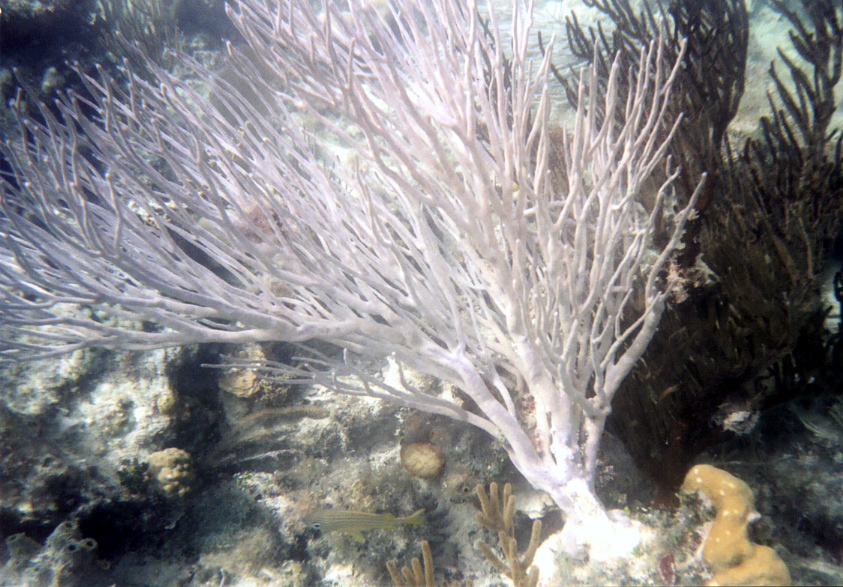 Figure 3 – Bleached coral in Belize (photographed by my wife and me in 2003)
A more recent summary of the situation in Belize is given in the Wikipedia entry:
Despite these protective measures, the reef remains under threat from oceanic pollution as well as uncontrolled tourism, shipping, and fishing. Other threats include hurricanes, along with global warming and the resulting increase in ocean temperatures,[7] which causes coral bleaching. It is claimed by scientists that over 40% of Belize’s coral reef has been damaged since 1998.[1]
Connecting the Holocaust with barrier reef destruction is controversial. Below is the AI (through Google) summary of some of the issues:
A comparison connecting the Holocaust and barrier reef destruction is highly contentious and ethically fraught. While the connection is not one of direct comparison or equivalence, scholars have explored it thematically in a complex and controversial academic subfield called “environmental history of the Holocaust”. The topic is a subject of intense debate, as many consider any comparison a trivialization of the Holocaust’s unique historical horror.
This debate is centered on using Holocaust memory to inspire action on modern crises like climate change. The key challenge lies in drawing parallels without diminishing the unique genocidal suffering of the Jewish people.
Points of contention and criticism
Holocaust scholars and remembrance organizations generally reject comparisons that equate the Holocaust with environmental destruction or future climate catastrophe, considering such analogies inappropriate or offensive. Major criticisms include:
-
Unique historical atrocity:The Holocaust was a specific, deliberate, and industrialized genocide against human beings based on racist ideology. Environmental destruction, while catastrophic, is a different kind of harm.
-
Trivialization:Using the Holocaust as a metaphor for other crises, even severe ones, can diminish the specific suffering and historical context of Jewish victims. The International Holocaust Remembrance Alliance (IHRA) has specifically noted that comparisons like “Climate Holocaust” engage in a “trivialization of the Nazi-led mass murder of European Jewry”.
Not surprisingly, I heard many of these objections while discussing climate change in the context of my family’s experience of the Holocaust, and my repeated claim that doing nothing to mitigate the longer-term disaster that will materialize is consistent with what I have labeled “self-inflicted genocide.” My Holocaust background has shielded me from more lethal attacks. Objecting to the analogy based on the “uniqueness” of the Holocaust deprives “never again” of its premise. If the Holocaust is unique, it will not happen again and it’s useless to require future generations to study it. I believe that we can learn from it and apply that knowledge to combat other lethal global problems.
A different obstacle to this program is overtourism. Here is how AI (through Google) describes overtourism in barrier reefs:
Overtourism in barrier reefs can cause significant damage to these delicate ecosystems. Increased tourism, particularly in popular reef areas, can lead to physical damage from boats, snorkeling, and diving, as well as pollution from waste and human activity. This can negatively impact coral health, reduce biodiversity, and disrupt the overall reef ecosystem.
As I mentioned in a previous blog (August 13, 2025), Australia is one of the countries that requires Holocaust education. As the host country for a program like this, Australia might be willing to help a small number of youngsters with a background in studying the Holocaust to interact with its students, connect the two threats, and discuss the pros and cons of learning from one to mitigate the other.