
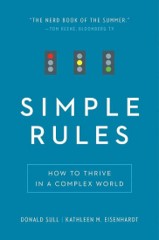
(Source: Nate Eliason)
November 3, the deadline for the present midterm election in the US, is approaching. Climate change has almost disappeared from public discussions during this election cycle.
In this blog I will try to put it back.
This blog will be posted on Thursday, October 22, about two weeks before the deadline for the elections. Results of this election will have a strong impact on the attitude of the US government to climate change.
I will start the discussion with a paragraph from an earlier blog (October 8) on the present public attitude in the US that was quoted from Pew Research:
Republicans and Democrats remain deeply divided about how big a problem climate change is, how much harm it’s causing and how to address it.
Most Democrats and Democratic leaners (68%) say climate change is harming people in the U.S. a great deal or quite a bit. And about six-in-ten also say climate change is a very big problem facing the country today.
In contrast, only about two-in-ten Republicans and GOP leaners (22%) say climate change is harming people in the U.S. a great deal or quite a bit. And a majority see climate change as no more than a small problem.
Partisans also remain divided in how much they think the federal government is doing on climate change: 87% of Democrats say it’s doing too little, compared with 31% of Republicans. This gap has been wide – spanning at least 51 percentage points – since we started asking about the federal government’s role in 2018.
Here’s a more specific description of generational attitudes in the US about the threats of climate change:
More than 80% of young people in the U.S. say they are worried about climate change. Schifter: “Whether it’s going outside to play in extreme heat, or if it’s about the jobs that they’re going to be able to access in the future, the world that they are living in is being shaped by our changing climate.” But Laura Schifter of the Aspen Institute says a recent survey that her group commissioned reveals that many teens do not fully understand the issue. Only about half of the teens surveyed know that climate change is mostly caused by carbon pollution from human activities like burning fossil fuels. And even fewer know that nearly all climate scientists have concluded that human activity is causing climate change.
As has been described repeatedly throughout this blog, anthropogenic climate change is a complicated issue.
Young people (and almost everyone else) in the US (and everywhere else) like simplicity.
As was described in last week’s blog, Kathy Eisenhardt supplied this need for some less complicated takes with her book (with Donald Sull), “Simple Rules”. The book was focused mainly on business decisions and not on the voting public. For Kathy, the book was a culmination of a long research career. The methodology of her work was described separately as the “Eisenhardt Method,” summarized digitally in the introductory abstract of her publication:
This essay sharpens and refreshes the multi-case theory-building approach, sometimes termed The “Eisenhardt Method.” The Method’s singular aim is theory building, especially with multiple cases and theoretical logic. Its defining features (e.g. research questions without obvious answers, careful case selection, well-identified constructs and relationships, theoretical arguments, boundary conditions) reflect this aim. I begin with the influence of the 1980s, including grounded theorizing and case logic. Relying on exemplars, I illustrate the Method’s defining features. I also address common misconceptions (e.g. types of data, number of cases, performance emphasis). These miss the Method’s essence and imply a rigid template that does not exist. Instead, the Method’s relatively few defining features enable a wide variety of research possibilities. I conclude with what I would write today like a richer palette of research choices, more emphasis on time, and flexible philosophy of science. Yet the core message of theory building would remain.
The essence of business-targeted simple rules is the designation of a three-step process for developing simple rules to help businesses increase their profits. It includes targeted simple rules designed to address personal challenges.
There is a distinction in the book between individuals and collectives. An example of a simple rule for police personnel is to try to find where a serial criminal lives by taking the midpoint of the two most distant crime scenes. An example of a simple rule for a collective is bird flocking.
All simple rules start with questions such as “(1) decide what will move (you or your business) needles and increase the gap between what energizes you and what stresses you out. (2) identify bottlenecks that keep you from creating value, and (3) develop simple rules that work.”
Example of a “Simple Rule” in a more complicated setting is to make decisions in zero-sum situations that are not included in the book.
I asked AI (through Gemini) to suggest what to do. This is what I got:
Here are the fundamental rules and strategic principles for navigating zero-sum situations—scenarios where one participant’s gain or loss is exactly balanced by the corresponding losses or gains of the other participants:
-
- Identify the Zero-Sum Nature
-
-
- Recognize Fixed Pies: Confirm that resources, rewards, or outcomes are strictly limited. Unlike win-win scenarios where value can be created, value here is only distributed.
- Map All Players: Identify who is at the table, what each stand to gain or lose, and whether hidden coalitions exist.
-
-
- Guard Your Position
-
-
- Protect Your Core Assets: In a strict zero-sum dynamic (like competitive bidding, legal settlements, or negotiation over a fixed resource), any concession you make directly benefits the opponent.
- Minimize Vulnerabilities: Assume your counterpart is looking for leverage; keep your bottom line, constraints, and alternative options confidential.
-
-
- Leverage Your Best Alternative (BATNA)
-
-
- Know Your Walk-Away Point: Your power in a zero-sum game depends entirely on how well you can survive without an agreement. A strong alternative prevents you from accepting a net-negative outcome.
- Shift the Dynamic: If possible, look for ways to reframe the situation to expand the pie (turning it into a non-zero-sum or positive-sum game), though this requires changing the rules or adding variables.
-
-
- Anticipate Countermoves
-
-
- Game Theory (Minimax Strategy): Expect opponents to act in their own rational self-interest to minimize their maximum possible loss.
- Zero-Sum Mindset vs. Reality: Be aware that treating a potential win-win situation as zero-sum (a common psychological trap) can unnecessarily destroy value and trigger adversarial conflict.
-
This scenario is more complicated than the two that I presented from the book, but it still misses an important point that is required in political decisions (for whom to vote). Voting is usually what the book calls a “boundary rule.” It is a yes-no vote on the issue or person. The consideration is often a boundary consideration. Am I voting to help achieve a collective outcome (it will be better for the group) or a personal outcome (will it decrease my taxes)?
A day before submitting this blog to my editor (10/20/26), a relevant article was published in the NYT in which “Simple Rules” are mentioned without quotes.
The title of this article is “I Teach at a Business School. It’s Time to Shut them Down.”
The relevant paragraphs are quoted below:
I have taught in business schools for over 20 years, at Harvard, Cornell and Cambridge. While some students appear to care only about their future compensation, I have met many with nobler goals: engineers who want to commercialize clean energy, physicians determined to fix the health care system, nonprofit leaders who have watched good missions fail for want of good management. These students enroll hoping to learn what business schools say they teach: how to manage people, how to allocate capital and resources and how to make the world a better place through leadership. But I’ve come to see how the institution can reshape the worldviews of those who enter it, often undermining the very ambitions that brought them there.
This change can take place in a single semester. Again and again, I have watched students abandon their altruistic intentions, instead becoming consumed by whether to choose careers in consulting or finance and who will land a summer internship at McKinsey or Goldman Sachs. The modern business school is designed to promote dealmaking, simplification and optimization. This mind-set has escaped containment and has spread to the wider world. Business-educated elites increasingly populate political leadership, bringing with them a transactional view of public life. One investigation found that out of 45 current heads of state who had studied in the United States, 10 were business majors, and six of those also earned M.B.A.s. President Trump, a Wharton graduate, has treated foreign policy and government itself as extensions of dealmaking and personal gain.
The proposed remedy is harsh, so I asked AI (through Gemini) for the present relative enrollment in US Business Schools:
Business schools in the U.S. represent a significant portion of total enrollments. Recent data indicates that business programs are among the most popular fields of study in higher education.
-
-
- Enrollment Trends: Business schools have seen a rise in applications, with a 38% increase for undergraduate programs and a 25% increase for master’s programs over the last five years.
- Percentage of Total Enrollment: Business majors account for a substantial share of total enrollments, with many institutions reporting that business programs are the most common offerings.
-
Institutional Characteristics: The majority of business programs are offered by private not-for-profit institutions, which dominate the sector. Overall, while specific percentages can vary by institution, business programs consistently attract a large number of students, reflecting their importance in the academic landscape.
When I was running the Environmental Studies program at my school, my deputy was an economist who later served as Chair of the Economics Department, part of the Business School. Throughout this blog, I emphasized that economics is an important part of climate change, both on the mitigation side and on the destruction side of the unmitigated part. Closing business schools will certainly not address these issues. Using simple rules that can more easily be converted to political slogans might be much more effective.
The next blog will explore addressing the same issue without closing schools.