
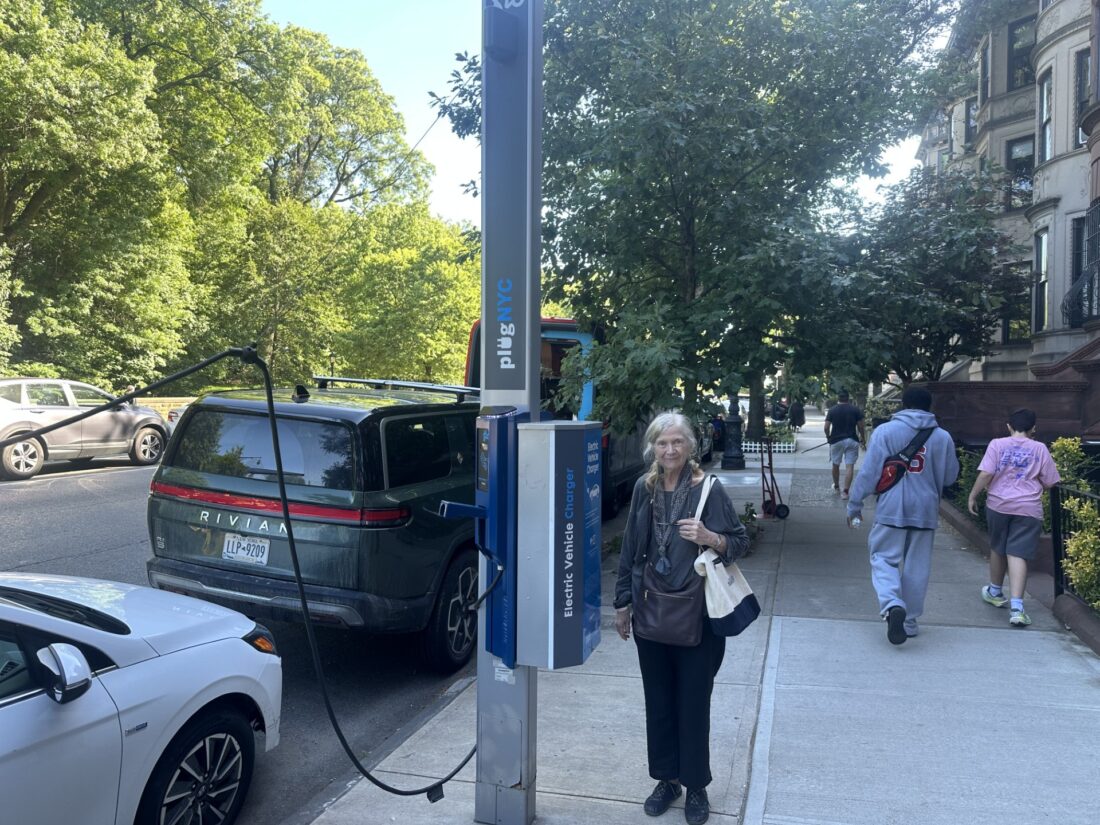
Figure 1 – New charging station near home
The top picture shows my wife near a new charging station just installed near our place. We are too old now to change our car, so we just walked by it. To many others, however, these new installations might act as a strong incentive to do just that. Last week’s blog addressed the antonyms, stability and turmoil, and how the Uncertainty Principle might apply on a global scale. This blog, and the two that follow, will address two other words used widely when discussing climate change: resilience and vulnerability.
I asked AI (Gemini) to define the two words. This is what I got:
Resilience and vulnerability function as conceptual opposites, where resilience describes the ability to bounce back from stress, and vulnerability describes susceptibility to suffering harm from it. [1, 2, 3].
Key Differences
- Resilience: The capacity to recover, adapt, and regain strength after facing hardship or adversity.
- Vulnerability: The state of being open to damage, defenseless against external shocks, or likely to experience harm. [1, 2, 3]
How They Relate
-
Direct Antonyms: In psychological and ecological contexts, vulnerability is frequently viewed as the opposite end of the spectrum from resilience. [1, 2]
-
Nuance: While antonymous, experts on platforms like Reddit note they are distinct, interacting forces rather than absolute inverse binaries—an individual or system can experience vulnerability while simultaneously building resilience. [1]
The references for the AI definition are given below:
- Resilience dictionary – Stockholm Resilience Centre
- Resilience and vulnerability: distinct concepts to address global change in forests – ScienceDirect
- What is the antonym of “resilience”? | Filo
This blog is focused on resilience; the next two blogs will focus on immediate and long-term vulnerabilities.
As discussed in the last few blogs, this year has been rich with American-initiated conflicts that have had major global impacts. Attempts at resilience in these conflicts are a good place to start an illustration of the concepts. The emphasis will be on resilience in energy availability. I wrote earlier (March 25, 2026) about the resilience of the energy transition in the middle of what appeared to be a sudden American-Israeli attack on Iran. More recent global efforts to work around the war are described below:
The crisis in the Strait of Hormuz is forcing Middle East nations to explore new routes for critical oil exports, easing the global supply crunch and reducing Iran’s ability to use the waterway as a source of leverage.
The new pathways could become permanent and reshape how the Gulf region exports crude.
Efforts to re-route oil can be arduous, however, and attempts to rebuild or resuscitate old pipelines will take time.
This conflict’s main impact on global energy use is on the Strait of Hormuz, through which about 20% of global oil transit takes place. This is mainly from the Middle East to Asia, and we see the obvious resilience of both importers and exporters through attempts to shift the energy transition to local control. Last week’s blog focused on trying to map the global importers and exporters that are the most vulnerable to the need to shift to local control of energy sources. This blog will expand on these attempts, with a focus on Saudi Arabia, the largest oil exporter. I will also look at the global shift to electric vehicles that was discussed last week, describing Pakistan as an example; global oil price and batteries.
Saudi Arabia (Under Threat, Saudi Arabia Reroutes Oil Exports Yet Again – The New York Times):
Saudi Arabia, long the world’s largest oil exporter, has spent the last six months improvising how to get its crude to the world.
In its latest workaround, Saudi Arabia has significantly cut back on shipping oil via the Bab al-Mandab Strait in the southern end of the Red Sea amid attacks claimed by Yemen’s Iranian-backed Houthi militants.
Instead, the kingdom is aggressively moving oil north in the Red Sea, via ships that unload crude at a pipeline in Egypt that shuttles it to the Mediterranean Sea, analysts say, even though that convoluted route is costlier and takes weeks longer for oil to reach markets in Asia.
The new global dynamics of electric car sales are described in a recent NYT piece, with details shown in Figure 2:
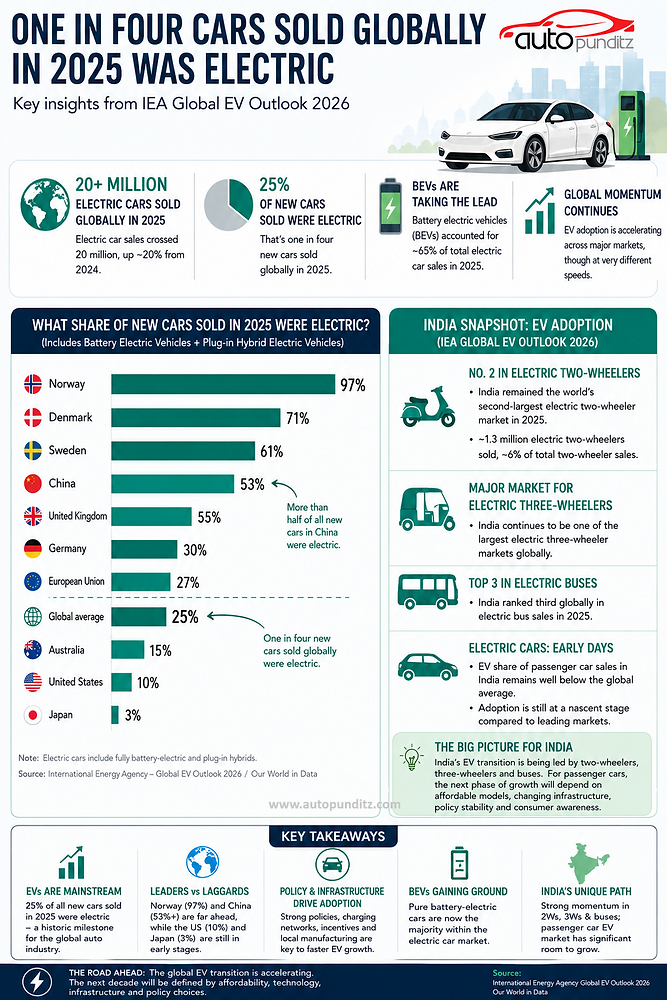
Figure 2 – Share of electric vehicles among new cars in 2025, by country (Source: AutoPunditz)
Within this transition, particular attention should be focused on the difference between the US, where only 10% of new cars sold in 2025 were electric, and China (53%). I will return to other differences between these two leading economies in the energy transition, in future blogs.
Figure 3 shows the sharp rise in Brent crude oil price, immediately after the start of the war. It also shows the stabilization of this market a short time after (1-2 months), mainly due to resilience steps that China took and the US did not.
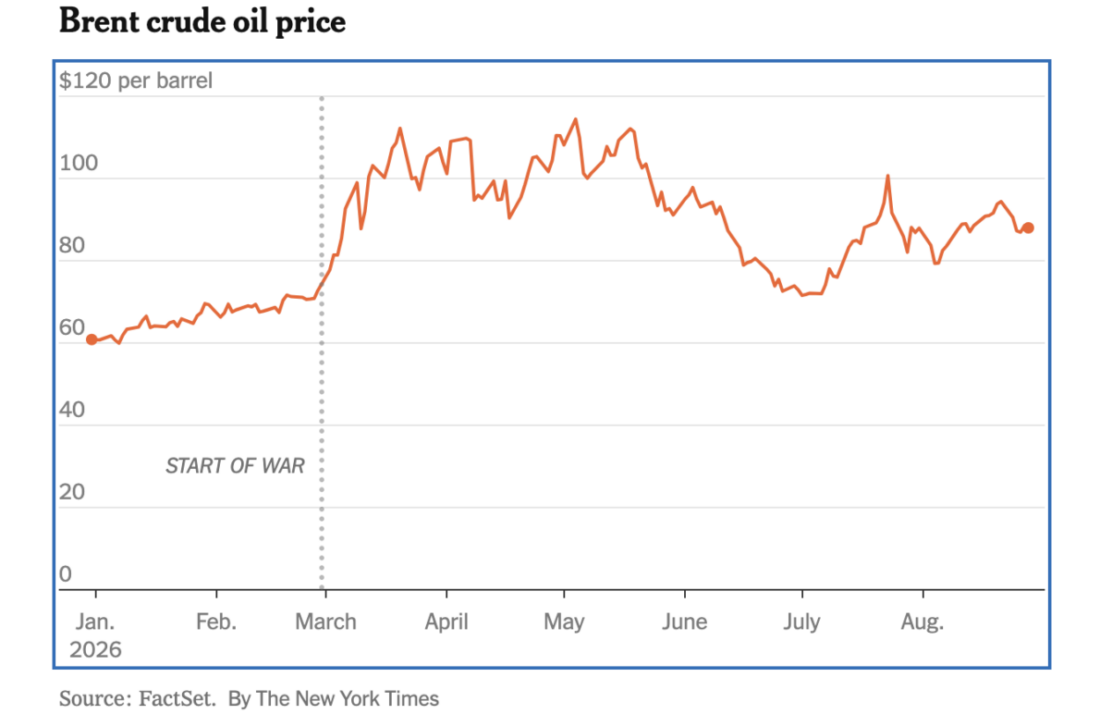
Figure 3 – Brent crude oil price after the start of the war (Source: NYT)
Work on resilience of the energy market was not restricted to fossil fuels. The rise in data centers, which were described in previous blogs, required major increases in electric power consumption. Effective, continued use of electric power requires batteries. Even the US has found that it depends on not-too-friendly China, to import the batteries that it needs (Trump Shuns E.V.s and Wind Power, But He’s Pouring Billions Into Batteries – The New York Times). I will return to this issue in future blogs. In all these discussions, one must remember that the shift from fossil fuels to electricity—no matter the source of the fossil fuels—is not a remedy to climate change through reduction of carbon dioxide emissions. As mentioned repeatedly in earlier blogs, fossil fuels are primary energy sources, while electricity is a secondary energy source. Any quantification of the shifts addresses the resilience to the difficulties of transporting the fuels but resilience to climate change requires analysis of how the countries power the electricity that they are now using. Again, this will be done in future blogs.
The discussion about resilience and adapting to changes is really interesting. I think the same idea can apply to everyday home appliances too, where a candy service center can help with repairs, while a candy service center Abu dhabi can be useful when a Candy appliance needs proper servicing or genuine replacement parts.