
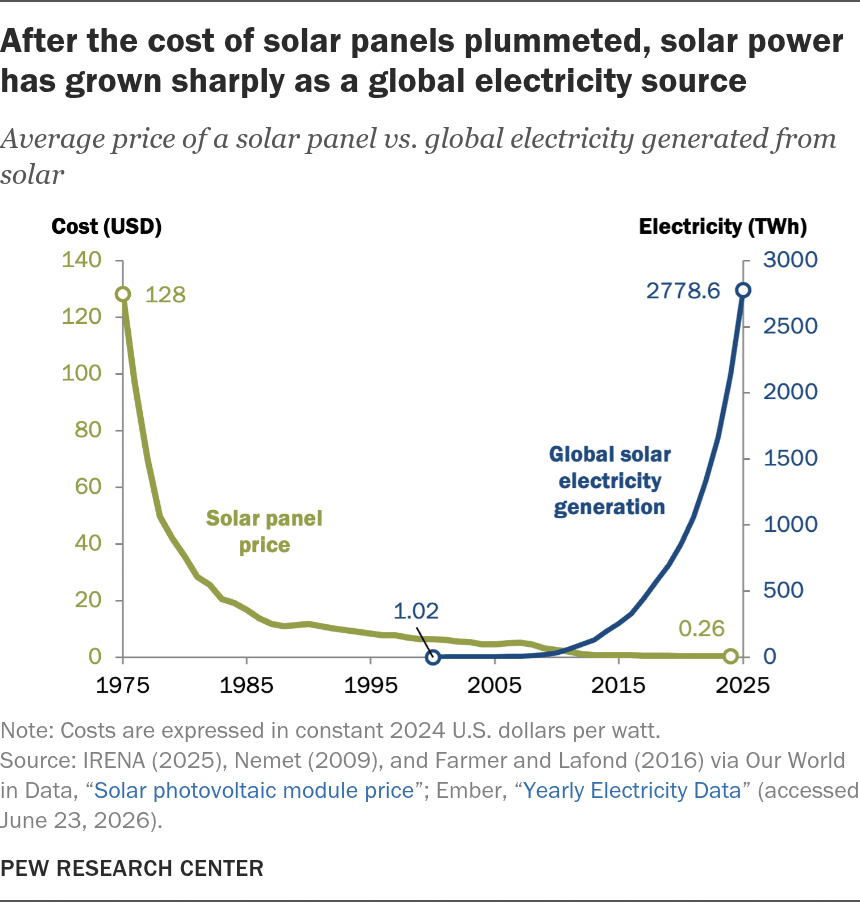
Figure 1 – Average price of a solar panel vs. global electricity generated from solar, 1975-2025 (Source: Pew Research Center)
Figure 1 was taken from the Pew Research Center site that was discussed in last week’s blog (August 6, 2026), which ended with the following lines: “There is a growing realization that the global energy transition to mitigate climate change coincides with energy security, but both need local control (IEA’s Latest Report Reveals Energy’s Shift From Climate to Security). However, neither affordability nor local control are assured.” This blog goes through some details about recent attempts to include access to energy as part of state sovereignty. I will start with the Merriam-Webster definition of sovereignty and its present status:
1 a : supreme power especially over a body politic
b : freedom from external control : autonomy sense 1
c : controlling influence
2 : one that is sovereign
especially : an autonomous state : autonomy sense 2
Number of sovereign countries (AI Through Google, now Gemini):
There are 195 widely recognized sovereign countries in the world. This total includes the 193 member states of the United Nations, plus two permanent observer states: the Holy See (Vatican City) and the State of Palestine. [1, 2]
Depending on the criteria used for political recognition, some lists count up to 197 by including associated states like the Cook Islands and Niue, or higher if counting partially recognized or disputed territories. [1, 2, 3]
Figures 2 and 3 illustrate attempts to integrate energy affordability with the security of sovereign countries through local control.
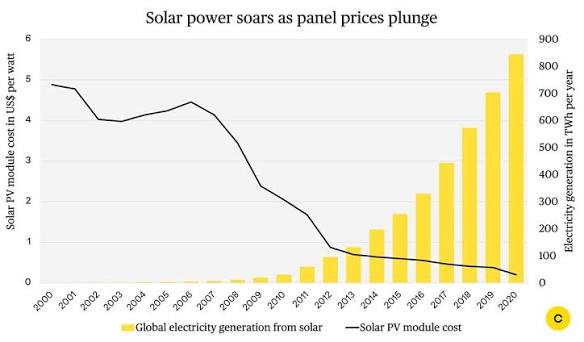
Figure 2 (Source: Canary Media)
Figure 3 illustrates that China is the facilitator of this transition:
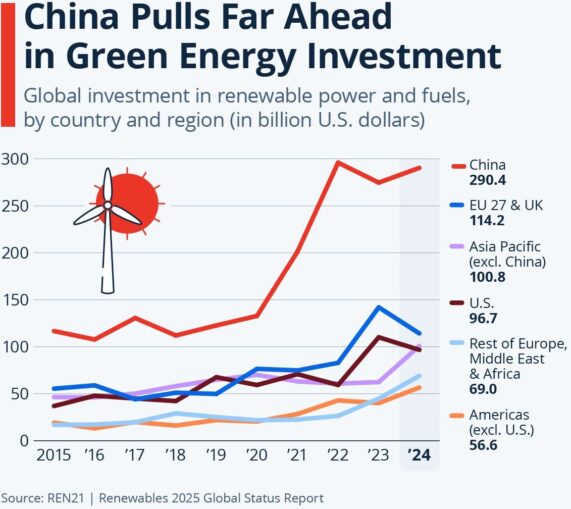
Figure 3
All three figures illustrate that the transition to local control of energy sources ties in well with the transition from coal to solar energy. However, in spite of the fact that China is leading that transition, the country is still responsible for more than 50% of global use of coal—the dirtiest fossil fuel that underlies recent energy use (Ranked: The Countries That Consume the Most Coal):
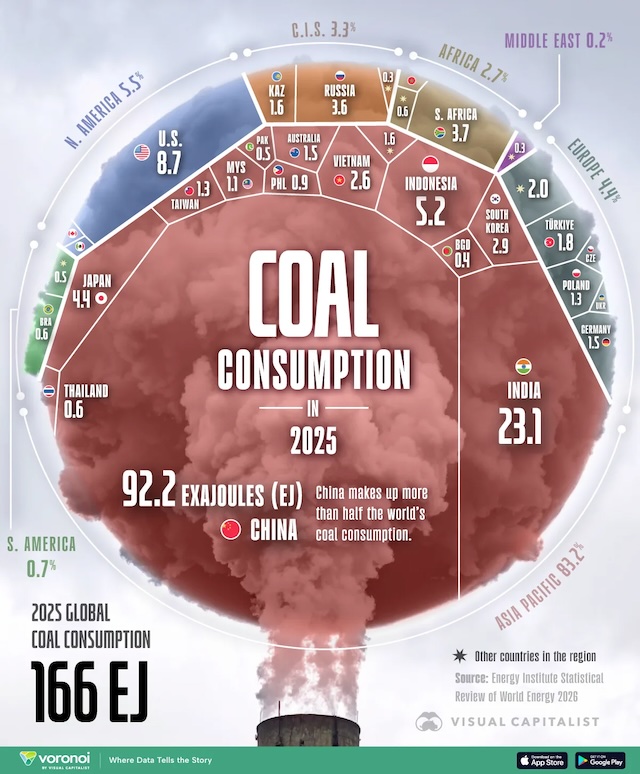
Figure 4 – The countries that consume most coal
Trump claimed security as the reason behind his attempt to shift legislative issues to executive control under his “Liberation Day” global tariff policy. Three paragraphs from that publication give insight into the Trump administration’s thinking:
On April 2, 2025—a date President Trump proclaimed “Liberation Day”—the administration announced the most sweeping tariff hike since the Smoot-Hawley Tariff Act, the 1930 law best remembered for triggering a global trade war and deepening the Great Depression.
At the center of the Trump administration’s trade doctrine lies a conviction that the U.S. trade deficit with each partner is not just a data point, but a ledger of national failure. It is a scarlet letter testifying to decades of asymmetric trade agreements, in which the United States bartered away its industrial birthright for mere corporate margins and cheaper imports.
What the United States gained in shareholder returns, it lost in productive capacity. Steel, aluminum, and shipbuilding were left to wither—casualties of an indifferent trade regime. And this, in Trump’s framing, is where trade policy crosses the Rubicon. What began as economic decline becomes a national security liability, one that would be exposed in the event of a sustained military conflict. After all, it was the United States’ unmatched industrial base, not just its battlefield tactics, that secured victory in World War II. Today, the argument goes, that the “arsenal of democracy” has been allowed to rust, while China has assembled the very industrial capacity that once defined U.S. strength.
However, the shift to local control of the economy is not restricted to the US. In many cases, it is driven by smaller countries’ interests in breaking their dependence on the US. My next blog will list some such efforts in countries that are ahead in the transition to local control.
The discussion about affordable energy and local control is really interesting. I think reliable care also matters in everyday homes, and a candy service center can help when an appliance needs repair, while a candy service center Abu dhabi can be useful for Candy appliance servicing with genuine parts and on-site support.