
The first paragraph in Wikipedia’s entry on the subject describes water conflicts in the following way:
Water conflict typically refers to violence or disputes associated with access to, or control of, water resources, or the use of water or water systems as weapons or casualties of conflicts. The term water war is colloquially used in media for some disputes over water, and often is more limited to describing a conflict between countries, states, or groups over the rights to access water resources.[2][3] The United Nations recognizes that water disputes result from opposing interests of water users, public or private.[4] A wide range of water conflicts appear throughout history, though they are rarely traditional wars waged over water alone.[5] Instead, water has long been a source of tension and one of the causes for conflicts. Water conflicts arise for several reasons, including territorial disputes, a fight for resources, and strategic advantage.[6
A list of historical water conflicts starts in 2500 BC. One of my blogs from earlier this year (March 11, 2026) starts with a drawing of the Boston Tea Party, and implies that our robot creations could be considered victims of taxation without representation. This blog attempts to link water conflicts with our changing world.
A good example to start this discussion is the conflict in Taiwan from five years ago, which the NYT covered in an article, “Drought in Taiwan Pits Chip Makers Against Farmers”:
Chuang Cheng-deng’s modest rice farm is a stone’s throw from the nerve center of Taiwan’s computer chip industry, whose products power a huge share of the world’s iPhones and other gadgets. This year, Mr. Chuang is paying the price for his high-tech neighbors’ economic importance. Gripped by drought and scrambling to save water for homes and factories, Taiwan has shut off irrigation across tens of thousands of acres of farmland. The authorities are compensating growers for the lost income. But Mr. Chuang, 55, worries that the thwarted harvest will drive customers to seek out other suppliers, which could mean years of depressed earnings. “The government is using money to seal farmers’ mouths shut,” he said, surveying his parched brown fields.
Today, the computer chip industry in this story takes the form of data centers, and the local war for water access is becoming global. I asked AI (through Gemini) to summarize the role that water access plays in data centers. This is what I got:
Where the Water Goes: Direct vs. Indirect
A data center’s total water footprint is split into two main categories: To give you a clearer picture of how a data center “drinks,” here is a breakdown of how that water is actually used and how the industry is trying to manage it.
- Direct Water Use (Onsite Cooling)
Data centers generate massive amounts of heat. To keep servers running efficiently, facilities often use evaporative cooling systems.
- Water is sprayed or runs down a mesh matrix to cool the air being pushed into the server rooms.
- As the water evaporates to cool the air, it is lost to the atmosphere, meaning it is consumed and removed from the local watershed.
- The scale: A single hyperscale data center can consume between 1 million and 5 million gallons of water a day—roughly the same as a town of 10,000 to 50,000 people.
- Indirect Water Use (Offsite Power Generation)
This is the hidden “virtual” water footprint. Data centers consume massive amounts of electricity from the power grid.
-
Traditional power plants (nuclear, coal, gas) use vast amounts of water for steam generation and cooling.
-
Hydroelectric dams lose massive volumes of water purely to evaporation from their reservoirs.
-
The reality: Often, a data center’s indirect water footprint from its energy consumption is two to three times larger than the amount of water it uses onsite for cooling.
Figures 1 and 2 summarize the present water situation. Figure 1 compares water withdrawals to available water around the world during the last 30 years. The visible impact covers more than half of the global population, and it is obvious that the ratio of withdrawals to availability cannot continue at the same rate.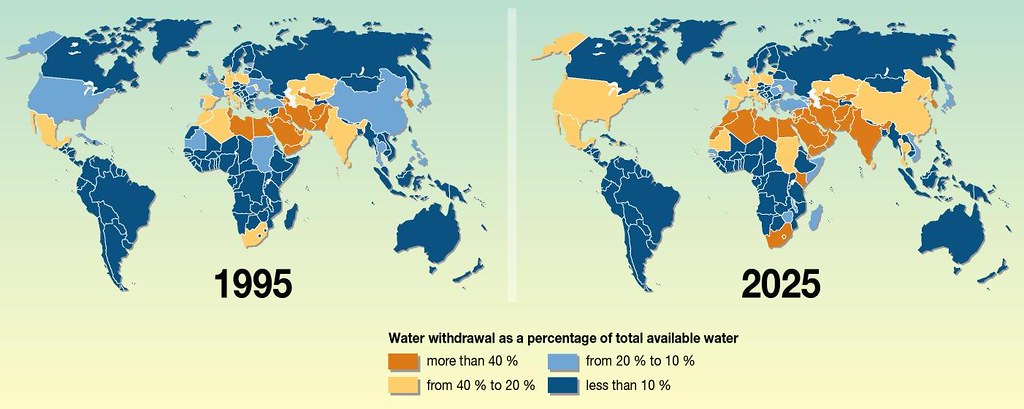 Figure 1 – Global water withdrawal vs. availability, 1995 and 2025 (Source: GRID-Arendal)
One of my earlier blogs (May 1, 2018) describes the 2015 Water Stress Index in more detail. Figure 2, from my March 19, 2024 blog, lists the fastest-sinking coastal cities, many of which are primarily caused by excessive water withdrawals.
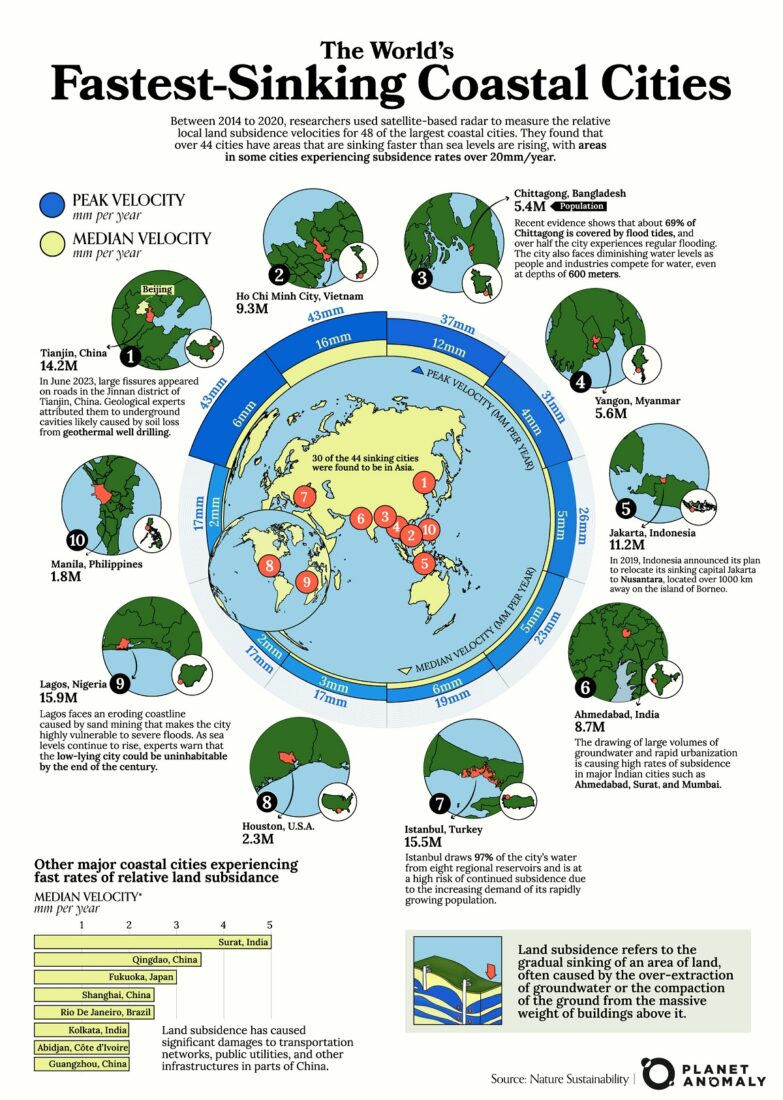
Figure 2 – The world’s 10 fastest-sinking coastal cities (Source: Visual Capitalist)
However, water availability on a planet whose surface is 70% covered by oceans, is a flexible concept. Water wars usually involve access to fresh water for direct application and agriculture, not to salty ocean water. Converting salty water into fresh water is known as desalination and was discussed in an earlier blog (October 29, 2013). Figure 3, taken from that blog, describes the global extent of water desalination at the time. Figure 4 shows the specific desalination plants by type from 2021.
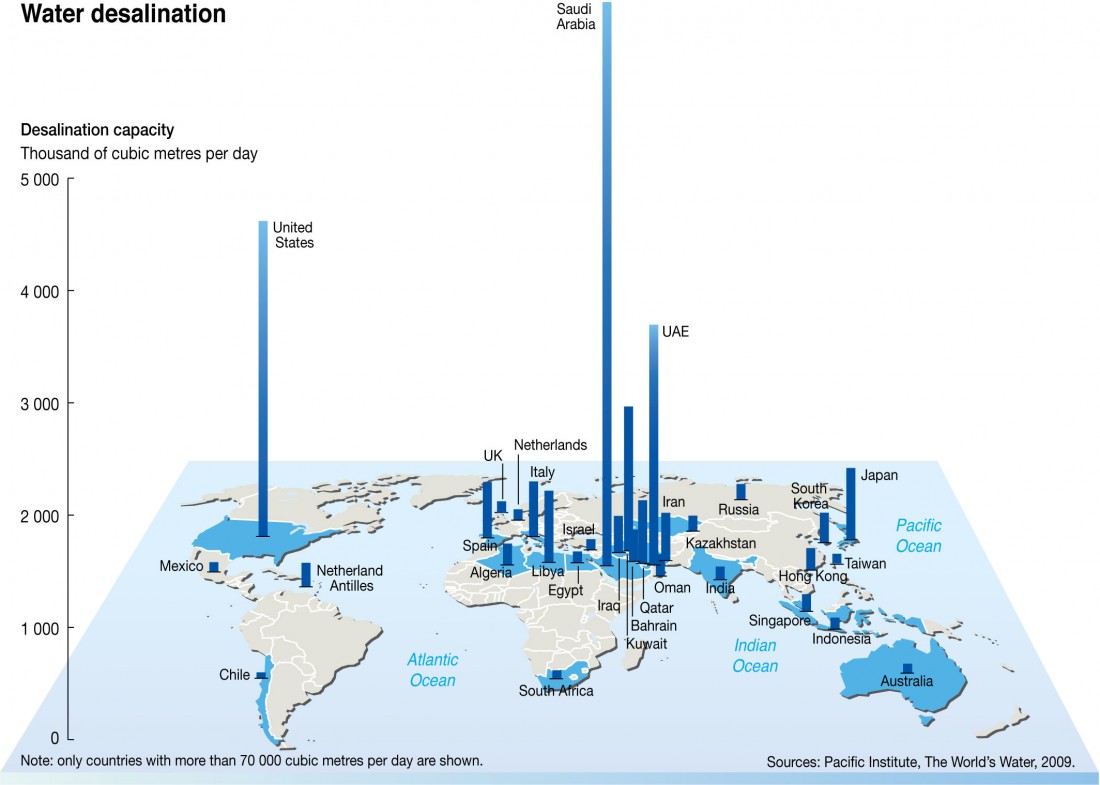
Figure 3 – Water desalination (from October 29, 2013 blog)
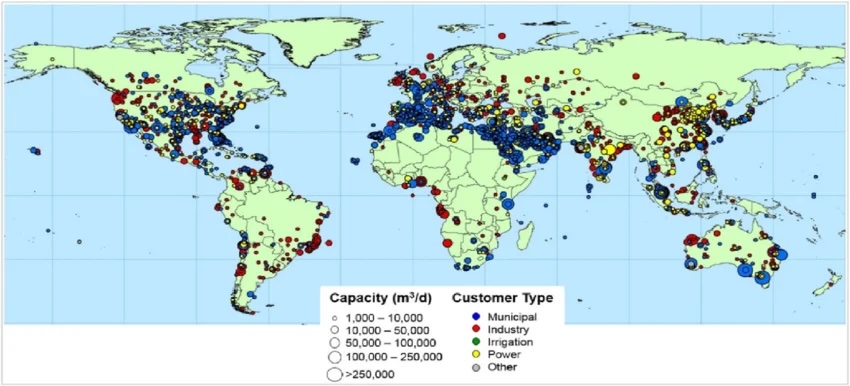
Figure 4 – Map of desalination plant location, capacity, and use (Source: Curto et al., 2021, via ResearchGate)
Water desalination requires a great deal of energy, and thus is directly connected to the global energy transition that is trying to mitigate climate change. Figure 3 and Figure 4 show that much of the desalination effort is concentrated in the Middle East, where it has become a casualty of the Iran-US-Israel war.
I will finish this blog in a similar way to how I started it – with a detailed description of a local conflict: the stress between water shortage and technological progress in a major city in the US. I have emphasized the two phrases that I think are most important:
The mayor of Corpus Christi called an emergency meeting last month to deliver a dire warning: The city, among the largest in Texas, was running out of water. City leaders had to make a plan, and fast. “Every day of delay increases uncertainty,” the mayor, Paulette Guajardo, told the City Council. Officials had warned that demand for water could outstrip supply within months. Corpus Christi, a coastal city of more than 300,000 and home to a large industrial port, is not alone in grappling with water shortages. Half the nation is dealing with a persistent drought, according to federal data, at the same time as industrial water demand has risen because of growing needs from power plants and data centers. But Corpus Christi’s struggle to respond could serve as a warning to cities around Texas and across the country, officials said.
This post highlights an urgent intersection of technology and water scarcity. As someone who has worked in environmental tech, I wonder how digital solutions like street view could aid in tracking water resources effectively?
The post does a good job showing how digitized infrastructure can make an old conflict feel even more tense: the resource is physical, but the control layer becomes data, access, and prediction. That systems-pressure angle is what stayed with me. It reminded me, in a much smaller fictional way, of why a restaurant horror story like dead plate game works: scarcity, timing, and hidden rules can turn ordinary service work into suspense. I appreciated how clearly you connected water policy to the digital layer behind it.
I really loved your insights on the clash over water resources in our increasingly digital world! It reminded me of my own struggles during a drought last summer. Your point about technology offering solutions but also complicating things is so spot-on. Thanks for highlighting this important issue! speedstars