 Figure 1 – Drawing of the Boston Tea Party (Source: SC Daily Gazette)
The last two blogs promised that I would focus on different efforts to adapt to the demographic changes that the world is going through. Currently, there are two main aspects to this effort; both have the same objective: continuing (or accelerating) economic growth in a world with a declining workforce. One approach works with the premise that we don’t need that many people for economic growth—we can replace the decreasing workforce with computers. The other tactic is to shift demographic trends by encouraging people to have more babies. These approaches require separate blogs. This blog will discuss the first—balancing the decreasing workforce by giving computers an increasing economic role in running the economy (either directly with robots or indirectly with AI). This involves a large increase in productivity, as defined by the ratio of economic output to number of workers.
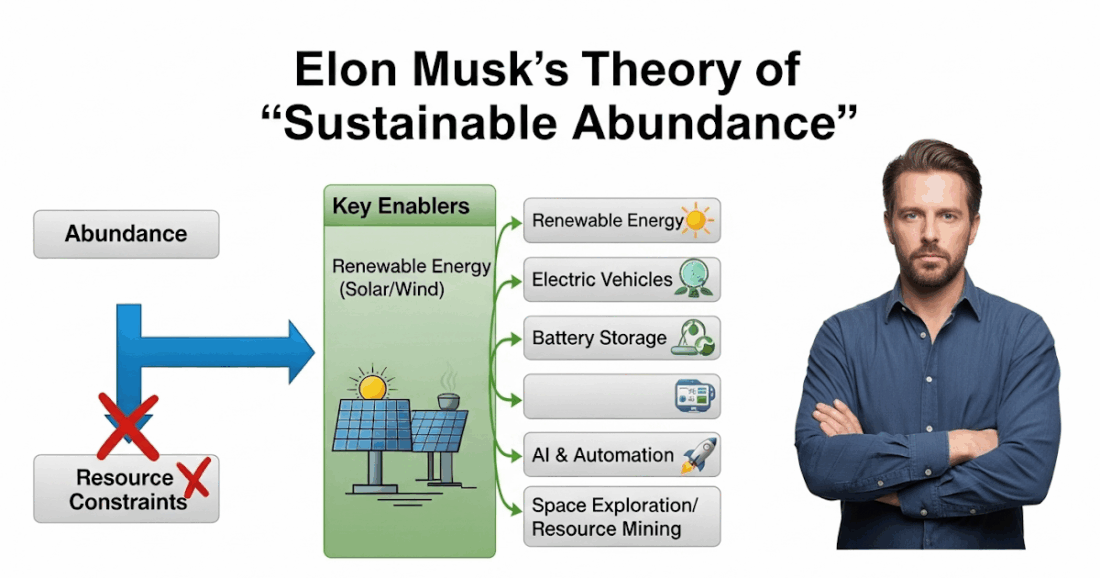
This approach of restructuring the economy with computers to compensate for a diminishing workforce can be divided into two forms: “Sustainable Abundance” and “Silver Economies.” Both forms are described in this blog. Sustainable Abundance is outlined in Figure 2. It redefines growth by challenging the traditional tradeoff between economic growth and environmental sustainability, arguing that advances in technology can enable both. The concept became recently the flagship of Tesla and its chairman, Elon Musk. Tesla started as an environmental centric company focusing mainly on replacing fossil fuel transportation with electric cars. I discussed in earlier blogs (March 12 – 26, 2019), that such a shift only counts toward climate change mitigation if the charging is done with sustainable electricity sources. Recently, Tesla amplified its efforts in commercial applications of sustainable electricity sources with activity in solar cells as shown below:
Recent Tesla efforts in solar cell production – according to AI (Google):
Tesla concept as of early 2026, Tesla is aggressively expanding its role in solar cell production, shifting from a reseller to a major US manufacturer. By 2026, Tesla has begun in-house manufacturing of new, proprietary solar panels at its Buffalo, New York, Gigafactory, aiming for a massive 100-gigawatt (GW) annual production capacity to support terrestrial and space data centers, making it a potential industry leader.
The New York Times (NYT) describes “Sustainable Abundance” the following way:
A World Where All Is Free? That’s Elon Musk’s Theory of ‘Sustainable Abundance.’
The Tesla and SpaceX chief has told his followers that they will live in a world where robots will take care of every need and people do not have to work, in what has become his latest slogan. In the future that Elon Musk envisions, humans won’t just live on Mars. They will also never have to work again. Money will be irrelevant. And everything they could ever want will be immediately accessible. This is what Mr. Musk calls “sustainable abundance,” a post-scarcity society where humans have created technologies so ubiquitous and so powerful that they have eliminated the need for labor. Over the past six months, the utopian phrase has become central to the billionaire’s businesses, belief system and lexicon, according to Mr. Musk’s social media posts and what he has said on podcasts and at company events. Now his electric carmaker, Tesla, is developing humanoid robots; his rocket company, SpaceX, is promoting orbital data centers; and his artificial intelligence start-up, xAI, is creating A.I. that Mr. Musk has said will solve most, if not all, of humanity’s problems.
What this NYT entry is missing, but which is emphasized in Figure 2, is the environmental changes that this approach promises. What the piece emphasizes is the replacement of people in a declining workforce with computers and AI. I live in NYC and we just elected Zohran Mamdani as our new Mayor. Mamdani’s successful election campaign was based on fixing affordability. Just replace millionaires and billionaires with of computers; and everybody in “Tesla’s sustainable abundance with “average New Yorker”:
Food prices are out of control. Nearly 9 in 10 New Yorkers say the cost of groceries is rising faster than their income. Only the very wealthiest aren’t feeling squeezed at the register.
As Mayor, Zohran will create a network of city-owned grocery stores focused on keeping prices low, not making a profit. Without having to pay rent or property taxes, they will reduce overhead and pass on savings to shoppers. They will buy and sell at wholesale prices, centralize warehousing and distribution, and partner with local neighborhoods on products and sourcing. With New York City already spending millions of dollars to subsidize private grocery store operators (which are not even required to take SNAP/WIC!), we should redirect public money to a real “public option.”
Public transit should be reliable, safe and universally accessible. But one in five New Yorkers struggle to afford the ever rising fare. Adding insult to injury: our city’s buses are the slowest in the nation, robbing working people of precious time for family, leisure and rest.
Zohran won New York’s first fare-free bus pilot on five lines across the city. As Mayor, he’ll permanently eliminate the fare on every city bus – and make them faster by rapidly building priority lanes, expanding bus queue jump signals, and dedicated loading zones to keep double parkers out of the way. Fast and free buses will not only make buses reliable and accessible but will improve safety for riders and operators – creating the world-class service New Yorkers deserve.
Next week’s blog will focus on an alternative approach to declining fertility and increase need to support retiring old population, to try to reverse the clock and take steps to increase the declining fertility. One of the central player that will be discussed is China. However, to complement that approach, China is also trying to change it economic structure to make it more responsive to the demographic changes. Other countries are starting to experiment with this approach and it got the name of “Silver Economy” that is described below (https://en.wikipedia.org/wiki/Silver_economy):
Silver economy is the system of production, distribution, and consumption of goods and services aimed at using the purchasing potential of older and ageing people and satisfying their consumption, living, and health needs. The European Union has determined that all economic activity servicing those who are aged 50 and above is within the silver economy.[1] The silver economy is analyzed in the field of social gerontology, not as an existing economic system, but as an instrument of ageing policy and the political idea of forming a potential, needs-oriented economic system for the aging population.[2][3] Its main element is gerontechnology as a new scientific, research and implementation paradigm.[4]
Similar to the non-environmental aspects of Sustainable Abundance, China is basing its Silver Economy approach on replacing declining workforce with computers:
Humanoid Robots Will Cater to China’s Aging Population
Robots will play a growing role in caring for China’s elderly, industry insiders say, as robotics firms move to tap into the country’s expanding “silver economy.”
Why It Matters
China, like the rest of East Asia, is grappling with a flagging birth rate coupled with a fast-aging workforce.
People aged 65 and older already make up about 15 percent of its 1.4 billion citizens, according to United Nations data. Demographers expect China to join Japan and South Korea as a “super-aged” society, where more than one in five residents are seniors, by 2035.
With record numbers of Chinese retiring, the country faces mounting strain on its pension system and social safety nets, alongside a shrinking workforce to support them. Beijing says it is ramping up investment in elder care, including artificial intelligence and humanoid robotics, to prepare for these demographic shifts.
Many of us react to this type of economic restructuring via technology with skepticism, feeling like we’ve seen it all before. The “before” for most of us consists of movies such as 2001: A Space Odyssey (1968), in which the robot Hal 9000 takes over, with disastrous consequences. However, such movies are fiction. At the same time, we can take a short trip to the countryside or petting zoo, and see horses and donkeys. They are trained (or born) to help us, and do not have much say over what they do.
However, in July, most of us in the US, will celebrate 250 years of statehood. The War of Independence from Britain started with the slogan, “no taxation without representation.” While the phrase came into use at the center of the 1773 Boston Tea Party, it later became a more universal slogan against tyrany. A drawing of the event opens this blog. The robots and AI that we are creating to replace our work force are suppose to be super intelligent. If they are aware of the slogan and its implications within the new economic structures that we are creating, will they strive for their independence?
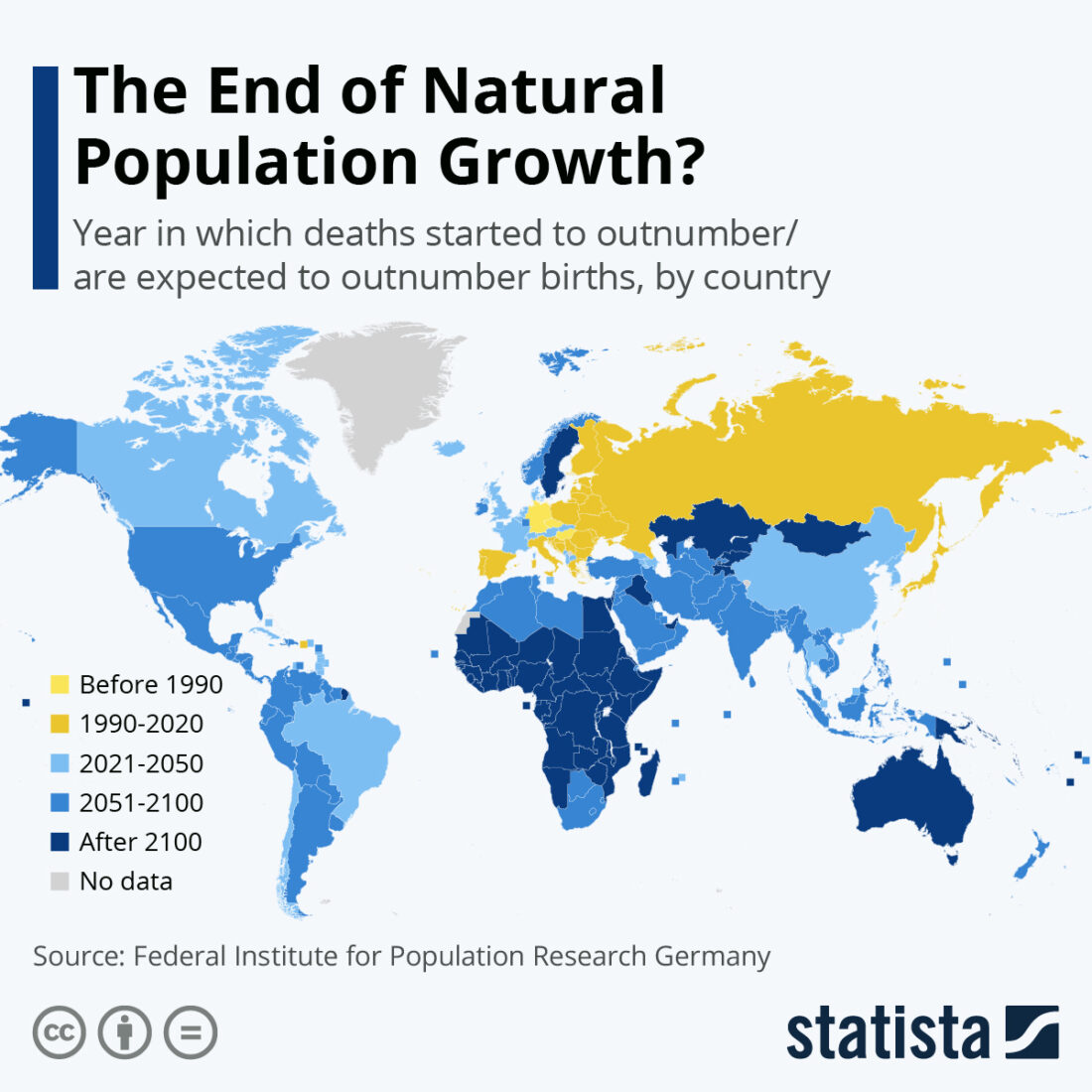 Figure 1
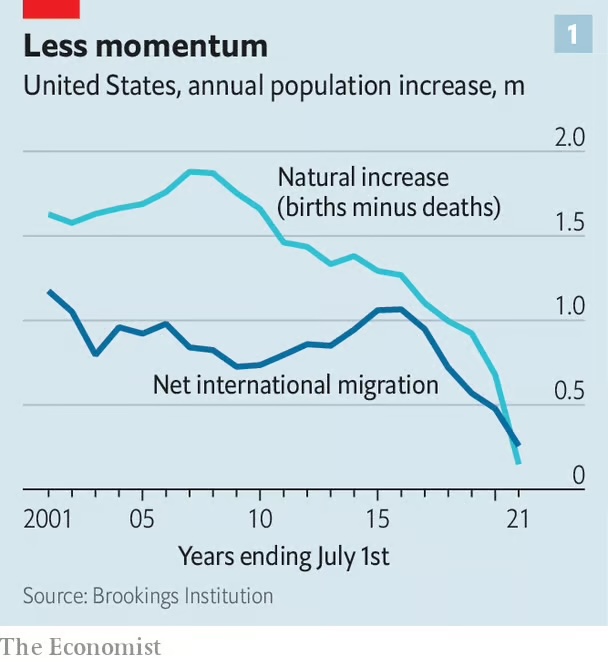 Figure 2 – Population increase in the US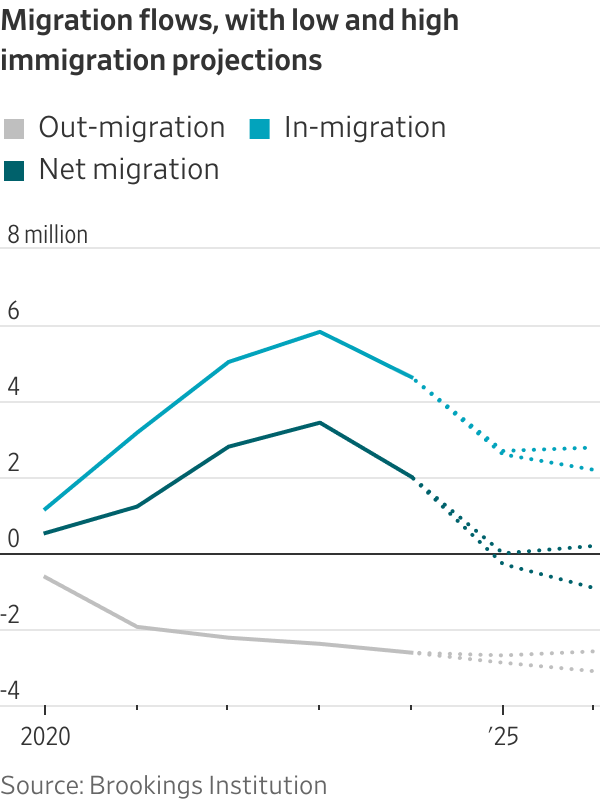
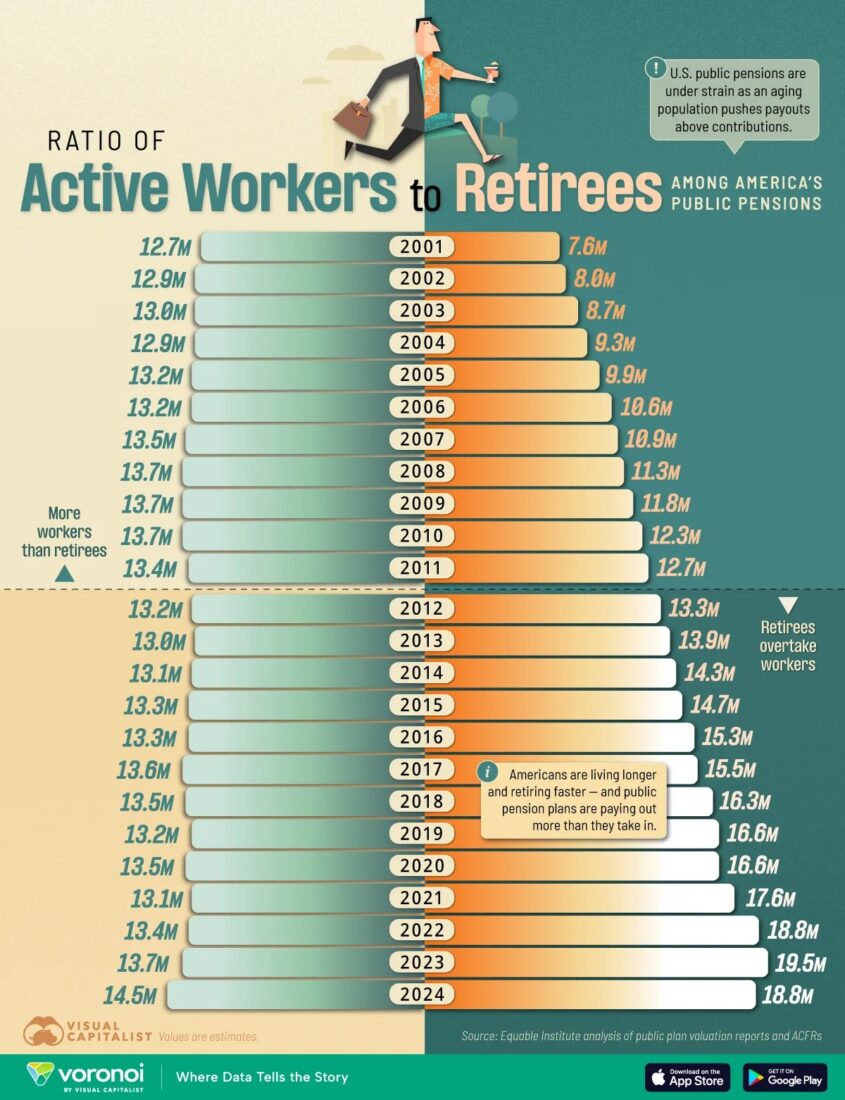
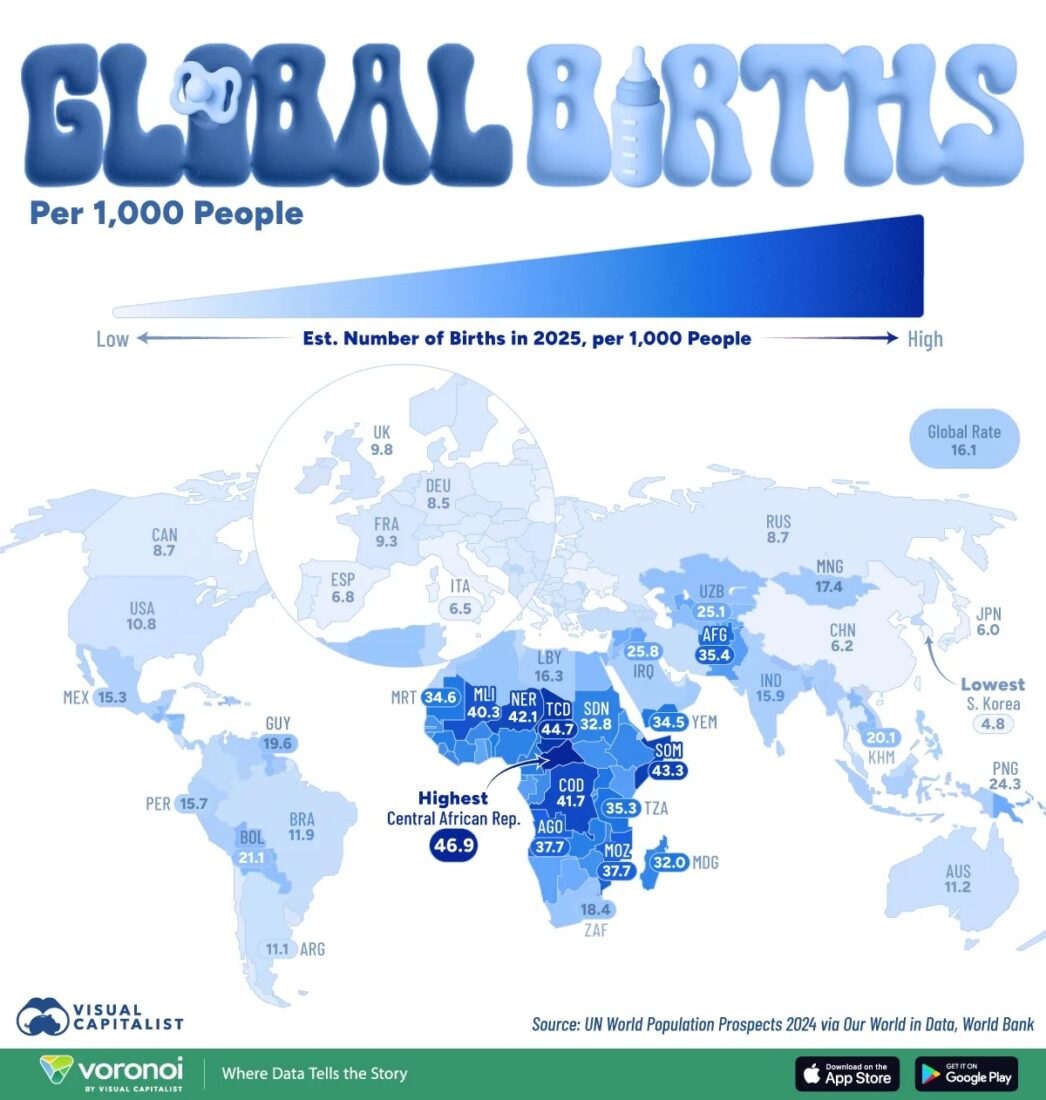

 Figure 1 – Kim Meylemans and Nicole Silveira, wives competing in Olympic skeleton (Source:

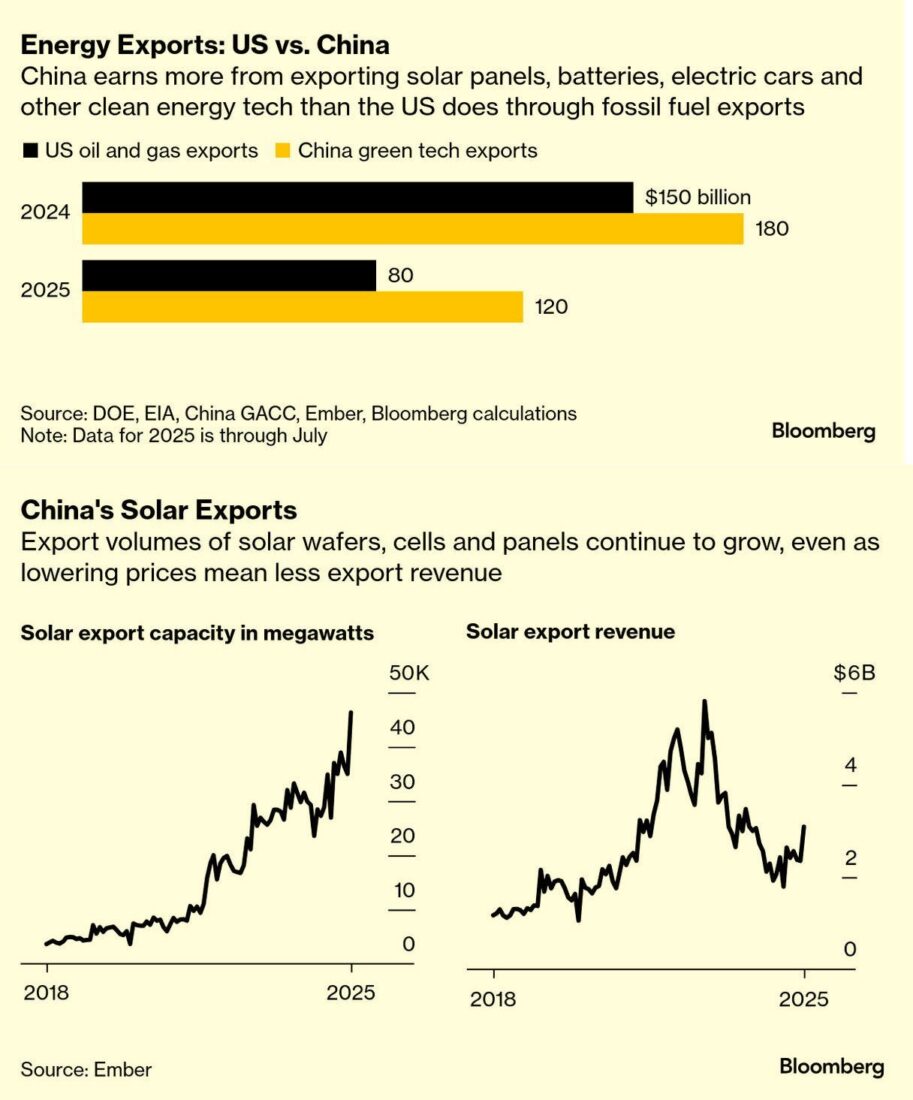
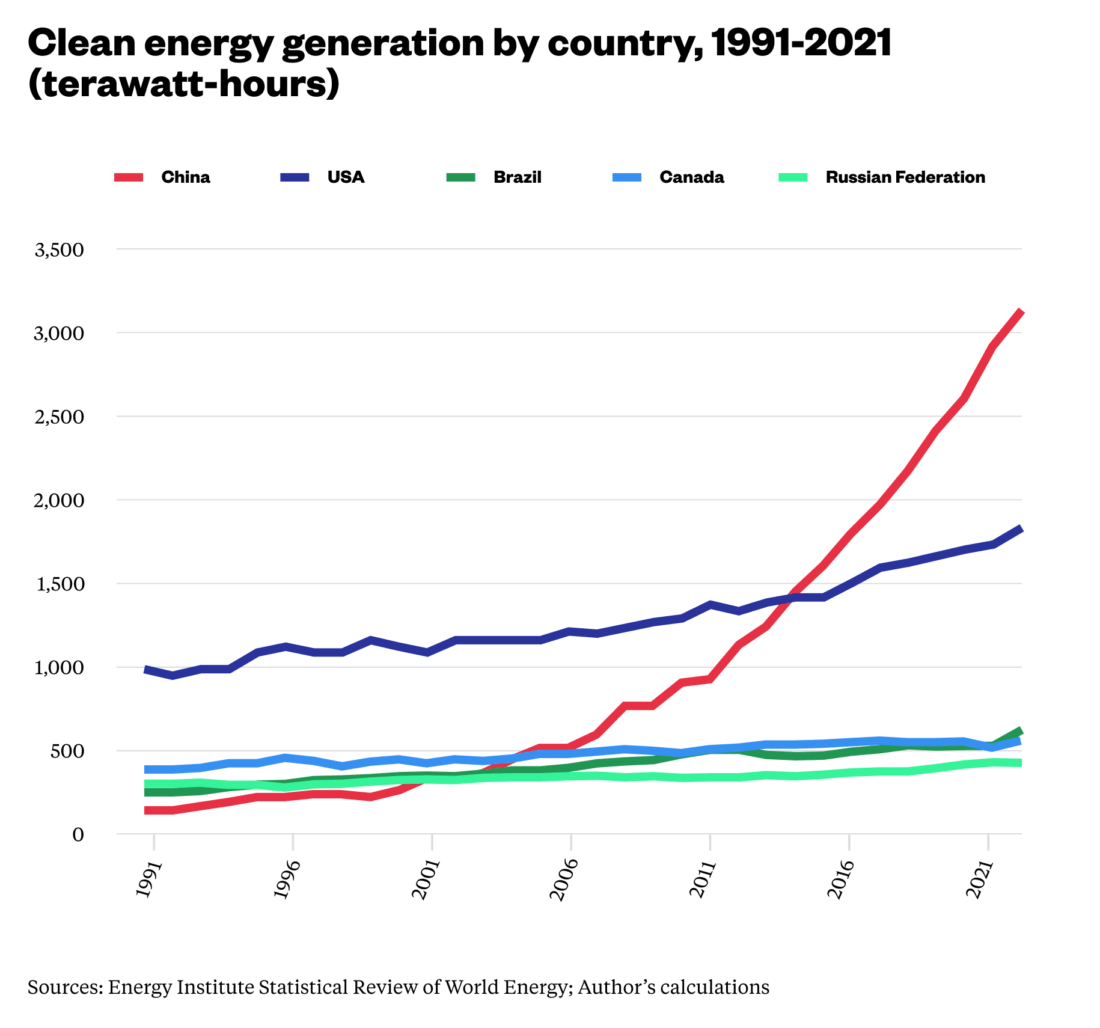 Figure 1-
 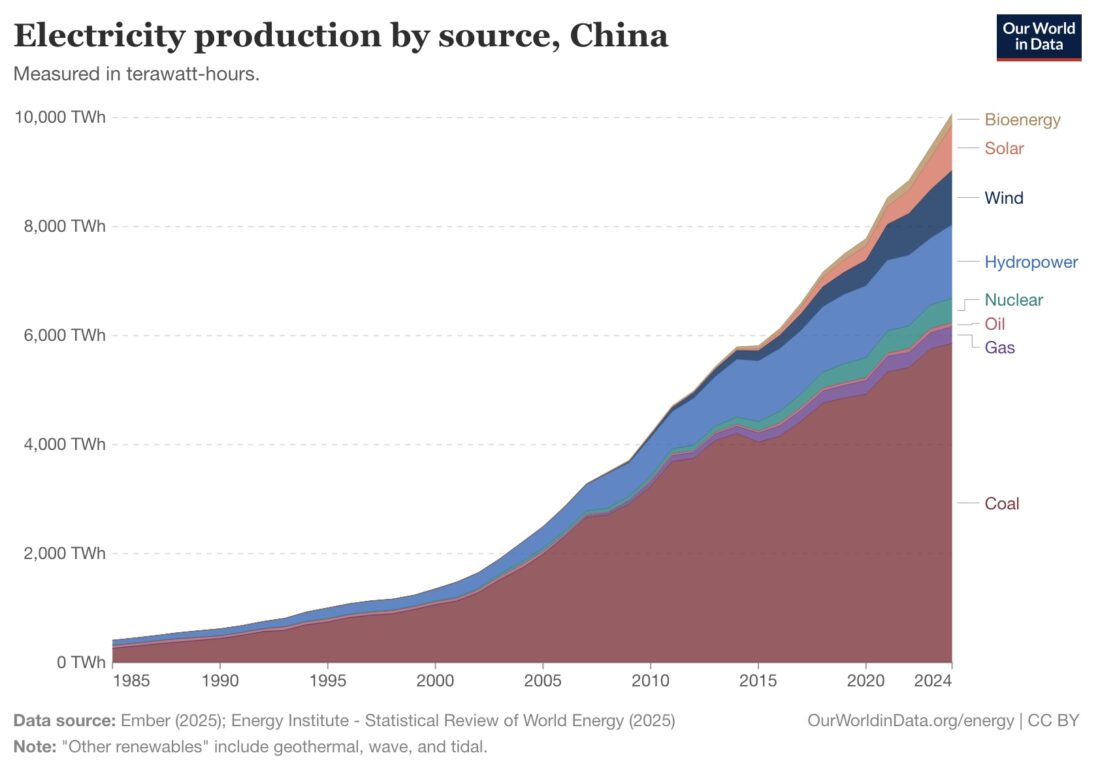 Figure 2 – Graph of China’s electricity production by source, 1985-2024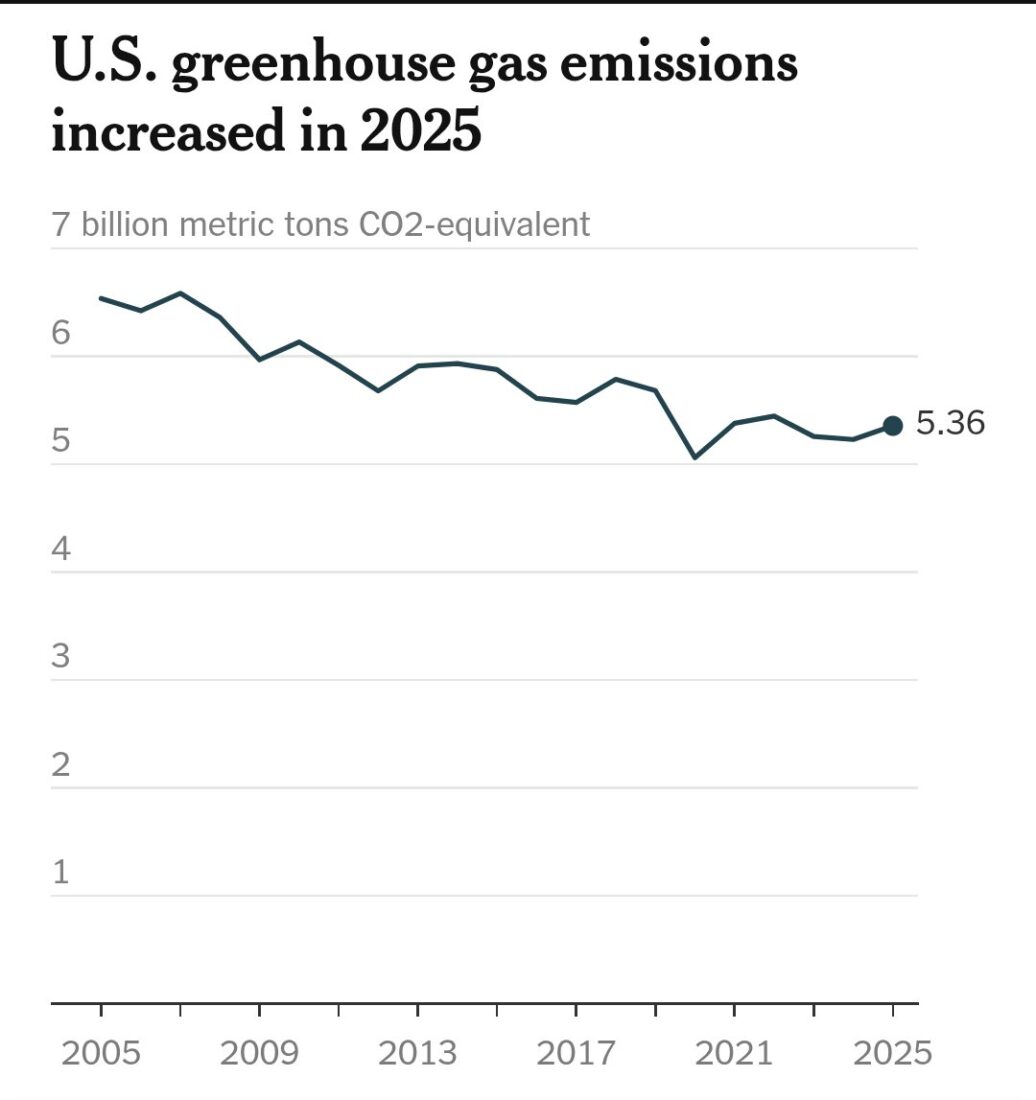
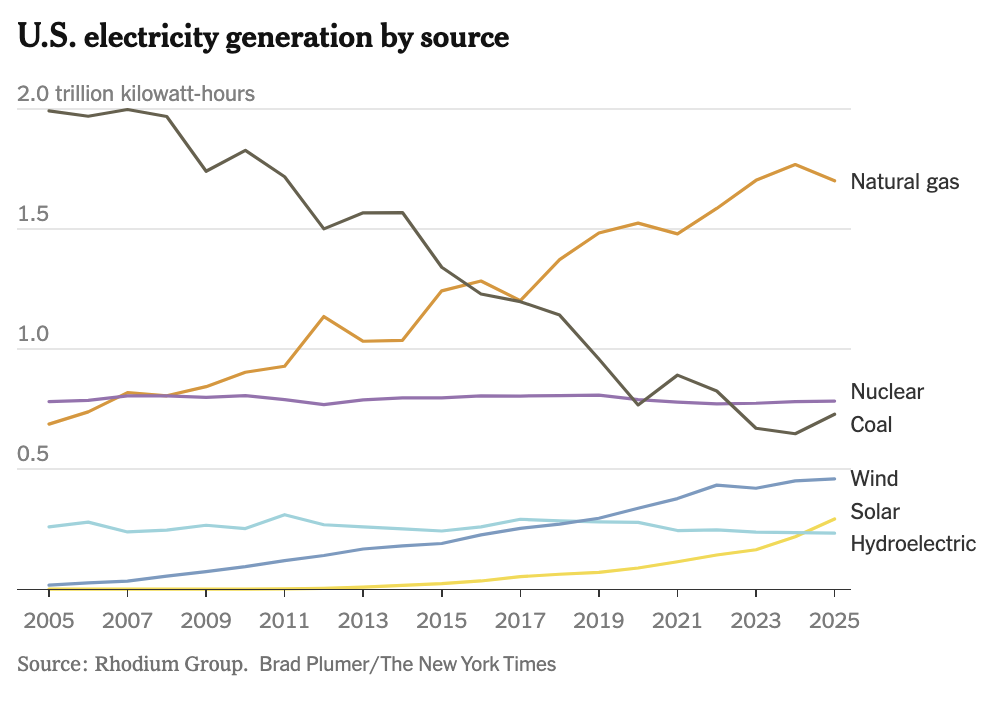 Figure 4 – US electricity generation by source, 2005-2025 (Source: NYT:
 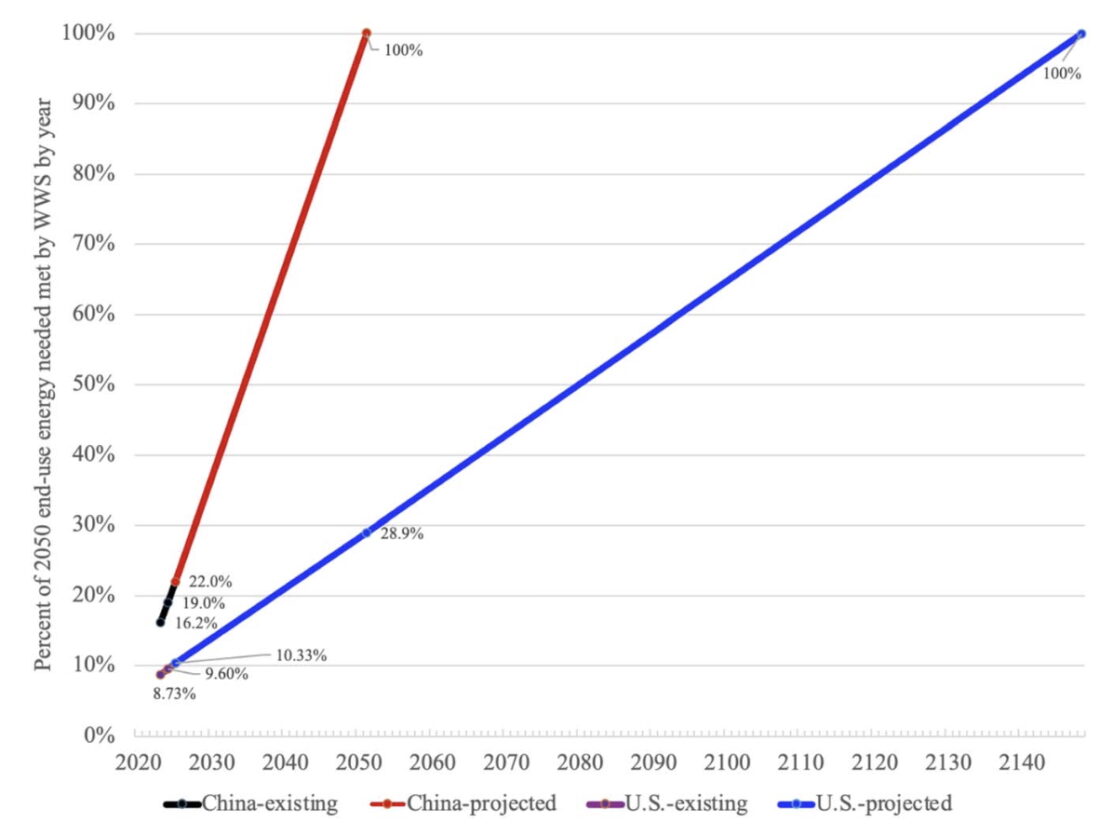 Figure 5 – Rate of energy transition, China vs. US, existing vs. projected
 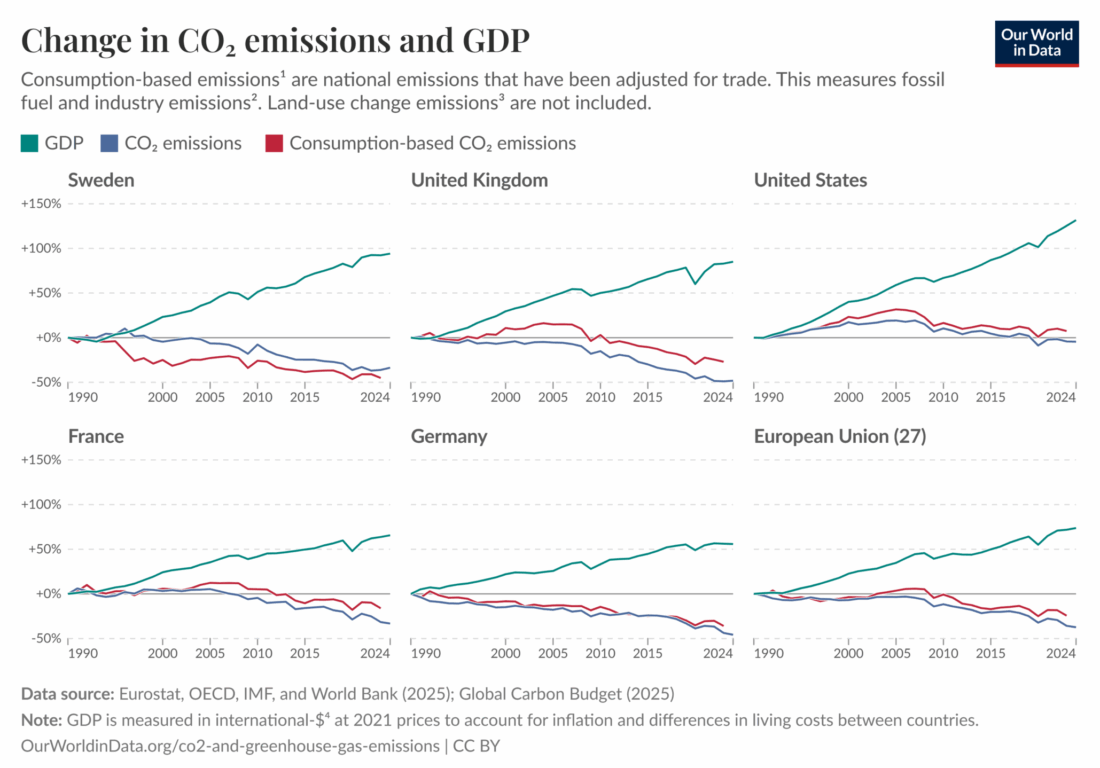 Figure 1
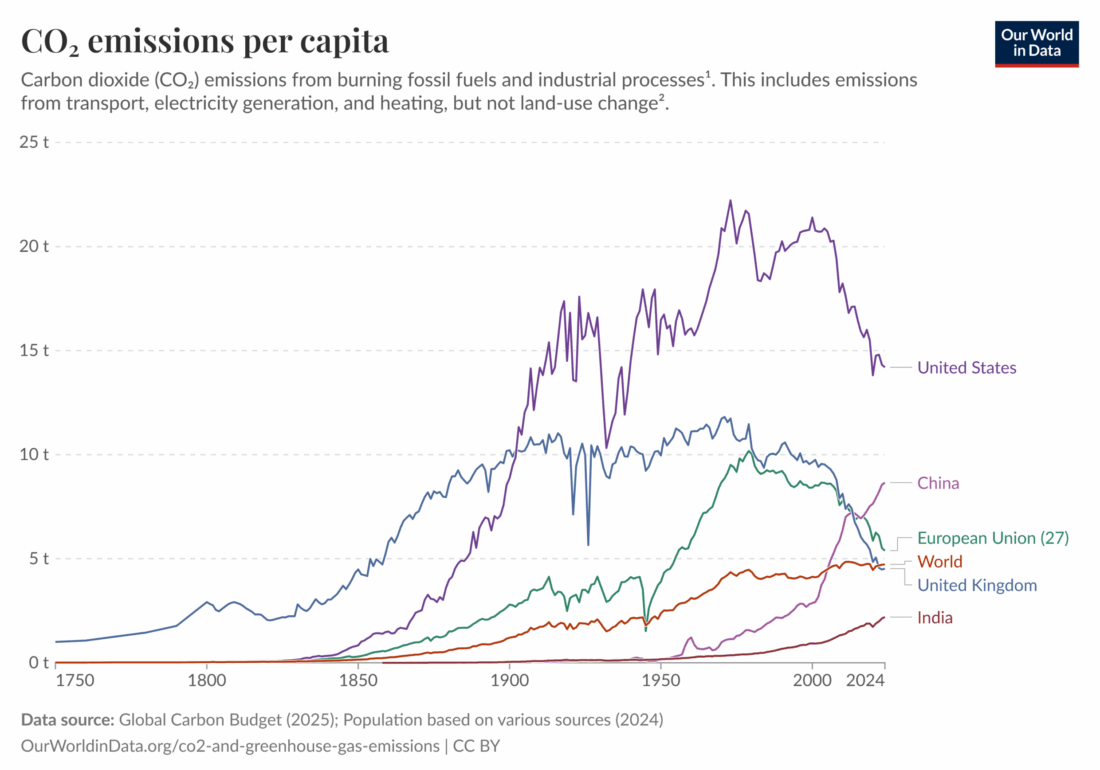 Figure 2
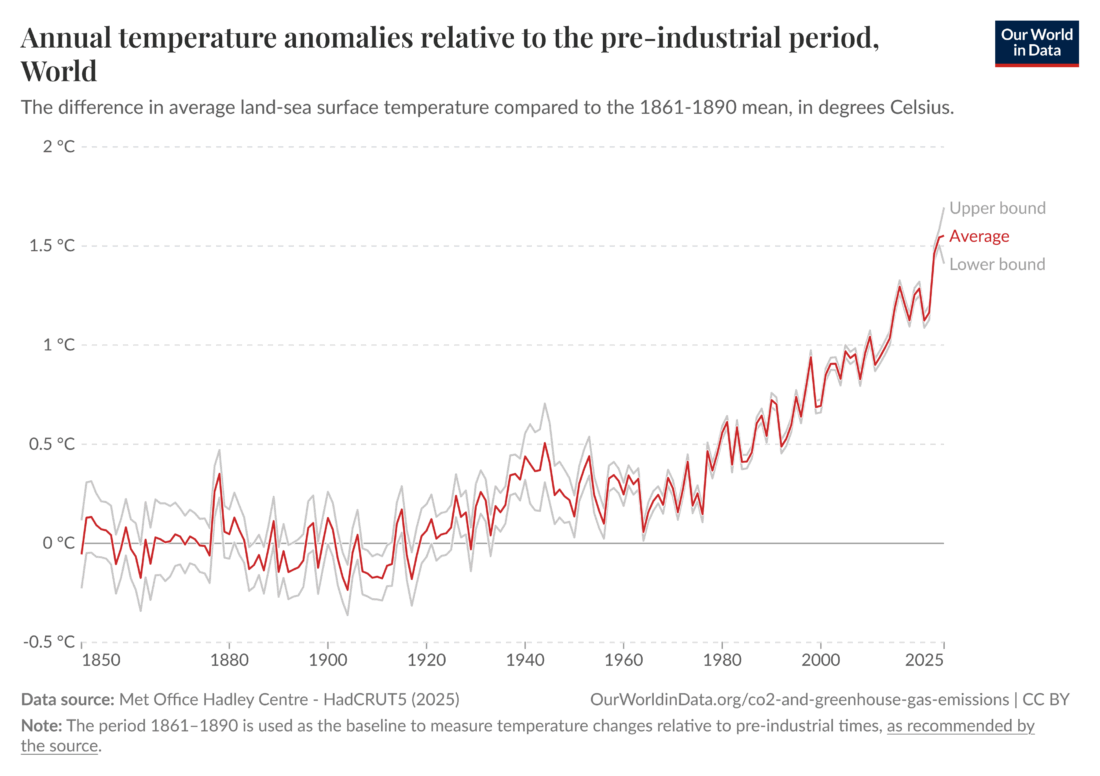 Figure 3
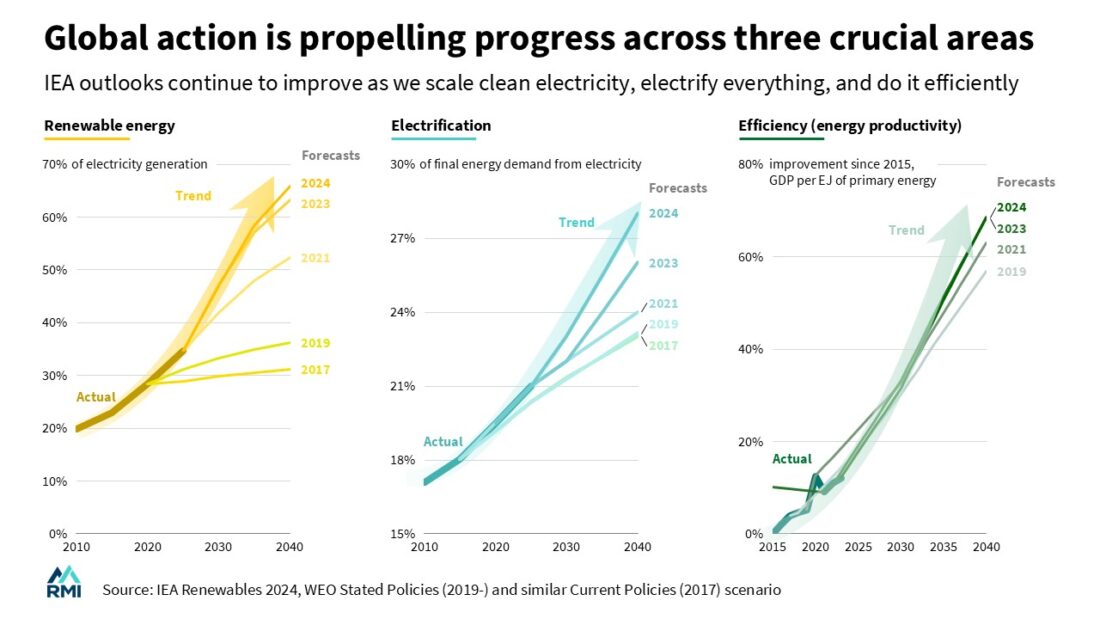 Figure 4
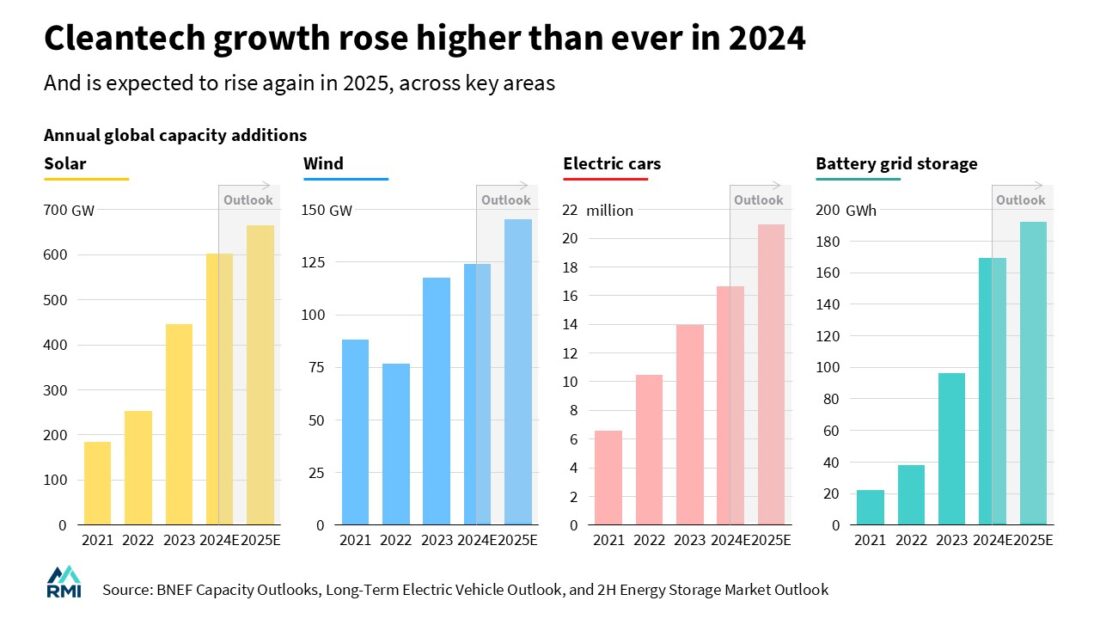 Figure 5
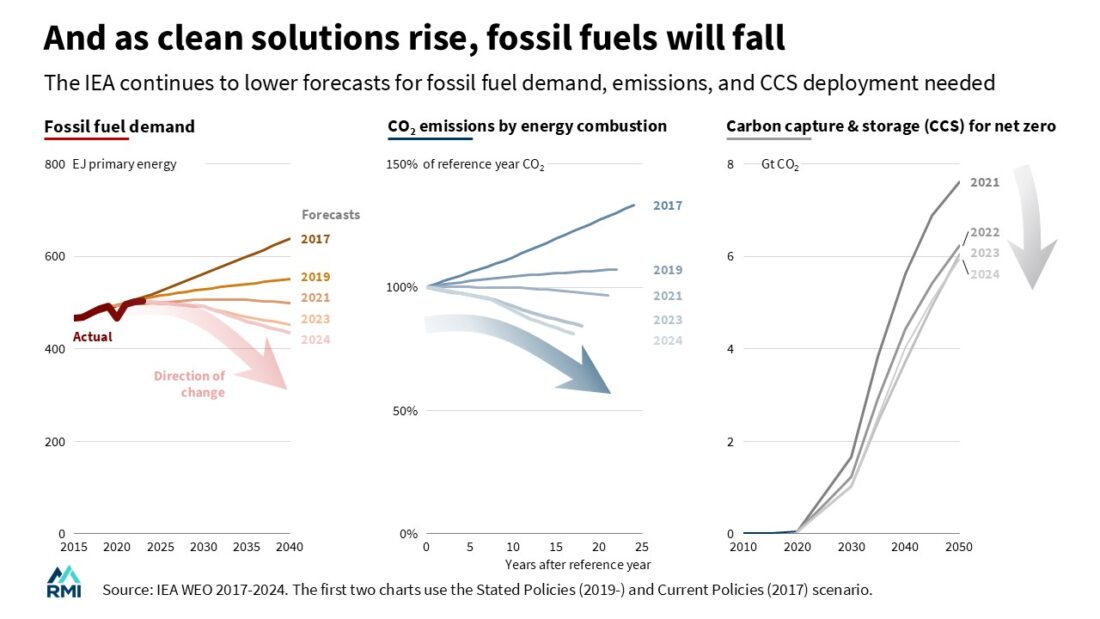 Figure 6