We Are Not Prophets

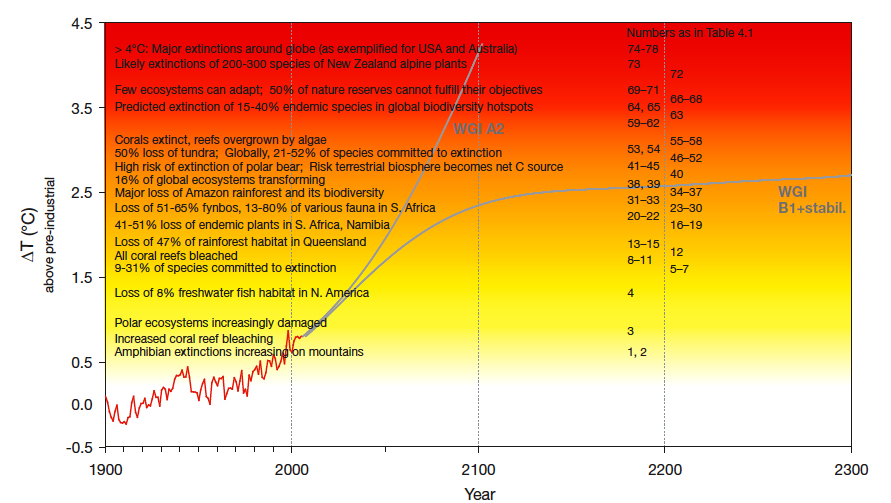
We are not prophets. None of us are, but like biblical prophets, we stand on the top of the hill and warn about a coming Armageddon (remember the “self-inflicted genocide” in my first blog post). The tools that we use to try to predict the future are different: the biblical prophets used divine inspiration while we use computer simulations. One attribute that we have in common is that the prophecies are for a relatively distant future beyond the lifetime of the prophets.

In a sense, the Poperian interpretation of the scientific method is about prophecies (see the June 18 blog). It is based on refutability. We develop hypotheses and theories based on everything that we know, then we test these theories. If the tests fail, we change the theory. This amounts to prediction of future results.

One of the best demonstrations of the scientific method came spectacularly to light only recently. On July 4th, the European Organization for Nuclear Research (CERN) announced the experimental observation of the decay of a new particle that resembles the Higgs boson. The Higgs boson was predicted to be the evidence for the existence of the Higgs field, a precursor to today’s elementary particles. The particle and the field are named after Peter Higgs, who predicted the mechanism and the existence of the particle in 1964. At about at the same time, two other teams published papers predicting similar mechanisms. For almost 50 years, experimentalists tried to find such a particle until CERN announced that they found what “looks to be” the long sought particle. The results are still being analyzed to determine the particle’s properties.

Throughout the 50-year wait, many well known physicists made bets about the existence of these particles. A recent article in the New York Times reports on the settlement of some of the debts: Stephen Hawking admits that he lost his $100 bet with Gordon Kane. Guido Tonelli, a CERN physicist that was in charge of one of the groups that did the experiment, said that if he were to collect on all the bets that he made, he would be a rich man. Janet Conrad, a physicist at MIT, admitted to losing her own bet with Frank Wilczek from the same institute. The bet was for 10 chocolate Nobel coins that you can buy in the Nobel store in Stockholm, Sweden.

These are all cute bets on future results, but the stakes are very low. If the Higgs boson had not been found, eventually a new theory would have developed, with different predictions, to occupy the productive time of more physicists. Peter Higgs would probably not have gotten his well deserved Nobel Prize (my “safe” prediction for next year’s prize) but some other well deserving physicist would have been the beneficiary.

I already mentioned another kind of payout in a previous blog (May 7) that describes a letter that was published in the on-line publication Business Insider on April 11, 2012, and signed by 49 former NASA employees. This list included seven Apollo astronauts and two former directors of NASA’s Johnson Space Center, all of whom called NASA to move away from climate model predictions and to limit its stance to that which can be empirically proven. The letter states that, “We believe the claims by NASA and GISS, that man-made carbon dioxide is having a catastrophic impact on global climate change are not substantiated.”  The writers cite reasons for this doubt:

NASA is relying too heavily on complex climate models that have proven scientifically inadequate in predicting climate only one or two decades in advance…There’s a concern that if it turns out that CO2 is not a major cause of climate change, NASA will have put the reputation of NASA, NASA’s current and former employees, and even the very reputation of science itself at risk of public ridicule and distrust.

The emphasis here is the last sentence. If the predictions turn out wrong – we lose face.

In my opinion, the only way to address future uncertainty of the impact of global climate change is through the “purchase” of a global insurance policy that will put resources in mitigation and adaptation. This is not so different from insuring ourselves against fire, theft, or flood. The difference is mainly in scope and the singularity of the threat. I will try to discuss it in future blogs.

The issue is not so much the accuracy of the prediction as the magnitude of the impact when the predictions come to roost. Our difficulties in predicting the future do not guarantee that the future will be better; there is probably an equal chance that the future will come out worse than predicted. This does not relieve us of responsibility, however – in fact, it makes it all the more important that we take steps to minimize possible negative impact – the same as we do with any other insurance policy that we purchase.

Posted in Climate Change | Tagged , , , , , , , , , , , | 4 Comments

Is Algebra Necessary? – Yes It Is!!!

I’ve been living with this question for a long time – starting with my own son when he attended Middle School (he is now 45, a Managing Director in Greenwich Capital, with his own Middle School aged children).

On Sunday, July 29, the question got a renewed focus with an article titled “Is Algebra Necessary?” in the cover Op-Ed of the New York Times, written by Prof. Andrew Hacker, a colleague of mine from the City University of New York.

I am spending my time trying to democratize the issue of Climate Change by writing a book that I have designated as a textbook for the general public; writing this weekly blog; teaching General Education courses on the topic and founding an undergraduate program designed to lower the communication barriers between the Natural Sciences and the Social Sciences.

The common thread in all these activities is an attempt to democratize the necessary decision making process required to address these climate issues that are so essential to continued human existence. I make the point that the main stumbling block we face is the need to expand science education to the general public, so that decisions that are based on interactions between humans and the physical environment will adhere to a common set of principles.

Suddenly, Professor Hacker tells me in his opinion piece that I must do this without algebra. Here are his arguments:

My question extends beyond algebra and applies more broadly to the usual mathematics sequence, from geometry through calculus. State regents and legislators — and much of the public — take it as self-evident that every young person should be made to master polynomial functions and parametric equations.

This debate matters. Making mathematics mandatory prevents us from discovering and developing young talent. In the interest of maintaining rigor, we’re actually depleting our pool of brainpower. I say this as a writer and social scientist whose work relies heavily on the use of numbers. My aim is not to spare students from a difficult subject, but to call attention to the real problems we are causing by misdirecting precious resources.

According to the data in the article, one quarter of ninth graders fail to finish high school. In South Carolina, it is 34% and in Nevada 45%. Algebra, according to this account (based on chats with educators) is the main culprit. Furthermore, he states:

Another dropout statistic should cause equal chagrin. Of all who embark on higher education, only 58 percent end up with bachelor’s degrees. The main impediment to graduation: freshman math. The City University of New York, where I have taught since 1971, found that 57 percent of its students didn’t pass its mandated algebra course. The depressing conclusion of a faculty report: ‘failing math at all levels affects retention more than any other academic factor.’ A national sample of transcripts found mathematics had twice as many F’s and D’s compared as other subjects.

The article makes an argument that not teaching algebra to everybody does not mean not teaching quantitative reasoning:

Quantitative literacy clearly is useful in weighing all manner of public policies, from the Affordable Care Act, to the costs and benefits of environmental regulation, to the impact of climate change. Being able to detect and identify ideology at work behind the numbers is of obvious use. Ours is fast becoming a statistical age, which raises the bar for informed citizenship. What is needed is not textbook formulas but greater understanding of where various numbers come from, and what they actually convey.

He suggests that we replace algebra with “citizen statistics” that will include topics such as personal finance and how to compute the “Consumer Price Index.”   The notion is that we should teach skills to students that will be useful in the job market and should not teach difficult abstract concepts that make them want to drop out of school.

Hacker is talking about the heart of elementary algebra: variables that represent numbers and the rules that apply to these variables. To use a relevant example – any estimate of environmental impact requires an estimate of future growth of quantities such as population and economic activities. With a constant growth rate, this is calculated as exponential growth, and involves calculation with exponential functions related to logarithmic functions. These functions are usually taught in schools in pre-calculus, a level that is more advanced than elementary algebra and only selectively required, depending on the track that students are taking. Many students that take environmental courses have never taken pre-calculus. One can teach exponential growth without relying on exponential functions by instead using the concept of doubling time. However, one needs to manipulate simple one variable equations in order to be able to estimate the needed information. The simplest graphing requires ability to work with slopes, intercept and scale – you cannot do that without elementary algebra.

Even simple things such as unit conversion and percentage calculations need elementary algebra.

Political decisions will need to be made based on interactions with the physical environment. These will require a kind of literacy test for the ability to understand the data on which the decisions are being made. To exclude anybody from mastery of these skills means to give up on them. We don’t want to go in this direction.

There is no question that the teaching of mathematics, perhaps more than any other subject, can be improved. But the “improvement” cannot be done by excluding students that have difficulties. No, we have to redouble our efforts so as to reach these students.

Posted in Climate Change | Tagged , , , , , , , , , , | 8 Comments

Climate Change as a Bridge Maker

For many years, I made my living by teaching Physics and focusing my research activities on alternative (to fossil fuels) energy sources. My primary focus was on solar energy, occasionally straying into nuclear waste disposal, energy storage and related topics. When I went to parties or other activities that involved random close encounters with strangers, conversations often started with the typical prompt of, “What do you do?” I used to respond that I taught Physics. The usual responses were: “Oh! You must be very smart…” or “I always had difficulties with Physics…” These responses almost always had the effect of shifting the chats to safer (less science-y) grounds.

In 1998, the year that marked a large heat wave in Europe and massive death of the Great Barrier Reef corals, I completely shifted my research and most of my teaching to focus on climate change.

Now, the casual conversations start with the same question but they proceed on different tracks. Everybody has an opinion on climate change. The topic is in the news and in the political debate, with deniers, skeptics and action advocates speaking with almost equal, what I call, “messianic fervor.”  It’s a great opportunity to bridge the “two cultures”.

Two weeks ago I returned from a scientific conference on Climate Change in Seattle.  I published the main themes of this conference here, in order to emphasize the interdisciplinary aspects of the field. At that conference I presented two papers.

One of them I am going to briefly describe here: For about five years I have collaborated with Lori Scarlatos, a Professor at Stony Brook University that specializes in game design with educational objectives. Our “game” was initially called “Intelligent Energy Choices”, a name that morphed several times over the project’s various iterations. In this “game” the world is represented by the 25 most populated countries and players take the roles of said countries’ “Heads of State.”  Their job is to advance the well being of their countries without endangering the planet in the process. They do this job mainly through the purchase of energy to support their GDP (Gross Domestic Product) growth. The initial conditions of this “world” are derived from real data taken mainly from the World Bank in a fixed reference year. The reference year we used was 2003 so as to give students the opportunity to compare the world of their design with the evolution of the real world through comparison of their countries’ data with the World Bank data after 2003.

In academic settings (as opposed to commercial settings), we generally present the work in various conferences as we go along, so as to benefit from feedback. We presented aspects of this work in an Energy Conference that took place at Stony Brook. A comment from a conference participant was very revealing and rewarding. He said, “This approach can be used in any field that involves complex societal issues that are anchored on science.”  His particular interest was health care policy.

The Seattle conference on Climate Change was obviously not the only scientific conference on Climate Change that is being held in 2012. Googling “Climate Change conferences 2012” produces 115,000,000 results. I obviously didn’t check for repetitions and relevance, but going through the first 20 entries clearly showed the wide scope of the field, with many entries advertizing themselves as “working at the intersection of environment and human needs”.

The Seattle meeting was organized by an organization called “Common Ground Publishing.”  Common Ground takes:

Some of the pivotal ideas and challenges of our time and builds knowledge communities which cut horizontally across legacy knowledge structures. Sustainability, diversity, learning, the future of the humanities, the nature of interdisciplinarity, the place of the arts in society, technology’s connections with knowledge, the changing role of the university—these are deeply important questions of our time which require interdisciplinary thinking, global conversations, and cross-institutional intellectual collaborations. (From the Program of the conference)

The conference itself was, by the standard of such conferences, rather “intimate.”  It included 250 registered participants from 35 different countries. There were no “skeptics” or “deniers.”  There were no policy makers and there was no press of any sort. There were only “like minded” participants that came from different directions and backgrounds. There was a lawyer from Berkeley who was trying to sue the US for contributing to the drowning of a Pacific island; there were speakers who were trying to map vulnerable locations inhabited by Native Americans in Alaska and the Northwest. There were Intermediate and High School teachers that described efforts to use Climate Change to teach STEM (Science, Technology, Engineering and Mathematics) topics in the corresponding schools, etc…

There were no loud voices or “messianic fervor” – but it was a great time and a good opportunity for extensive networking.


Posted in Climate Change | Tagged , , , , , , , , , | 5 Comments

Dislike of Science – Who Is To Blame and What Is Being Done About It?

As was mentioned in previous blogs (see for example the June 18 blog), one of the main challenges to democratization of the climate change issue is the public dislike of science. As a result, public ignorance of the driving forces of climate change and the consequences of inaction constitute a serious threat. Our contributions to chemical changes in the atmosphere alter the energy balance with the sun, and hence, the climate (see July 9 blog); it is dangerous that people cannot recognize this.

To democratize complex issues such as climate change, the global voting public needs to be educated in the fundamentals of science and be comfortable dealing with data and numbers. The alternative is to hire epistemological lawyers that make decisions for us. Many scientists would like to serve in this role (see May 21 blog) – but we can do better.

This is a big job that will take a long time. It can be done through the educational system but we have to remember that climate is global so it has to include everybody. But we also have to remember that the global illiteracy rate is more than 10% (2011). This includes overly populated countries such as India (24%) and Bangladesh (44%). We saw (July 9 blog) that even in developed countries such as the US (14% lack Basic Prose Literary Skills), close to 50% of the population do not believe in evolution or climate change, but 77% do believe in the possibility that extraterrestrials have visited earth. In my (optimistic?) estimate it will take a few generations to accomplish the educational objectives that will allow informed, individualized, decision making that will formulate collective policies such as efforts for mitigation and adaptation to climate change. We cannot give up and we have to start now.

Given the sorry state of science education and the general failure of many education models, we simply have to do better, and we have to engage more people in this effort, We have to start to build bridges. Fortunately, the need for this is getting some recognition. This blog, and others like it, are a manifestation that technology is a big help.

My audience here is the World and I am getting feedback in form of comments, emails and tweets from all over the world. A few years ago, the only “audience” that I could approach was my students and my family. I am paid to enable my students to learn, but with my family I have to be careful- I cannot cross the line into preaching. I cannot even attempt to give them the skills necessary to make the judgment by themselves; I can only hope that the school system will do the job. With students, it’s a bit easier because they are paying me to provide them with the skills.

In this respect, teaching science is more difficult than teaching any other subject because it’s more vertical. One set of skills is being supported by a different set of skills that need to be mastered first. In academic lingo we call these prerequisites.

Here is how bridges can be built:

  • Professionals will have to learn how to be “bilingual” – in other words, scientists will have to learn how to talk to non-scientists without scientific jargon. An AP report by Karl Ritter quotes US climate scientist Robert Corell speaking to his fellow scientists at a meeting in Copenhagen on the melting of the Arctic ice: “Stop speaking in code. Rather than ‘anthropogenic,’ you could say ‘human caused”.

“There’s a kind of frustration on the part of many scientists about not being able to get points across to the public,” said NAS president Ralph Cicerone; as examples, he pointed to Earth’s age, biological evolution, the teaching of evolution, and climate change. Arthur Lupia, a political science professor at the University of Michigan, said scientists must revise their approach to communication in order to compete for the attention of their audience. “Failure is common in attempts to communicate on science with the public. Attention is scarce, and working memory is very limited in capacity,” he said. “We don’t get a free pass because we are experts.” His advice to educators is to appeal to the core values, fears, and aspirations of the listener, “not by dumbing things down, but by smartening up how we convey what we know.” Doing that requires using concrete examples that the audience cares about, not abstractions.

  • Colleges, universities, and even high schools, will have to learn how to be both thematic and disciplinary, covering topics like climate change, evolution, cosmology, the history of the atomic bomb, etc. in addition to traditional physics, chemistry, political science, history, etc. Many colleges and universities, including my own, include general education requirements for the entire student population. The general education includes science requirements. In the discussion about what kinds of courses to include, there is often tension between disciplinary and interdisciplinary topics. One of the arguments against interdisciplinary courses is that students need to master the disciplines before they can approach the interdisciplinary topics. On the other hand, there is an opportunity to use these general education courses as a recruiting ground for the disciplines that constitute the basic departments of all of our schools. I will expand on this issue in future blogs.
  • Public communication tools such as newspapers, TV, radio, books, internet, blogs, etc. will have to learn how to avoid sentences such as “many scientists say….” and will instead hire people that can explain issues from first principles without the use of code words.

In a recent opinion page in the New York Times, David Leonhardt writes about the difficulty of relying on either carbon tax or cap-and-trade policies to promote a switch to different energy sources. He speaks of the necessity of combining methods- raising the price of “dirty” energy, while fostering new solutions. Maybe there is an alternative way to achieve the objective:

Those others things, in the simplest terms, are policies intended to help find a breakthrough technology that can power the economy without heating the planet. “Our best hope,” says Benjamin H. Strauss, a scientist who is the chief operating officer of Climate Central, a research group, “is some kind of disruptive technology that takes off on its own, the way the Internet and the fax took off.”

It might just be that the “disruptive technology” could be educating the general public to accept higher energy prices if they are needed to prevent irreversible atmospheric chemical changes that might lead to catastrophic climate consequences. There is no law that I know about that says energy prices must remain as low as they are now in the US. They are already much higher in most of the world.

Posted in Climate Change | Tagged , , , , , , , , | 1 Comment

Fourth International Conference on Climate Change July 12 &13

I have just returned from a climate change conference in Seattle, Washington where I have presented some of our group’s work. I would like to share with you a list of the main themes of the conference to illustrate the broad scope and cross-disciplinary nature of this topic.  I will have more to add on the matter next week.

Theme 1: Scientific Evidence

What is evidence is there of climate change?

  • Paleoclimatology: the earth’s climate in a long view
  • Climate change today: examining the data
  • Ice cap reduction and glacial melt
  • Sea level change
  • Floods, drought, forest fires, hurricanes and other sporadic events
  • Albedo or measuring the earth’s reflectiveness
  • Meteorology and climate informatics
  • Equilibria and disequilbria: change processes and countervailing tendencies
  • Climate measurement processes, methodologies and technologies
  • Reading complex, dynamic and unstable systems
  • Developing local and global climate models
  • Change scenarios: slow, rapid, abrupt or episodic

Theme 2: Assessing Impacts in Divergent Ecosystems

What are the impacts of climate change on natural environments?

  • Ocean currents and el Niño
  • Riverine ecosystem impacts
  • Mountain ecosystem impacts
  • Coastal ecosystem impacts
  • Marine ecosystem impacts
  • Forest and grassland ecosystem impacts
  • Impacts on wilderness and protected areas
  • Impacts on specific biomes
  • Impacts on biodiversity, potential extinctions
  • Hardiness zone migration
  • Regional variations: temperature and rainfall

Theme 3: Human Impacts and Impacts on Humans

What evidence is there that human activity has contributed to climate change, and what are the impacts of climate change on human life?

  • Anthropogenic factors in climate change: determining the relative contribution of natural and human causes
  • Impacts of carbon dioxide and other greenhouse gases
  • Land use patterns, agriculture and livestock husbandry and deforestation as factors in climate change
  • Impacts on humans: agriculture, fish stocks, food supply, health
  • Human settlements and sea level rise
  • Impacts on humans: water supply, desertification
  • Impacts on humans of intense weather events, natural disasters and ecological surprises
  • Impacts of climate change in the developing world

Theme 4: Technical, Political and Social Responses

How do scientists, technologies, policy makers and community members respond to climate change?

  • Environmental policies in response to climate change
  • Controversy and denial: politics, the media and scientists with dissenting views
  • The international politics of climate change
  • The past, present and future of international agreements
  • Education and awareness for management of global climate change
  • Protected areas and preservation of biodiversity: ‘corridoring’ and other strategies
  • Strategies for sustainability
  • Human adaptive strategies
  • Technologies of mitigation: carbon dioxide sequestration, solar shades and other processes
  • Alternative and renewable energy sources: technologies, policies and strategies
  • Carbon taxes, offsets and trading
  • Emission standards
  • Climate ethics and the precautionary principle
  • Eco-development, eco-efficiency


Posted in Climate Change | Tagged , | 5 Comments

We Need to Do Some Serious Work if We Want to Democratize Climate Change Decisions.

A survey that was published in a recent OECD report has found that only 5% of American students expect to pursue a career in the sciences by age 30.

We are in good company – countries such as Brazil, UK, Canada and the Netherlands have similar statistics. Estonia is the highest (among the countries that were surveyed – at around 30%). Unfortunately, the survey probably never questioned the students on their understanding of what science entails. If they have similar attitudes to students that I know, science for them is associated with disciplines such as Physics, Chemistry and Biology that require a lot of math – many of them have decided that they hate math and don’t want to be associated with it any longer than they absolutely must. Presumably, nobody told them that they are now part of the physical world and if they want to participate in the decision-making process of governing the place that they and their families live in – they had better change their attitude about science. The “Two Cultures” (C.P. Snow – see the previous blog) cannot stay separated.

One of the questions that was surveyed by the National Science Foundation (NSF) to probe factual knowledge among the American public was, “Human beings, as we know them today, developed from earlier species of animals – true or false?” 47% of Americans surveyed had the correct answer (true). For comparison, they also provide the score for international respondents: South Korea (64%), EU (70%), Japan (78%), India (56%), China (69%) and Russia (44%).

Recent reports by Yale University on American Global Warming Beliefs and Attitude found that Americans can be divided into six “distinct” groups in terms of their attitudes to climate change. The groups are shown in the figure below, together with the relative proportion of responses in each group (2009).

In the “Alarmed” group, 88% of the respondents believe that humans are the main culprits. In the “Concerned” group, that belief in mostly human culpability is reduced to 79%.

Interestingly, but not surprisingly, a similar survey that was conducted among frequent visitors to Science and Technology museums found that 45% of the frequent visitors are in the “Alarmed” category and 29% in the “Concerned” category. In total, 66% of the frequent museum visitors understand that global warming is mostly caused by humans.

The Christian-Science Monitor has recently reported on a survey that asked whether the respondents believe aliens have visited Earth – 36% of those who were surveyed responded that they do, 48% aren’t sure, and 17% said they don’t believe so. This means that more than three in four Americans (77%) think there are signs that suggest aliens have visited the Earth, whether or not they’ve made up their minds about the question.

With some margin of error, the percentage of ignorance in all three questions is about the same. However, the consequences are very different. As long as we keep people who don’t believe in evolution and people who believe in visits from extraterrestrials away from teaching (not an easy task) the damage is mostly personal. Nobody is asked to “vote” on these issues.

The climate change issue requires real remedies in the form of changes to the way that we and our children and grandchildren conduct our individual and collective lives. It also requires spending large sums of money that otherwise would go to address different needs. In democratic societies, these actions require public support.  The public is repeatedly required to make informed choices. If the public cannot make informed choices based on first principles, it will search for “epistemological lawyers”. Climate scientists would like to serve in this role (see my May 21 blog) but they are not the only ones – it becomes a hotly debated political issue that in most cases leads to inaction. Even many “skeptics” admit that in the near future (“end of now”) we will need to change our energy choices to ones that do not result in human-induced climate change because of irreversible changes in the chemistry of the atmosphere. They just question the timing (not now – later). We are starting to find out that the necessary changes are so fundamental that to accomplish them we require basic changes in our educational system.

Some movements in this direction will be discussed in the next blog.


Posted in Climate Change | Tagged , , , , , , , , | 6 Comments

Climate Change and the Tragedy of the Commons.

Garrett Hardin was a professor of Biology in Santa Barbara, California. In June 1968 he delivered a presidential address before the Pacific Division of the American Association for the Advancement of Science (AAAS). The lecture was on the future of nuclear war – drawing the conclusion that: “It is our considered professional judgment that this dilemma has no technical solution. If the great powers continue to look for solutions in the area of science and technology only, the result will be to worsen the situation.” A few months later, he  expanded on this topic in an article in Science titled, “The Tragedy of the Commons.” It became an almost instantaneous hit and an effective lasting teaching material. Googling the title today produces more than 400,000 hits. Combining it with “Climate Change” results in 85,000 hits. I use it regularly in classes on environmental issues and in talks on Climate Change.

Two paragraphs from the paper are sufficient to demonstrate the connection:

The class of “no technical solution problems” has members. My thesis is that the “population problem,” as conventionally conceived, is a member of this class. How it is conventionally conceived needs some comment. It is fair to say that most people who anguish over the population problem are trying to find a way to avoid the evils of overpopulation without relinquishing any of the privileges they now enjoy. They think that farming the seas or developing new strains of wheat will solve the problem-­technologically. I try to show here that the solution they seek cannot be found. The population problem cannot be solved in a technical way, any more than can the problem of winning the game of tick-tack-toe. In reaching this conclusion, I have made the usual assumption that it is the acquisition of energy that is the problem. The appearance of atomic energy has led some to question this assumption. However, given an infinite source of energy, population growth still produces an inescapable problem. The problem of the acquisition of energy is replaced by the problem of its dissipation… The arithmetic signs in the analysis are, as it were, reversed; but Bentham’s “The Tragedy of the Commons” develops in this way. Picture a pasture open to all. It is to be expected that each herdsman will try to keep as many cattle as possible on the commons. Such an arrangement may work reasonably satisfactorily for centuries because tribal wars, poaching, and disease keep the numbers of both man and beast well below the carrying capacity of the land. Finally, however, comes the day of reckoning, that is, the day when the long-desired goal of social stability becomes a reality. At this point, the inherent logic of the commons remorselessly generates tragedy. The goal is still unobtainable.

The National Parks present another instance of the working out of the tragedy of the commons. At present, they are open to all, without limit. The parks themselves are limited in extent–there is only one Yosemite Valley–whereas population seems to grow without limit. The values that visitors seek in the parks are steadily eroded. Plainly, we must soon cease to treat the parks as commons or they will be of no value anyone. (Hardin, G.  Science 162, 3859 (1968))

It doesn’t take a fertile imagination to extend the concept of the National Parks to the Planet as a whole. It is a bit more complicated to show that the “common pasture” issue,  so central now in game theory to debate a winning strategy that will benefit all the owners without harming the individual players, is equivalent to the NIMBY (Not In My Back Yard) phenomena that is a major challenge in addressing all environmental issues, including climate change. The NIMBY challenge, in the context of climate change will be addressed in future blogs.

Hardin’s world was different than ours. The world’s population was approximately half the present population (7 billion in October 2011) and systematic measurements of man’s contributions to changes in the chemistry of the atmosphere and the resulting changes in the energy balance with the Sun, were just begining. We were in the middle of the Cold War, less than one generation removed from Hiroshima and Nagasaki with MAD (Mutually Assured Destruction) as the dominant theory to prevent global suicide.

Science was connected to all of this only through attempts to design better destruction tools- not to solve any problems. This was the time that followed C.P. Snow’s  1959 publication of “The Two Cultures” (C.P.Snow,  The Two Cultures. London: Cambridge University Press (2001)). This small book that has recently emerged as one of the most influential books since WWII has made the point that one of the “cultures” is scientists and the other one is everybody else and that they don’t know how to talk to each other. This small book, like Hardin’s paper, came out also of a lecture (in Cambridge University).

What I understand in Hardin’s “no technical solution” is something that science can not solve. Both Hardin and Snow were scientists, although with broader interests, that have tried to build some bridges. Snow was advocating developing a common language. Hardin, in my view, was desperate and believed that if there are no “technical solutions” there are no solutions. Natural Science and Social Science in their time were separate. They are still separate in most universities, but as I have tried to show in the previous blog, Climate Change is forcing us to recognize that they are not separate any more. Building bridges now is not only the right thing to do but it is essential.

More about this – next week.


Posted in Climate Change | Tagged , , , , , , , , , , , | 9 Comments

Climate Change and the Nature of Science: The Carbon “Tipping Point” is Coming

The two attached pictures are schematic diagrams of the circulation of carbon on Earth (IPAA Report (2001) – the Carbon Cycle).  If I Google “Carbon Cycle Diagram” in the image mode, I get close to a million entries.  Most of these entries look like the second image – not the first.  What is the difference?  The second one doesn’t have numbers (photoshopping on my part).

The numbers in the arrows of the first image represent fluxes of carbon per year in units of billion tons of carbon.  The numbers outside the arrows represent quantities in the same units of billion tons of carbon. The man-made (anthropogenic) contributions are shown by the dashed red arrows.

Scientifically, it is very difficult to argue with the second diagram.  I have to make qualitative statements like, “I don’t believe that carbon is exchanging between the atmosphere and the oceans.”  It is much easier to argue – scientifically – with the first diagram.  If I have the background and tools, I can either try to follow the original measurements or to take the measurements myself.  It doesn’t really matter if the job is too big; the fact that, in principle, I can do it, makes the first diagram science, while the second figure is obviously a good qualitative description but is not actually science.

Back to deniers and skeptics: I have been approached by friends (some of them with good science backgrounds) and students, who tell me (nicely) that since carbon dioxide is a “natural” product, it cannot be bad, so the EPA (Environmental Protection Agency) should not have to identify it as a pollutant.  Sometimes the conversations have gone on to suggest that if I want to avoid global warming, I should simply stop breathing (since they know that we exhale carbon dioxide).  They have asked me kindly to get off their backs and stay away from commenting upon their energy usage.  In the cases where conversations got more heated and evolved to include other greenhouse gases, the suggestions went as far as, “Well, why don’t we regulate cows so they’ll stop farting.”

Well, here is where science comes in.  When it comes to the carbon cycle, we can analyze the numbers.  We can add up the amount of carbon that is going from the earth to the atmosphere, and subtract that which is doing the reverse – entering the earth from the atmosphere.  (The carbon in theses fluxes mainly takes the form of carbon dioxide.)

The result? It shows that there are 3.1 billion tons of extra carbon being added to the atmosphere.  Since carbon dioxide is a very stable compound, it will stay in the atmosphere for many years.  If we assume that this same kind of flux will be more or less maintained from now until the end of the century (the “end of now” time-frame that I talk about in my book), the atmospheric concentrations of carbon will grow by close to 50%. This is a major difference that directly affects our energy balance with the sun.

3.1 billion tons is less than half of what we emit into the atmosphere (red broken arrows in the picture).  The difference means that both the earth and its oceans have now become net “sequesters,” or absorbers of the excess carbon dioxide that we produce.  Vegetation and soil, in the form of enhanced growth because of the carbon dioxide that fertilization contributes, and areas of the ocean that absorb carbon dioxide, contribute as well.  As the temperature rises, the capacity of these methods of compensation is expected to decrease, until they reach the point where both the earth and our oceans no longer absorb the carbon dioxide, but instead reverse themselves to be net emitters.  Some would call this a “tipping point.”

This makes us part of the physical system that we investigate, and negates, at least in my mind, the option of waiting with remedies until the consequences of these changes are absolutely certain.  Science tells us that the danger exists, so the remedies should be approached as an insurance premium.

We are now busy searching for planets outside the solar system.  We are particularly interested in finding planets in the habitable zone of stars- an area defined as a zone around a star, within which it is possible for a planet to maintain liquid water on its surface.  We have, up to now, been able to identify more than 700 exoplanets; last December, NASA announced the its discovery of the first exoplanet in a habitable zone of another star.  It is a narrow zone, but it offers the best chance so far to find life forms outside our own planet.  We are doing well, but we have a long way yet to go in that quest.  On a cosmological scale – destruction of a habitable zone is not very difficult – Venus can serve as a good example. The pace of the atmospheric changes that we are inducing, meanwhile, might lead to the first observable instance of the destruction of a habitable zone.  For a far away civilization, it will be scientific observation.  For us it will be a collective suicide.

Posted in Climate Change | Tagged , , , , , , , , , , | 58 Comments

Democratization and Decision Making: My Four Climate Change Challenges

In the following set of blogs, I will try to outline four major challenges to the democratization of the decision making process that, in my view, are needed to address the challenges that anthropogenic changes in the chemistry of the atmosphere will pose (see the previous two blogs).  These challenges are: climate change and the nature of science; science “hatred”; we are not prophets; and NIMBYism.  I’ll outline each briefly:

Climate Change, the Nature of Science and What Impacts and Constitutes the     “Physical World”

Climate change is a scientific issue. Merriam-Webster defines science (among other definitions) as “knowledge or a system of knowledge covering general truths or the operation of general laws especially as obtained and tested through scientific method” and “such knowledge or such a system of knowledge concerned with the physical world and its phenomena”.  Encyclopedia Britannica defines science as “any system of knowledge that is concerned with the physical world and its phenomena and that entails unbiased observations and systematic experimentation. In general, a science involves a pursuit of knowledge covering general truths or the operations of fundamental laws”.

I can argue with both definitions but especially with the Britannica statement that science involves a  “pursuit of knowledge covering general truths…”  I subscribe to the Popperian definition of the scientific method that is based on refutability and denies the existence of “general truths.”  A theory is “true” until it is refuted by observations; if it cannot be refuted – it is not science.  I will get back to the refutability issue shortly. Right now, I want to focus on the part common to both definitions – science is a “system of knowledge that is concerned with the physical world and its phenomena”.

As was mentioned in previous blogs, I was born in 1939.  The approximate world population at that time was 2.3 billion people.  In October 2011, we reached the 7 billion population milestone.  During my lifetime, almost 5 billion friends were added to my earth family – and I am still kicking.  My expanded family is not only considerably bigger, but also considerably richer in the aggregate.  These developments are changing the nature of the part of the physical world that we live in.  We are now an important part of the physical world on planet earth.  I will quantify this further in future blogs, but when we try to investigate global phenomena such as climate change, we have to include “us” in the system that we investigate.  In medical or legal terms, this process is called self-diagnosis or self-defense.  A common saying is that a lawyer that serves as his own legal adviser has a fool for a client.  The same holds true for a doctor that tries to treat himself when a serious medical issue is involved.  Doctors and lawyers have the option to hire somebody else.  The global human population doesn’t have these options.  We haven’t yet identified an exoplanet that can help.

“Hatred of Science”

Many of us say we “hate” science and students that take my courses, which are identified as science courses, tell me with great pride that they “despise” math.  Most of us either don’t want to or can not afford to study science.  Yet now, we have only two choices: we must either learn science in order to  knowledgeably participate in decisions that will revolve around climate change or quietly suffer the consequences of governmental and other decision making that is centered on scientific issues that affect our daily life.

We Are Not Prophets

The Popperian scientific method is based on refutability.  We develop a hypothesis and/or theory based on everything that we know, and we should be able to test the theory based on predictions for observations that we haven’t yet made.  If the tests fail, we change the theory.  This amounts to prediction of future results.  Since we are part of the system, failure might mean closing the window that allows us to survive.  The science we’re talking about here is more like medicine – we have to make a rational diagnosis about the changes that take place in the physical world, but if our predictions might result in a harmful impact, we will need to act. On this scale, actions to restore equilibrium must become part of the science that we practice.

NIMBYism  (Not In My Backyard)

Climate Change is a global, collective phenomenon that all of us contribute to and that, sooner or later, will affect us all.  There’s no “backyard” that we can try to protect or hide in.  The required remedies are global.  Non-participants tend to freeze the global response and potentially put everybody in danger.

All of these challenges have a single common denominator; all of them can be – and must be – addressed through the educational system.  This is an enormous task and it is global and not simply confined to schools.  In later blogs, I will elaborate on possible networks that can be used and the available time to do that.  It will take a few generations (my definition of the “End of Now” in my book is within the lifetime of my grandchildren).

The Tombstone of Aharon Avigdor Tomkiewicz in Wysokie Mazowieckie, Poland

I had a recent, very personal, “End of Now” experience.  I have just returned from a trip to Poland where I visited the village of Wysokie Mazowieckie, situated between Warsaw and Bialystok.  Before WWII, about 70% of the population was Jewish.  The village was burned by the Nazis and most of the people were murdered, yet, about six years ago, a young local history teacher uncovered one of the two Jewish cemeteries.  He had his students clear the place and find whatever tombstones they could.  The most prominent tombstone found, that now stands erect in the middle of the cemetery and is shown here, is that of Aharon-Avigdor Tomkiewicz, my great-grandfather, who was a shop keeper in the town and died in 1913 – about 100 years ago.  This was my historic “End of Now.”  A great deal has happened since then and a great deal can happen going forward – but we will have to work on it.

Posted in Climate Change | Tagged , , , , , , , , , | 5 Comments

Turning Holocaust “Paper Clips” Into Environmental “Paper Clips”

The story of the Holocaust “Paper Clips” project (read the last blog post) not only
moved me, but inspired me to action.

The book that I wrote – “Climate Change: the Fork at the End of Now”
Momentum Press (2011) – was written as “textbook for the general public,”
In academic terms: no prerequisites!

Yet, in my terms, it also means no preaching.  The book is structured so that
there is almost equal weight and focus on the scientific issues and the social
issues that impact climate change, like population, economics and politics.  The book
is anchored on data from organizations such as the World Bank, the Energy
Information Administration (EIA), oil company databases (mainly BP), the
International Energy Agency (IEA) American and International agencies such as
IPCC, NSF, World Bank, etc.

I tried to set up the book so that students could learn how to extrapolate to
the future without requiring that they be familiar with the details of exponential
growth (no prerequisites!!!) using concepts such as doubling time.  They could
then actually use this skill to try to imagine what the world might be like when,
for example, an “average” Chinese citizen would be as “rich” as an “average”
American, based on current growth patterns.  A chapter titled “What Can I Do?”
that appears toward the end of the book includes mainly activities like creating
personal energy audits and doing carbon footprint calculations.

At the time that the Hudson Falls meeting took place, where I saw “Paper Clips”
for the first time, the book was in print.  It came out in June 2011 and since then,
I have been able to use it for two semesters in two kinds of courses.  One is an “Energy
Use & Climate Change” course that is part of our Second Tier General Education
program.  The other is a second year Honors College Seminar targeted at providing
Honors students with a taste of scientific issues and structured so that half
the time is spent in classroom education and the other half is spent on group
research (typically, three students per group) that focuses on issues in New York
City.

In both courses, the students were asked to read the book cover to cover during
the first half of the semester and were then tested on the material in the midterm
examinations.  The second half of the semester, in both cases, was focused on
related current events.

After I saw the “Paper Clips” movie, I started to think about how I could
individualize climate change and make it more personal for the students.

My first thought was that the best candidate that I had for an
environmental “Paper Clips” equivalent was the personal energy audits and
calculations of carbon footprints.  I did try it in both courses.

The first hurdle that students had to overcome was to understand and handle the
broad spectrum of energy units that our energy bills contain.  Once they learned
to handle the unit conversions, they could add up the amounts of energy from
various energy sources to figure out their total energy use and compare it with
the energy use of their friends and neighbors and with relevant averages in their
City, State, Country and, yes, even the world.

The second issue that they encountered was how to overcome the complexities
of the variety of living arrangements found in a city such as New York.  To get
the appropriate information, they had to interact with their parents, landlords and
whoever actually pays all the electric bills.  For the carbon footprint calculations,
they were not encouraged to go to the internet to get the “carbon coefficients” of
the various fuels.  Instead, despite the fact that many of them had never taken
any chemistry courses (remember, no prerequisites), they had to learn the basic
principles of chemical equations.  This included learning the concept of mole
and how to calculate the carbon coefficients from the basic chemical reactions
of burning the three most common forms of fossil fuels.  They learned what
electricity is, the differences between primary and secondary energy sources,
and why a unit of electrical energy costs about three times more than a unit of
heat energy that we derive by a direct burning of fossil fuel.  (Yes – they learned
the two laws of thermodynamics, but didn’t know they were doing it).

At the end of all this, they learned how and where they could save energy and
how much money those savings would produce.  Now, they can also critically
evaluate advertising that promises them wonders by switching from one fuel
to another or one light source to another.  I am now trying the concept on high
school students and eventually I hope to try it on middle school students, starting
with Whitwell, Tennessee.

These are my environmental “Paper Clips,” and I feel sure that learning how to
do energy audits made my students feel somewhat empowered and that they
were, in a real sense, helping to mitigate the effects of climate change, albeit on
a small scale.

My “dream” (likely unrealizable) is to try to follow Peter Finch in Sidney Lumet’s
film “Network” where, through the broadcasting network, he was able to incite
everybody to stand in front of the window or the terrace and shout, “I’m mad as
hell and I’m not going to take this anymore.”  In the process, he gave a huge boost to the
rating of the network.

In today’s terminology, he was able to create what Richard Dawkins called
a “meme.”  This was a “desperation” meme.  I would like to use it to create
a “meme of hope.”  The transmission of this meme will not be monopolized by
networks but will go through the educational systems – both formal and informal.
In my “dream,” the end result is similar – this meme of hope will be shouted from
the rooftops, windows, and terraces, from the tents, and from any other dwellings
throughout the world.  In all languages, including braille and sign language,
people will be able to shout, “I can do my energy audit and calculate my carbon
footprint (zero is ok) and I am doing it right and helping the planet.”

Once we get even closer to this situation, it will be much easier to achieve the
global and local environment that Gernot Wagner so desires in terms of global
and local regulatory systems.  In the process, everybody learns and we all gain.

With your help we will explore it further.

Posted in Climate Change | Tagged , , , , , , , | 7 Comments