
(Source: Piermont Wealh Management)
To the followers of this blog (starting in April 2012) this title will not be a surprise. I am an old guy and I am seriously thinking about retirement, meaning that I am starting to think seriously on what I will do after retiring. All of this, provided of course, that my health allows me to remain productive. Whatever I will have the opportunity to do, I would like to continue posting about my take on reality on this blog. The difficulty is that much of my thinking and writing here has focused on my teaching and my students. The question that I am asking myself is what I will use to replace this anchor.
A quick look at the statistics of this blog since its inception gives the following numbers:
- 610 blogs since Earth Day 2012
- 1618 posted comments (and another 965 in my spam queue)
- 933,416 visitors with 5,808,384 visits
These are impressive numbers that I would hate to lose. In this and future blogs, I will start, with your help, to expand on a new topic. Right now, my thinking is focused on retrofitting. Below is the Wikipedia definition:
Retrofitting is the addition of new technology or features to older systems. Retrofits can happen for a number of reasons, for example with big capital expenditures like naval vessels, military equipment or manufacturing plants, businesses or governments may retrofit in order to reduce the need to replace a system entirely. Other retrofits may be due to changing codes or requirements, such as seismic retrofit which are designed strengthening older buildings in order to make them earthquake resistant.
Retrofitting is also an important part of climate change mitigation and climate change adaptation: because society invested in built infrastructure, housing and other systems before the magnitude of changes anticipated by climate change. Retrofits to increase building efficiency, for example, both help reduce the overall negative impacts of climate change by reducing building emissions and environmental impacts while also allowing the building to be more healthy during extreme weather events. Retrofitting also is part of a circular economy, reducing the amount of newly manufactured goods, thus reducing lifecycle emissions and environmental impacts.
From my perspective, the term retrofitting has come to encompass a much broader range than what is included in the relatively narrow definition of Wikipedia. The world is fast-changing and all of us must adapt. The Wikipedia description provides useful examples of retrofitting; however, it doesn’t emphasize the important distinction between retrofitting and repairing or fixing. The distinction rests in repurposing, which is an essential element of retrofitting. I will elaborate on this issue and on the requirements in both repairing and retrofitting to be cost effective, in future blogs. However, the fast-changing climate, and other environmental impacts, constitute an important element in the Wikipedia definition that will allow me to refocus my anchor and maintain the present flavor of the blog. I will lose the immediate feedback of students but hopefully will be able to replace it with other audiences. Hopefully, focusing on retrofitting will allow me to work to scale, meaning to start (or finish) at the global scale and converge on immediate targets with expectations of some feedback.
Housing is a good starting point for such an effort. Put campus into the search box and you will get about 55 blog entries. Many of these blogs, at the time of posting, were sent to my college administrators, Faculty Council committees that I happened to serve on at the time, and my students in courses related to climate change. If you go over some of these blogs, you might see students’ comments. Changes in energy use in housing to minimize carbon emissions New York were mandated both by NY State and City (see the June 25, 2019 blog).
It is reasonable to expect that university campuses will lead the way in these efforts. One of the main problems that campuses everywhere face is that most of their buildings are old. In a blog this summer (June 6, 2023), I described a small symposium that I organized during last summer’s Faculty Day, which we celebrate every year at the end of the Spring semester. The symposium was focused on the use of Campus as a Lab in our curriculum. A faculty member from the Health and Nutrition Department gave a talk about opportunities to incorporate environmental considerations when we construct new facilities. With declining enrollment, however, new facilities are rare. To have an impact, we have to focus on standing facilities and learn how to retrofit them.
Examples of retrofitted housing emerged after global environmental disasters. These will probably stay with us, removed from environmental considerations, in the face of other disasters that can now be found hitting many cities around the world. One of the broader social consequences of the COVID-19 pandemic directly resulted from one of the widely-used adaptation tools. It was focused on major advances in computer ability to work remotely through peer-to-peer software advancement in videotelephony and chat services. The most famous company in this effort is Zoom, which took its name from the corresponding verb. The company was formed one year before I started this blog and got its name in 2012, around the same time that this blog started. To appreciate the growth of Zoom’s use, one needs superlatives that don’t exist in the English language (see this page of Zoom statistics for some numbers). Not surprisingly, video-telephoning and video-chatting hasn’t stopped with the ebbing of COVID-19. The development and omnipresence of videoconferencing has enabled a massive number of workers to work from home. The Forbes report cited below summarizes the situation in the US:
As of 2023, 12.7% of full-time employees work from home, while 28.2% work a hybrid model
Currently, 12.7% of full-time employees work from home, illustrating the rapid normalization of remote work environments. Simultaneously, a significant 28.2% of employees have adapted to a hybrid work model. This model combines both home and in-office working, offering flexibility and maintaining a level of physical presence at the workplace [1].
Despite the steady rise in remote work, the majority of the workforce (59.1%) still work in-office [1]. This percentage underscores the fact that while remote work is on an upswing, traditional in-office work is far from obsolete.
By 2025, 32.6 million Americans will work remote
Looking ahead, the future of remote work seems promising. According to Upwork, by 2025, an estimated 32.6 million Americans will be working remotely, which equates to about 22% of the workforce [2]. This projection suggests a continuous, yet gradual, shift towards remote work arrangements.
98% of workers want to work remote at least some of the time
Interestingly, workers’ preference for remote work aligns with this trend. A staggering 98% of workers expressed the desire to work remotely, at least part of the time [3]. This overwhelming figure reflects the workforce’s growing affinity towards the flexibility, autonomy and work-life balance that remote work offers.
At the tail-end of the pandemic, as much of the focus has shifted to local wars in the Middle East and Ukraine, the rich world is experiencing other difficulties. We are dealing with instabilities in the supply chain as well as in the energy markets. These have led to a major increase in inflation, together with major shortages and budget difficulties in developing countries. Central banks are fighting inflation with major increases in interest rates. These trends are being accompanied by population decreases in many developed countries and a decline in population growth in the developing world.
Owners of apartments or homes are holding onto existing real estate that they can finance with long-term low mortgages. However, most people who don’t own real estate cannot buy any because of high prices and expensive mortgages that they can ill-afford. A serious economic stress is developing between commercial and residential real estate. We need less of the first and more of the second. We have to start refocusing on retrofitting commercial real estate to make it desirable in the residential market.
To give some idea about just how much extra commercial real estate there is, one article from this month said that:“In Manhattan, 22 percent of office space was vacant last quarter, or about twice the rate of empty space before the pandemic…”
The idea of retrofitting is to make something that is no longer efficiently serving its original purpose work better in a new context. This is a different way of saying that people will benefit more from the retrofitted product than from the original and the effort should be cost-effective, meaning that the cost of the retrofitting should not exceed the benefits or profits from the action. This economic analysis doesn’t have to be restricted to the immediate parties that are involved in the process. Society can mandate the retrofitting to benefit society at large. Most environmental retrofitting falls into this category. In future blogs, I will try to come up with some quantitative examples.

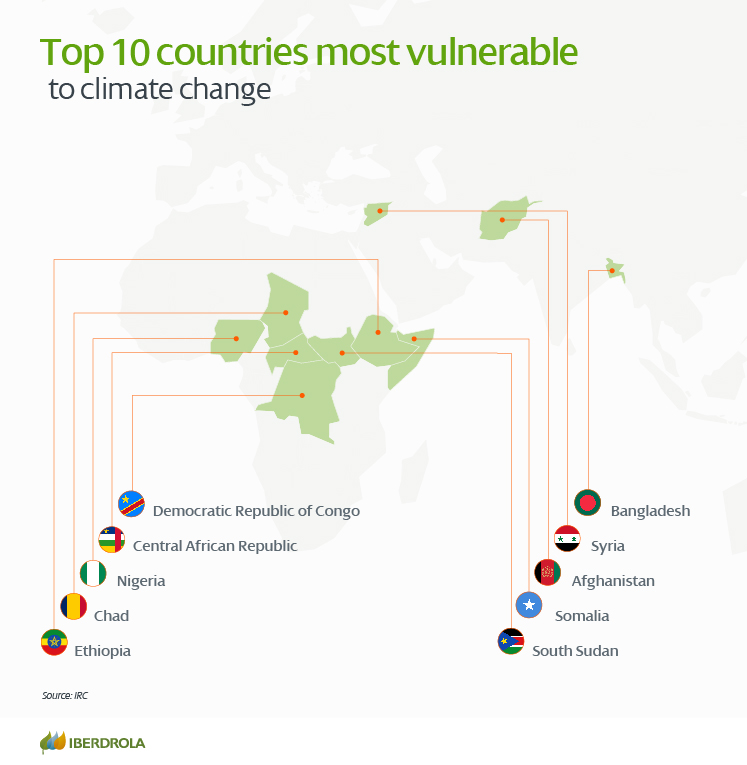 Figure 1 – The 10 countries most threatened by climate change in the 21st century (Source: IRC
 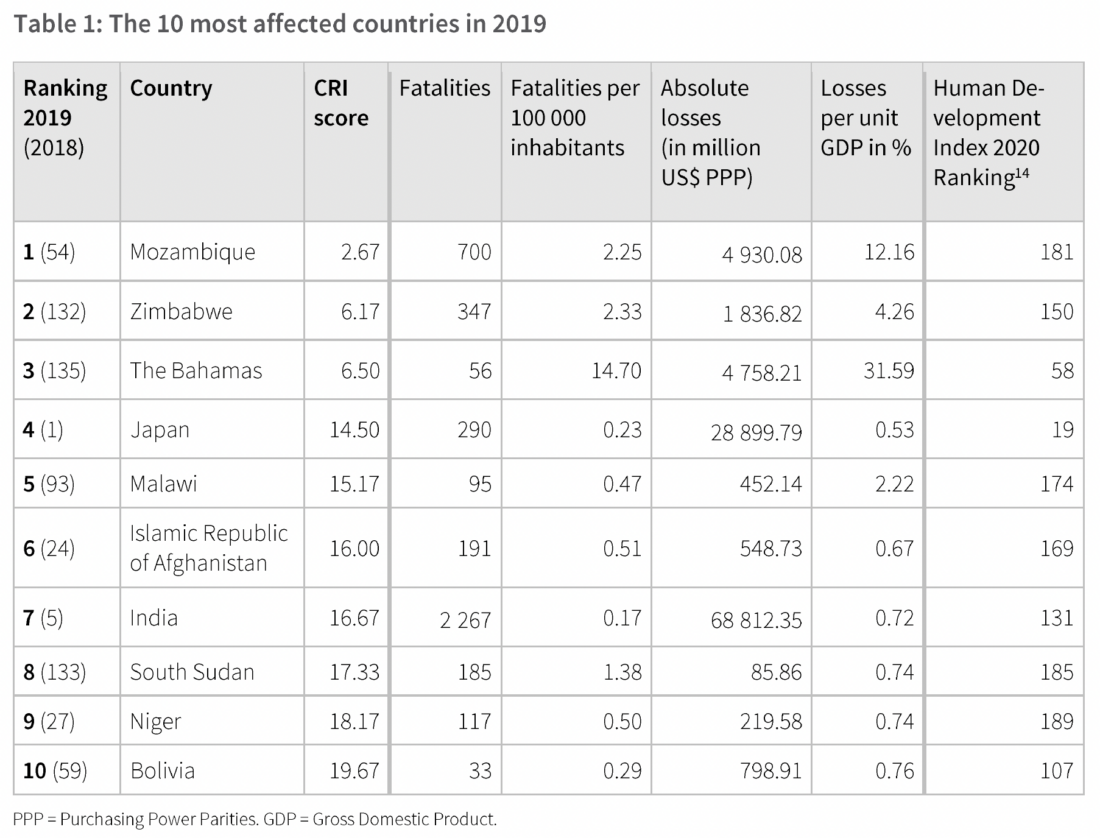 This ranking is independent of the ability to mitigate the damage, but with one exception (Japan) also includes only developing countries. This ranking is based on the Global Climate Risk Index (CRI), summarized below from the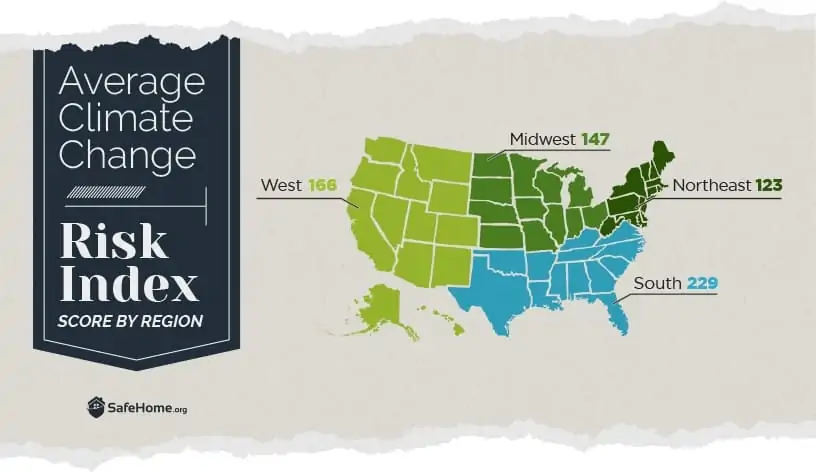
 Figure 1 – A subway ad for for CUNY highlighting different clubs
 Figure 2 – Another subway ad specifies the number of programs that CUNY runs
 (Source: ABC News: Andie Noonan via