“America First” and the Green Climate Fund

Figure 1Cumulative Carbon Emissions

In his exit speech from the Paris Agreement on Thursday, June 1st (see the previous two blogs), President Trump characterized the parts of the agreement that call for developed countries to help pay for climate change mitigation and adaptation efforts in developing countries as ridiculous. He said that our participation makes the United States a laughingstock. He also referred to the transition toward sustainable energy sources as an excuse for allowing more American coal miners to lose their jobs while their Indian and Chinese counterparts benefit. The next three blogs will focus on these claims as well as his repeated motto of “America First” and his assertion that he was elected by Pittsburg and not by Paris (the inaccuracy of which I have already pointed out). I will quote the relevant parts of the speech in order to avoid the common pitfall of cherry picking factual information that fits with my argument.

I will start here with the aspect of monetary distribution:

This agreement is less about the climate and more about other countries gaining a financial advantage over the United States. The rest of the world applauded when we signed the Paris Agreement — they went wild; they were so happy — for the simple reason that it put our country, the United States of America, which we all love, at a very, very big economic disadvantage. A cynic would say the obvious reason for economic competitors and their wish to see us remain in the agreement is so that we continue to suffer this self-inflicted major economic wound. We would find it very hard to compete with other countries from other parts of the world.

The agreement is a massive redistribution of United States wealth to other countries. At 1 percent growth, renewable sources of energy can meet some of our domestic demand, but at 3 or 4 percent growth, which I expect, we need all forms of available American energy, or our country (Applause) will be at grave risk of brownouts and blackouts, our businesses will come to a halt in many cases, and the American family will suffer the consequences in the form of lost jobs and a very diminished quality of life.

The Paris Agreement handicaps the United States economy in order to win praise from the very foreign capitals and global activists that have long sought to gain wealth at our country’s expense. They don’t put America first. I do, and I always will.  (Applause)

Beyond the severe energy restrictions inflicted by the Paris accord, it includes yet another scheme to redistribute wealth out of the United States through the so-called Green Climate Fund — nice name — which calls for developed countries to send $100 billion to developing countries all on top of America’s existing and massive foreign aid payments. So we’re going to be paying billions and billions and billions of dollars, and we’re already way ahead of anybody else. Many of the other countries haven’t spent anything, and many of them will never pay one dime.

The Green Fund would likely obligate the United States to commit potentially tens of billions of dollars of which the United States has already handed over $1 billion — nobody else is even close; most of them haven’t even paid anything — including funds raided out of America’s budget for the war against terrorism. That’s where they came. Believe me, they didn’t come from me.  They came just before I came into office.  Not good.  And not good the way they took the money.

In 2015, the United Nation’s departing top climate officials reportedly described the $100 billion per year as “peanuts,” and stated that “the $100 billion is the tail that wags the dog.”  In 2015, the Green Climate Fund’s executive director reportedly stated that estimated funding needed would increase to $450 billion per year after 2020.  And nobody even knows where the money is going to.  Nobody has been able to say, where is it going to?

Of course, the world’s top polluters have no affirmative obligations under the Green Fund, which we terminated. America is $20 trillion in debt. Cash-strapped cities cannot hire enough police officers or fix vital infrastructure. Millions of our citizens are out of work. And yet, under the Paris accord, billions of dollars that ought to be invested right here in America will be sent to the very countries that have taken our factories and our jobs away from us. So think of that.

In his speech, president Trump treats all countries as equal parties to deals, regardless of their size – Vatican City is tiny, the island of Nauru has 9,488 inhabitants and China has close to 1.4 billion people (close to 20% of the world population).

The United States, under the Trump administration, will continue to be the cleanest and most environmentally friendly country on Earth. We’ll be the cleanest. We’re going to have the cleanest air. We’re going to have the cleanest water. We will be environmentally friendly, but we’re not going to put our businesses out of work and we’re not going to lose our jobs. We’re going to grow; we’re going to grow rapidly.

Well, the United States under Trump administration cannot be “the most environmentally friendly country on Earth with the cleanest air and water. You cannot build a wall around our air or water. Pollutants don’t recognize national boundaries; they spread around and spread fast. Climate change is a global issue.

Figure 1 at the top of this blog depicts the global accumulation of carbon emissions since 1960. The Unites States’ share of those emissions is close to 40% even though our population makes up only about 4.5% of the worldwide total. But, some might say, this is history – who cares? What about the future? Figure 2 illustrates the future, taking into account the commitments of the Paris Agreement. These projections were made by the US Energy Information Administration (EIA). In 2040, one generation from now, countries that do not belong to the Organisation for Economic Co-operation and Development (OECD), what President Trump calls the “poor countries” are projected to put out close to 70% of the emissions.

Figure 2 – Emissions projections given the Paris Agreement

Figure 3 shows business as usual projections– disregarding any international agreements committed to emissions reductions.

Figure 3Projected carbon emissions in Business as Usual Scenario

Short of war, how could a country like India – with a GDP/capita 30 times smaller than the United States’ and about quarter of its 1.4 billion people not connected to the electrical grid – be persuaded not to use its cheapest, most abundant energy source – coal? The financial help that President Trump so strenuously objects to is designed to provide India and other developing countries with the fiscal incentives to do just that. Without these incentives, developing countries will continue to use dirty fuel as needed as they attempt to bring their people out of poverty. President Trump’s efforts will not be able to prevent Americans, along with the rest of the word, from bearing the full brunt of unchecked climate change.

The organization that was put in charge of this effort is the Green Climate Fund:

The Green Climate Fund (GCF) is a fund established within the framework of the UNFCCC to assist developing countries in adaptation and mitigation practices to counter climate change. The GCF is based in the new Songdo district of Incheon, South Korea. It is governed by a Board of 24 members and initially supported by a Secretariat.

The objective of the Green Climate Fund is to “support projects, programmes, policies and other activities in developing country Parties using thematic funding windows”.[1] It is intended that the Green Climate Fund be the centre piece of efforts to raise Climate Finance under the UNFCCC, and raise $100 billion a year by 2020.

U.S. President Donald Trump in his announcement of U.S. withdrawal from the Paris Agreement on June 1, 2017, also criticized the Green Climate Fund, calling it a scheme to redistribute wealth from rich to poor countries.[4]

U.S. President Obama committed the US to contributing US$3 billion to the fund. In January 2017, in his final 3 days in office, Obama initiated the transfer of a second $500m installment to the fund, leaving $2 billion owing. Incoming President Trump was not expected to make further contributions.[14]

As of June 2017, the Green Climate Fund has raised USD 10.3 billion in pledges from 43 state governments. The objective is for all pledges to be converted into contribution agreements within one year from the time at which they are made. I hope that happens.

Country Signed (M) Signed/capita($) GDP/Capita($) Emissions/capita(MT)
UK 1,211 18.77 46K 7
Germany 1,003 12.40 48K 9
Japan 1,500 11.80 36K 9
US 3,000 9.41 55K 17
Italy 268 4.54 35K 7
Spain 161 3.46 30K 6
South Korea 100 1.99 28K 12
Indonesia 0.25 <0.01 4K 2
Posted in administration, Anthropogenic, Climate Change, COP21, IPCC, Sustainability, Trump, UN, UNFCCC | Tagged , , , , , , , , , , , , , , , , , , , , , , , , , , , , , , , , , , , , , , , , , , , , , , , , , , , , , , , | 1 Comment

Remedies for Abdication of Duties?

Figure 1Trends in global urbanization

I am starting to write this blog on Tuesday, June 6th. I am doing this a bit earlier than usual in preparation for a trip that I will be taking in July to Australia and a few countries in Southeast Asia.

June 6th is the anniversary of D-Day. On this date in 1944 160,000 American, British, and Canadian troops landed on the shores of Normandy, France. That event ultimately resulted in the defeat of Nazi Germany and in the process saved my life, what remains of my family, and in a broader sense, saved us all.

The start of America’s direct involvement in World War II can be traced to the Japanese attack on Pearl Harbor on December 7, 1941. The US declared war on Japan the following day and on December 10th Germany and Italy declared war on the US. The United States found itself fighting on both fronts. This is history. I wonder now what would have happened if – after the Pearl Harbor attack – FDR had decided not to respond, declaring that our involvement in the war would cost too many American jobs. Both chambers of Congress at that time were controlled by Democrats, so it is unlikely that they would have impeached FDR and declared war on their own. The more likely scenario to that hypothetical event is that the post-war world would have been dominated by Nazi Germany and Imperial Japan. My family and I would obviously not be around to write about the consequences.

The main role of any government is to protect its citizens. We understand this concept well. I think that if Canada or Mexico were to invade the US or North Korea were to drop one of its nuclear war heads on American property, even the Trump administration would have to respond.

And yet, what the Trump administration did on Thursday, June 1st was an abdication of the federal government’s primary duty: it declared that the US will formally withdraw from the global effort to respond to the danger that climate change poses to the safety of all of humanity. Given the structure of Congress now, it is most probable that it will not take action to challenge this decision. The judiciary branch is still independent but it is vulnerable to continuous changes by the two other branches of government and can do little to change this outcome.

Climate change is a global threat but it is up to sovereign countries to make individual decisions that affect the whole. The federal government of the richest big country in the world (in terms of GDP/capita of countries with more than 50 million citizens) – which is also historically the largest contributor of greenhouse gases emission/capita – is taking itself out of the mitigation efforts. This deliberately puts us all in great danger – not from war but from the drastic changes in physical environment triggered by human activities. Our federal government is not protecting us; it is abandoning its responsibilities.

What can we do?

Revolution? Military coup? Historically, these methods have not worked very well here – this is not our way. Shifting the responsibilities from top-down mandates to bottom-up trial and error efforts appears to be a more successful approach.

I was made aware of one specific such attempt of a major bottom-up resistance, via Reuter’s on Monday, June 5th. Given that I didn’t find much follow-up to this announcement, I will quote the article in full:

Bloomberg delivers U.S. pledge to continue Paris climate goals to U.N

By Valerie Volcovici | WASHINGTON

WASHINGTON Former New York City Mayor Michael Bloomberg submitted a statement to the United Nations on Monday that over 1,000 U.S. governors, mayors, businesses, universities and others will continue to meet the goals of the Paris climate agreement abandoned by President Donald Trump last week.

Bloomberg, who is the U.N. Secretary-General’s special envoy for Cities and Climate Change, submitted the “We Are Still In” declaration to U.N. Secretary General Antonio Guterres and the UN Framework Convention on Climate Change (UNFCCC) Executive Secretary Patricia Espinosa.

He also launched a process to work with local governments and non-state entities to formally quantify the combined – and overlapping – emissions reduction pledges, which will be known as “America’s Pledge,” and submit the report to the United Nations.

“Today, on behalf of an unprecedented collection of U.S. cities, states, businesses and other organizations, I am communicating to the United Nations and the global community that American society remains committed to achieving the emission reductions we pledged to make in Paris in 2015,” Bloomberg said in a statement.

Signatories to the new initiative include 13 Democratic and Republican governors, 19 state attorneys general, over 200 mayors, and CEOs of Fortune 500 companies and small businesses.

Trump on Thursday pulled the United States from the landmark 2015 agreement designed to fight climate change, fulfilling a major campaign pledge despite entreaties from U.S. allies and corporate leaders.

Although the formal process to withdraw from the Paris agreement takes four years, Trump said the United States will not honor the pledge the Obama administration submitted, known as the nationally determined contribution to reduce greenhouse gas emissions 26-28 percent below 2005 levels by the year 2025.

To fill the void, “America’s Pledge” will be submitted to the UNFCCC as a “Societal NDC.”

“The UNFCCC welcomes the determination and commitment from such a wealth and array of cities, states, businesses and other groups in the United States to fast forward climate action and emissions reductions in support of the Paris Climate Change Agreement,” said Espinosa.

The coalition will align a number of different efforts to show U.S. support for the Paris agreement, including a commitment of over 260 corporations including Kellogg , Pepsi Co. and Walmart to reduce their greenhouse gas emissions in line with the latest science.

Thirteen governors have also pledged to continue to honor the Paris pledges.

“It will be up to the American people to step forward-and in Virginia we are doing just that,” said Virginia Governor Terry McAuliffe.

The process is already underway. Jerry Brown, the governor of California, recently made a fruitful visit to Beijing to make the case that individual states can now represent the US’s efforts to fight and adapt to climate change; he made similarly successful overtures in Germany to do the same. In fact, Canada has just decided that its own coordination of climate change mitigation and adaptation with the US will be directly with cities and states and not via the federal government.

The auto industry is also experiencing bottom-up activity:

The auto industry can’t count on a rollback of environmental standards by U.S. President Donald Trump to escape increasing worldwide pressure to make vehicles cleaner.

Rather than national and international bodies, the big push for change is coming from urban centers like Paris, Seoul and Mexico City, and U.S. states such as California, where leaders are reacting to the health hazards caused by deteriorating air quality.

“The air in London is lethal and I will not stand by and do nothing,” Mayor Sadiq Khan said in April as he announced plans to set up an ultra-low emissions zone around the city center.

Automakers can’t afford to ignore these initiatives, especially as a growing slice of the world’s population crowds into urban areas. The push by cities gained momentum in the wake of Volkswagen AG’s emissions-cheating scandal, which highlighted the smog-causing nitrogen oxides emitted by diesel vehicles. Madrid, Athens, Paris and Mexico City have all said they will ban these vehicles from their roads by 2025.

“Electric cars are the main driver of our technology effort because we are seeing many cities, urban cities, which are going to be zero-emissions and because the most affordable, known, popular technology is going to be electric,” Carlos Ghosn, chief executive officer of French carmaker Renault SA and chairman of Japan’s Nissan Motor Co., said in an interview.

In the U.S., 30 cities including New York and Chicago asked automakers for the cost and feasibility of providing 114,000 electric vehicles, including police cruisers, street sweepers and trash haulers, to improve air quality and show demand for low-emission vehicles.

The opening figure at the top of the blog describes present and near future rates of global urbanization. Cities all around the world are growing:

Global population in urban areas is expanding quickly…

Every year, 65 million people are added to the world’s urban population, equivalent to adding seven cities the size of Chicago or five the size of London annually.

At some point the courts will have to intervene.

California and New York are low carbon states. However, each country’s carbon emissions are a component of global carbon emissions. The Paris Agreement is a global covenant that amounts to more than individual countries’ future commitment to lowered carbon emissions. Until the US withdrawal, the agreement was signed by nearly every country – big and small, rich and poor, democratic or totalitarian. The only exceptions were Syria and Nicaragua. Now we are adding the US to the list.

Posted in administration, Anthropocene, Anthropogenic, Climate Change, law, Sustainability, Trump, UN, UNFCCC | Tagged , , , , , , , , , , , , , , , , , , , , , , , , , , , , , , , , , , , , , , , , , , , , , , , , , , , , , , , , , , , , , , , , , , , , , , , , , , , , , , , , , , , , , , , , , , , , , , , , , , , , , , , , , , , , , , , , , , , | 1 Comment

Me vs. Them vs. We – Time

Thursday (June 1st) was an event to remember. President Trump did indeed turn his back on the world, declaring that he was elected to serve Pittsburg and not Paris – except for the small detail that Pittsburg didn’t vote for him. Allegany County gave 259,480 votes to Trump and 367, 617 votes to Clinton.

Aside from that small discrepancy from reality, the speech was an astronomical declaration that the US is an isolated planet unaffected by anything that happens around it. Strangely, there was not a word in the speech about the future. Last week’s blog focused on the conflict between globalism and nationalism. I wrote there that “Me” and “Them” are very well defined. “We” includes me but needs an additional description of the collective that is being referring to. I am especially interested in where we position our family members and friends on this spectrum. In my book (Climate Change: The Fork at the End of Now), I defined “Now” in terms of the expected life span of my grandchildren, which approximately brings me to the end of the century.

Well, President Trump is thinking about his youngest son Barron. He reacted swiftly to the comedian Kathy Griffin’s awful exhibition of holding what appeared to be the president’s decapitated bloody head. The act immediately raised strong objections from everybody, irrespective of political affiliation. Ms. Griffin apologized and lost her job with CNN and had to cancel other performances. President Trump responded with the following tweet:

He was right. Except that he forgot to mention his eight grandchildren (not yet including Eric and Lara’s expected new baby). In his speech on Thursday, in which he removed the US from the Paris Agreement, there was plenty of “America First” rhetoric, implying that the rest of the world can go to hell. He said nothing at all, however, about the future that his youngest son and eight grandchildren can expect – especially if they reside in coastal cities as America and the world drown.

The American people do not share Trump’s cavalier neglect of the future – especially one that might directly affect their families. Recent Gallup polls show the numbers:

Figure 1 – Recent Gallup numbers of Americans worry about climate change

President Trump didn’t try to debunk the science of climate change in his speech. So in a sense he didn’t try to deny the future that “business as usual” scenarios will bring to us all. He was basically saying, as I understand him, that 60 or so million out of a US population of 330 million voted him in on his promise to extract the US from the Paris Agreement, so he is delivering on that promise. Barron and his eight grandchildren, and the hundreds of millions that will join them toward the end of the century, didn’t have the option to vote – too bad – they will be the ones to bear the consequences. His daughter, Ivanka, mother of three of his grandchildren, tried in vain to persuade Mr. Trump to remain in the Paris Agreement.

Well, if we cannot do anything to mitigate climate change, who can? A few of President Trump’s supporters have an answer:

Rep. Tim Walberg (R-Mich.) told a constituent last week that God can solve the problem of climate change if the global phenomenon truly exists.

The 66-year-old Republican, who is a climate change skeptic, made the remark at a town hall in Coldwater, Michigan, on Friday.

“I believe there’s climate change,” Walberg said, according to a video of the exchange obtained by HuffPost. “I believe there’s been climate change since the beginning of time. I believe there are cycles. Do I think man has some impact? Yeah, of course. Can man change the entire universe? No.”

“Why do I believe that?” he went on. “Well, as a Christian, I believe that there is a creator in God who is much bigger than us. And I’m confident that, if there’s a real problem, he can take care of it.”

Or:

It’s hard to refute someone’s deeply held beliefs.

On the other side of the world, the dynamics in Australia are a bit different. Apparently, the disparity in attitude toward climate change is generational:

SPRING RIDGE, Australia — Mark Coulton and his daughter, Claire, both believe there is a future in rural living. They are both active members of Australia’s National Party, which traditionally represents farmers and voters outside the main cities who lean conservative, and they agree on most things — but not on how to deal with climate change.

Mr. Coulton, 59, thinks measures like carbon trading are “symbolic things that really won’t have any impact.” Claire Coulton, 33, supports carbon trading as a means of reducing greenhouse gas emissions and worries that Australia’s economic dependence on coal could undermine her future.

“I think it’s something all young people should be looking at with real interest,” she said, “because if there are negative effects of opening up that coal mine, our generation will be the one to bear the brunt of it.”

The elder Coulton is a lawmaker in the Australian Parliament, representing the electoral division of Parkes in New South Wales, and his daughter belongs to the party’s youth wing, but their disagreement is not limited to family debate. Last month, the regional youth wing, the NSW Young Nationals, including Ms. Coulton, went against party leaders at an annual meeting and voted to endorse a plan that would place a cost on emissions, known as an emissions intensity plan.

President Trump’s withdrawal speech last Thursday is a good focal point for the choices that we all must make in prioritizing the benefits for Me vs. Them vs. We, so I will do away with this awkward title for the next few blogs and instead look into the ramifications of the president’s departure from the Paris Agreement. I will address his emphasis on the Green Climate Fund, which he depicted negatively as a program for massive wealth redistribution. I will also speak to his emphasis on ramping back up our use of coal-powered energy as a means of bringing back coal mining jobs and his depiction of the Paris Agreement as a detriment to that goal. I will go on to enumerate the probable impacts of our withdrawal from the accord. Probably the most important aspect will be revisiting the issue of global wealth distribution as it ties in to any attempt to mitigate human contributions to climate change.

All of these are predicated on what might be a faulty belief that he now “suspects” that humans are important contributors to climate change. This might be a stretch given that he made no such mention in his speech.

Posted in Anthropogenic, Climate Change, Sustainability, Trump | Tagged , , , , , , , , , , , , , , , , , , , , , , , , , , , , , , , , , , , , , , , , , , , , , , , , , , , , , , , , , , , , | Leave a comment

Me vs. Them vs. We – Nationalism/Populism vs. Globalism

The world is a shaky place right now. The best windows into this instability are countries where citizens can express their feelings in the voting booths. I am not alone in having mentioned repeatedly that the world is now entering into a period dominated by humans. For a global change this is taking place at a very fast pace – one which continues to accelerate.

In a previous blog (January 17, 2017) I cited the Economist’s description of a key proposal for the start of this new era:

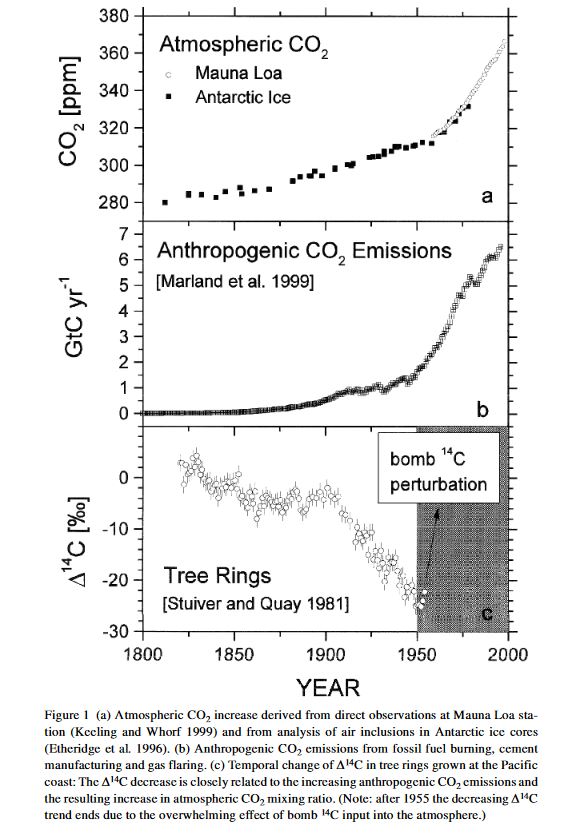
The second slide (Figure 2) summarizes the state of approval for marking the Anthropocene as a new (and current) geological period. One important aspect, as shown on this slide, is the proposed marker for the beginning of this period. The Economist’s report from September 2016, demonstrates that the leading candidate for said marker is the high point of nuclear weapons testing in 1964.

Based on this proposed timeline, I am older than this new era, as are many of you. On a geological time scale that measures epochs in millions of years, this new era has barely reached infancy. An infant’s main job is to learn how best to survive in the new world that it is entering. Humanity is a collection of individuals who organize themselves into variously sized aggregates, including sovereign states, cities, towns, etc. Every one of these units keeps in mind its own interests as well as those of its largest grouping. Changes and instabilities always create winners and losers. In places where people can vote to decide on the direction of such change, people invariably have the choice of voting for either what they perceive to be their own good or that of the larger collective. On a global scale, these choices often exhibit themselves as a struggle between Nationalism (or Populism) and Globalism. Other scales are in play as well, including cities, towns, and states in federal systems, generational conflicts, etc. I will redefine these struggles as Me vs. Them vs. We (MTW – if you like abbreviation) and will devote my next few blogs to them.

These struggles are similar to the classic environmental NIMBY (Not In My Back Yard) argument. (Type NIMBY into the search box and you will find at least 13 different blogs that deal with this issue in various contexts.)

Try to Google “me vs. them” and you will get a variety of results, ranging from police views on relevant conflicts with their communities to the band Radium’s album by that name. If you Google “me vs. them vs. we,” the search engine may correct it to “me vs. them or we.” The distinction between “me” and “them” is obvious but “we” necessitates including myself in some collective that needs to be defined separately. The other thing missing here is some gradation of the collective; do family, friends, etc. count under “me” or “them”?

On the political side, two Op-Ed pieces from the New York Times do an admirable job of illustrating some of these issues within the recent United States presidential elections.

The first is R.R. Reno’s April 28, 2017, “Republicans are Now the American First Party”:

For most of my career, the Republican Party was pretty easy to define. It stood for small government, an internationalist foreign policy, free trade, and moral and religious conservatism. Ronald Reagan was the party’s North Star. Of course, there have always been Republicans who veered from that line — but everyone understood what the party meant.

Of all the people still trying to process Donald Trump’s rise to the presidency, perhaps none are more confused than my generation of conservatives, who came of age under Mr. Reagan and drank deeply of that old orthodoxy. We are, by now, the establishment — the senators, governors, think-tank presidents and columnists who, until Mr. Trump came along, got to define what “Republican” and “conservative” meant. My cohort simply cannot accept that Mr. Trump has taken away that coveted role and revolutionized not just our party, but also the very terms of the American political divide.

But we need to. Because as Mr. Trump recognized, the new schism in American life is not about big versus small government, or more or less regulation. It is about immigration, free trade and the broad and deep impacts of globalization on America’s economy and culture. “Americanism, not globalism, will be our credo,” he told the Republican National Convention.

The second piece is much more controversial because it compares the Trump presidency with mid 20th century German and Italian Fascism and thus appears to “obey” Godwin’s Law (December 27, 2016 blog):

Godwin’s law (or Godwin’s rule of Hitler analogies)[1][2] is an Internet adage asserting that “As an online discussion grows longer, the probability of a comparison involving Hitler approaches 1“[2][3]—​​that is, if an online discussion (regardless of topic or scope) goes on long enough, sooner or later someone will compare someone or something to Hitler.

In this case, the Op-Ed was written by the grandson of Henry A. Wallace, the 33rd Vice President of the United States:

Seventy-three years ago, The New York Times asked the sitting vice president to write an article about whether there are fascists in America, and what they’re up to.

It was an alarming question. And the vice president took it quite seriously. His article, “The Danger of American Fascism,” described a breed of super-nationalist who pursues political power by deceiving Americans and playing to their fears, but is really interested only in protecting his own wealth and privilege.

That vice president was my grandfather, Henry A. Wallace. And in my view, he predicted President Trump.

To be clear, I don’t think the precise term “fascism” — as in Mussolini and Hitler — is fairly applied to Mr. Trump. Mussolini was a proponent of “corporatism,” defined by some as “a merger of state and corporate power.” And through that lens, using that term, my grandfather’s warning looks prescient.

Here’s an excerpt from an interview with the Israeli historian, Yuval Noach Harari, on the topic of the present conflict between Nationalism and Globalism. The interview was broadcasted as a part of an interactive TED talk:

YNH: Yeah, the old 20th-century political model of left versus right is now largely irrelevant, and the real divide today is between global and national, global or local. And you see it again all over the world that this is now the main struggle. We probably need completely new political models and completely new ways of thinking about politics. In essence, what you can say is that we now have global ecology, we have a global economy but we have national politics, and this doesn’t work together. This makes the political system ineffective, because it has no control over the forces that shape our life. And you have basically two solutions to this imbalance: either de-globalize the economy and turn it back into a national economy, or globalize the political system.

He continues:

YNH: Exactly. All the major problems of the world today are global in essence, and they cannot be solved unless through some kind of global cooperation. It’s not just climate change, which is, like, the most obvious example people give. I think more in terms of technological disruption. If you think about, for example, artificial intelligence, over the next 20, 30 years pushing hundreds of millions of people out of the job market — this is a problem on a global level. It will disrupt the economy of all the countries.

I wrote about Yuval Noach Harari in a previous blog (January 10, 2017):

I recently read Yuval Harari’s Homo Deus; he is an Israeli historian of some note and puts forward his view of humanity’s future. For those of us challenged in Latin, Homo is man or human (as in Homo Sapiens), while Deus refers to God or a deity. Harari’s implication is that man will become a deity, in the sense that he will have eternal life. As far-fetched as this concept sounds, attempts to prolong human life beyond the present limits of slightly more than 100 years are being widely pursued – including by people with significant means.

I will conclude with a paragraph from the Jewish Passover Haggadah:

What says the wicked son? He asks: “What mean you by this service”? By the word “you”, it is clear he doth not include himself, and thus hath withdrawn himself from the community; it is therefore proper to retort upon him by saying: “This is done because of what the Eternal did for me, when I went forth from Egypt;” for me and not for him; for had he been there, he would not have been thought to be redeemed.

Posted in Climate Change | Tagged , , , , , , , , , , , , , , , , , , , , , , , , , , , , , , , , , , , , , , , , , , , | 1 Comment

Global Trends 2035

Last week’s blog opened with a figure from the January 2017 intelligence report titled, “Global Trends Paradox of Progress.” It showed the projected average surface temperature change based on two emission scenarios: RCP8.5 – a high emission scenario that approximately reflects business as usual practices and the RCP2.6 – a low emission scenario that predicts complete global decarbonization (removal of fossil carbon from the energy sources or capture of the carbon that is not being removed) of energy use before the end of the century. The Global Trends report took the figure from the IPCC report that came out in 2013. Last week, I emphasized the origin of the uncertainty bands in the graph and how their existence does not “prove” Bret Stephens’ New York Times Op-Ed argument that:

We ought to know this by now, but we don’t. Instead, we respond to the inherent uncertainties of data by adding more data without revisiting our assumptions, creating an impression of certainty that can be lulling, misleading and often dangerous.

The same Global Trends series of reports (this one is the sixth in the series) also serves me well for a different purpose. The Spring 2017 semester in my school is almost over (my classes are all done and all that’s left are exams and some special events including a graduation ceremony). My course’s main objective (March 11, 2013) is to teach students about how our contributions to the physical environment affect societal issues in both the immediate and intermediate future. I want them to use information from the present and past to improve the prospects for a better future.

Such a report can serve the additional objective of trying to figure out the impact that the new US federal government might have on such a future. These reports are compiled every four years; the new report came out in January 2017, amid the shift in power. The previous one came out in 2013, in the middle of the Obama administration’s eight years.

The spring semester started at the end of January. I opened the report shortly after it came out, converted it to PDF, and made sure that all my students got it so they could work on the future scenarios within it. As we approached the end of the semester, I reopened the online report and, to my mild surprise, I was confronted with some issues.

The original report that I downloaded was still available in a PDF form, however, as I went to the home page I saw the following content:

Paradox of Progress

The achievements of the industrial and information ages are shaping a world to come that is both more dangerous and richer with opportunity than ever before. Whether promise or peril prevails will turn on the choices of humankind.

What is Global Trends?

Every four years since 1997, the National Intelligence Council has published an unclassified strategic assessment of how key trends and uncertainties might shape the world over the next 20 years to help senior US leaders think and plan for the longer term. The report is timed to be especially relevant for the administration of a newly elected US President, but Global Trends increasingly has served to foster discussions about the future with people around the world. We believe these global consultations, both in preparing the paper and sharing the results, help the NIC and broader US Government learn from perspectives beyond the United States and are useful in sparkling discussions about key assumptions, priorities, and choices.

From this “introduction,” two key statements seem informative: that the timing coincides with newly elected administrations and that it is meant to foster discussion. From these, I surmised that this was probably not the original report that I saw and downloaded.

To make sure, I clicked “Read Full Report.” I got the now familiar letter from the NIC Chairman and a table of contents on the left, which was similar to the original, albeit with different formatting.

I was looking for the climate change entries. They were difficult to find. At the top of the entry page, there was a category, “Annex: Key Global Trends.” I clicked through to that as well as on the “How People Live” button, which was identical to the corresponding section in the original. There was a major entry at the beginning of this segment about “Changes in Earth Systems”:

Storm surges, augmented by sea level rise, are likely to threaten many coastal systems and low-lying areas, and this environmental volatility almost certainly will disrupt food production patterns and water availability, fueling broader economic, political and social stresses. Changes in the Arctic will exceed those felt in the middle latitudes, and reductions in summer sea-ice will make the Arctic more accessible than any time in human history. (Follow this link to read the NIC paper on Implications for US National Security of Anticipated Climate Change.)

This looked promising. I clicked on the highlighted entry and got the following error message:

You may not be able to visit this page because of:

  1. an out-of-date bookmark/favourite
  2. a search engine that has an out-of-date listing for this site
  3. a mistyped address
  4. you have no access to this page
  5. The requested resource was not found.
  6. An error has occurred while processing your request.

Please try one of the following pages:

  • Home Page

If difficulties persist, please contact the System Administrator of this site and report the error below.

I gave up.

Additional searching around the report took me to an Andrew Freedman piece, “Trump’s intel agencies tell Congress that climate change poses national security threats.” Given how important I find it, I am citing it here in full:

Each year the intelligence community puts together a “Worldwide Threat Assessment” report, and it inevitably scares the hell out of Congress and the public by detailing all the dangers facing the U.S. (Hint: there are a lot of them.)

This year’s report, published Thursday and discussed at a congressional hearing, makes for particularly disquieting reading.

While it focuses on the increasing danger that North Korea’s nuclear weapons program poses as well as cyberterrorism threats, one environmental concern stands out on the list: climate change.

According to the new report, delivered to the Senate Intelligence Committee by Dan Coats, the director of national intelligence (DNI), warns that climate change is raising the likelihood of instability and conflict around the world.

This is surprising given the Trump administration’s open hostility to climate science findings.

“The trend toward a warming climate is forecast to continue in 2017,” the report states, noting that 2016 was the hottest year on record worldwide. Climate scientists have firmly tied this to human-caused emissions of greenhouse gases, though the report does not make that link.

“This warming is projected to fuel more intense and frequent extreme weather events that will be distributed unequally in time and geography. Countries with large populations in coastal areas are particularly vulnerable to tropical weather events and storm surges, especially in Asia and Africa,” the report states.

The report also cites worsening air pollution in urban areas around the globe, potential water resources conflicts in places like the Middle East. Interestingly, the intelligence report also says that biodiversity losses from pollution, overexploitation and other causes is “disrupting ecosystems that support life, including humans.”

However, there is a caveat in the intelligence community’s assessment that lets Coats avoid being accused of aligning himself with the administration’s critics in the environmental community.

“We assess national security Implications of climate change but do not adjudicate the science of climate change,” the report states. In other words, “We’re just telling you what’s happening, not why it’s happening.”

That report also stated that climate change will cause growing security risks for the U.S. during the next several years. It was the first major intelligence review to cast climate change as a present-day security challenge, rather than a distant, far-off threat.

The military is already experiencing global warming impacts at its bases, particularly the Navy, which is dealing with sea level rise at its facilities.

“The rate of species loss worldwide Is estimated at 100 to 1,000 times higher than the natural background extinction rate, according to peer-reviewed scientific literature,” the report states.

The findings in this report are surprising considering the Trump administration’s hostility to mainstream climate science findings and policies aimed at cutting emissions of greenhouse gases that are warming the planet. Some agencies, such as the Environmental Protection Agency (EPA) and Interior Department, have gone so far as to take down pages devoted to peer-reviewed scientific reports on climate change.

The report that Mr. Coats’ piece cites is not the Global Trends 2017 that his agency came out with in January but a 37-page (the original report is 235 pages + 125 pages of annexes) summary with almost no graphs or data (OS-Coats-051117.pdf). Here is the key page on environmental issues in that report:

Environmental Risks and Climate Change

The trend toward a warming climate is forecast to continue in 2017. The UN World Meteorological Organization (WMO) is warning that 2017 is likely to be among the hottest years on record—although slightly less warm than 2016 as the strong Ei Nino conditions that influenced that year have abated. The US National Oceanic and Atmospheric Administration (NOAA) and the National Aeronautics and Space

Administration (NASA) reported that 2016 was the hottest year since modern measurements began in 1880. This warming is projected to fuel more intense and frequent extreme weather events that will be distributed unequally in time and geography. Countries with large populations in coastal areas are particularly vulnerable to tropical weather events and storm surges, especially in Asia and Africa. Global air pollution is worsening as more countries experience rapid industrialization, urbanization, forest burning, and agricultural waste incineration, according to the World Health Organization (WHO). An estimated 92 percent of the world’s population live in areas where WHO air quality standards are not met, according to 2014 information compiled by the WHO. People in low-income cities are most affected, with the most polluted cities located in the Middle East, Asia, and Africa. Public dissatisfaction with air quality might drive protests against authorities, such as those seen in recent years in China, India, and Iran.

Heightened tensions over shared water resources are likely in some regions. The dispute between Egypt and Ethiopia over the construction of the massive Grand Ethiopian Renaissance Dam (GERD) on the Nile is likely to intensify because Ethiopia plans to begin filling the reservoir in 2017.

Global biodiversity will likely continue to decline due to habitat loss, overexploitation, pollution, and invasive species, according to a study by a nongovernmental conservation organization, disrupting ecosystems that support life, including humans. Since 1970, vertebrate populations have declined an estimated 60 percent, according to the same study, whereas populations in freshwater systems declined 13 more than 80 percent. The rate of species loss worldwide is estimated at 100 to 1,000 times higher than the natural background extinction rate, according to peer-reviewed scientific literature.

We assess national security Implications of climate change but do not adjudicate the science of climate change. In assessing these Implications, we rely on US government-coordinated scientific reports, peer reviewed literature, and reports produced by the Intergovernmental Panel on Climate Change (IPCC), which is the leading International body responsible for assessing the science related to climate change.

In the end, I gave up on the newer format and continued to use the 2013 Global Trends report with some input from the original 2017 report.

Posted in administration, Anthropocene, Anthropogenic, Climate Change, Education, IPCC, Sustainability, Trump | Tagged , , , , , , , , , , , , , , , , , , , , , , , , , , , , , , , , , , , , , , , , , , , , , , , , , | Leave a comment

Bret Stephens and Uncertainty

Figure 1 – Taken from the 2017 Intelligence Report

Figure 1 might look familiar – I took it from the fifth IPCC report (AR5) and showed it in my October 28, 2014 blog where I discussed the IPCC’s use of scenarios. This time, I found the figure in the recent US intelligence report, “Global Trends: Paradox of Progress.” The report was presented in January 2017, about two months after the election of President Trump (the exact date was not given so I cannot tell if by the time of publication President Trump was president elect or had taken office). “Global Trends” is a series of unclassified reports that the US intelligence community issues about the way that they see the near and intermediate future of the US – specifically how the US will function in a changing world. They issue these reports once every four years. I am using them in an effort to teach students how to model the future based on information gathered about the recent past. Versions of them are presented to Congress; in a sense, I view them as the official perspective of the US government and as such, very significant. I have no idea, however, if the president is required to read them.

The intelligence community is using Figure 1 to introduce the dangers associated with global climate change. They have provided their own explanations for the figure, apart from those that the IPCC gave. Not surprisingly, the 2017 report is going through some “modifications” as the Trump presidency progresses. These changes are interesting and I will devote next week’s blog to some of them; fortunately, at no point do they present climate change as a “Chinese Hoax.”

I want to emphasize the large bands that engulf the two main trends. These two bands represent the uncertainty in these predictions. They result not from uncertainty about the science or the human contributions to climate change but rather from the realization that we don’t yet have a full understanding of the feedback mechanism that changes the temperature equilibrium as a result of changes the chemistry of the atmosphere. The most important feedback mechanism that contributes to the climate change and is not yet fully understood is the role of clouds in the process. Other, better-understood feedback mechanisms include how the melting of snow and ice – especially in the Polar Regions – changes the surface reflectivity; how the melting of frozen tundra releases carbon greenhouse gases; the oceans’ ability to absorb such greenhouse gases; and the changing of the atmosphere’s ability to absorb water vapor. The solid lines in the middle of each uncertainty band represent the working number that is needed for any planning required to meet the dangers of global climate change that include policies targeted at mitigation and adaptation. These projections use specific scenarios to minimize the uncertainty inherent in trying to predict future levels of emissions. Yet climate change deniers have presented these uncertainties either as proof that scientists are ignoramuses who don’t know what they are talking about – and are just interested in increasing their grant money – or that this is an international conspiracy to damage the US economy.

In this day and age, The New York Times has decided that its editorial page is not balanced enough. So they hired Bret Stephens to establish balance. The rest of this blog is dedicated to this effort.

Here is a very short description of Stephens’ background as taken from Wikipedia:

Bret Louis Stephens is a neoconservative American journalist who won a Pulitzer Prize for commentary in 2013. Stephens began working as a columnist at The New York Times in late April 2017

James Bennet from The New York Times introduced Bret Stephens in an Op-Ed column:

I wanted to call your attention to our new columnist, Bret Stephens, whose first piece appears today. Bret, the winner of the 2013 Pulitzer Prize for commentary, has joined us from The Wall Street Journal, where he wrote the Global View column and also served as deputy editorial page editor.

For a sense of how Bret thinks about his role you might consider his response while at the Journal to criticism he received for opposing Donald Trump. He wrote, in part, “What a columnist owes his readers isn’t a bid for their constant agreement. It’s independent judgment. Opinion journalism is still journalism, not agitprop. The elision of that distinction and the rise of malevolent propaganda outfits such as Breitbart News is one of the most baleful trends of modern life. Serious columnists must resist it.”

Well, in spite of his lack of any related credentials, Mr. Stephens decided that his “virgin” contribution to this vaunted balance would be dedicated to climate change. For obvious reasons, his contribution attracted very broad attention. To avoid any argument that I am cherry picking his arguments and missing the message, I am posting excerpts from his column below.

These selected excerpts make up the majority of this week’s blog because, as always, details make a difference and given that there’s been three weeks’ time delay between the original NYT paper and the posting of the blog, it’s much harder for my readers to locate:

There’s a lesson here. We live in a world in which data convey authority. But authority has a way of descending to certitude, and certitude begets hubris. From Robert McNamara to Lehman Brothers to Stronger Together, cautionary tales abound.

We ought to know this by now, but we don’t. Instead, we respond to the inherent uncertainties of data by adding more data without revisiting our assumptions, creating an impression of certainty that can be lulling, misleading and often dangerous

Why? The science is settled. The threat is clear. Isn’t this one instance, at least, where 100 percent of the truth resides on one side of the argument?

Well, not entirely. As Andrew Revkin wrote last year about his storied career as an environmental reporter at The Times, “I saw a widening gap between what scientists had been learning about global warming and what advocates were claiming as they pushed ever harder to pass climate legislation.” The science was generally scrupulous. The boosters who claimed its authority weren’t.

Anyone who has read the 2014 report of the Intergovernmental Panel on Climate Change knows that, while the modest (0.85 degrees Celsius, or about 1.5 degrees Fahrenheit) warming of the earth since 1880 is indisputable, as is the human influence on that warming, much else that passes as accepted fact is really a matter of probabilities. That’s especially true of the sophisticated but fallible models and simulations by which scientists attempt to peer into the climate future. To say this isn’t to deny science. It’s to acknowledge it honestly.

Let me put it another way. Claiming total certainty about the science traduces the spirit of science and creates openings for doubt whenever a climate claim proves wrong. Demanding abrupt and expensive changes in public policy raises fair questions about ideological intentions. Censoriously asserting one’s moral superiority and treating skeptics as imbeciles and deplorables wins few converts.

None of this is to deny climate change or the possible severity of its consequences. But ordinary citizens also have a right to be skeptical of an overweening scientism. They know — as all environmentalists should — that history is littered with the human wreckage of scientific errors married to political power.

I’ve taken the epigraph for this column from the Polish poet Czeslaw Milosz, who knew something about the evils of certitude. Perhaps if there had been less certitude and more second-guessing in Clinton’s campaign, she’d be president. Perhaps if there were less certitude about our climate future, more Americans would be interested in having a reasoned conversation about it.

By the time that I am writing this blog, 1551 NYT readers have commented on his piece. I am attaching three of the first comments that provide the anti and pro emphasis of many of the comments:

HR Lincoln (Tenn April 28, 2017 )

Stephens has it backwards. Climate science (and those who accept it) gives a range of probable outcomes. A doubling of CO2 is believed to lead to between 1.5 and 4.5 degrees Celsius. There is some possibility that the true result could be outside this range.

So called “skeptics”, on the other hand, claim that a doubling will result in between 0.5 and 1.5 degrees Celsius. They argue that there is no chance of it being any higher. Moreover, they ignore the scientific evidence–both empirical and from simulations–that indicates higher future warming.

So who is claiming to have 100% certainty?

RFLatta (Iowa City April 28, 2017 ):

This is the same old claim to “reasonable” incertitude that think tanks funded by the oil industry have circulated for many years. They take the correct assertion that evidence of athropogenic climate change is a matter of probabilities to it’s logically absurd conclusion: that we should discount any possibility of it’s likelihood no matter how much evidence there is. The irony is that those who stand to gain the most from selling oil still in the ground claim to have even more certainty about the science than scientists or environmentalists.

Corwin Kilvert (New York, NY April 28, 2017 ):

I think Bret Stephens makes an excellent point about the dangers of certainty. I’ve often felt that we live in a time of hyperbole, things are either never or always. People fail to approach subjects with a rational level of certainty. Look at how quickly the population responds to the latest meme or video of the moment. How can anyone with absolute certainty come to a conclusion of a video clip interaction, but so often we do. With real consequences. A little more critical thinking is certainly needed.

On the other hand if you truly want people to look a little bit harder at the climate change argument, then present us with the argument. Present the data. Show the probabilities. Discuss the models. Don’t be afraid of the details.

By the time that I am writing this blog (May 12th), Mr. Stephens has already written three more Op-Ed contributions to the NYT with which I have no arguments. President Trump is the focus in all three blogs; he seems to be a “safe” subject in The New York Times. Still, the climate change beginning in the NYT did leave an impact.

Stephens, formerly of the Wall Street Journal, faced intense backlash to the late-April opinion piece, in which he questioned any certainty in the political debate surrounding climate change. In it, he said, “if there were less certitude about our climate future, more Americans would be interested in having a reasoned conversation about it.”

Not only did other members of the scientific community and the press criticize his skeptical take, but there were also declarations on Twitter by people saying they were going to unsubscribe from the Times in reaction to the piece.

The Times ran a correction, which fixed a wrong statistic on climate data.

Stephens specifically stated in the piece that he doesn’t refuse the idea of climate change, and during an interview Sunday with CNN’s Fareed Zakaria, he once again asserted he doesn’t deny climate change or “that we need to address it.”

“Seriously,” he added for emphasis.

“The point of the article was to say that there is a risk in any predictive science of hubris,” Stephens said, referring, as an example, to the 2007 U.N. Intergovernmental Panel on Climate Change’s report claiming a very high likelihood that Himalayan glaciers would melt by 2035 — which was later discredited.

The column, Stephen contended, was “an attempt to be was a warning against intellectual hubris.” What it wasn’t was an effort to “deny facts about climate that have been agreed by the scientific community,” he added.

“I think that’s a distinction that I’m afraid was lost in some of more intemperate criticism,” Stephens said. “But people who read the column carefully can see I said nothing outrageous or beyond the pale of normal discussion.”

The only climate-change-related reference that Mr. Stephens made in his first article was that of Andrew Revkin, an ex-environmental writer at The New York Times. Mr. Revkin has solid credentials for his writing on climate change and the way that Stephens used the quote, without including the context, leaves his credibility wanting.

Mr. Revkin is one of the 27 co-authors who wrote the recent paper, “Making the case for a formal Anthropocene Epoch: an analysis of ongoing critiques,” which was published in Newsletters on Stratigraphy Vol 50/2 (2017), 205-226. Here is the paper’s abstract:

Abstract : A range of published arguments against formalizing the Anthropocene as a geological time unit have variously suggested that it is a misleading term of non-stratigraphic origin and usage, is based on insignificant temporal and material stratigraphic content unlike that used to define older geological time units, is focused on observation of human history or speculation about the future rather than geologically significant events, and is driven more by politics than science. In response, we contend that the Anthropocene is a functional term that has firm geological grounding in a well-characterized stratigraphic record. This record, although often lithologically thin, is laterally extensive, rich in detail and already reflects substantial elapsed (and in part irreversible) change to the Earth System that is comparable to or greater in magnitude than that of previous epoch-scale transitions. The Anthropocene differs from previously defined epochs in reflecting contemporary geological change, which in turn also leads to the term’s use over a wide range of social and political discourse. Nevertheless, that use remains entirely distinct from its demonstrable stratigraphic underpinning. Here we respond to the arguments opposing the geological validity and utility of the Anthropocene, and submit that a strong case may be made for the Anthropocene to be treated as a formal chronostratigraphic unit and added to the Geological Time Scale.

The issue of this Op-Ed is not going away, no matter how many anti-Trump Op-Eds Mr. Stephens might write. It’s been reported that as a result of his contribution some readers are cancelling their subscriptions to The New York Times, making the publishers a bit nervous. Here is what Politico wrote about it:

New York Times publisher Arthur O. Sulzberger Jr. is making a personal appeal to subscribers who canceled because the paper hired Bret Stephens, a conservative columnist who has questioned some of the science behind the theory of climate change and the dangers it poses. In an email sent Friday afternoon and obtained by POLITICO, Sulzberger addresses subscribers who specifically mentioned the hiring of Stephens as a reason that they ended their subscriptions.

“Our customer care team shared with me that your reason for unsubscribing from The New York Times included our decision to hire Bret Stephens as an Opinion columnist. I wanted to provide a bit more context,” the email begins. Stephens, who left The Wall Street Journal to join the Times, is also well known as a Pulitzer Prize-winning conservative writer who has written strongly against President Donald Trump, often engaging in public battles during the campaign with the likes of Fox News anchor Sean Hannity. His first column for the Times last month argued that climate data create the misleading impression that we know what global warming’s impact will be, leading to reader complaints, some canceled subscriptions and a public editor column. In the letter to former subscribers, Sulzberger says it’s important to underscore that the newsroom functions separately from the opinion department, and that New York Times executive editor Dean Baquet “has sharply expanded the team of reporters and editors who cover climate change.” “No subject is more vital,” Sulzberger said.

Sulzberger then lists several articles about climate change, including a photo essay about rising waters threatening China’s cities; environmental rules, regulations and other policies rolled back during Trump’s first 100 days in office; and a recent issue of the Sunday magazine dedicated to the climate’s future.

Stay tuned!

Posted in Anthropocene, Anthropogenic, Climate Change, COP21, IPCC, Sustainability, UN, UNFCCC | Tagged , , , , , , , , , , , , , , , , , , , , , , , , , , , , , , , , , , , , , , , , , , , , , , , , , , , , , , , , , , , , , , , , , , , , , , , , | Leave a comment

Guest Blog by Sofia Ahsanuddin: Marching for Science on Earth Day

In the span of a few months, the March for Science burgeoned into a global movement that galvanized support from hundreds of thousands of people in over 610 locations around the globe. The march’s organizers officially aim to create a long-term social movement that champions science outreach and advocacy as a meaningful way to foster an enduring relationship between the scientific community and the general public. I believed it was essential for me to get involved because our society especially needs a public affirmation of the value of science in evidence-based federal decision-making in an age marred by a political establishment that undermines the credibility and authenticity of scientific evidence on climate change.

Dialogue between scientists and laypeople has never been more critical. In order to take steps to address climate change, the scientific community needs to gain the trust of citizens in an era of increasing skepticism towards scientists and technologists. Being involved in organizing the march was my way of challenging and reshaping the perception of insularity of the scientific community. It is essential that the general public stop viewing scientific enterprise as an elitist, ivory tower endeavor that is only accessible to a select few. As a scientist working at Weill Cornell Medicine, I realized that there was a real need for young people like myself to assert the importance of science in a way that actually resonated with people. And what better way to engineer a grassroots social movement than to organize a march in support of a worthy cause? The fact that more than 70% of march registrants were non-scientists is a testament to the broad grassroots support of our message.

Throughout my tenure as a steering committee member, I have often received questions from people regarding my own views on science, politics, and religion and whether I think the march runs the risk of politicizing something that should be an “apolitical” endeavor. I respond by saying that the March for Science may be nonpartisan, but it is not apolitical. None can conduct science in a vacuum insulated from any particular historical moment or political context. Policies have wide-reaching implications for science that extend far beyond budget cuts, climate change denialism, and unsubstantiated comments about the use of vaccines; they even also affect the ability to recruit the brightest academic talent by limiting funds to support them.

We advocate for the nonpartisan funding and support for scientific research, but we also advocate for the mobilization and engagement of scientists with the political process to inform federal decision-making. Science, as an international social enterprise, knows no boundaries and is not apolitical.

My studies in political science and chemistry in college have taught me that throughout history, political forces have always shaped science. I’m sure that several of the march organizers, including myself, are chronically aware of the terrible things science has been used to do, such as forced sterilization and eugenics. As scientists in the 21st century, we realize that science can be used for both good and evil and that it is our moral responsibility to promote its use for the common good. Similarly, I believe that being a scientist is not antithetical to being observant of any faith tradition; personally, I find that my occupation as a scientist and my observance of my Islamic faith are synergistic and harmonious. I do not find that they contradict one another, because both strongly encourage intellectual inquiry and critical thinking to know one’s “place” in what Albert Einstein once described as the “the marvelous arrangement of the universe.” While I view science as a means of understanding the physical world and complex natural phenomena, religion is my way of understanding the deeper meaning of my life and the purpose of my temporal existence on Earth. It is through my Islamic faith that I am able to understand that I am here to serve others and to promote goodness, justice, and peace through whichever avenue I choose for myself. Given that I chose to pursue a career in science, it was reasonable for me to be involved in the leadership and planning elements of the march, particularly as the organization aims to promote science’s benefits to society.

Posted in administration, Climate Change, Guest Blog | Tagged , , , , , , , , , , , , , , , , , , , , , , , , , , , , , , , , , , , , , , , , , , , , , , , , , , , , , , , , , , , , , , , | 1 Comment

Politicizing Science or Quantifying Governance?

I opened last week with a sarcastic sign from the March for Science in New York City. I attended, along with thousands of others in NYC and hundreds of thousands all over the world, in celebration of Earth Day. This week I will focus on a few of my observations from the NYC march and next week we will have a guest blog from a friend and several-time-contributor who served on the central organizing committee of the whole effort.

The end of April turned out to be very eventful. In addition to the march on Earth Day, Steve Ballmer, the ex-president of Microsoft, announced a new initiative to facilitate information gathering in the United States; President Trump has reached the important 100 day marker of his presidential tenure and he also came out with a very short but significant outline of his all-important new tax proposal.

Let’s start with the Steve Ballmer effort:

On Tuesday, Mr. Ballmer plans to make public a database and a report that he and a small army of economists, professors and other professionals have been assembling as part of a stealth start-up over the last three years called USAFacts. The database is perhaps the first nonpartisan effort to create a fully integrated look at revenue and spending across federal, state and local governments.

The entryway to the new site is shown in Figure 1:

Figure 1 the home page of USAFacts.

I have yet to really explore the new database but with the new resources available to differentiate between real and fake facts, it might eventually act as a Bloomberg terminal, providing an invaluable teaching tool for a variety of disciplines, including governmental decision-making.

Collection of photographs from the March for Science in NYC on Earth Day

Observations on the March for Science:

After returning home from the march, I checked the internet to see what was taking place around the world and to my astonishment there were strong similarities in the main messages and signs that emerged across the board. These apparent parallels might be language biased by my sources of information, but nevertheless they were interesting.

The American press has produced a number of write-ups that described the events and show collections of signs in different cities. The New York Times emphasized occurrences across the US while Science magazine (Science, Volume 356, Issue 6336 (28 April 2017)) took on a more international focus.

Here are some observations:

  • The signs were highly individualized and not “manufactured.” I am comparing the signs with posters that my students will be presenting at the upcoming “Science Day” as the end of the school year approaches. Science Day includes students from high schools, undergraduate, and graduate programs presenting their research, which is then judged by faculty. Almost all the posters are “mechanized” (i.e. created in PowerPoint and color printed using large printers). This technology is readily available to the students. Many of these same schools participated in the March for Science; it is highly likely that almost all of them could have produced their march signs in a similar fashion but the marchers preferred to make the signs without the use of much of this technology. This suggests a strong bottom-up movement, with organizers putting in as little effort as possible to “centralize” the messages.
  • Politics was certainly included amongst the topics but it didn’t dominate. The march was mostly a call for people to appreciate science in decision-making and to stop the defunding of science that is now taking place. On the NYC route there were two stands that sold anti-Trump buttons and the march passed near the Trump Tower at Columbus Circle. There were a few raised voices but no visible (steady) demonstrations on the site.
  • The main thrust was that you cannot govern, let alone navigate through the future, without considering the impacts of the physical environment.
  • There was also a strong emphasis on possible consequences of the present effort to stop mitigating anthropogenic climate change.

The title of my book is Climate Change: The Fork at the End of Now (Momentum Press, 2011), with “Now” being within the lifetime of my grandchildren. I have 3 grandchildren, the oldest of whom is now approaching 20. President Trump is a few years younger than me and has 8 grandchildren, with a 9th one on his (or her) way. His oldest grandchild is now 9 and his youngest son is 11. President Trump’s “Now” should extend further to the future than mine. Yet he completely dismisses the high probability that it is within his power now to mitigate the deadly global damage being inflicted on his children and grandchildren’s generation.

The other side of the same coin that become visible this week is the potential effects of his plan for major changes in the tax code that he outlined on one double spaced page. Rough calculations indicate that over the next 10 years this plan will increase the deficit by the astonishing sum of $6 trillion – approximately one third of the total 2016 US GDP. He proposes to pay for it from future growth. Regardless of whether such immense growth materializes or not, his children and grandchildren will be responsible for paying for his mistakes.

President Trump’s predictions for the future are not very generous to his own family.

Posted in administration, Anthropocene, Anthropogenic, Climate Change, Trump | Tagged , , , , , , , , , , , , , , , , , , , , , , , , , , , , , , , , , , , , , , , , , , , , , , , , , , , , | Leave a comment

Saving the World Through the Pursuit of Self Interest

I took part in the March for Science on Earth Day in New York City, where I live. The photograph above is my introduction to the next two blogs, which will both focus on the march. This week I want to discuss our president.

President Trump claims that presidents are allowed to have conflicts of interest. The Washington Post gave some more details on the legality of the matter:

The law doesn’t say the president can’t have a conflict of interest. But Congress, under Title 18 Section 208 of the U.S. code, did exempt the president and vice president from conflict-of-interest laws on the theory that the presidency has so much power that any possible executive action might pose a potential conflict.

“As a general rule, public officials in the executive branch are subject to criminal penalties if they personally and substantially participate in matters in which they (or their immediate families, business partners or associated organizations) hold financial interests,” the Congressional Research Service said in an October report. “However, because of concerns regarding interference with the exercise of constitutional duties, Congress has not applied these restrictions to the President. Consequently, there is no current legal requirement that would compel the President to relinquish financial interests because of a conflict of interest.”

President Trump and the entire administration are putting this concept to stringent tests that will establish precedents for future administrations. The promised tax reform, rumored to be outlined this week, will have to confront the sticky situation that is the absence of the president’s publicly released tax reports. This will serve as an important testing ground for the potential conflict of self-interest in government policy.

I’ll express an honest desire for the president to act in line with his financial self-interests in one particular area: investing in flood prevention of his various real-estate holdings throughout the world, especially his Florida golf club, Mar-a-Lago.

Figure 1

Figure 1 shows the setting of the Florida property, which now appears to serve as the winter White House. I have repeatedly discussed how prone southern Florida is to major climate change-caused floods (see February 23, 2016 blog) and how many in the American building industry are responding to the enhanced flood risks (February 14, 2017).

I am far from the only one to be concerned about that area’s vulnerability:

According to data from the National Oceanic and Atmospheric Administration, the President’s so-called Winter White House would be partially submerged if sea levels rose by three feet in the next 83 years.

“Today we sit at ground zero of the impacts of climate change in the US,” said Democratic Senator Bill Nelson, ranking member of the Senate Commerce, Science and Transportation Committee.

His state has already suffered multiple cases of serious flooding.

“And while there are still some who continue to deny climate change is real, South Florida offers proof that it is real and it’s an issue we’re going to be grappling with for decades to come.”

A recent study published in journal Nature found that sea levels could rise by six feet by 2100 due to ice melting in the Antartic, and the President’s golf course at Doral, Florida, and several of his Sunny Isles Beach properties – along with two million homes – would be underwater.

The Nature article mentioned was published way before the 2016 presidential elections, when nobody dreamed that Donald Trump would wind up elected president of the United States. Robert M. DeConto and David Pollard wrote the paper, titled, “Contribution of Antarctica to past and future sea-level rise.” Their research project started before President Trump likely even considered running.

The authors wanted to try to reconcile past contributions to the melting of Antarctic ice and the corresponding sea level rise with present models that try to predict the future rise. They went back as far as the Pliocene period (about three million years ago) and extended their future predictions as far as the year 2500. The introductory paragraph in their paper sums up their objective:

Reconstructions of the global mean sea level (GMSL) during past warm climate intervals including the Pliocene (about three million years ago)1 and late Pleistocene interglacials2–5 imply that the Antarctic ice sheet has considerable sensitivity. Pliocene atmospheric CO2 concentrations were comparable to today’s (~400 parts per million by volume, p.p.m.v.)6, but some sea-level reconstructions are 10–30 m higher1,7. In addition to the loss of the Greenland Ice Sheet and the West Antarctic Ice Sheet (WAIS)2, these high sea levels require the partial retreat of the East Antarctic Ice Sheet (EAIS), which is further supported by sedimentary evidence from the Antarctic margin8. During the more recent Last Interglacial (LIG, 130,000 to 115,000 years ago), GMSL was 6–9.3 m higher than it is today2–4, at a time when atmospheric CO2 concentrations were below 280 p.p.m.v. (ref. 9) and global mean temperatures were only about 0–2 °C warmer10. This requires a substantial sea-level contribution from Antarctica of 3.6–7.4 m in addition to an estimated 1.5–2 m from Greenland11,12 and around 0.4 m from ocean steric effects10. For both the Pliocene and the LIG, it is difficult to obtain the inferred sea-level values from ice-sheet models used in future projections.

As is evident from the cited paragraph, the language in the paper is highly technical.

In terms of predicting future sea level rise, the reference is usually the IPCC’s 5th report. Figure 2 provides the various contributions for the IPCC-projected sea level rise of the business as usual scenario (RCP8.5). The figure shows that at least until 2100, close to half of the projected sea level rise is attributed to thermal expansion of the oceans while the melting of the Greenland and Antarctica ice sheets each contribute close to 20 cm. Figure 3, taken from the Nature paper, is based on a model that attempts to reconcile climate events using a high emission scenario model from the IPCC report. The Nature report raises Antarctica’s contributions by a factor of 5. Long term projections (until 2500) under the same scenario and model raise the projections for the Antarctic contributions to sea level rise to 15m. No more Mar-a-Lago – no more Florida, and no more NYC, to name just a few future aquatic destinations.

Figure 2 – Predicted contributions to sea level rise by source in the business as usual (high emission) scenario in the IPCC’s 5th Assessment Report.

Figure 3 – Predicted sea level rise (GMSL= Global Mean Sea Level) in the Nature paper for three of the four IPCC recent emission scenarios. RCP2.6 – lowest emission; RCP8.5 – business as usual (highest emission)

I tried to find out if President Trump has flood insurance for his properties but was unable to determine that information. Here is a recent summary of the state of federal flood insurance in the US, written by people that know more than a little bit about the subject:

When President-elect Donald Trump said, he wanted to “drain the swamp,” he may not have been referring to the sinking federal flood insurance program.

However, it is likely the nationalization of the flood insurance industry and years of federal interference in the sale of private flood insurance will not go unnoticed.

The government monopoly on flood insurance has been a major impediment to the growth of the private flood insurance market and has only exacerbated the $23 billion debt the National Flood Insurance Program owes taxpayers. It seems foreseeable that a Trump administration will act to correct such needless waste.

Swamps are typically drained to remove the water that harbors mosquito larvae and alligators. Over the years, pundits have embraced this analogy when looking to rid Washington, D.C., of self-serving politicians and feckless bureaucrats or — as in the matter at hand — a flawed federal program costing taxpayers billions.

It seems that self-interest should dictate that the president cooperate with the international community’s will, as expressed in the 2015 Paris agreement (COP21) and try to limit the global greenhouse scenario to RCP2.6. His action on this particular conflict of interest would be blessed by all of us.

Posted in administration, Anthropogenic, Climate Change, IPCC, Sustainability, Trump, UN | Tagged , , , , , , , , , , , , , , , , , , , , , , , , , , , , , , , , , , , , , , , , , , , , , , , , , , , , , , , , , , , , , , , , , , , , , , , , , , | 1 Comment

Assessment: Earth Day and the Shifting Baseline Syndrome

The April assessment is usually a busy time here. It coincides with Earth Day, my wife’s birthday, and birds singing to celebrate the arrival of spring. Today is no different. The last three months have been kind of dark. Accordingly, most of my blogs over that time period have focused on the first 100 days of the Trump presidency and how the new government that he is assembling is focusing on eliminating climate change and science in general from public discussion. They appear to be doing this in a three pronged attack: physically discouraging scientists from public service in the White House and other key agencies, attempting to deprive everything that looks to be connected to science of necessary funds, and distracting public attention by advancing issues such as health and immigration to destructive extremes.

What are the references that we use to compare the impacts of our decision making on the environment and how do we estimate the future impacts of what we are doing? We all remember how the Libertarian candidate, Gary Johnson, dismissed concerns about climate change by referring to the “natural phenomenon” that will convert the sun into a red giant, which will engulf Earth and indeed will put the destructive capacity of climate change to shame. The “small” detail that Johnson forgot to mention (or simply had no clue about) is that this is projected to take place in about 5 billion years – after the sun exhausts its core hydrogen fuel – while the deadly consequences of climate change are slated to take place around the end of the century, well within my definition of “now” (Micha Tomkiewicz; Climate Change – the Fork at the End of Now, 2011 (Momentum Press)). These “minor details” are important.

The Washington Post provided a highly relevant cartoon:

coal, Trump, EPA, climate, smoke, smog, pollution, ozone, The US, under this administration, bombed a Syrian airfield in response to President Bashar al Assad’s use of sarin gas against the civilian population in Syria, after deciding that Assad’s actions constituted a war crime. Meanwhile, the environmental impact of killing clean air regulations and the the resulting health effects on present and future populations, which promise many more casualties much closer to home, are seen as normal political events.

Trying to find an appropriate reference for this type of logic takes us into the area of mainstream science terminology. It is known by the name of “Shifting Baseline Syndrome”:

A shifting baseline (also known as sliding baseline) is a type of change to how a system is measured, usually against previous reference points (baselines), which themselves may represent significant changes from an even earlier state of the system.

The concept arose in landscape architect Ian McHarg‘s 1969 manifesto Design With Nature[1] in which the modern landscape is compared to that which ancient men once lived on. The concept was then considered by the fisheries scientist Daniel Pauly in his paper “Anecdotes and the shifting baseline syndrome of fisheries”.[2] Pauly developed the concept in reference to fisheries management where fisheries scientists sometimes fail to identify the correct “baseline” population size (e.g. how abundant a fish species population was before human exploitation) and thus work with a shifted baseline.

In 2002, filmmaker and former marine biologist Randy Olson broadened the definition of shifting baselines with an op-ed in the Los Angeles Times. He explained the relevance of the concept to all aspects of change and the failure to notice change in the world today. He and coral reef ecologist Jeremy Jackson (of Scripps Institution of Oceanography) co-founded The Shifting Baselines Ocean Media Project [1] in 2003 to help promote a wider understanding and use of the concept in conservation policy.

The Shifting Baselines Ocean Media Project grew from its three founding partners (Scripps Institution of Oceanography, The Ocean Conservancy, and Surfrider Foundation) to over twenty conservation groups and science organizations

For the fishing industry, this takes the following shape:

Figure 1

The references change from generation to generation, ultimately resulting in a complete degradation of the natural stock that could have survived without human interference. Human interference is obviously not always destructive; it can often balance natural growth through human needs. For that to take place, however, we need people to be aware of how to determine such a balance and how to regulate human impact to maintain that balance. We need the scientists.

The Shifting Baseline Syndrome also applies to political decisions and voting. References of what needs to be done and what needs to be preserved differ across generations and impact political decisions. Here is how Howard Frumkin, Linda Fried, and Rick Moody applied this concept to climate change in their paper, “Aging, Climate Change, and Legacy Thinking”:

Climate change is a complex, long-term public health challenge. Older people are especially susceptible to certain climate change impacts, such as heat waves.

We suggest that older people may be a resource for addressing climate change because of their concern for legacy—for leaving behind values, attitudes, and an intact world to their children and grandchildren. We review the theoretical basis for “legacy thinking” among older people. We offer suggestions for research on this phenomenon, and for action to strengthen the sense of legacy.

At a time when older populations are growing, understanding and promoting legacy thinking may offer an important strategy for addressing climate change.

Assessment: Since the end of December, on Twitter, I’ve gained 22 new followers, bringing my total up to 387. I also had 3 mentions, 23 likes, 10 retweets, and over 16.5K tweet impressions. On Facebook, in the same time period, my page got an additional 12 “likes” (I’m now up to 146), 97 reactions, 1 comment, 214 shares, and close to 8K impressions. To those of you reading, I thank you and (as always) welcome your comments. Please don’t forget to follow me on Twitter, “like” me on Facebook, and tell your friends to do the same. Not only do I post my newest blogs, I also share interesting articles and stories. You can also make sure you never miss any of my posts by subscribing; just click the RSS feed link at the top right-hand corner of the page.

Posted in administration, Anthropocene, Anthropogenic, assessment, Climate Change, Election, Sustainability, Trump | Tagged , , , , , , , , , , , , , , , , , , , , , , , , , , , , , , , , , , , , , , , , , , , , , , , , , , , , , , , , , , , , , , , , , , , , , , , , , , , , , , , | 2 Comments