
Ocean Health Issues – How Do We Measure Health?

Last week’s blog was an introduction to the vulnerabilities that we face with the deterioration of our oceans. It paid particular attention to the recently published study of evidence associating the 4th mass extinction with ocean deoxygenation – which effectively suffocated all existing oceanic life.

Today starts a series in which we try to follow the present state of our oceans’ health and how they are impacted by anthropogenic climate change. Here are two competing approaches:

The first method lists the rapid (on a geological time scale) physical changes that oceans are experiencing; left unabated such transformations will eventually extinguish all life within these bodies of water. I am citing information from the Climate Science Special Report: Fourth National Climate Assessment (CSSR NCA4), Volume I (see August 15, 2017 and January 30, 2018 blogs), an authoritative evaluation of the science of climate change, with a focus on the United States, as mandated by the Global Change Research Act of 1990.

The second approach relies on recently compiled data in the Ocean Health Index. This new methodology was initiated by a group of scientists who held the opinion that the current attitude of describing the health of oceans is based too heavily on negative indicators. Instead, they proposed an index anchored on a popular definition of sustainability and mostly measured in the territorial waters of individual countries.

I will start with the general introduction to Chapter 13 of the CSSR report:

13.0: A Changing Ocean

Anthropogenic perturbations to the global Earth system have included important alterations in the chemical composition, temperature, and circulation of the oceans. Some of these changes will be distinguishable from the background natural variability in nearly half of the global open ocean within a decade, with important consequences for marine ecosystems and their services. However, the timeframe for detection will vary depending on the parameter featured.

Here I will show some data on the recent accumulation of ocean heat content and ocean heat feedback as they have major impacts on sea level rise. Future blogs will focus on the other indicators that are only mentioned briefly here. Chapter 12 of the CSSR report is fully devoted to sea level rise, which I have repeatedly discussed.

13.1: Ocean Warming

13.1.1 General Background

Approximately 93% of excess heat energy trapped since the 1970s has been absorbed into the oceans, lessening atmospheric warming and leading to a variety of changes in ocean conditions, including sea level rise and ocean circulation (see Ch. 2: Physical Drivers of Climate Change, Ch. 6: Temperature Change, and Ch. 12: Sea Level Rise in this report). , This is the result of the high heat capacity of seawater relative to the atmosphere, the relative area of the ocean compared to the land, and the ocean circulation that enables the transport of heat into deep waters. This large heat absorption by the oceans moderates the effects of increased anthropogenic greenhouse emissions on terrestrial climates while altering the fundamental physical properties of the ocean and indirectly impacting chemical properties such as the biological pump through increased stratification. , Although upper ocean temperature varies over short- and medium timescales (for example, seasonal and regional patterns), there are clear long-term increases in surface temperature and ocean heat content over the past 65 years. , ,

13.1.2 Ocean Heat Content

Fig. 1
Global Ocean heat content change time series. Ocean heat content from 0 to 700 m (blue), 700 to 2,000 m (red), and 0 to 2,000 m (dark gray) from 1955 to 2015 with an uncertainty interval of ±2 standard deviations shown in shading. All time series of the analysis performed by Cheng et al. are smoothed by a 12-month running mean filter, relative to the 1997–2005 base period. (Figure source: Cheng et al. 2017).

13.1.3 Sea Surface Temperature and U.S. Regional Warming

13.1.4 Ocean Heat Feedback

The residual heat not taken up by the oceans increases land surface temperatures (approximately 3%) and atmospheric temperatures (approximately 1%), and melts both land and sea ice (approximately 3%), leading to sea level rise (see Ch. 12: Sea Level Rise). , , The meltwater from land and sea ice amplifies further subsurface ocean warming and ice shelf melting, primarily due to increased thermal stratification, which reduces the ocean’s efficiency in transporting heat to deep waters. Surface ocean stratification has increased by about 4% during the period 1971–2010 due to thermal heating and freshening from increased freshwater inputs (precipitation and evaporation changes and land and sea ice melting). The increase of ocean stratification will contribute to further feedback of ocean warming and, indirectly, mean sea level. In addition, increases in stratification are associated with suppression of tropical cyclone intensification, retreat of the polar ice sheets, and reductions of the convective mixing at higher latitudes that transports heat to the deep ocean through the Atlantic Meridional Overturning Circulation. Ocean heat uptake therefore represents an important feedback that will have a significant influence on future shifts in climate (see Ch. 2: Physical Drivers of Climate Change).

Below are the topics covered in Chapter 13. I will explore these in separate blogs with complementary information from other sources:

13.2: Ocean Circulation

13.3: Ocean Acidification

13.4: Ocean Deoxygenation

13.5: Other Coastal Changes

13.5.1 Sea Level Rise

13.5.2 Wet and Dry Deposition

13.5.3 Primary Productivity

13.5.4 Estuaries

The Ocean Health Index (OHI) approach relies heavily on individual states’ attempts to keep the condition of the oceans sustainable. See my January 5, 2016 post for more about what constitutes sustainability:

The 1987 United Nations’ Brundtland Report (World Commission on Environment and Development) was the first platform to articulate the idea of “sustainable development” to a wide audience. The Report framed it as “…development that meets the needs of the present without compromising the ability of future generations to meet their own needs.” It posited that the only truly sustainable form of progress is that which simultaneously addresses the interlinked aspects of economy, environment and social well-being.

A short paper in Nature by Halpern, Longo, and Zeller covers the process of calculating this index:

An index to assess the health and benefits of the global ocean

Benjamin S. Halpern, Catherine Longo and Dirk Zeller

Abstract:

The ocean plays a critical role in supporting human well-being, from providing food, livelihoods and recreational opportunities to regulating the global climate. Sustainable management aimed at maintaining the flow of a broad range of benefits from the ocean requires a comprehensive and quantitative method to measure and monitor the health of coupled human–ocean systems. We created an index comprising ten diverse public goals for a healthy coupled human–ocean system and calculated the index for every coastal country. Globally, the overall index score was 60 out of 100 (range 36–86), with developed countries generally performing better than developing countries, but with notable exceptions. Only 5% of countries scored higher than 70, whereas 32% scored lower than 50. The index provides a powerful tool to raise public awareness, direct resource management, improve policy and prioritize scientific research.

Figure 2 illustrates the methodology:

Figure 2Conceptual framework for calculating the index

The authors provide some explanations of their goals:

For six of the ten goals, production (or delivery) of the goal involves activities by people that can negatively feedback on the potential of the goal to be realized (for example, overfishing ultimately reduces the total catch that is available). The six goals include ‘food provision’, ‘artisanal fishing opportunity’, ‘natural products’, ‘tourism and recreation’, ‘coastal livelihoods and economies’, and ‘sense of place’ (for example, visiting cultural sites can have a negative impact on them). This type of sustainability is built into the status assessment for the goals for which it can be assessed and assumed to be neutral in other goals (for example, ‘sense of place’) for which we currently do not have research or data to inform how this feedback works.

By the authors’ own admission, the goals are highly anthropocentric (using the Merriam-Webster definition, “interpreting or regarding the world in terms of human values and experiences”):

Results for individual goals may seem counterintuitive because we assessed ocean health through the lens of coupled human–natural systems. For example, extractive goals such as ‘natural products’ score best when harvest levels are high but sustainable, with inherent impacts on nature captured as pressures on other goals.

The index represents the health of coupled human–natural systems.

You can find a detailed description of the Ocean Health Index here. The website provides the OHI for all the countries with details of the methodology used; they are compiled annually and indicate changes within the last year.

The next blog will focus on aspects and areas of the oceans that relate to livelihood and the vulnerabilities of individual countries.

Posted in Anthropocene, Anthropogenic, Climate Change, Sustainability, Water | Tagged , , , , , , , , , , , , , , , , , , , , , , , , , , , , , , , , , , , , , , , , , , , , , , , , , , , , , , , , , , , , , , , , , , | Leave a comment

Vulnerabilities: Oceans

Let’s get back to vulnerabilities, focusing specifically on the oceans this time. Since they cover 70% of the planet, the health of our oceans is paramount. The connections between anthropogenic climate change and said health are complex and multifaceted, so I’ll spread the topic out over the next few weeks.

Climate change coffee mug, without coffee

Climate change coffee mug with my morning coffee

The coffee mug above was given to me by a graduating student who presented her thesis, “A Heated Atmosphere: Driving Forces in American Attitude Toward Anthropogenic Climate Change,” at Brooklyn College’s Science Day (May 4, 2018).

As you can see, the hot coffee inside the mug changes the map, enlarging deserts, shrinking forests, and illustrating other major transformations to the planet’s geography. It shows the effects of sea level rise, including the disappearance of Florida, Cuba, and much of Central America. Of course the mug is a gimmick but it is a thought provoking one that starts interesting and productive conversations with our guests.

I have repeatedly invoked doomsday scenarios (see an extended series from August 29October 10, 2017) and assessed extinctions in the Anthropocene (February 3, 2015). I tried to analyze the methods used to predict some of these scenarios and the role that climate change plays in these predictions. The February 3, 2015 blog, partially based on a publication in Science magazine that discussed marine defaunation, included some of the most striking projections.

Figure 1 shows the predicted timeline of changes, both on land and in the oceans, and the following paragraph from the same blog post offers some explanation:

Figure 1 – Timeline of marine and terrestrial defauntation

I mentioned that article, “Marine Defaunation: Animal Loss in the Global Ocean,” (Science, 347, 247 (2015)) last week, together with the book The Sixth Extinction by Elizabeth Kolbert. Both publications deal with species extinctions of the past, present, and future. The picture shows an artist’s representation of how the world once looked and how it might look in the future, both on land and in the ocean. As always, there is no way of knowing what the future will actually bring; the best we can do is to base our suppositions on models that we hope can inform us about what the future will entail. In this case, the picture’s scope extends from 50,000 years ago – the approximate time that early modern humans started to spread from Africa to Asia and Europe – to toward the end of this century.

A few days ago, a team published its results from using geological and physics-based tools in a different context. The researchers weren’t aiming to predict the future but rather trying to figure out the reasons for one of the most devastating global extinctions in history: the Ordovician-Silurian extinction, which took place about 450 million years ago. Here’s Wikipedia’s blurb on what we know about it:

The Ordovician–Silurian extinction events, when combined, are the second-largest of the five major extinction events in Earth’s history in terms of percentage of genera that became extinct. This event greatly affected marine communities, which caused the disappearance of one third of all brachiopod and bryozoan families, as well as numerous groups of conodonts, trilobites, and graptolites.[1] The Ordovician–Silurian extinction occurred during the Hirnantian stage of the Ordovician Period and the subsequent Rhuddanian stage of the Silurian Period.[2] The last event is dated in the interval of 455–430 Ma ago, i.e., lasting from the Middle Ordovician to Early Silurian, thus including the extinction period.[3] This event was the first of the big five Phanerozoic events and was the first to significantly affect animal-based communities.[4]

The new analysis was published in the Proceedings of the National Academy of Science (PNAS), one of our country’s most prestigious and selective scientific publications. Below is the authors’ synopsis:

Abrupt global-ocean anoxia during the Late Ordovician–early Silurian detected using uranium isotopes of marine carbonates

Rick Bartlett, Maya Elrick, James R. Wheeley, Victor Polyak, André Desrochers, and Yemane Asmerom

Significance

The Late Ordovician mass extinction (LOME) terminated one of the greatest biodiversity radiations in Earth history eliminating ∼85% of marine animals, and it is coincident with the first major glaciation of the Phanerozoic. To evaluate LOME origins, we use uranium isotopes from marine limestones as a proxy for global-ocean redox conditions. Our results provide evidence of an abrupt global-ocean anoxic event coincident with the LOME onset and its continuation after the biologic recovery, through peak glaciation, and the following early Silurian deglaciation. These results also provide evidence for widespread ocean anoxia initiating and continuing during icehouse conditions.

The essence of this finding is that the massive global extinction took place because of major oxygen deprivation in the ocean, which basically suffocated every living organism that needed the element for respiration. This included photosynthetic organisms that require oxygen for respiration when the sun is not shining. One of the technical terms for such oxygen deprivation is anoxia:

Oceanic anoxic events or anoxic events (anoxia conditions) refer to intervals in the Earth’s past where portions of oceans become depleted in oxygen (O2) at depths over a large geographic area. During some of these events, euxinia, waters that contained H2S hydrogen sulfide, developed.[2] Although anoxic events have not happened for millions of years, the geological record shows that they happened many times in the past. Anoxic events coincided with several mass extinctions and may have contributed to them.[3] These mass extinctions include some that geobiologists use as time markers in biostratigraphic dating.[4] Many geologists believe oceanic anoxic events are strongly linked to slowing of ocean circulation, climatic warming, and elevated levels of greenhouse gases. Researchers have proposed enhanced volcanism (the release of CO2) as the “central external trigger for euxinia”.[5]

The trigger for the anoxia 450 million years ago was most likely major volcanic eruptions in and around what we now call Siberia. Humans were obviously not a factor then but we are an important one now. Decline in the oxygen content of the oceans is already being recorded but there are other ocean impacts that can lead to the same results (i.e. mass extinctions). The next few blogs will explore some of the specifics, including what we can do to try to mitigate the situation and slow down or limit the already occurring sixth mass extinction.

Posted in Anthropocene, Anthropogenic, Climate Change, Sustainability, Water | Tagged , , , , , , , , , , , , , , , , , , , , , , , , , , , , , , , , , , , , , , , , , , , , , , , , , , , , , , , , , , | 12 Comments

Referencing vs. Plagiarism

The semester is about over (only some finals and the graduation ceremony remain). In a few days I’ll be celebrating my birthday – time for a selfie reflecting the integrity of my writing. I addressed some aspects of the ethics of my writing earlier (January 6, 2015) but a lot has happened since then and things do change.

I have been writing this blog for more than six years using basically the same methodology: trying to connect current events to some basic science, focusing on anthropogenic (human-influenced) climate change in a way that people with different backgrounds can relate to. My targeted audience is the general public, including my students. I also have the benefit of editors who, while not trained in the sciences, are much better qualified in writing than I am. This has proved to be an excellent synthesis, the need for which is visible throughout the blog.

Why a return to the ethics question now? It was a Google alert that brought up this story:

Republican lawmaker: Rocks tumbling into ocean causing sea level rise

By Scott Waldman, E&E News May. 17, 2018, 9:10 AM

Originally published by E&E News

The Earth is not warming. The White Cliffs of Dover are tumbling into the sea and causing sea levels to rise. Global warming is helping grow the Antarctic ice sheet.

Those are some of the skeptical assertions echoed by Republicans on the U.S. House of Representatives Science, Space and Technology Committee yesterday. The lawmakers at times embraced research that questions mainstream climate science during a hearing on how technology can be used to address global warming.

The article describes in some detail the confrontation between many committee members and the scientist that testified in front of them. The title comes from a comment by representative Mo Brooks:

Every time you have that soil or rock or whatever it is that is deposited into the seas, that forces the sea levels to rise, because now you have less space in those oceans, because the bottom is moving up.

                                                           Representative Mo Brooks (R–AL)

Even though Representative Brooks’ response is, scientifically speaking, absolutely absurd, I found what happened to the piece itself very interesting. The original (cited above) comes from E&E News. On two consecutive days, Google alerts notified me that a variety of different publications had reprinted the same piece. Direct Googling of the title produced even more. Some of them would not grant me access to the full publication without a subscription. As usual, if I didn’t have one, I skipped it (as I’m sure you do). I pay for subscriptions to many publications and have access to many more through my school’s library, but some of these were not available to me. I have no idea how many publications that repeated the original E&E piece charge for subscription. Are they plagiarizing? is it theft? Did Science magazine, one of the most respected interdisciplinary science magazine that we have, pay to republish the E&E piece? – I have no idea. In general, publications that are directly republishing a piece from another publication do cite the original. And even if they are not directly republishing something, the original is often at least referenced, and a link is placed in the new story.

On the internet, there are rules that govern reprinting or republishing articles. Often, however, those rules are overlooked since most online publications feel that the more their story gets around the internet, the more people will visit their publication’s site, hopefully leading to more readership.

But I was trained in writing scientific papers, in which data and methodology are key so readers can evaluate my arguments based on the data. That way, if they so wish, readers can try to reproduce my data if they disagree with some aspect of my methods. Academic papers also generally include introductions with references to other people’s work and conclusions broader than their own data justify. In cases of more theoretical work, some scientists might not present any data of their own – just new interpretations of data that were already published by other researchers. Almost all scientific papers include extensive lists of references that can be checked and scrutinized.

Given that my blogs and my teaching target the general public, it is a good bet that the majority of my readers will not actually visit the originals. In reality, scientists rarely do so either but the practice is cherished for other reasons (such as the prestige for original authors in being added to the citation index). The general practice is instead to cite a relevant paragraph or figure that substantiates the argument being made. I do the same, always including a full reference to the original (and a link, where possible); anybody that wishes to check whether I am using the excerpt out of context is more than welcome to refer back to the original papers.

So, am I plagiarizing? The best argument that I can make is that which I already made in a paper that I wrote together with Geraldine DeLuca, a productive writer and professor of English at my school. Below is a short abstract of the paper as well as a longer segment that describes my thought process after I wrote my book on climate change:

Personalizing the Anti‐Plagiarism Campaign

Geraldine DeLuca and Micha Tomkiewicz

Abstract: In response to a pamphlet on ways to avoid plagiarism published by their university, a science professor and an English professor reflect on their own writing practices. They also explore such topics as electronic plagiarism detectors, the history of “imitation” in literature, the Popperian formulation of the scientific method, the postmodern notion that “everything is already written,” the problem of “unconscious plagiarism,” Foucault’s “author function,” and the different assumptions about truth made in the “objective” work of science and the “subjective” work of the humanities.   They reflect on some reasons why teachers’ guidelines may foster plagiarism among students, and they suggest ways to frame assignments that help students to do their own work.

The Limits of Acknowledgement: An Extended Example in the Sciences

Toward the end of my first reading of CUNY’s anti-plagiarism pamphlet, I find myself feeling horrified. Have I been plagiarizing? I have just finished writing a book on energy use and the consequential climate changes. The book sits now on a publisher’s desk and goes through the usual vetting process. I wrote the book with the premise that the issue of global energy use has reached the existential point where it is directly related to the future existence of the human race. Some characterize the situation in terms of a feeding transition that will take place as organisms suddenly need to change their food source. The present estimate is that this transition will occur over the next two or three generations, that it will require collective action in response, and that, at least in democratic societies, this action should be initiated by the election of legislators who will respond to it. But in order for voters to respond intelligently to this crisis, they need to understand what’s happening. Thus, my book, which is heavily based on centralized data sources that, in the majority of cases, are freely available through the Web. And since climate change affects and will continue to affect global income distribution, competition for natural resources and economic security, it is no surprise that one can find opinions, references and new research throughout the media.

So I had good reason to worry. Was I using all of this research appropriately? My wife and I were recently married by Judge Richard Owen, an opera composer of some notoriety, who is famous in certain circles for coining the phrase “subconscious plagiarism.” He used this phrase in a trial in which former Beatle George Harrison was accused of plagiarizing the melody for “My Sweet Lord” from the Chiffons’ 1963 hit “He’s so Fine.” The two operating criteria for plagiarism, he said, were opportunity (Harrison had heard the song) and sufficient similarity. Intent to copy was not necessary.

Controversial topics like energy use and climate change are prime suspects for “subconscious plagiarism.” So I asked my wife, who is a psychologist, what to do about my own work.

You have three options, she said:

1. eliminate the cause of your anxieties by dropping the project;

2. live with your anxieties; or

3. confront the cause by checking for plagiarism. Use the same tools that an unfriendly reader or your publisher might use.

The full paper is available online and includes what I did with my wife’s advice.

Am I self-plagiarizing here? How many of you actually went to the original blog that I linked to in the beginning to check what I wrote there and compare? Those of you who did so found that while I am repeating the abstract here, the long section that directly relates to my own writing appears here for the first time.

Am I stealing anything from anybody else? In the book that I wrote (which I referenced in the plagiarism paper), most of the figures were taken from readily available literature. In all required cases I asked for permission before posting. The book was published by a commercial publisher so they guided me through the process. The permission process took time that is not feasible in a blog setting (I publish weekly and write each post a few days before posting). That said, I have never gotten any complains about permissions for citing works within my blog.

In this age of social media, data comes in many forms and gets passed around blithely; one might refer to tweets or Q&As from an interview. In a political environment where the president is known for his heavy reliance on tweets, what we need to remember is to check the original sources and verify the data whenever possible.

Posted in Anthropogenic, Climate Change, Education, politics, Sustainability | Tagged , , , , , , , , , , , , , , , , , , , , , , , , , , , , , , , , , , , , , , , , , , , , , , , , , , , , , , , , , , , , , , , , , , , , , | 1 Comment

Vulnerabilities: Desertification

The ecological counterpart to water stress (May 1, 2018) is desertification. The table summarizing the IPCC’s assessments of five categories directly or indirectly connected to water use (April 24, 2018) refers to: “Decreasing water availability and increasing drought in mid-latitudes and semi-arid low latitudes.” The IPCC devotes long sections of its Fourth Assessment Report (AR4) to this issue (sections 3ES, 3.4.1 and 3.4.2). The IPCC predicts that the comprehensive impacts will start to be shown as we approach a 4.5oC change relative to the 1980-1999 standard. That said, desertification is already in full force and having a major global impact.

The definition of what constitutes or contributes to desertification is controversial. Wikipedia mentions the disagreement between its sources:

Desertification is a type of land degradation in which a relatively dry area of land becomes increasingly arid, typically losing its bodies of water as well as vegetation and wildlife.[2] It is caused by a variety of factors, such as through climate change (particularly the current global warming) and through the overexploitation of soil through human activity.[3] When deserts appear automatically over the natural course of a planet’s life cycle, then it can be called a natural phenomenon; however, when deserts emerge due to the rampant and unchecked depletion of nutrients in soil that are essential for it to remain arable, then a virtual “soil death” can be spoken of,[4] which traces its cause back to human overexploitation. Desertification is a significant global ecological and environmental problem.[5]

Figure 1, also taken from Wikipedia, illustrates the global distribution of vulnerability to desertification.Figure 1

Desertification is a term that many scientists shy away from – both because it lacks specificity and because it comes with a bevvy of associated emotions. Figure 2 was taken by my French relative Rafik Mezouane on his recent holiday in Algiers. It’s a stereotypical picture of the implied consequences of the term.

Figure 2 (taken by Mr. Rafik Mezouane) – Saharan desert landscape in Algeria

Figure 3 shows a map of the extent of the Sahara desert.

Figure 3Map of the span of the Sahara Desert across the African continent

There is also active discussion regarding the degree of reversibility of degraded (desertified) lands. In this case, reversibility of desertification is usually defined in terms of one generation (25 years). Of course, such a feat would be impossible with the Sahara. Nor did the enormous desert come into its status recently. The general belief is that in the past what is now known as the Sahara desert was a fertile land. Science Magazine published an interesting article a while back about the desert’s origins:

New Clue to Sahara’s Origins by Mark Sincell Jul. 9, 1999

Studies of fossilized pollen have shown grasses and shrubbery covered what is now the Sahara desert until some unknown environmental catastrophe dried up all the water, leaving nothing but sand. The exact timing is uncertain, but one interpretation of the pollen data suggests that a relatively mild arid episode between 6000 and 7000 years ago was followed by a severe 400-year drought starting 4000 years ago. Such a disaster might have driven entire civilizations out of the desert, leading them to found new societies on the banks of the Nile, the Tigris, and the Euphrates rivers. But the cause of the postulated droughts remained a mystery.

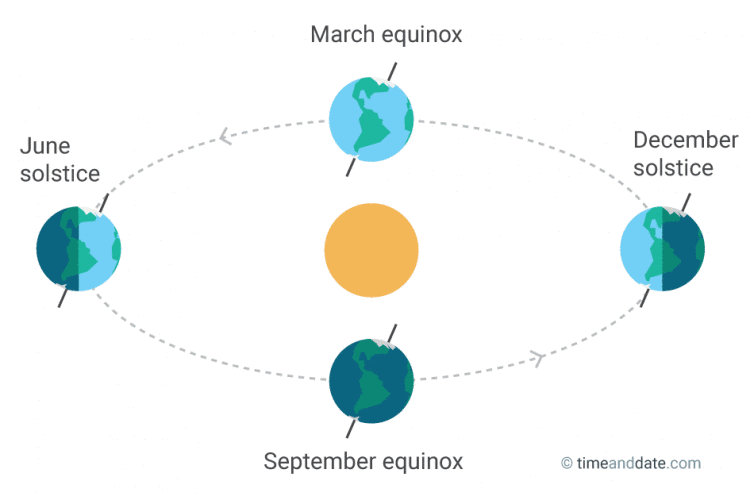
Now, climatologist Martin Claussen and co-workers at the Potsdam Institute for Climate Impact Research in Germany are proposing that the changing tilt of the Earth triggered the rapid drying of the Sahara. Like a spinning top slowly wobbling on its tip, the Earth’s tilt has decreased from 24.14 degrees to 23.45 degrees in the last 9000 years, resulting in cooler summers in the Northern Hemisphere. When Claussen introduced cooler Northern summers into a computer simulation of the Earth’s atmosphere, ocean, and vegetation, the monsoon storms that provide water to the Sahara grew weaker, killing off some of the native plants. The initial reduction in vegetation further reduced rainfall, says Claussen, starting a vicious cycle of desertification that began to accelerate about 4000 years ago. Less than 400 years later, Claussen’s team found, the drought caused by the vegetation-feedback mechanism could have wiped out almost all plant life in the desert.

One of the places most vulnerable to desertification is Africa’s Sahel region, located directly south of the Sahara and shown in deep red in Figure 1.

According to Wikipedia, the Sahel part of Africa includes:

(from west to east) parts of northern Senegal, southern Mauritania, central Mali, northern Burkina Faso, the extreme south of Algeria, Niger, the extreme north of Nigeria, central Chad, central and southern Sudan, the extreme north of South Sudan, Eritrea, Cameroon, Central African Republic and extreme north of Ethiopia.[4]

As of the 1970s, the Sahel also became a political body, albeit with a somewhat different makeup than that described above:

In 1973 the Permanent Interstates Committee for Drought Control in the Sahel (CILSS) was formed by Burkina Faso, Cape Verde, Chad, Gambia, Guinea Bissau, Mali, Mauritania, Niger and Senegal to group countries that were then becoming interdependent.

CILSS countries alone are home to around 58 million people, the majority of them subsistence farmers, sharing similar cultures and livelihoods even while their religions, languages and customs vary widely.

CILSS estimates that more than half the working-age population in the Sahel is engaged in or dependent on agriculture and is responsible for more than 40 percent of the region’s collective gross domestic product (GDP). Dryland crops such as millet, sorghum and cowpea, and cash crops such as groundnut and cotton are the predominant agricultural produce.

The population is growing very quickly in the Sahel. According to CILSS, there will be 100 million people in the region by 2020 and 200 million by 2050 – almost four times the current population. More than half of them, 141 million, will live in the three countries Egeland is visiting: Burkina Faso, Mali and Niger.

As Figure 1 shows, the region is prone to drought and desertification, meaning that it is unable to support the increasing population that subsists off of agriculture, be it herding or growing crops. So the people move elsewhere for subsistence – either they flock to cities within their own countries or they become environmental refugees in other countries. The Climate and Migration Coalition has written about this:

The Sahel region is highly dependent on agriculture for livelihoods and the wider economy. Agriculture is almost entirely rain fed, dependent upon a 3-4 month rainy season that refills lakes and the rivers which, in turn, irrigate crops. Annual rainfall is highly variable, some studies argue that the concept of ‘normal’ annual rainfall is almost meaningless in the Sahel. As well as erratic rainfall a number of other factors play an important part in creating the vulnerabilities of the people who live in the Sahel. Over the past half century a combination of land degradation, population growth and misplaced environmental and development policies have contributed to vulnerability. This vulnerability has in turn shaped patterns of migration and displacement. However, the changing climate is only one among a number of factors.

The article also includes a quote from one of the refugees:

“Migration has now become an inevitable method of adaptation for us … As a means of survival for us and our animals, we are forced to continuously migrate despite all the risks involved. This is our form of adaptation. We have always mastered it, but if nothing is done to ensure the safety of our space and activities, we risk, one day, being forced to abandon our way of life and join the swelling ranks of the unemployed in the city.”

– Hindu Oumarou Ibrahim, Peul Mbororo of Chad

In the Sahel the initiative to move is still mostly on the individual level. But we have already encountered (September 8, 2015) a different approach to a similar situation in Inner Mongolia (an autonomous region of China), where the government is forcing the Mongolian shepherds to stop herding and instead move to cities to minimize grazing and stop desertification.

Desertification, along with its causes and consequences, is a vast and complex issue. Any attempts to directly associate the phenomenon with climate change are controversial. Those of you with a desire to dig a bit deeper in this important issue might try two articles:

Posted in Anthropocene, Climate Change, immigration, IPCC, refugee, UN, Water | Tagged , , , , , , , , , , , , , , , , , , , , , , , , , , , , , , , , , , , , , , , , , , , , , , , , , , , , , , , , , , , , , , , | 1 Comment

Laboratory Observations of Collective Suicide

Rafik, a young, dear, French relative of mine, was born in Algeria. He still has family there that he visits often, occasionally going with some of them to tour the Sahara desert. We discussed his trips and the history of the Sahara desert; his stories fit nicely with the topic of desertification, one of the biggest vulnerabilities of climate change (April 24, 2018 blog). I was just starting to write about the topic, planning to include some of Rafik’s photographs, when my wife showed up with a short piece from the science section of The New York Times: “Fellow Travelers in Eco-Suicide.” It caught my imagination. When I visited the online version of the NYT, I found the article with a different title: “A Population That Pollutes Itself into Extinction (and It’s Not Us).” This change was sufficiently intriguing to motivate me to search for the original paper it described: “Ecological Suicide in Microbes.” The public response was widespread and immediate (as judged by Google’s response to the article’s title). People seemed to recognize the connection between this bacterial suicidal activity and the end result of humans ignoring the long-term consequences of climate change. I have long labeled climate change as self-inflicted genocide (see the November 15, 2016 blog). There is, however, a major difference between bacteria and us. Merriam Webster dictionary defines genocide as, “the deliberate and systematic destruction of a racial, political or cultural group.” The key word here is deliberate. One cannot be deliberate without a brain, and bacteria don’t have them. The same problem applies to the term suicidal in the other two titles.

Before proceeding, let’s get some details of the story from the abstract of the original paper that was published in Nature Ecology & Evolution (2018 May; 2(5): 867-872) by Christoph Ratzke, Jonas Denk and Jeff Gore. It is worth mentioning that all three authors are in physics departments: Ratzke and Gore at MIT in the US and Denk in Germany.

The growth and survival of organisms often depend on interactions between them. In many cases, these interactions are positive and caused by a cooperative modification of the environment. Examples are the cooperative breakdown of complex nutrients in microbes or the construction of elaborate architectures in social insects, in which the individual profits from the collective actions of her peers. However, organisms can similarly display negative interactions by changing the environment in ways that are detrimental for them, for example by resource depletion or the production of toxic byproducts. Here we find an extreme type of negative interactions, in which Paenibacillus sp. bacteria modify the environmental pH to such a degree that it leads to a rapid extinction of the whole population, a phenomenon that we call ecological suicide. Modification of the pH is more pronounced at higher population densities, and thus ecological suicide is more likely to occur with increasing bacterial density. Correspondingly, promoting bacterial growth can drive populations extinct whereas inhibiting bacterial growth by the addition of harmful substances—such as antibiotics—can rescue them. Moreover, ecological suicide can cause oscillatory dynamics, even in single-species populations. We found ecological suicide in a wide variety of microbes, suggesting that it could have an important role in microbial ecology and evolution.

The essence of the bacterial suicidal behavior (of which said bacteria is probably unaware) is a lack of ability to dispose of their waste within a relatively small enclosure. To take the human analogy further, Figure 1 shows the global extent of basic sanitation facility usage.

Figure 1Percent of global population that uses at least basic sanitation facilities

The World Bank defines the indicator as follows:

The percentage of people using at least basic sanitation services, that is, improved sanitation facilities that are not shared with other households. This indicator encompasses both people using basic sanitation services as well as those using safely managed sanitation services. Improved sanitation facilities include flush/pour flush to piped sewer systems, septic tanks or pit latrines; ventilated improved pit latrines, compositing toilets or pit latrines with slabs.

Not too long ago, humans didn’t use any sanitation facilities. But at that point, human density was low enough that we could move across the land and let nature apply the old dictum, “dilution is a solution.” The bacteria in the MIT-German study didn’t have that option. The bacteria’s waste consisted of various organic acids (developed from the metabolization of the glucose supplied as the source of nutrition). The organic acids produced changed the pH of the medium to values that inhibited digestion and eventually led to collective bacterial death. When the experimenters included a buffer into the medium that was able to keep the pH approximately constant, the bacteria did fine.

We can drive the analogy even further: about 25% of the carbon dioxide that is produced by our consumption of fossil fuels ends up dissolved into our oceans, thus changing the oceans’ pH to more acidic values which in turn inhibit almost all life forms. Since the oceans are so large, complete collective death will take some time.

The untreated waste that humans excrete becomes a poison, just as we saw with the bacteria. We need to improve digestion/processing mechanisms (in the same way that the experimenters added the buffer) to neutralize the problem and increase our chances of survival. (See “Tragedy of the Commons” July 2, 2012 blog).

While the paper itself is only five pages long (including a full page of references), there is a separately published online supplement that spans 25 pages. The supplement includes a suggested outline for a mathematical approach to facing ecological suicide that might be applicable to many other situations. The approach is based on logistic growth (February 4, 2014), which leads to saturation in concentration (carrying capacity). In this case, the saturation level changes with the waste concentration that manifests itself in terms of change in the pH of the medium. This is probably one of the first quantitative analyses of the collective suicide of a living system.

Both titles – that of the important Ratzke paper just published in Nature and the one heading this blog – falsely invoke commonality between humans and life forms that lack, functioning, thinking brains. The tragedy is that even with the advantage of our thinking power, we are in a similar situation to Paenibacillus sp. bacteria.

Stay tuned for next week’s examination of desertification.

Posted in Anthropocene, Anthropogenic, Climate Change, Holocaust, Sustainability | Tagged , , , , , , , , , , , , , , , , , , , , , , , , , , , , , , , , , , , , , , | 1 Comment

Vulnerabilities: Water Stress

Figure 1 in last week’s blog listed key impacts of climate change as a function of increasing global temperature relative to the average temperature between 1980 and 1999. Based on NASA measurements (Figure 2 in the same blog), we have calculated a temperature increase of 0.75oC within that time period. One of the key impacts shown in that figure is “Hundreds of millions of people exposed to increased water stress.” This impact is estimated to occur once the global temperature rises by 3oC. This blog describes the current situation and some possible strategies to alleviate the stress. Here is how the World Resource Institute (WRI) describes the present global situation:

Our analysis finds that 37 countries currently face “extremely high” levels of water stress, meaning that more than 80 percent of the water available to agricultural, domestic, and industrial users is withdrawn annually.

Yet the world’s water systems face formidable threats. More than a billion people currently live in water-scarce regions, and as many as 3.5 billion could experience water scarcity by 2025. Increasing pollution degrades freshwater and coastal aquatic ecosystems. And climate change is poised to shift precipitation patterns and speed glacial melt, altering water supplies and intensifying floods and drought.

Figures 1 and 2 below describe the situation in terms of number of people exposed to water stress and its distribution around the globe.

Figure 1Global exposure to increased water stress (Source: “Environmental Outlook 2030” OECD 2008)

Figure 2Global map of water stress index

Given that 70% of the planet is covered in water, there is obviously no shortage of it. However, there is a shortage of fresh water that can be used to satisfy the basic human needs summarized in Figure 3. High and low-income countries have different needs, which directly relate to their degrees of industrialization and the fractions of their workforces employed in agriculture (March 27, 2018 blog).

Figure 3Global water use

As Figure 2 shows, severe water stress doesn’t have to be on a countrywide level. Good examples of this are the US, Australia, China, and more recently South Africa. One solution for such countries with stress in some parts and abundance in others is to move massive amounts of fresh water from the latter to the former. Figure 4 shows China’s massive water works from the Yangtze River basin to Beijing, which I have discussed before (September 1, 2015):

Figure 4 – The South-North water division project in China

California has a history of developing extensive infrastructure to move water from the north to supply Los Angeles and the California Central Valley, which in turn supplies the US with the majority of the fruits and vegetables it consumes:

In 1979, a balding man with a touch of gray at the temples and glasses like windshields was holding forth on his favorite subject: H2O. Pat Brown, former governor of California — and father of current California governor Jerry Brown (D) — was asking: What’s the value of water?

“You need water,” he told the University of California’s Oral History Program, as recounted in Marc Reisner’s “Cadillac Desert: The American West and its Disappearing Water.” “Whatever it costs you have to pay it. … If you’re crossing the desert and you haven’t got a bottle of water, and there’s no water anyplace in sight and someone comes along and says, ‘I’ll sell you two spoonfuls of water for ten dollars,’ you’ll pay for it. The same is true in California.”

This philosophy — unlimited water for every Californian at any price — was behind Pat Brown’s massive mid-century push for water projects in the Golden State. And it’s a legacy his son, who just announced California’s first mandatory water restrictions, must endure.

We can also address water stress by increasing the efficiency of water use (e.g. by way of a price increase) or “creating” new fresh water through desalination.

Water productivity, according to the World Bank, is calculated as GDP in constant prices divided by annual total water withdrawal. Increase in water productivity means that that less water is needed to produce a unit of economic activity – a balance that is equivalent to saving water. Figure 5 shows the changes in global water productivity. The data are sporadic and do not show a discernible trend but one can see that they can jump close to a full order of magnitude in a short time, providing great opportunity for improvement.

Figure 5Global water productivity (GDP in units of 2010 US$ per cubic meter of water used)

Table 1 shows the water productivity in the 12 countries I have used since February as a yardstick for global activity. I have added Israel to this table because I wrote earlier about the successes of its water management policies (March 4, 2014 blog).

Table 1 – Indicators related to water productivity of Israel, the 12 most populous countries, and the world as a whole

Country Water Productivity
Israel 129 (2004)
United States 35.7 (2010)
Nigeria 29.6 (2010)
Brazil 29.5 (2010)
Russia 27.8 (2013)
DR Congo 22.9 (2005)
China 15.0 (2015)
Mexico 14.1 (2015)
Ethiopia 5.0 (2016)
Indonesia 4.0 (2000)
Bangladesh 2.9 (2008)
India 2.6 (2010)
Pakistan 0.9 (2008)
World 5.0 (2016)

Figure 6 shows global water desalination efforts (October 29, 2013). Here is what I wrote in that blog:

The map below shows the “hot spots” for the use of this technology. Unfortunately, the height of the bars is not normalized to any parameter that scales with the size of the country (population, GDP or water consumption) so the visual might be a bit misleading. For obvious reasons (abundance of oil money, great shortage of water) South Arabia and the Gulf States are leading the effort. The effort is visible in almost every continent but, as is so often the case with activities in which available money plays an important role, it is dominated not necessarily by need, but rather, by the ability to allocate the necessary resources.


Figure 6 – Global desalination capacities (October 29, 2013 blog)

When I wrote about water management in Israel, I emphasized how the country coordinated all three activities mentioned here with the fluctuation of its external water supply (weather), as well as its practice of recycling water. Most importantly, I underlined the price that consumers have to pay. This also requires optimizing water quality for every application. To successfully achieve this same success on a global scale is a big challenge.

Posted in Anthropocene, Climate Change, IPCC, Sustainability, Water | Tagged , , , , , , , , , , , , , , , , , , , , , , , , , , , , , , , , , , , , , , , , , , , , , , , , , , , , , , , , , , , , | 3 Comments

Water Cycle Vulnerabilities

Happy belated Earth Day and Happy 6th Birthday to Climate Change Fork!

I have repeatedly mentioned that global climate change is driven mainly by our interruption of the energy cycle. Specifically, we use fossil fuels as our main energy source as we aim to increase standards of living throughout the world. However, the biggest immediate impact of climate change that we are feeling relates directly to the subsequent disturbance of the water cycle. Not only does that change already have major effects on our lives, it is projected to accelerate in a business as usual scenario (as the global population continues to grow and we keep striving for higher standards of living).

Projections are abstract and they may be wrong (overestimating or underestimating the effects of present trends). My last series of blogs (starting mid-February) tried to analyze present trends in energy use, carbon emission, population growth, and the average standard of living in the world’s most populated countries as well as a few of the most developed ones. I will continue to look at the same groups of countries in the coming series of blogs with an emphasis on water use. I’m starting with the projections from the IPCC’s 2007 Fourth Assessment Report (AR4).

Figure 1 summarizes the IPCC’s assessments of five categories that are all directly or indirectly connected to water use.

Figure 1

Figure 2 shows an estimate of where we stand now in terms of temperature rise. It displays the annual temperature from 1880, as compiled by NASA, overlaid by a smoothed version using a statistical method known as Lowess Smoothing. Using the timetable from Figure 1, we experienced an average rise of 0.75oC from 1980 to 1999.

Global temperature change 1880-2020Figure Global temperature change 1880-2020

Figure 3 ranks global concerns about various consequences of climate change. Water impact, specifically with regard to droughts and water shortages, is by far the most pressing issue in most people’s minds.

Global concerns about climate change - highest percentage: water shortages & droughtsFigure 3Global Concerns about Climate Change

I have discussed the connections between climate change and global water vulnerabilities in the past (see for example August 27, 2013 – water stress; November 12, 2013 – water desalination; November 19, 2013 – feedback on desalination; March 4, 2014 – Israel and water management).

This series will focus on similar topics including water stress, desertification, floods, the state of the ocean, and the role of water in the amplification of the impact of carbon that of burning fossil fuels. I am continuing my focus on the 12 most populated countries so as to develop a global perspective. This is not about far-future projections but rather present practices, emphasizing steps that are being taken right now to try to make the future a better one.

Posted in Anthropocene, Anthropogenic, Climate Change, IPCC, politics, Sustainability | Tagged , , , , , , , , , , , , , , , , , , , , , , , , , , , , , , , , , , , , , , , , , , , , , , , , , , , , , , , , , | 1 Comment

If You Don’t Believe In Climate Change – Try It!

This blog is coming out three days after the March for Science and five days before Earth Day and my wife’s birthday. It’s a busy week.

Climate change is an abstract issue. Its main impact is projected to take place in the future and its extent is global. To have any chance at mitigation we needed to start yesterday. Barring that, today will do. Efforts at mitigation include changing energy sources and compromising in many areas that involve our quality of life. In most places, these changes and compromises require political decisions; in democratic societies these decisions need broad public acceptance.

It is not surprising that significant numbers of people worldwide have decided that they do not want to make such compromises. They maintain that the prospects of existential climate change, driven largely by man-made activities, are nonexistent. Well, science suggests that if you don’t believe in someone else’s scientific conclusions, you try to prove your own theory with observations.

Here is a simple experiment for those of you disbelievers:

During a nice summer day (a good spring day will do) get into your car, lock the doors and roll up all your windows and sit there. See what happens.

It turn out that hundreds of people are doing this, most of them inadvertently, with their small children or their pets. Figure 1 records the number of fatalities that result from this neglect in the US. Figure 2 shows the reason – a quick temperature rise that causes cruel death from hyperthermia. Both figures are taken from San Jose State University’s Department of Meteorology & Climate Science. When you are capable of taking care of yourself, you open the car doors and/or all the windows or you start the car and turn on the air conditioning. If you are a baby or a pet that cannot do such things, or the doors and windows are jammed and the car won’t turn on, you die.

Figure 1


Figure 2

This mirrors climate change and its consequences on a small scale. Let us try to analyze the similarities.

Figure 3 shows the thermal radiation of a black object such as an iron poker that we put into a furnace to increase its temperature. I discussed this radiation in a previous blog (January 7, 2013):

It turns out that every “visible” object in the universe emits radiation that depends only on the temperature of the object and the surface area of the object. This kind of radiation is called blackbody radiation. “Visible” objects are the regular objects that are all around us and are constituted of atoms and molecules. There are other kinds of objects that don’t emit any radiation – this is dark matter and we can locate it only through its gravitational force. We don’t see this matter around us, but, in the universe, we find five times more dark matter as compared with visible matter and we still have no idea about the structure of dark matter.

The temperatures in the figure are given in degrees Kelvin, where:

oK = oC + 273

The Kelvin temperature scale is about absolutes (the 0 on this scale is an absolute zero, below which you cannot go). Both axes are given in logarithmic terms (December 6, 2016) to best demonstrate the large differences in scale. The wavelengths express colors. The visible part of this radiation is shown in Figure 3 as a narrow band. Blue and violet have low wavelengths so they are on the left side of that small spectrum while red, with a higher wavelength is on the right side of it. Any light on this figure with a lower wavelength than violet is known as ultraviolet and any with a longer wavelength is known as infrared, which we often refer to as heat. The two temperatures that will attract our attention in Figure 3 are 5777oK (the surface temperature of the sun) and 300oK, which is the temperature of ambient light on Earth. We can see that as our object’s temperature drops the radiation peak moves to a longer wavelength with a lower peak value. The wavelength scale in Figure 3 is given in micrometers (μm) – millionths of a meter. 

Figure 3

Figures 4 and 5 give the transmission spectrum of a 2mm thick piece of glass (Figure 4) and the absorption spectra of water and carbon dioxide in Earth’s atmosphere (Figure 5). The scale in Figure 4 is given in nanometers (nm), such that 1000nm = 1μm. In both figures most of the light from the surface of the sun (5777oK in Fig 3) is transmitted but significant portions of the light at 300oK (ambient) between 1 and 10 μm are blocked, thus raising the temperature of the interior. On Earth, much of this selective radiation blocking is done by the carbon dioxide released when we burn fossil fuels (see discussion of the carbon cycle, June 25, 2012). Additionally, as the temperature warms, a significant amount of additional water evaporates, playing a major role in blocking the infrared radiation from leaving Earth and raising the overall temperature further. This positive feedback amplifies the carbon dioxide impact.

Figure 4 – Transmission spectrum of a 2mm thick piece of glass

Figure 5 – Absorption of oxygen and ozone, carbon dioxide, and water into Earth’s atmosphere

The mechanism of the car heating is obviously much simpler than that of the planet heating. In the car the optical properties of the windows remain approximately constant. The chemical composition involved in transmitting the visible light while other elements block the infrared radiation doesn’t change as it gets hotter. On Earth the atmosphere plays the role of the windows. Human output of carbon dioxide leads to increased amounts of evaporated water, which in turn amplifies the blocking of infrared radiation. In the car, unless we are babies or animals we can get out through the doors and/or open the windows to control the temperature. On Earth, we cannot “open the door”; we cannot go anywhere. The equivalent of opening the windows would be to suck out the atmosphere. We cannot do that and survive. Nor do we have an air conditioner. In principle, we can clear the chemistry of the atmosphere of the infrared blocking elements or at least halt the practices that accumulate them. That’s what we are trying to do. By denying the necessity to actively mitigate our contributions to climate change, we are essentially locking entire future generations inside an increasingly hot car.

Posted in Anthropocene, Anthropogenic, Climate Change, Sustainability | Tagged , , , , , , , , , , , , , , , , , , , , , , , , , , , , , , , , , , , , , , , , , , , , , , , , , , , , , , , , , , , , , , , , , , | 2 Comments

Vulnerabilities: Local Environmental Displacements

Last week’s blog looked at one of the biggest vulnerabilities that anthropogenic climate change has already produced: the dislocation of people from land that is no longer inhabitable. The dislocated people either try to move to safer locations within their countries of origin and become internally displaced persons or cross national borders and become refugees:

An internally displaced person (IDP) is someone who is forced to flee his or her home but who remains within his or her country’s borders. [2] They are often referred to as refugees, although they do not fall within the legal definitions of a refugee.[3]

A refugee, generally speaking, is a displaced person who has been forced to cross national boundaries and who cannot return home safely (for more detail see legal definition). Such a person may be called an asylum seeker until granted refugee status by the contracting state or the UNHCR[2] if they formally make a claim for asylum.[3]

I also provided some key global data indicating that natural disasters are the dominant driving forces for such displacements – far exceeding escape from violence. This is true in spite of the increasing coverage of/attention to those fleeing from the horrific situations in Syria, Yemen, and countries in Africa, as well as the plight of the Rohingya in Myanmar. Most of the natural disasters driving people from their homes are amplified by climate change and are expected to worsen in terms of geographic scope and the number of people directly impacted. US intelligence has shown interest in this growing trend of displacement and considers it a major security risk.

One of the countries at the forefront of this exodus – both with regard to climate and violence – is Syria. Credible accounts and data indicate that the civil war that has been raging for the last seven years originated with the government’s inability to handle the severe impacts of an ongoing drought. Climate change-driven environmental disasters have major political fallout.

Figure 1 shows a global account of the refugee population. The number, which reached its lowest point of roughly 13 million in 2005, has almost doubled since then.

Figure 1Global refugee population (2016)

Tables 1 and 2 catalog the countries with the most refugees and internally displaced persons. Most of the refugees in Table 1 are fleeing violence. Table 2 includes more people escaping natural disasters.

Table 1Ten countries with the largest total refugee populations (Mid-2017)

Country Total refugees (Mid 2017)
Turkey 3,203,785
Pakistan 1,406,794
Uganda 1,269,758
Lebanon 1,003,076
Iran 978,698
Germany 864,686
Ethiopia 841,285
Jordan 692,240
Sudan 538,797
DR Congo 533,568


Table 2Ten countries with the largest populations of internally displaced persons and refugees (Mid-2017)

Country Internally displaced persons

(Violence)

Internally displaced persons

(Disaster)

Refugees
China 7,434,000 208,000
Syria 6,326,000 5,524,000
Philippines 367,000 5,930,000 400
India 1,244,000 2,400,000 7,200
DR Congo 3,152,000 130,000 537,000
Nigeria 2,456,000 78,000 229,000
Yemen 1,974,000 18,000
Ukraine 1,653,000 239,000
Myanmar 679,000 509,000 490,000
Bangladesh 426,000 614,000 14,000

You can see the full data about the original conflicts and disasters that people were escaping in the CIA World Factbook.

I will follow with the most detailed account I have found of the environmental origins of the raging Syrian conflict. It was published in one of the most prestigious scientific journals, the “Proceedings of the Natural Academy of Sciences” (PNAS March 17, 2015. 112 (11) 3241-3246):

Connection between environmental causality and violence causality: The Syrian example:

“Climate change in the Fertile Crescent and implications of the recent Syrian drought”

Colin P. Kelley, Shahrzad Mohtadi, Mark A. Cane, Richard Seager and Yochanan Kushnir

Significance

There is evidence that the 2007−2010 drought contributed to the conflict in Syria. It was the worst drought in the instrumental record, causing widespread crop failure and a mass migration of farming families to urban centers. Century-long observed trends in precipitation, temperature, and sea-level pressure, supported by climate model results, strongly suggest that anthropogenic forcing has increased the probability of severe and persistent droughts in this region, and made the occurrence of a 3-year drought as severe as that of 2007−2010 2 to 3 times more likely than by natural variability alone. We conclude that human influences on the climate system are implicated in the current Syrian conflict.

Abstract

Before the Syrian uprising that began in 2011, the greater Fertile Crescent experienced the most severe drought in the instrumental record. For Syria, a country marked by poor governance and unsustainable agricultural and environmental policies, the drought had a catalytic effect, contributing to political unrest. We show that the recent decrease in Syrian precipitation is a combination of natural variability and a long-term drying trend, and the unusual severity of the observed drought is here shown to be highly unlikely without this trend. Precipitation changes in Syria are linked to rising mean sea-level pressure in the Eastern Mediterranean, which also shows a long-term trend. There has been also a long-term warming trend in the Eastern Mediterranean, adding to the drawdown of soil moisture. No natural cause is apparent for these trends, whereas the observed drying and warming are consistent with model studies of the response to increases in greenhouse gases. Furthermore, model studies show an increasingly drier and hotter future mean climate for the Eastern Mediterranean. Analyses of observations and model simulations indicate that a drought of the severity and duration of the recent Syrian drought, which is implicated in the current conflict, has become more than twice as likely as a consequence of human interference in the climate system.

Fig. 2

Six-month winter (November−April mean) Syria area mean precipitation, using CRU3.1 gridded data. (B) CRU annual near-surface temperature (red shading indicates recent persistence above the long-term normal). (C) Annual self-calibrating Palmer Drought Severity Index. (D) Syrian total midyear population. Based on the area mean of the FC as defined by the domain 30.5°N–41.5°N, 32.5°E–50.5°E (as shown in 2). Linear least-squares fits from 1931 to 2008 are shown in red, time means are shown as dashed lines, gray shading denotes low station density, and brown shading indicates multiyear (≥3) droughts.

A short personal testimony:

An abundance of history books on the subject tell us that civil unrest can never be said to have a simple or unique cause. The Syrian conflict, now civil war, is no exception. Still, in a recent interview (45), a displaced Syrian farmer was asked if this was about the drought, and she replied, “Of course. The drought and unemployment were important in pushing people toward revolution. When the drought happened, we could handle it for two years, and then we said, ‘It’s enough.’” This recent drought was likely made worse by human-induced climate change, and such persistent, deep droughts are projected to become more commonplace in a warming world.

The next few blogs will deal with some specific, climate change-connected, vulnerabilities such as water stress and desertification.

Posted in Anthropocene, Anthropogenic, Climate Change, immigration, refugee, Sustainability, UN | Tagged , , , , , , , , , , , , , , , , , , , , , , , , , , , , , , , , , , , , , , , , , , , , , , , , , , , , , , , , , , | 2 Comments

Vulnerabilities: Global Environmental Refugees

I am not the only one to predict (February 3, 2015 and October 3, 2017) that continuing our practices in a business as usual scenario will lead to destruction of the physical environment as we know it – as well as what has already been labeled the sixth mass extinction. This extinction will not occur suddenly as the result of one event such as a nuclear war or collision with a large astronomical object; it will happen more gradually. Numerous visible markers strongly suggest that this process is already taking place.

Anthropogenic climate change fueled by the uncontrolled release of greenhouse gases is one of the main mechanisms leading us in that direction. Many now recognize the dangers and the world is trying to take steps to mitigate this process. One of the biggest steps is the transition toward non-carbon-based energy sources that do not change the energy balance of the planet. This should help keep us within the “Goldilocks Zone” – the ideal temperature and abundance of liquid water on the planet’s surface to support life. By all accounts, the transition is a stuttering one (December 24, 2012 blog and more recent entries) because of conflicts between future and present needs. My last few blogs tried to summarize where the most populated countries and the world as a whole stand in this process.

As in any case, people in more vulnerable situations and environments are trying to move to more stable ones. Such moves create major global security issues.

The US intelligence community recognizes the challenge and is required to publish periodic reports on the global situation (every 4 years) warning of some of the challenges. From the January 2017 report, “Global Trends: Paradox in Progress” (May 23, 2017):

Changing climate conditions challenged the capacity of many governments to cope, especially in the Middle East and Africa, where extended droughts reduced food and water supplies and high temperatures suppressed the ability of people to work outdoors. Large numbers of displaced persons from the region often found they had no place to go as a series of dramatic terrorist attacks in Western countries drove those governments to adopt stringent security policies that restricted immigration.

The US intelligence community also issues yearly reports of its observations about climate change and its recommendations for addressing the aspects that directly affect US security. Here are some excerpts from the beginning of the most recent report:

The Center for Climate & Security: Exploring The Security Risks of Climate Change

Program Areas

  • Policy Development: Convening and facilitating public-private collaborative policy development processes and dialogues in critical areas of the climate-security field, such as the role of national and intergovernmental security institutions in addressing climate change.

  • Analysis: Elevating the climate and security discourse through the Center for Climate and Security blog, our reports on the sub-national, national, regional and international security implications of climate change, and other publications.

  • Research: Conducting research to fill information gaps, including assessing the security community’s strategic and operational rationale for addressing climate change risks, examining the role of climate change, water and food insecurity in the security dynamics of strategically-significant regions of the world, and forecasting the potential of disruptive technologies to address climate and security risks.

  • Resource Hub: Answering frequently asked questions, keeping track of the latest policy developments, and acting as a resource hub for key climate and security documents from governments, international institutions, non-governmental organizations and academia.

Context

Climate change, in both scale and potential impact, is a strategically-significant security risk that will affect our most basic resources, from food to water to energy.  National and international security communities, including militaries and intelligence agencies, understand these risks, and have already taken meaningful actions to address them. However, progress in comprehensively preventing, preparing for, adapting to and mitigating these risks will require that policy-makers, thought leaders and publics take them seriously.

Other countries have their own perspectives on the dangers they face:

Water, Conflict and Cooperation: Lesson From the Nile River Basin

by Patricia Kameri-Mbote:

In 1979, Egyptian President Anwar Sadat said: “The only matter that could take Egypt to war again is water.” In 1988 then-Egyptian Foreign Minister Boutros Boutros-Ghali, who later became the United Nations’ Secretary-General, predicted that the next war in the Middle East would be fought over the waters of the Nile, not politics. Rather than accept these frightening predictions, we must examine them within the context of the Nile River basin and the relationships forged among the states that share its waters.

The iDMC (Internal Displacement Monitoring Centre) report addresses the vast number of displaced persons, an issue that is not relegated to the future but clearly visible now. Figure 1 shows a global picture of displacement:

Figure 1

Figure 1 confirms that displacements associated with disasters have surpassed those driven by conflicts and violence.

Figure 2 specifies the kinds of disasters in question.

Figure 2

Earthquakes and volcanic eruptions are not associated with anthropogenic climate change. The rest of the disasters are directly associated with climate change and our disturbance of the water cycle. These disasters are expected to worsen and spread as the global temperature rises, leading to even more displacement:

Climate refugees or environmental migrants are people who are forced to leave their home region due to sudden or long-term changes to their local environment. These are changes which compromise their well-being or secure livelihood. Such changes are held to include increased droughts, desertification, sea level rise, and disruption of seasonal weather patterns (i.e. monsoons[1]). Climate refugees may choose flee to or migrate to another country, or they may migrate internally within their own country.[2]


Figure 3 highlights the destination countries for displaced persons.

Figure 3 Refugees by hosting countries in 2016

A large number of displaced persons do not leave their countries. When storms and sea level rise drive them from their homes, land, and livelihoods, they flock to cities in search of some relief and the hope of new opportunities. Here is an example from Bangladesh:

Cities Swell with Climate Migrants: Bangladesh’s capital Dhaka is struggling to absorb migrants from the countryside forced to move by environmental change, Part 3 of a special series.

By Lisa Friedman on March 16, 2009

Nearly 500,000 people – about the population of Washington, D.C. – move to this city on the banks of the Buriganga River each year, mostly from coastal and rural areas. More than 12 million people live in Dhaka, twice as many as just a decade ago. It’s one of the world’s most densely populated countries on a planet that is seeing rapid urbanization.

In Dhaka, migration experts say, climate change already is fueling urban arrivals. Coastal flooding is occurring with more frequency. Rice crops, in particular, are slowly dying because of creeping salinity levels, and in the worst cases, entire homes and villages are lost to fearsome storms. 

A typical individual story:

Standing among the mazes of corrugated metal shacks with no running water or sanitation services, Omar said he left the town of Sherpur, north of Dhaka, “to earn a living.” He came from a family of farmers, but when floods ruined the crops in his village last year, he borrowed 500 taka (about $7) to take the bus to Dhaka.

Now he, his wife and their two daughters live in a single room and share a flimsy wooden plank latrine with about 35 other families in the Karail slum, across the river from Dhaka’s upper-class Gulshan neighborhood. He isn’t likely to go back to Sherpur.

“I don’t have the means to go home. I don’t have a house or anything over there. It’s not possible,” he said.

Next week I will return to the 17 countries that I have examined in recent blogs.

Posted in Climate Change | Tagged , , , , , , , , , , , , , , , , , , , , , , , , , , , , , , , , , , , , , , , , , , , , , , , , , , , , , , , , , , , , , , , , , , , , , , , , , , , , , | 2 Comments