Can We Reopen Schools? Who Loses Out if We Don’t?

I just read an important op-ed in the New York Times by Nicholas Kristof, “‘Remote Learning’ Is Often an Oxymoron: We need to try harder to get kids back in school.” The essence of the piece is that, while rich kids have all the tools and support systems necessary to learn successfully either on- or offline, millions of less fortunate kids don’t have such resources. Kristof posits that not only will their education suffer, that fact will also deprive them of advantages in their future.

While President Trump has insisted that schools physically reopen, the private school his son Barron is attending is sticking with remote learning.

Yes, that feels like a double standard, but it’s more complicated than that. Barron will have a computer and internet access at home. He’ll have adults making sure he does his work, and he’ll be able to eat his fill without free school lunches.

In short, affluent children will mostly be fine even without in-person classes. But one study found that almost 17 million American children live in homes without high-speed internet, and more than seven million don’t have a computer at home. For disadvantaged kids, “online learning” is an oxymoron.

Prolonged school closures will worsen dropout rates across the nation, for missing just 10 percent of class days is associated with a sevenfold increased risk of dropping out. Even in normal times, only 53 percent of children attending Bureau of Indian Education schools finish high school. Closures after Hurricane Katrina led many students to leave school for good.

Kristof judges that some of these less fortunate students will not learn nearly as much remotely as they would in a physical classroom setting. Others have made similar arguments based on a different perspective. They have pointed out that, especially for small children, online learning requires direct parental involvement. That’s a big hurdle for parents’ ability to work—even if some or all of their work can be done remotely. Again here, low-income families suffer the most. The truth of all of this is almost self-evident. Clearly, we need to find out a way to get back to classrooms but that’s easier said than done. Kristof also points out that, although President Trump appears to be correct that children are much less vulnerable to the coronavirus than adults or the elderly, they are also vector points that can easily transmit the virus to teachers, parents, grandparents, administrative personnel, and others.

Two weeks ago (September 15th), I discussed the balance between taking action and not doing anything. I cited a Forbes piece that argued renewable power sources are too expensive. It ignored the expenses incurred by the worsening consequences of climate change that will come from not shifting to renewable sources. In a school setting, the key balance is between safety and disruption. I am teaching at a university that is now almost completely online and my grandchildren are going to schools with mixed online/offline classes so I am getting a first-hand view of both sides.

I spent my early childhood in the Warsaw Ghetto, followed by the Bergen-Belsen concentration camp but was liberated by the American army one month short of my 6th birthday. This meant I was able to start school at the same age as all of the other kids in my class (April 22, 2012, August 25, 2020 blogs). I have family members a few years older than me. They too survived the Holocaust but they started school later. This, combined with the increased awareness of what they had been through, left a much stronger impact on them. That said, my wife is a developmental psychologist and she has noted that we are giving too little credit to children’s adaptability. Children are resilient, at least up to a point.

There is no question (at least in my mind) that when safety is not an issue, everybody prefers face-to-face learning. Some schools around the world have been able to adapt to the pandemic. In these instances, children, teachers, and administrators are back to the usual face-to-face learning model. Here are two such schools, from opposites side of the world:

Figure 1School in Wuhan

Figure 2School in Uruguay

Adapting to this level of safety is very expensive, though, and many schools don’t have the resources to do so. Schools that can’t follow the necessary safety precautions must weigh potential delayed development and other effects of waiting or distanced learning with the certain exposure that in-person learning brings to more vulnerable populations. For me, this choice is a no-brainer – I will always vote for life over education.

Unfortunately, not everyone has taken the same stance. Plenty of colleges have opened their campuses without completing or enforcing known safety precautions:

“A New Front in America’s Pandemic: College Towns”  by Sarah Watson, Shawn Hubler, Danielle Ivory and Robert Gebeloff

IOWA CITY, Iowa — Last month, facing a budget shortfall of at least $75 million because of the pandemic, the University of Iowa welcomed thousands of students back to its campus — and into the surrounding community.

Iowa City braced, cautious optimism mixing with rising panic. The university had taken precautions, and only about a quarter of classes would be delivered in person. But each fresh face in town could also carry the virus, and more than 26,000 area residents were university employees.

“Covid has a way of coming in,” said Bruce Teague, the city’s mayor, “even when you’re doing all the right things.”

Within days, students were complaining that they couldn’t get coronavirus tests or were bumping into people who were supposed to be in isolation. Undergraduates were jamming sidewalks and downtown bars, masks hanging below their chins, never mind the city’s mask mandate.

Now, Iowa City is a full-blown pandemic hot spot — one of about 100 college communities around the country where infections have spiked in recent weeks as students have returned for the fall semester. Though the rate of infection has bent downward in the Northeast, where the virus first peaked in the U.S., it continues to remain high across many states in the Midwest and South — and evidence suggests that students returning to big campuses are a major factor.

Unfortunately, some of the most serious safety issues have less to do with schools’ insufficient care/adaptability than they do with the sheer selfish dishonesty of some parents and students:

Parents send student to school while knowingly infected with coronavirus, mayor says

by Taylor Romine and Madeline Holcombe,

Almost 30 teenagers have to quarantine after parents sent their child to a Massachusetts school despite knowing they were positive with Covid-19, according to Attleboro Public Schools and the town’s mayor.

A Covid-19 positive student attended class on Monday, but the school wasn’t notified of their diagnosis until the next day, Attleboro High School superintendent David Sawyer said in a letter sent out to families Tuesday night. Twenty-eight students who had close contact with the infected person have been notified and asked to quarantine for 14 days, Sawyer said.

I will finish this piece on a lighter note: the University of Arizona is using a creative method to track COVID-19 presence on its campus via virus particles in the sewer. (“How the University of Arizona used No. 2 to solve its No. 1 problem: The coronavirus”).

Posted in Climate Change, Education | Tagged , , , , , , , , , , , , , , , , , , , , , , , , , , , , , , , , , , , , , , , , , , , , , , , , , , , , , , , , , , | 9 Comments

Happy Jewish New Year

 Let This Year be as Short as Possible and Mark the End of the Virus

I started to write a blog about opening schools—a timely topic right now. However, I got a message from my Australian family for Rosh Hashana—the Jewish New Year (the evening of September 18th marked the start of the year 5781 in the Jewish calendar) and changed my mind. My Australian relatives weren’t overly optimistic about the coming year. They wished us all a safe, sanitized, distanced, and happy new year. They hoped we would stay healthy (especially COVID-free) and would be able to weather all of the new restrictions and limitations that will continue to change everyone’s lives for at least the next 2-3 years. The Islamic New Year was on August 19th; I would not be surprised if Muslims celebrated the holiday in a similar spirit. This is definitely different from the evening of December 31, 2019, when we all wished everybody an uncomplicated, “Happy New Year!”

I wrote a blog on August 14, 2018 (“Giving Up is Not an Option: Let’s Focus on What We Still Can Do”), where I took my inspiration from the game of bridge. The logic fits the present situation even better than that of two years ago:

A “golden” rule of bridge (as conveyed to me) is to play based only on information that can help you immediately and ignore everything else, even if it might impact your ultimate success.

I came to realize that such a strategy is essential for survival in this age of climate change and there is no better time to start implementing it than now.

Right now, on top of climate change, we are grappling with COVID-19. The western US is ablaze and Alabama and northern Florida are drowning. Europe is starting to experience a second wave of the coronavirus and Victoria, Australia is back in a lockdown and waiting for the almost inevitable bush fires in the coming summer. I have close family in all of these places. Everything has become personal.

I am focusing with my students on finding ways to extract some good news from the coronavirus so we can learn how to confront future disasters. For instance, we survey the successes and failures in coronavirus responses around the world and judge how relevant they are to our confrontation with the longer-term disaster of climate change. I will write about some of these projects soon and have my students write guest blogs as well.

We celebrated Rosh Hashana with a sweet potato and dried fruit dish called tzimmes, honey chicken, and wine. For the first time since the lockdown, we went to visit friends, sitting on the terrace, keeping social distance, and wearing masks when we needed to move around. We shared our homemade tzimmes and they made an excellent kugel. Many of the traditional foods for the Jewish New Year are sweet. They reflect the hope for a sweet year.

Enjoying the dishes, I reflected that my wishes for this new year are a bit different from usual. Mostly, I just wanted this past year—and all the baggage that it carried—to be over. I thought that this new year might be more accurately celebrated with the bitter herbs that are traditional for Passover—a symbol of suffering and sorrow. Of course, I eventually decided it might be better for my mental health to approach this period with a positive outlook, hoping for minimum damage. Despair, too, can be dangerous to both the mind and the body.

Shana tova, everyone. May your new year be sweet and safe.

Tagged , , , , , , , , , , , , , , , , , , , , , , , , , , , , | 2 Comments

Two Contradictory Versions of “Too Expensive”

comic of man worried about big bill, expensive

I’m still in lockdown but I have the resources to communicate with the world. I have the opportunity to expose myself to different kinds of information while avoiding exposure to the pandemic. The piece below came from Forbes magazine, which, in turn, quotes a piece from the German magazine, Der Spiegel. The Forbes piece controversially declares that renewables cannot power modern civilization on their own. The author offers as “evidence,” the fact that Germany (the celebrated leader in the energy transition) has not met its intended timeline of phasing out coal-based energy and does not look likely to do so anytime soon.

I have written extensively on Germany’s efforts in the energy transition. The country is in the midst of one of the world’s strongest transitions to sustainable energy sources. Germany has a detailed policy addressing both the winners (all of us) and the losers (stakeholders in the fossil fuel industries, especially coal):

The Reason Renewables Can’t Power Modern Civilization Is Because They Were Never Meant To
by Michael Shellenberger.

Over the last decade, journalists have held up Germany’s renewables energy transition, the Energiewende, as an environmental model for the world.

“Many poor countries, once intent on building coal-fired power plants to bring electricity to their people, are discussing whether they might leapfrog the fossil age and build clean grids from the outset,” thanks to the Energiewende, wrote a New York Times reporter in 2014.

With Germany as inspiration, the United Nations and World Bank poured billions into renewables like wind, solar, and hydro in developing nations like Kenya.

But then, last year, Germany was forced to acknowledge that it had to delay its phase-out of coal, and would not meet its 2020 greenhouse gas reduction commitments. It announced plans to bulldoze an ancient church and forest in order to get at the coal underneath it.

Now comes a major article in the country’s largest newsweekly magazine, Der Spiegel, titled, “A Botched Job in Germany” (“Murks in Germany“). The magazine’s cover shows broken wind turbines and incomplete electrical transmission towers against a dark silhouette of Berlin

“The Energiewende — the biggest political project since reunification — threatens to fail,” write Der Spiegel’s Frank Dohmen, Alexander Jung, Stefan Schultz, Gerald Traufetter in their a 5,700-word investigative story.

Over the past five years alone, the Energiewende has cost Germany €32 billion ($36 billion) annually, and opposition to renewables is growing in the German countryside.

“The politicians fear citizen resistance” Der Spiegel reports. “There is hardly a wind energy project that is not fought.”

In response, politicians sometimes order “electrical lines be buried underground but that is many times more expensive and takes years longer.”

As a result, the deployment of renewables and related transmission lines is slowing rapidly. Less than half as many wind turbines (743) were installed in 2018 as were installed in 2017, and just 30 kilometers of new transmission were added in 2017.

Der Spiegel cites a recent estimate that it would cost Germany “€3.4 trillion ($3.8 trillion),” or seven times more than it spent from 2000 to 2025, to increase solar and wind three to five-fold by 2050.

Between 2000 and 2019, Germany grew renewables from 7% to 35% of its electricity. And as much of Germany’s renewable electricity comes from biomass, which scientists view as polluting and environmentally degrading, as from solar.

But no amount of marketing could change the poor physics of resource-intensive and land-intensive renewables. Solar farms take 450 times more land than nuclear plants, and wind farms take 700 times more land than natural gas wells, to produce the same amount of energy.

Efforts to export the Energiewende to developing nations may prove even more devastating.

The new wind farm in Kenya, inspired and financed by Germany and other well-meaning Western nations, is located on a major flight path of migratory birds. Scientists say it will kill hundreds of endangered eagles.

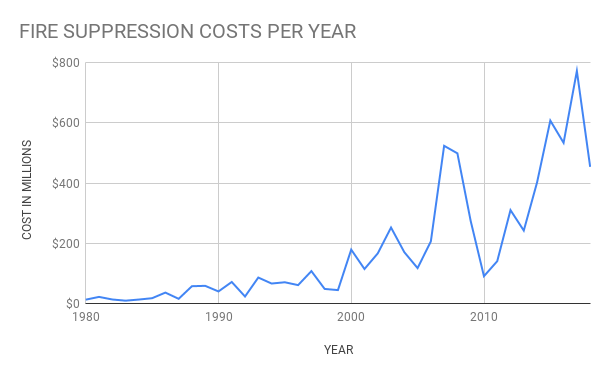
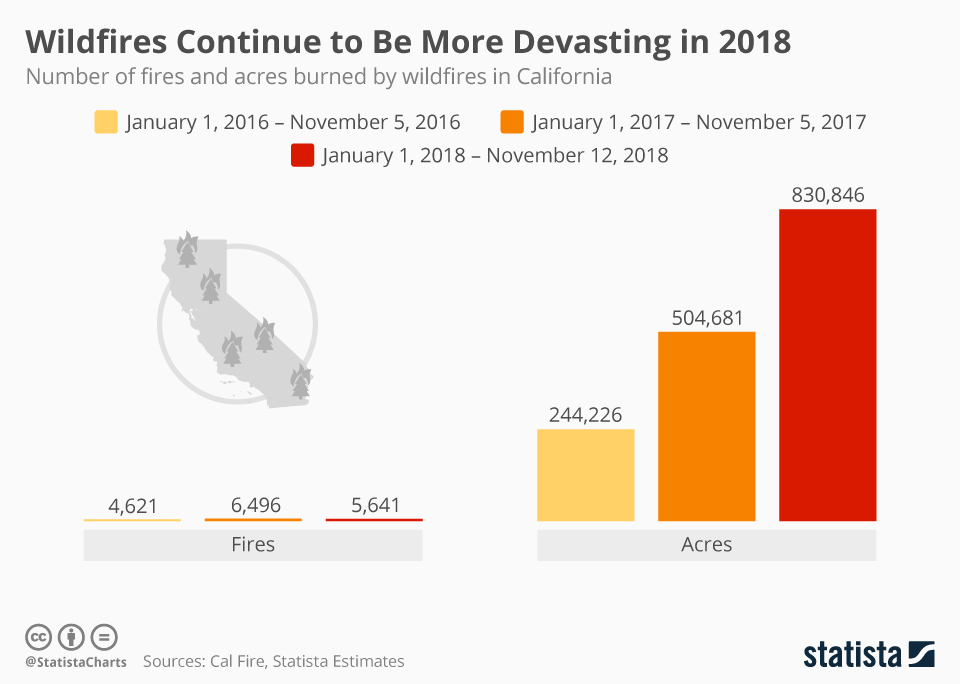
The main argument above is that sustainable energy sources are too expensive to power modern civilization. But they’re missing a “small detail”: expensive compared to what? I assume that they mean compared to continued use of fossil fuels, specifically coal. Meanwhile, major climate change-induced fire storms are raging in California, Oregon, and Washington state. Such fires in the western states are now recurring and accelerating every year. They are projected to further accelerate to such a degree that they will make the areas unlivable (see my December 10, 2019 blog). This, too, is expensive.

Many publications have been covering the economic cost of failing to take steps to mitigate climate change:

Wildfires Hasten Another Climate Crisis: Homeowners Who Can’t Get Insurance

Insurers, facing huge losses, have been pulling back from fire-prone areas across California. “The marketplace has largely collapsed,” an advocate for counties in the state said.  

As wildfires burn homes across California, the state is also grappling with a different kind of climate predicament: How to stop insurers from abandoning fire-prone areas, leaving countless homeowners at risk.

Years of megafires have caused huge losses for insurance companies, a problem so severe that, last year, California temporarily banned insurers from canceling policies on some 800,000 homes in or near risky parts of the state. However, that ban is about expire and can’t be renewed, and a recent plan to deal with the problem fell apart in a clash between insurers and consumer advocates.

The insurance crisis is making California a test case for the financial dangers of climate change nationwide, as wildfires, floods and other disasters create economic shocks well beyond the physical damage of the disasters themselves. Those changes have already started to affect home prices, the mortgage industry and the bond market.

The challenges are especially pronounced in California, where regulations lean toward consumer protection. The state forbids insurance companies from setting rates based on what they expect in future damages. Insurers are allowed to set rates only based on prior losses.

For those confused about the correlation between wildfires and climate change, this article might help.

In an earlier blog (“Collective Irrationality and Individual Biases: Climate Change II,” November 28, 2017), I tried to examine the psychology behind certain aspects of behavioral economics. Specifically, I looked at instances where people irrationally cherry pick data without looking at the broader picture and its consequences. It’s called prospect theory and it has to do with how you look at an idea. The encyclopedia Britannica summarizes the phenomenon:

Prospect theory encompasses two distinct phases: (1) an editing phase and (2) an evaluation phase. The editing phase refers to the way in which individuals characterize options for choice. Most frequently, these are referred to as framing effects. Framing effects demonstrate the way in which the substance of a person’s choice can be affected by the order, method, or wording in which it is presented. The classic demonstration of this effect took place in the so-called Asian disease paradigm, in which people were asked to make a choice among public policy plans for responding to a disease outbreak. Although the actual statistical probabilities remained identical, the percentage of people supporting a given plan changed dramatically based on whether or not the outcomes were presented in terms of the number of people who would live versus the number of people who would die. In perhaps the most dramatic demonstration of this effect, real-world patients suffering from cancer made different choices of whether to undergo surgery or chemotherapy for treatment of their illness based on whether the outcome percentages were presented in terms of survival or mortality. Once people are presented with both choices side by side, they can easily see that the substance of the decision remains the same, even if the psychic pull to perceive them differently remains.

If, instead of the “Asian disease,” we apply the phenomenon to climate change, we see two separate views. We can analyze the physical and economic consequences of acting vs. not acting on climate change mitigation. As it stands, nothing can replace coal in fueling modern civilization, but by continuing its use, we will continue to pay with the destruction of our planet.

To finish this blog on a cheerier note: over the last year, the world added more solar and wind than any other form of energy. For the first time ever, solar and wind made up the majority of the world’s new power generation — marking a seismic shift in how nations get their electricity.

Posted in administration, Climate Change, Energy, Sustainability | Tagged , , , , , , , , , , , , , , , , , , , , , , , , , , , , , , , , , , , , , , , , , , , , , , | 4 Comments

Big Oil’s in Trouble: What’s Next?

The political fight over mitigation of climate change now spans more than two generations. The fossil fuel industry has long seen mitigation as a direct threat to its business model. It has, whether directly or indirectly, used institutions such as the Heartland Institute to deny climate change. This is unsurprising; a lot of climate change mitigation calls for a shift to non-carbon-based energy sources and/or the reduction of energy use through increased efficiency. But COVID-19 and the very apparent effects of climate change (e.g. extreme weather) seem to be triggering a change in attitude for some members of the oil industry.

In the US, the attempt to make the country energy independent (“Second U.S. shale boom’s legacy: Overpriced deals, unwanted assets“) created a boom in the industry. It especially meant increases in fracking oil and gas. However, that boom has come to an end. Figure 1 shows the changes in the drilling activities that have taken place over the last few years. They culminated in a major imbalance between supply and demand and lack of storage facilities, which led to negative oil prices (June 9, 2020 blog) in April 2020. By July, the international rig count fell drastically, meaning that the number of active rigs outside of North America was at its lowest since 2003. Since then, the prices have somewhat stabilized around 40-50 US$/barrel, well below the production costs of many US facilities.


Figure 1 – Drilling activities

Those oil companies who couldn’t adapt went bankrupt. The economic model had to change:

Texas-based Gavilan Resources last month filed for Chapter 11 protection, saying it intends to sell its business and assets.

It cited the coronavirus pandemic and the oil price rout along with an ongoing dispute with a joint venture partner in the Eagle Ford Shale in South Texas, Kallanish Energy reports.

It is among 19 new bankruptcies filed in 2020 through May 31 by U.S. energy companies, according to a list maintained by the Haynes and Boone law firm.

The firm with headquarters in Dallas, Texas, said the 19 filings reflected a total debt of $13.1 billion.

Other firms filing for federal protection include Whiting Petroleum, Echo Energy Partners, Ultra Petroleum, Skylar Exploration, Diamond Offshore, Freedom Oil and Gas, and Templar Energy.

There were 51 bankruptcy filings from Jan. 1 through May 31 in 2016; 14 in 2017, 18 in 2018, and 18 in 2019, the law firm said in its Oil Patch Bankruptcy Monitor.

Overall, there are about 225 bankruptcy cases across the country pending in federal bankruptcy courts, as of May 31, it said.

There have been predictions that a wave of Chapter 11 filings is coming and that more than 100 U.S. energy companies may be forced to declare bankruptcy this year after the coronavirus pandemic and the oil price rout.

According to Haynes and Boone, there have been 13 bankruptcies by oilfield service companies in 2020, through May 31.

Those filings had a total debt of $11.6 billion, it said.

That compares to 28 bankruptcies from Jan. 1 through May 31 in 2017, eight in 2018 and four in 2019, the law firm said in a separate listing of wellfield service companies.

All I can say is wow! That many bankruptcies have sparked a change in approach. One new alternative economic model involves slashing stock value and shareholder dividends as steps toward eventual zero-carbon energy sourcing. This shift is global. I show some examples from Europe (Shell), Israel, and the US (Duke) below:

Europe:

Two of the world’s oil supermajors suggested this week that oil demand may never fully recover from the coronavirus crisis.

Shell just did the thing CEO Ben van Beurden said no leader of the company would ever want on their record: cut its shareholder dividend for the first time since World War II.

In slashing Shell’s dividend on Thursday from 47 to 16 cents per share, van Beurden made a dramatic statement on the global oil industry’s current predicament. But what the supermajor and its peer BP are not cutting is also very telling.

Both BP and Shell released their earnings results this week, their first since the oil price crash and the emergence of the coronavirus pandemic — and since declaring their own net-zero ambitions. Despite the chaos in global oil markets, the pair of supermajors have committed to maintaining their low-carbon investment plans and spoken of an accelerating energy transition.

Also in Europe:

Europe’s Big Oil Companies Are Turning Electric: Under pressure from governments and investors, industry leaders like BP and Shell are accelerating their production of cleaner energy.

This may turn out to be the year that oil giants, especially in Europe, started looking more like electric companies.

Late last month, Royal Dutch Shell won a deal to build a vast wind farm off the coast of the Netherlands. Earlier in the year, France’s Total, which owns a battery maker, agreed to make several large investments in solar power in Spain and a wind farm off Scotland. Total also bought an electric and natural gas utility in Spain and is joining Shell and BP in expanding its electric vehicle charging business.

At the same time, the companies are ditching plans to drill more wells as they chop back capital budgets. Shell recently said it would delay new fields in the Gulf of Mexico and in the North Sea, while BP has promised not to hunt for oil in any new countries.

Israel:

Government seeks to nix half of planned gas power stations as renewables rise

In move welcomed by environmentalists, Energy Ministry says advances in technology will enable it to reach 30% renewables by 2030, but notes it will still need natural gas backup. The Energy Ministry on Sunday asked the National Planning and Building Council to slash its plans for new gas-fired power stations by more than half in a move welcomed by both the Environmental Protection Ministry and civilian campaigners for more renewable energy. The ministry asked the planners to strike off four projects being designed, with a combined output of 4,860 Megawatts (MW).

USA:

After Scrapping Gas Pipeline, Duke Looks to Plug Hole With Renewables, Grid Investments: Duke is considering additional solar investments and “will address” its offshore wind plans later this year, says CEO Lynn Good. By Jeff St. John (August 10, 2020).

Duke Energy on Monday reported a $1.6 billion charge related to abandoning the Atlantic Coast Pipeline. The utility also laid out how its renewable energy and grid modernization plans will fill in the capital-investments hole left by the canceled multibillion-dollar natural-gas project.

Meanwhile, if everything else fails, the oil industry has plans to use the excess fuel to make mountains of plastic and dump it on Africa—even though that will end up killing off life in all of our oceans.

Big Oil Is in Trouble. Its Plan: Flood Africa With Plastic: Faced with plunging profits and a climate crisis that threatens fossil fuels, the industry is demanding a trade deal that weakens Kenya’s rules on plastics and on imports of American trash.

Confronting a climate crisis that threatens the fossil fuel industry, oil companies are racing to make more plastic. But they face two problems: Many markets are already awash with plastic, and few countries are willing to be dumping grounds for the world’s plastic waste.

The industry thinks it has found a solution to both problems in Africa.

According to documents reviewed by The New York Times, an industry group representing the world’s largest chemical makers and fossil fuel companies is lobbying to influence United States trade negotiations with Kenya, one of Africa’s biggest economies, to reverse its strict limits on plastics — including a tough plastic-bag ban. It is also pressing for Kenya to continue importing foreign plastic garbage, a practice it has pledged to limit.

As I said, this would have disastrous consequences. A lot of plastics eventually end up in the oceans, including in places like the Great Pacific Garbage Patch. At almost 617,000 square miles (1.6 million square kilometers), it’s the largest of the 5 vortexes globally that contain large concentrations of plastics, from large pieces to microplastics. Even though they aren’t solid islands of trash floating on the surface, those pieces add up and they affect ocean flora and fauna.

We’ll see how all of these tactics play out. Hopefully this new push toward more sustainable energy sources, even if it is financially motivated, will help with global mitigation efforts.

Posted in Climate Change, Energy, Sustainability | Tagged , , , , , , , , , , , , , , , , , , , , , , , , , , , , , , , , , | 3 Comments

Simultaneous Global Disasters

About a month ago (August 4th), I wrote a blog that used a Venn diagram to show the overlap of climate change, COVID-19, projected population change, job availability, and socio-economic status. My discussion was relatively abstract. Now, only one month later, so many worrisome things are overlapping at once that apocalyptic fears are widespread.

apocalypse, apocalyptic, Durer, horsemen

Albrecht Dürer’s The Four Horsemen of the Apocalypse (1498)

Albrecht Dürer’s powerful woodcut from the end of the 15th century illustrates the four horsemen of the apocalypse (Death, Famine, War, and Plague). The concept of the apocalypse runs through the writing of Judaism, Christianity, and Islam. In many of these manifestations, it symbolizes God’s punishment for humanity’s sins. Many are living under the impression that this judgement is now upon us.

However, for those of us who are trying to view the world through the eyes of science rather than religion, perhaps a more fitting image would be humanity astride a horse that represents the physical environment. We are riding toward extinction. This vision is perhaps even more frightening than Dürer’s because we are the ones in control. We know where we are going and we know what we have to do to change direction; we just refuse to do so.

The concept of humanity steering the physical environment is what we call the Anthropocene. Humans have had a huge impact on Earth’s geology and ecosystems and our contributions such as anthropogenic (human-caused) climate change define the time period. Scientists have posited it as a geological epoch (like the Triassic or Jurassic) for over two generations. The Anthropocene is one of the main concepts that drove me to start this blog. You can type the term into the search box for more information or visit Wikipedia for a summary of where we stand in the context of the Anthropocene.

Meanwhile, some of the disasters that were still abstract a month ago are now showing up in concrete form:

Tropical storm Marco raced hurricane Laura to the coastline near the Texas-Louisiana border. While the former made a smaller impact than at first feared, Laura landed as category 4 hurricane, then moved northeast. It left more than 20 dead and tens of thousands in the Gulf Coast and Puerto Rico without power or running water. We are now approaching the peak of a hurricane season that looks to be unusually busy—and people are understandably concerned, especially since this region is also a COVID-19 hot spot.

Meanwhile, heat waves almost everywhere have intensified, even as most of us are still in lockdown because of the pandemic. If you don’t have air conditioning to adjust the indoor temperature you are in serious trouble. New York City has started to offer older New Yorkers free air conditioners but many are still waiting.

Even among those of us lucky enough to have air conditioners, there are problems. Namely, too many of us are running them at the same time. This happened in California and the resulting surge in electricity usage was too much for the grid to handle. Millions experienced blackouts at a time when most of our activities—whether professional or recreational—require electrical power. In California, almost immediately after the blackout, massive fires engulfed the state, costing many lives and large swaths of property.

As if all of this were not enough, a small asteroid is on its way towards Earth, scheduled to reach us (there’s a less than 0.5% probability that it will hit) just a day or two before the US presidential election.

Aside from the coronavirus and the asteroid, we still have all of the disasters generated by our continued contributions to climate change. On top of all this, we also have abundant social and political disasters. For instance, the Kenosha and Minneapolis police’s deadly violence against unarmed black citizens in the US are triggering desperate demonstrations throughout the world, as are crackdowns in autocratic regimes such as Belarus.

“We shall overcome,” has long been a hopeful refrain. I hope that we can do this in the upcoming elections. This November 3rd might be the ultimate test in the US. Not only do we need to stem our contributions to climate change, we must do the same with our input to social injustice. We need policies to help achieve these goals and take better control of the reins.

Posted in administration, Anthropocene, Anthropogenic, Climate Change, Extreme Weather, law, politics, US | Tagged , , , , , , , , , , , , , , , , , , , , , , , , , , , , , , , , , , , , , | 5 Comments

School Curriculum: The NYT

Why do we send our kids to school? Why did our parents send us to school? People are wondering this more than ever, now that many schools are still closed physically and have moved to an online educational experience. But it’s not a new question and will stay with us (likely to a considerably smaller degree) after the pandemic is over.

As I have mentioned in earlier blogs, I was born three months before the start of WWII in Warsaw, Poland and my early childhood was dominated by my Holocaust experiences (namely, the Warsaw Ghetto and Bergen-Belsen). But I was fortunate to be liberated by American soldiers in 1945. I was six weeks short of my sixth birthday. Soon after I turned six, I was able to start school in Israel (Palestine at the time)—a pretty normal starting age. I don’t think I would be the same person if I had started school later, for example at age 12.

Now that I teach in a college, we are constantly wondering: what do students, parents, and society in general expect us to provide in our education?

I see the educational experience as a necessary ingredient in preparing students for the future. On one side, students need to master certain skills in order to pursue various employment opportunities. On the other, we also regard education as key to helping make our students happy and productive individuals prepared to face the future. Of course, none of us—parents, students, or educators—are able to predict what that future will bring. The present pandemic is only the most recent evidence of this inability. We rely on the belief that understanding the past and the ever-changing present is the best and perhaps the only way to be able to confront the future.

Which brings me back to last week’s blog about The New York Times Weather Report. The NYT cares a lot about learning. Like many other publications, it offers deeply discounted (often free) academic rates for students and educators. The paper also has a whole Learning Network section online, which aims to:

1) Connect the classroom to the world.

2) Give students a voice — and strengthen literacy skills along the way.

3) Promote critical and creative thinking through multimedia.

The NYT summarizes the site in this way:

Welcome to The Learning Network. Here are three quick facts about our site:

  • The Learning Network publishes about 1,000 teaching resources each school year, all based on using Times content — articles, essays, images, videos, graphics and podcasts — as teaching tools across subject areas.

  • Most of our resources are free (only our lesson plans are limited to five per month for nonsubscribers).

  • Our intended audience is middle and high school teachers and students (teenagers 13 and up). That said, we know that our content is used in elementary schools and colleges as well, and much of it is appropriate for both.

The Learning Network section features over 100 lesson plans based on NYT articles. The areas of study include Science Technology and Health; Education; The Arts and Culture; Sports; American Politics, History and Civics; and Global History, Politics and Culture.

I, of course, searched for content related to either climate change or COVID-19. While I didn’t find a direct lesson plan on either of these topics, I found one about environmental issues and one that indirectly relates to climate change: “The World Can Make More Water From the Sea, but at What Cost.” I wrote some blogs about the latter (just put desalination in the search box) and the NYT has a full lesson on desalination:

Lesson of the Day: ‘The World Can Make More Water From the Sea, but at What Cost?’

In this lesson, students will explore the issue of access to clean and safe water and weigh the pros and cons of desalination as a possible solution to water scarcity.

Lesson Overview

Featured Article: “The World Can Make More Water From the Sea, but at What Cost?

The issue of water quantity and quality is increasingly a global problem. According to the Environmental Protection Agency, over 80 percent of the world is covered in water, but only 3 percent is fresh water. As more places face water scarcity, desalination is seen as a possible answer. However, energy and financial requirements limit how widely that process can be used.

In this lesson, students will explore the issue of water access, examine how desalination presents a potential solution, and finally, weigh the costs and benefits of various approaches to water scarcity.

Warm Up

Do you have access to clean and safe water? How concerned are you about access to quality water now or in the future?

Do you believe that your family, and Americans in general, use water wisely? Or do you think we take this vital resource for granted?

Before reading, look at the graph below and answer the following questions:

  • What do you notice?
  • What do you wonder? What are you curious about that comes from what you notice in the graph?
  • What story does the graph tell? Write a catchy headline that captures its main idea. If your headline makes a claim, tell us what you noticed that supports your claim.

water stress, fresh water

Questions for Writing and Discussion

Read the article, then answer the following questions:

  1. Scroll through the photos in the article: What do you notice? Which image stands out to you and why? What story do these photos tell?
  2. The article begins, “Desalinated seawater is the lifeblood of Saudi Arabia, no more so than at King Abdullah University of Science and Technology.” Why did Henry Fountain, the author, start by describing the water uses of one university? How does this single institution illustrate the needs of the entire country?
  3. How big a problem is water quality and quantity globally? What are the major causes of water scarcity worldwide?
  4. What challenges do Saudi Arabia and other countries face in making desalination affordable and sustainable? In what ways are engineers and researchers addressing these challenges?
  5. In your own words, describe the desalination process. Explain reverse osmosis.
  6. How is Saudi Arabia’s effort to find renewable and sustainable water sources linked to finding sustainable energy sources?
  7. What is your reaction to the article? What was most interesting, surprising or provocative to you? How does this article alter your opinion of the way you, your family and your community use water? What responsibility do we all have to using water responsibility?

Going Further

Imagine you are a member of local government in one of the high water-stress locations identified on the map in the warm-up activity. Should you invest in desalination technology? What factors would you consider? What are the pros and cons of using desalination to solve the problem of water scarcity?

As part of your analysis, consider whether other possible solutions might be more desirable, such as changing individual water consumption patterns, recycling sewage into drinking watercombating water pollutionincreasing agricultural efficiencyinvesting in green infrastructure and taxing water use?

(You can find more information on the countries facing water stress in “A Quarter of Humanity Faces Looming Water Crises.”)

What would you recommend?

The original article by Henry Fountain describes a desalination plant in Saudi Arabia. It mentions the financial cost as well as the environmental issues associated with having to dispose of the highly concentrated salt water that is the byproduct of the process. It also talks about trying to transition to sustainable energy sources like solar to drive the process. Many of the photographs included in the article illustrate life around the plant (guys playing golf and an empty Olympic swimming pool) rather than the facility itself.

One of the questions in the lesson plan directly relates to the global scarcity of fresh water (water stress). I especially applaud the lesson plan for urging students to look into other strategies and solutions for water stress. Unfortunately, the article itself is behind a paywall but you don’t need a subscription to look at a few lesson plans.

The NYT should be commended for running such a site. As I mentioned last week, I hope to convince the editors to digitize the Weather Report and make it public under the Learning Network section. Meanwhile, I strongly recommend heading over to the Learning Network site and looking at some of the great resources there.

Like the NYT, other publications and many universities—including mine—are starting to pay more and more attention to databases as a raw material for teaching students to quantitatively mobilize various aspects of the present in preparation for confronting the future. The NYT is collecting one of the most extensive databases on the new coronavirus and the resulting COVID-19. The database serves as an important source for understanding the impacts of the pandemic.

The Economist provides other useful databases that we can use to mobilize the present in the service of the future: the Democracy Index and the “Big Mac Index.” The latter uses the cost of a hamburger in different countries to compare the value of one currency against another, and whether they differ from official exchange rates.

Next week, I will get back to the multiple global threats that we are facing now.

Stay safe.

Posted in Anthropogenic, Climate Change, Education, Water | Tagged , , , , , , , , , , , , , , , , , , , , , , , , , , , , , | 2 Comments

Do-It-Yourself Climate Monitoring: the Weather Report

My wife and I start our day with breakfast and the print edition of The New York Times (NYT). When the paper arrives, we split it between us—she gets the front section and I get the rest. One of the first things I look for in the paper is the Weather Report—specifically, the global temperature listing shown in Figure 1. I am not looking for the weather in New York City. I get that information in a much timelier manner from one of the weather applications on my electronic devices. Rather, I want to see the global picture. What am I searching for? This time of the year I am looking at places with temperatures higher than 100oF and monitoring how long those heat waves last. The Weather Report in Figure 1 shows three cities in the US with temperatures consistently higher than 100oF: El Paso, Phoenix, and Tucson.

Weather report from NYT

Figure 1 The daily global temperature listing in The New York Times Weather Report

Brooklyn College’s academic year starts in a few weeks. I’ll be teaching three courses, each of which discusses climate change on some level. I have recently started to examine ways to use the NYT Weather Report as a teaching resource. I’ve been counting how many consecutive days the temperature stays above 100oF and I am starting to think about the heat index in these places (July 3, 2018 blog). With temperatures of 100oF and humidity (not given in the weather index) reaching between 40% and 100% in El Paso, the heat index in these cities can range between 109oF and 136oF. With prolonged exposure and/or physical activity, such a heat index can amplify danger. This includes instances of muscle cramps and heat exhaustion, as well as much more dangerous heat strokes. In other words—the whole range can be summarized as unlivable. I have a dear friend in Tucson (the editor of this blog) but she and her family are largely able to stay out of the heat. Others, including “essential” workers or those who live from paycheck to the paycheck, cannot. As I mentioned last week, such circumstances are also at play with coronavirus exposure right now.

Another way to analyze this database is to count the number of cities in each continent with temperatures above 90oF. The list provides three columns of temperature: yesterday, today, and tomorrow. A heat wave can be any event with three consecutive days of temperatures above 100oF.

The key is to get a sense of the time-dependence of some of these trends. Since my semester is a bit longer than three months, my students and I will spend about a third of it analyzing such trends.

It is obvious that the data set shown in Figure 1 is a biased one. It emphasizes NYC and the US, and a somewhat arbitrary selection of cities worldwide. The list shows more than 80 cities in the US, which has a population of 330 million, while it only mentions 7 cities in Africa, which has 1.3 billion people. So, any analysis to indicate a global trend has to be based on the same continental analysis that the report provides. One of the most important consequences of this bias is that—as with any data set—to make it useful, we must use the same parameters throughout our study and not change (or supplement) them. Our analysis also has to be sensitive to some properties of the planet. For instance, while it’s the height of summer in the northern hemisphere, it is winter in Australia and in South America. Obviously, we will not look for 100oF or 90oF temperatures in the winters.

The New York Times Weather Report, as we see in Figure 1, is somewhat simplistic. It’s certainly not up to my usual standards. It also bounces around between the paper’s sections. I tried to find the data set online and convert it to a nice figure. No such luck. I spent some quality time on the NYT application with no result. I suspected that for one reason or another, it might only be in the print edition. But, while I was able to find the print edition online, the Weather Report was not there. A more intensive search in the Replica Edition didn’t help. I finally found a note about the phenomenon in a meteorology course in the New York Times inEducation section:

Finding the weather forecast today on the internet or through apps is easy for just about any location on earth.   However, what about getting the forecast on one page for a cross-section of the major cities in the U.S. as well as around the world?   The internet and apps would require a lot of data entry.  What about the level of the NYC reservoirs or whether or not the current month’s temperature and precipitation are above or below normal and other environmental data?

The New York Times print edition provides this information every day.  It is not available on-line.  But if you can find a duplicate copy of the in-print “Weather Report” on line, you will be rewarded with 100 extra points in this lab, not at  http://www.nytimes.com/weather?8qa

I don’t honestly understand the reasoning here, nor the challenge to find something that likely doesn’t exist. If the information is already compiled for the print version, why not just publish it online with a date?

In any case, I want my students to follow the data set for one month, to clearly indicate the parameters that they intend to follow (such as the examples that I gave earlier) and write down the information with the corresponding date. Afterward, they will submit a graph with the related information as a function of time and draw conclusions from the graphic presentation.

The New York Times provides many resources for teaching and learning. It also offers free or discounted subscriptions to students and faculty in many eligible schools. It is obvious that the paper cares for education. I will try to take some steps to convince them to digitize the Weather Report. In spite of its time-dependent nature, publishing the data online would give better access to most and provide a valuable educational resource.

Next week I will try to continue my virtual discussion of The New York Times by examining their learning sections. I hope to communicate to them my desire to incorporate the Weather Report.

Posted in Climate Change, Education, Extreme Weather | Tagged , , , , , , , , , , , , , , , , , , , , , , , , , , | 2 Comments

Looking at the Future Through Coronavirus-Infected Eyes

The iconic MAGA hat exemplifies the Trump administration’s unilateralist “America First” philosophy, to the detriment of global welfare

I am starting to write this blog on Thursday, August 6th. The coronavirus situation is currently:

Globally: around 19 million cases, more than 700,000 deaths

In the US: 5 million cases, around 160,000 deaths, and 31 million looking for unemployment benefits

I am one of the fortunate. I am old and vulnerable but I didn’t lose my job. I’ve been teaching online since early March. My wife is with me; she’s younger but still old and vulnerable. She holds a management position at my school and has to coordinate the online transition for 10 departments. She is working harder than ever before. In the five months since our lockdown began, we have probably been out around 5 times. We are lucky to live in a comfortable apartment that has two separate offices so we don’t get on each other’s nerves. It’s also well-equipped with functional electronics for all our communications needs. Facing a similar pandemic even 5 years ago, we probably would not have been able to shift to distanced learning and teaching. Our society would have had to completely shut schools and many other economic activities that have recently shifted online (the original Zoom was launched in 2013 with comparatively less functionality, Google Meet launched in 2017, and Blackboard went public in 2004 with different functionalities). Since we work at a university, we also have great tech support. We fully realize that we are incredibly privileged.

My wife and I live and work in New York City. Before the pandemic and the lockdown, we had an active social life. We love theaters and museums and we tried to enjoy NYC’s plentiful cultural offerings as much as we could. The lockdown has created a lot of free time for me but keeps my wife quite busy with work. I end up reading a lot of books and watching a lot of television—via both cable and multiple streaming platforms. I am particularly enjoying the availability of international TV series, movies, and documentaries.

Living under these conditions, trying to adapt and accommodate to the pandemic, I am constantly reminded that we all live in a global community in which similarities between people are much stronger than our differences. Again, I completely realize that, especially on a global scale, I am very fortunate. I have a comfortable place for my lockdown. I have the ability to get all the food and medicines that I need without leaving home (with the help of “essential” workers who expose themselves to vulnerability on my behalf).

I have lost friends in the pandemic but I am in contact with my family all over the world—they are OK and we share experiences based on similar situations. Not everyone, however—even those that are fortunate enough to share all of my advantages—shares my perspectives. The president of the United States is at the top of this list.

In an earlier blog (October 2, 2018), I described some details of the present US administration’s unilateralist policies. I ended that blog with this:

US National Security Adviser John Bolton summarized the philosophy in his own speech to the Federalist Society:

This Administration will fight back to protect American constitutionalism, our sovereignty, and our citizens. No committee of foreign nations will tell us how to govern ourselves and defend our freedom. We will stand up for the U.S. Constitution abroad, just as we do at home. And, as always, in every decision we make, we will put the interests of the American People FIRST.

The same John Bolton was fired less than two years after he joined the administration and recently wrote a revealing book, “The Room Where It Happened.”

I finished the 2018 blog with a two-word expression in Polish that summarizes the attitude:

In Polish we call such a philosophy, “Zosia samosia.” The phrase refers to someone independent who doesn’t need (or want) help or assistance from anybody. It’s usually used to describe a spoiled kid. This is a dangerous attitude for the most powerful nation in the world to espouse.

The 2018 blog also includes a list of four international treaties that the Trump administration had already left or had declared its intention to leave. Since then, he has also announced the US will leave two nuclear arms control treaties: the Open Skies Treaty and the Intermediate-Range Nuclear Forces Treaty. Additionally, in response to its criticism of his administration’s handling of the pandemic this year, Trump decided to leave the World Health Organization (WHO) and completely quit funding it. As I said last week, “Coronavirus for some is coronavirus for all. Nobody can mitigate the pandemic locally until one mitigates it globally.” Trump’s actions place the US in direct contradiction to this principle.

With regards to both the 2015 Paris agreement on climate change and the WHO, the Trump administration’s first act was to freeze funds that primarily benefit developing countries. Given that the US has long been a major contributor to these funds, its withdrawal has strongly impacted such countries’ mitigation abilities. This means that many will either die or try to immigrate to safer places—in the process, destabilizing the world.

None of these withdrawals is more destabilizing than those from international arms control treaties. This month marks 75 years since the only time atomic bombs were purposely dropped on populated targets (Hiroshima: August 6th, Nagasaki: August 9th). We still don’t know the exact number of people whom the bombs killed directly. Estimates range between 110,000 – 200,000, not counting the impacts of the fallout radiation. For years, the survivors of the bombing have done everything in their power to advance UN treaties that forbid any use of atomic weapons. These survivors are dwindling fast. The current unilateralist, anti-global policies negate the whole concept of international treaties and put all of us and next generations in much more danger.

Not only are we dealing with both a terrifying pandemic and the ongoing threat of climate change, this administration’s deliberate self-isolation has vast effects on global welfare, both now and in the future.

Posted in administration | Tagged , , , , , , , , , , , , , , , , , , , , , , , , , , , , , , , , , , , , , , , , , , , | 1 Comment

Inequity: The Intersection of Coronavirus, Poverty & Other Expected Trends

As with most of my blogs, I wrote this one over the weekend (starting Friday). Last week, I looked at the Sierra Club’s Venn diagram of the Green New Deal. I argued that in order to address the near future global trends that we will face in the coming years, the diagram should include COVID-19 and the projected changes in global population. I have done this in Figure 1.

Venn diagram of intersection between near-future global challenges-- equity, climate change, population, jobs, covid-19, coronavirus

Figure 1 – Venn diagram of expected current and near future global challenges

We are clearly witnessing how some of these challenges interact. Last week saw hurricane Hanna beating the southeast coast of Texas. Climate change amplifies and accelerates hurricanes and meanwhile, southeast Texas is currently one of the most concentrated COVID-19 hot spots in the US. People struggled to evacuate while maintaining social distancing. This weekend the picture seems to be repeating itself with hurricane Isaias, which is expected to hit Florida shortly and continue on a path northeast.

Figure 1 shows that all four trends I addressed last week, in addition to being connected to each other, also intersect with a circle that represents equity.

I am using the term equity here because the original Green New Deal refers to it. Equity is a socio-economic indicator that measures the balance/imbalance in poverty and wealth, access to civil rights, and many other elements. I am primarily concerned with global inequities regarding poverty.

Right now, the coronavirus—while a universal threat—clearly highlights the inequities of healthcare in poor countries and access to safety in richer ones. Let’s look at a list of five countries with some of the most severe COVID-19 outbreaks per capita right now.

Table 1 – Ranking of coronavirus cases per capita in 5 countries, as of 8/4/2020

Country Cases/1M population
USA 14,747
Qatar 39,724
Bahrain 24,520
Kuwait 16,083
Oman 15,469

The US is the third largest country in the world in terms of population. It’s also one of the richest countries in terms of GDP/capita and the clear leader in overall coronavirus cases (4,884,917). The other four countries in this list all belong to the Cooperation Council for the Arab States of the Gulf. These are small, rich countries, with some of the highest concentrations of COVID-19 cases measured per capita. As in the US, while some people are privileged enough to work from home and maintain social distance, many of the less fortunate have little choice but to keep working in dangerous situations. These countries rely heavily on foreign labor—guest laborers make up almost 75% of their work force. So it is unsurprising that almost all of the COVID-19 cases and deaths there occurred among that concentrated foreign labor force.

Many of the case numbers in individual US states exceed the numbers listed in Table 1 and most of America’s work force lives paycheck to paycheck:

Many people noted that their income would be just enough to cover their bills and basic necessities until the next paycheck comes along. This reflects just how many Americans are living paycheck to paycheck.

Depending on the survey, that figure runs from half of workers making under $50,000 (according to Nielsen data) to 74% of all employees (per recent reports from both the American Payroll Association and the National Endowment for Financial Education.) And almost three in 10 adults have no emergency savings at all, according to Bankrate’s latest Financial Security Index.

The coronavirus has only worsened the situation.

Figure 2 shows the distribution of the impact of COVID-19:

covid impact on distribution of American work force

Figure 2 – Impact of COVID-19 on the distribution of the American work force

This means that those in the bottom income brackets (often people of color and immigrants) who still have jobs have no choice but to keep working. Many of these people work in what we deem “essential services,” from grocery stores, farming, and online store fulfillment centers to public transportation and caregiving. We see the overlap between COVID-19, jobs, and inequity here.

In many aspects, the situation in a rich country like the US during this pandemic is not much different from the one in the Gulf states.

We have to absorb the lessons from the impact of COVID-19 to confront ongoing and upcoming disasters, such as climate change and major population decline. Both will strongly affect the age distribution of our work force, likely putting more strain on certain subsets of people and widening existing inequities. Although some places are already experiencing second surges of COVID-19, many developing countries are just now starting to experience the full impact of the first wave of the pandemic. The dangers there multiply relative to impacts on the much more limited health delivery systems, food supply levels, and inability to counteract lockdowns by printing money.

I would not be surprised to see a massive rise in people attempting to move from highly infected areas to “cleaner” ones. Obviously, that won’t work. Coronavirus for some is coronavirus for all. We can’t mitigate the pandemic locally until we mitigate it globally. The same holds true for the longer-range challenges depicted in Figure 1.

Posted in Climate Change, Economics, Sustainability, US | Tagged , , , , , , , , , , , , , , , , , , , , , , , , , , , , , , , | 1 Comment

The Green New Deal and Coronavirus: Intersections

Remember the Green New Deal (see the February 19, 2019 blog)? Representative Alexandria Ocasio-Cortez (AOC) and Senator Ed Murphy introduced the broad resolution to both houses of congress last year. To emphasize the breath of the resolution, here is a section of the bill:

Resolved, That it is the sense of the House of Representatives—

(1) that it is the duty of the Federal Government to create a Green New Deal—

(A) to achieve net-zero greenhouse gas emissions through a fair and just transition for all communities and workers;
(B) to create millions of good, high-wage jobs and ensure prosperity and economic security for all people of the United States;
(C) to invest in the infrastructure and industry of the United States to sustainably meet the challenges of the 21st century;
(D) to secure for all people of the United States for generations to come

(i) clean air and water;
(ii) climate and community resiliency;
(iii) healthy food;
(iv) access to nature; and
(v) a sustainable environment…

The Sierra Club summarized it in the form of a Venn diagram:

Green New Deal, climate, jobs, equity

Figure 1 – Venn diagram of the Green New Deal

Unsurprisingly, on March 25, 2019, the resolution failed to advance in the Republican-controlled Senate.

Less than a year later, COVID-19 started to spread throughout the world.

Two weeks ago, we saw a new analysis of expected population growth trends in the 21st Century:

July 14, 2020

Reposting of press release published by The Lancet

  • By 2100, projected fertility rates in 183 of 195 countries will not be high enough to maintain current populations without liberal immigration policies.

  • World population forecasted to peak in 2064 at around 9.7 billion people and fall to 8.8 billion by century’s end, with 23 countries seeing populations shrink by more than 50%, including Japan, Thailand, Italy, and Spain.

  • Dramatic declines in working age-populations are predicted in countries such as India and China, which will hamper economic growth and lead to shifts in global powers.

  • Liberal immigration policies could help maintain population size and economic growth even as fertility falls.

  • Authors warn response to population decline must not compromise progress on women’s freedom and reproductive rights.

This means that for a more complete look at what is going on in the world and what the future of the Green New Deal might look like, we are going to have to expand the Venn diagram from Figure 1. We will need to take into account both the COVID-19 pandemic and the expected changes in world population. So now we need at least 5 circles in the diagram. That is a lot to keep track of.

As the Venn diagram shows, the climate, jobs, and equity all overlap. The other two do as well. Next week I will try to expand the diagram to include the missing components of the pandemic and projected global population changes.

But not all of the circles have the same time dependence. When we talk about climate change and global population changes, our time span is the rest of the century. When we speak about jobs and equity, we are looking at the present and near future. As for the pandemic, we expect it to either disappear or at least become more manageable within the next year or two.

For now, we saw some of the overlap between the coronavirus and climate change over the weekend. Figure 2 shows the coronavirus distribution in the US. In my morning newspaper (the NYT) I see the updates to this map every day. I saw it in April when I was in the middle of the epicenter of the pandemic and I see it now as the virus moves to the Southeast and the West. Florida, Texas, and California are now the biggest hot spots.

Coronavirus hot spots in the US

Figure 2Coronavirus cases in the US from this weekend

But the pandemic is not the only emergency that these states are facing. The year’s first hurricane hit Texas this weekend. Figure 3 illustrates its trajectory. Authorities advised people in southeast Texas to evacuate. How do you evacuate while maintaining social distancing, though? How will the pandemic impact the rescue operations needed to mitigate the impact of the hurricane?

Figure 3projected path of Hanna, the first hurricane of 2020 (from Friday, July 24, 2020)

Climate change is amplifying both the frequency and the intensity of hurricanes and tornadoes all over the world. The same holds for fire as droughts increase. Arizona has seen an intersection between fires and the coronavirus. One fire raged in Tucson, Arizona for nearly two months, eating up almost 120,000 acres, even as Arizona’s coronavirus cases skyrocketed. These interactions will only amplify as long the pandemic persists.

Meanwhile, in politics, Joe Biden has endorsed the Green New Deal in every aspect but its name. An article in The Guardian elaborates:

On Tuesday, Joe Biden did something unprecedented for a Democratic candidate assured of nomination: he moved left. In a speech delivered from Wilmington in his home state of Delaware, Biden unveiled the most ambitious clean energy and environmental justice plans ever proposed by the nominee of a major American political party. The plans, which the Biden campaign described to reporters as “the legislation he goes up to [Capitol Hill] immediately to get done,” outline $2tn in investments in clean energy, jobs and infrastructure that would be carried out over the four years of his first term.

Forty percent of these investments would be directed to communities of color living on the toxic edge of the fossil fuel economy – communities that have also been among the most devastated by the coronavirus pandemic. Biden proposes to pair these investments with new performance standards, most notably a clean electricity standard that would transition the United States to a carbon pollution-free power sector by 2035.

 To get humanity through the rest of the century we will need strong leadership and commitments to mitigation (especially regarding climate change). The next few months will provide important yardsticks for how hard those goals will be to accomplish. We should be looking at two major events this autumn: the US presidential elections and the global COVID-19 situation. Specifically, we will be watching how the first wave of global infection begins to subside and when the (almost) inevitable second wave will show up. It’s likely that the latter will coincide with flu season, which might make everything much more complicated. The outcome of both events will depend on us (adults) and the degree of commitment that we have to our children and grandchildren.

The US election is especially important given the country’s central global roles in both economics and military power. We need to try to mitigate global disasters such as climate change, the pandemic, and projected shifts in population demographics. Denying the existence of these threats is the opposite of effective.

Joe Biden’s commitment to the spirit of the Green New Deal gives me hope. This is especially true in contrast to the despair that President Trump’s repeated denial of climate change has wrought. Two trillion dollars in four years looks like a lot of money at first. But the US has a GDP/capita of more than $20 trillion and the dollar so dominates global currency that up until now, we have almost been able to print money at will under emergency conditions.

In light of those facts, $4tr/4 years is petty cash. For reference, the US congress immediately approved the more than $2-trillion-dollar CARES Act, and followed it up with a similar chunk of money. The EU has also been working to put forth aid money. The rest of the world is trying to follow to the best of its ability. The amount of money in Biden’s Green New Deal proposal shouldn’t be controversial. The timing of the changes it lays out leaves plenty of ground for productive negotiation without endangering the future.

Next week I will look more at how the components in the Venn diagram above intersect with the pandemic and projected global population changes. I hope to emphasize the societal connections between equity and jobs, as well as how they tie in to other global calamities.

Posted in administration, Climate Change, politics, Sustainability, US | Tagged , , , , , , , , , , , , , , , , , , , , , , , , , , , , , , , , , , , , , , , , , , , , , | 1 Comment