Decision Time: What Will the Election Mean For the US and Abroad?

I am starting to write this blog two days after Super Tuesday. Hillary Clinton and Donald Trump came out way ahead of their competition as the leading candidates for the Democratic and Republican Party nominations for November’s election of the President of the United States. I promised to switch gears from Cuba to our upcoming presidential election, given how big of a role it will play in our immediate future. I have made a similar promise to my climate change class, where I am always trying to balance basic science with current events. In this case, much of that latter will revolve around the preliminary stages of the American presidential elections.

Up to now, climate change has hardly been mentioned in the election campaigns, but the terrain is very clear: both Democratic candidates, Hillary Clinton and Bernie Sanders, believe it to be a human-caused threat that requires major global mitigation efforts. They agree that these should be led by the US and have promised to continue and amplify President Obama’s work in this area. Meanwhile, the leading Republican candidates, Donald Trump, Ted Cruz and Marco Rubio, refuse to believe any of this and have vowed to overturn present policies and renege on international commitments to mitigate the impact. Marco Rubio, meanwhile, came back with the often-heard “I am not a scientist” argument, claiming that he is not qualified to determine the truth of climate change or whether mitigation efforts will cost American jobs. I took the opportunity to listen to the 11th Republican debate (Thursday, March 3, 2016) to find out if this assessment of the collective opinion is still valid; it is.

For the Democrats, the primary selection results so far have been a confirmation of the expected: victory for Hillary Clinton. As for the Republicans, the proceedings have come across as a disaster, with serious ramifications as to the future viability of the party in its present form. In the beginning of this process, during the first debate between more than 10 aspiring Republican candidates, the first question was a request for confirmation that each candidate was willing sign a pledge to support any Republican candidate if he (or she at the time) won the party’s nomination. The only candidate that refused to commit himself was Donald Trump. He later relented and signed a pledge to do so. In the last debate all three of his remaining opponents reaffirmed that promise.

But the campaign chair of one of the candidates has announced that he will not support Trump if elected. Mitt Romney, the 2012 nominee, and John McCain, the 2008 nominee, are urging all Republicans not to vote for Trump. Important party voices are calling for the creation of a third partyName calling at the intellectual level of elementary school bullies is prevalent. It is certainly a show. Right now, this show has no direct impact on policy, but that could change radically in November.

United States residents are not the only ones alarmed. The European press is fully covering the turmoil with great apprehension. As many US publications have noticed, however, the Europeans shouldn’t be surprised. Donald Trump actually fits in very well within recent political trends in Europe.

Political figures like Italy’s Silvio Berlusconi have many similarities to Donald Trump. Not only was he a candidate for high political office but he actually served as Prime Minister four times. Meanwhile, Victor Orban, the President of Hungary, is very busy building fences to block the refugees that are seeking security in Europe. Jean-Marie Le Pen and his much more media-savvy daughter Marine Le Pen also fit into this category. The memorable French presidential election of 2002 saw the National Front candidate win the first round against the serving socialist Prime Minister Lionel Jospin only to then be defeated by the Conservative Jacques Chirac 82% – 18% because almost everybody in France was truly alarmed by Le Pen’s policies. In fact, just a few days ago, neo-Nazis were elected to the Slovakian parliament for the first time.

The cover of a recent issue of The Economist (February 27, 2016) came with a Trump caricature that reads “Donald Trump is unfit to lead a great political party.” This is a bit less ambitious than Mitt Romney’s outright declaration that Donald Trump is unfit to be the President of the United States.

The question immediately arises – who decides about a candidate’s fitness to be President (or leader of a party)? There are no exams and the only constitutional restrictions I know of for running for the office are age and “natural born citizenship”:

Age and Citizenship requirements – US Constitution, Article II, Section 1

No person except a natural born citizen, or a citizen of the United States, at the time of the adoption of this Constitution, shall be eligible to the office of President; neither shall any person be eligible to that office who shall not have attained to the age of thirty-five years, and been fourteen years a resident within the United States

Based on this text, Trump certainly seems more eligible than Canadian-born Ted Cruz, though both meet the age requirement. Ultimately, it will be up to the voters to make a decision; they are also the ones that must live with the consequences.

An extreme example of the mentality that is trying to raise Donald Trump into the American presidency can be traced (at least in my eyes) to 1933 Germany. The consequences of the decisions by the German electorate cost me my childhood and the murder of most of my family. Furthermore, it cost Europe and the world the lives of tens of millions of victims. Democracy is not yet very efficient at guarding against repetition.

One often-discussed way to guard against candidates like Donald Trump is to censor candidates. There are huge pitfalls in establishing such a process that can be easily gamed. Two countries come to mind – Cuba and Iran. As we discussed last week, under The Economist’s Democracy Index, both countries’ governments are termed authoritarian. Iran comes in at 156th place on the list, with a democratic index of of 2.16, and Cuba is number 129 on the list, with a score of 3.52. The main components that drive both of them down are Electoral Process and Pluralism; that said, they do not rate well in the other criteria either. Guest blogger Jake Levin described the situation in Cuba (February 16, 2016):

Still, according to the International Institute for Democracy and Electoral Assistance, the average Cuban election sees more than 95% participation. These are non-mandatory, and there is little evidence that there are repercussions for citizens who choose not to vote. The process is conducted in a town-hall nominating format, with municipal candidates presenting their credentials to their constituents and voters approving or denying them in nominating assemblies. Provincial candidates go through multiple vetting rounds at the local level. Political scientists and philosophers have debated the democratic or non-democratic nature of the political process for decades – while likely not a system of which John Dewey would approve, it is a form of democracy.

A few days ago, elections were held in Iran. Here are some of the highlights:

There were 54,915,024 registered voters (in Iran, the voting age is 18). More than 12,000 people filed to run for office.[5] Nomination of 5,200 of candidates, mostly Reformists,[6] were rejected by the Guardian Council and 612 individuals withdrew.

Electoral system

The 290-seat Islamic Consultative Assembly has 285 directly elected members and five seats reserved for the Zoroastrians, Jews, Assyrian and Chaldean Christians and Armenians (one for Armenians in the north of Iran and one for Armenians in the south).[7]

The 285 directly elected seats are elected from 196 constituencies, which are a mix of single and multi-member. In single-member constituencies candidates must receive at least one-third of the votes in the first round. If no candidate passes this threshold, a second round is held with the two highest-vote candidates. In multi-member constituencies, voters cast as many votes as there are seats available; candidates must receive votes from at least one-third of the voters to be elected; if not all the seats are filled in the first round of voting, a second round is held with twice the number of candidates as there are seats to be filled (or all the original candidates if there are fewer than double the number of seats).[7]

Voters must be Iranian citizens aged 18 or over, and shall not have been declared insane.

Qualifications

According to Iranian law, in order to qualify as a candidate one must:[7]

  • Be an Iranian citizen
  • Have a master’s degree (unless being an incumbent)
  • Be a supporter of the Islamic Republic, pledging loyalty to constitution
  • Be a practicing Muslim (unless running to represent one of the religious minorities in Iran)
  • Not have a “notorious reputation”
  • Be in good health, between the ages of 30 and 75.

A candidate will be disqualified if he/she is found to be mentally impaired, actively supporting the Shah or supporting political parties and organizations deemed illegal or been charged with anti-government activity, converted to another faith or has otherwise renounced the Islamic faith, have been found guilty of corruption, treason, fraud, bribery, is an addict or trafficker or have been found guilty of violating Sharia law.[7] Also, candidates must be literate; candidates cannot have played a role in the pre-1979 government, be large landowners, drug addicts or have convictions relating to actions against the state or apostasy. Government ministers, members of the Guardian Council and High Judicial Council are banned from running for office, as is the Head of the Administrative Court of Justice, the Head of General Inspection, some civil servants and religious leaders and any member of the armed forces.[7]

The final results are not yet in because a second round is still needed for few of the assembly seats, but the overall assessment is that the reformists did very well. Laura Secor provided a detailed description of the outcome in the New York Times (March 5, 2016).

I’m sure we are not about to directly emulate Iran or Cuba’s practices, but discussions are certainly in order to talk about mechanisms to control the kind of candidates that are applying for our trust. We are currently placed at the bottom (#20) of the Democracy Index’s “full democracy” section. Any candidate-vetting process will obviously reduce our score in “pluralism,” moving us down to the “flawed democracy” category. We’ll need to decide whether sparing ourselves the votes on disastrous candidates such as Donald Trump is worth such a downgrade.
Posted in Anthropogenic, Climate Change, COP21, Sustainability, UN, UNFCCC | Tagged , , , , , , , , , , , , , , , , , , , , , , , , , , , , , , , , , , , , , , , , , , , , , , , , , , , , , , , , , , , , , , , , , , , , , , , , , , , , , , , , , , , , , , , , , , , , , , , , , , | 1 Comment

Goodbye Cuba – Hello Trump!

This blog is being posted on Tuesday, March 1st (Super Tuesday). Eleven states (and American Samoa) will select about 25% of the delegates that will choose the two party’s nominees to be elected President of the United States in November. About 10 days ago (February 20th), Steven Rattner wrote an op-ed in the NYT about an educational trip he took with his kids to Cuba. His goal was to show them how not to run a country, while asking whether the emerging capitalism in Cuba will also lead to democracy.

I am ready to stop writing about Cuba, so this blog will help me transition into the American Presidential election. As with previous elections, I will try to find examples where climate change is part of the discussion (or shouting match), as well as pointing out when it starts disappearing into the background noise.

From the start, this blog has focused on global issues. Cuba is a small Caribbean island; its direct global impact can be traced largely to its proximity and interactions with the US. (Especially when it comes to the nuclear missiles that have accumulated on both sides of the narrow stretch of water that separates it from the US).

I think that Steven Rattner represents the views of a significant portion of the US population. Rattner is an American financier; he served as lead adviser to President Obama’s Auto Industry Task Force in 2009. He is a contributing writer for the New York Times and is the Chairman of Willett Advisers, which manages Michael Bloomberg’s personal and philanthropic assets. I frequently read his NYT entries and often agree with his writing. I have no idea about his political party affiliation, but his writing seems to make him a centrist liberal.

I will start with a few selections from the op-ed describing his education goals for his kids:

For my part, I wanted them to understand the key role that capitalism, which has brought more people out of poverty than any economic system in history, can play in that important effort. So I took them to Cuba, ranked along with North Korea as the least free economy in the world and one that is described as a “basket case.”

We marveled at stunning unrestored old buildings (legacies of Cuba’s past prosperity) and droves of colorful American cars from the 1950s that were almost as beautiful. We also saw a country whose per capita gross domestic product is roughly equal to that of Sri Lanka and Swaziland.

For the average Cuban, access to Western goods is almost nonexistent, as my kids saw when I took them to a shabby “department store” that accepted only pesos, the local currency. Only low-quality, Cuban made merchandise was on offer. I wanted my children to see firsthand the ineffectiveness of socialism at creating prosperity. And I was eager for them to appreciate that the country’s salvation could be the very system that Fidel Castro decried.

My first advice to his kids would be to fact check their father’s claims. This has become a very popular (and necessary) practice within the context of the endless debates between American presidential candidates. It would, however, have been a bit difficult (if not impossible) to do such research in Cuba – one of the minor consequences of the embargo.

So I did my own fact checking here:

The op-ed refers to Cuba as a “basket case” in terms of two parameters: poverty and free economy. Rattner then compares them to more internationally recognizable examples of “basket cases.” In terms of poverty measured and GDP/capita his data are clearly off:

GDP/capita World Bank Data 2013  (Current US$)

Cuba – 6,790

China – 6,992

Swaziland – 3,648

Sri-Lanka – 3,628

I added China to the list for a reason: an important element that was missing in Rattner’s original educational package was a reference point. Since this is an American family, my thinking was that the intended reference was the US, but the American GDP/capita under the same conditions is more than $50,000 – not exactly in the same ballpark. Rattner’s central message was that Cuba’s problems stem from its socialist centralized government. Now that free enterprise is becoming more acceptable and Cuba is starting to allow private business and tourists from all over the world, he posits, perhaps democracy will follow.

Well, for this lesson to sink in, maybe the US is not the most apt example. China might be a much better one. China’s numbers on all the parameters mentioned in the op-ed are much closer to Cuba’s. Vacationing in China before traveling to Cuba (like we did, July 28 – September 15, 2015) might have not only been productive but resulted in a different conclusion.

The other parameter he mentioned was free economy. Here are the data:

Index of Economic Freedom (2015)

North Korea (178) – 1

Cuba (177) – 28.7

China (137) – 52.5

US (12) – 76.2

In this case, the facts check out: only North Korea comes behind Cuba. These data came from the Heritage Foundation, a very conservative American foundation, which likely shares the same biases against Cuba that many of us have. As I have shown in previous posts, you can “manufacture” these kinds of results by adjusting the components that you put in the index.

Compare those results to the Democracy Index compiled by the Economist – an outlet that is generally viewed as a more objective source than the Heritage Foundation. Here are the data:

Country (Democratic Index Rank) – Overall Score

North Korea (167) – 1.08

Cuba (129) – 3.59

US (20) – 8.05

China (136) – 3.14

These data paint a very different picture – Cuba’s numbers are still not great, but it is no longer at the bottom and, in fact, ranks above China.

In spite of the fact that China’s GDP/capita is about the same as Cuba’s and its democracy index is a bit lower than that of Cuba, a stay as a tourist (with some money in one’s pocket) in Beijing, Shanghai, Xian, or any other megacity will give you a different impression of the effectiveness of centralized governments.

Now back to the US: we are obviously a rich, democratic country. We ranked last in the Economist’s category of “full democracies.” Apart from Uruguay and Mauritius, that list of 20 mostly includes rich, developed countries, meaning that money likely has a lot to do with the placing. The message here seems to be that if you are a fully developed country you can afford full democracy.

The Merriam Webster Dictionary defines democracy thus:

Full Definition of democracy

plural de·moc·ra·cies

1 a :  government by the people; especially :  rule of the majority
b :  a government in which the supreme power is vested in the people and exercised by them directly or indirectly through a system of representation usually involving periodically held free elections

2 :  a political unit that has a democratic government

3 :  capitalized :  the principles and policies of the Democratic party in the United States <from emancipation Republicanism to New Deal Democracy — C. M. Roberts>

4 :  the common people especially when constituting the source of political authority

5 :  the absence of hereditary or arbitrary class distinctions or privileges

Elections in the US are the longest and most expensive in the world.

In 2008, $5.3 billion were spent on the federal elections – $2.4 billion on the presidential elections alone. In 2012 super-PACs (Political Action Committees) were created to spend more than $350 million on political campaigns; 60% of that money came from a mere 100 donors. These committees were created as a product of two judicial decisions that essentially defended campaign contributions as free speech protected by the first amendment of the constitution. The Supreme Court approved the divisive Citizens United case in a 5:4 decision. As a result, super-PACs are forbidden from being directly connected with or giving money to a specific candidate. They can, however, spend unlimited money on advertising issues that play to a chosen candidate’s strengths. It turns out gaming the system is not a very demanding sport (even within a “full democracy”).

To be continued.

Posted in Climate Change, Education, Sustainability | Tagged , , , , , , , , , , , , , , , , , , , , , , , , , , , , , , , , , , , , , , , , , , , , , , , , , , , , , , , , , , , , , , , , | 1 Comment

Cuba and Miami: The Importance of Friendly Neighbors

Cuba Synagogue Shalom Havana

Synagogue Beth Shalom – Havana, Cuba

JDC Cuba Havana Jewish

A JDC marked car in front of the synagogue

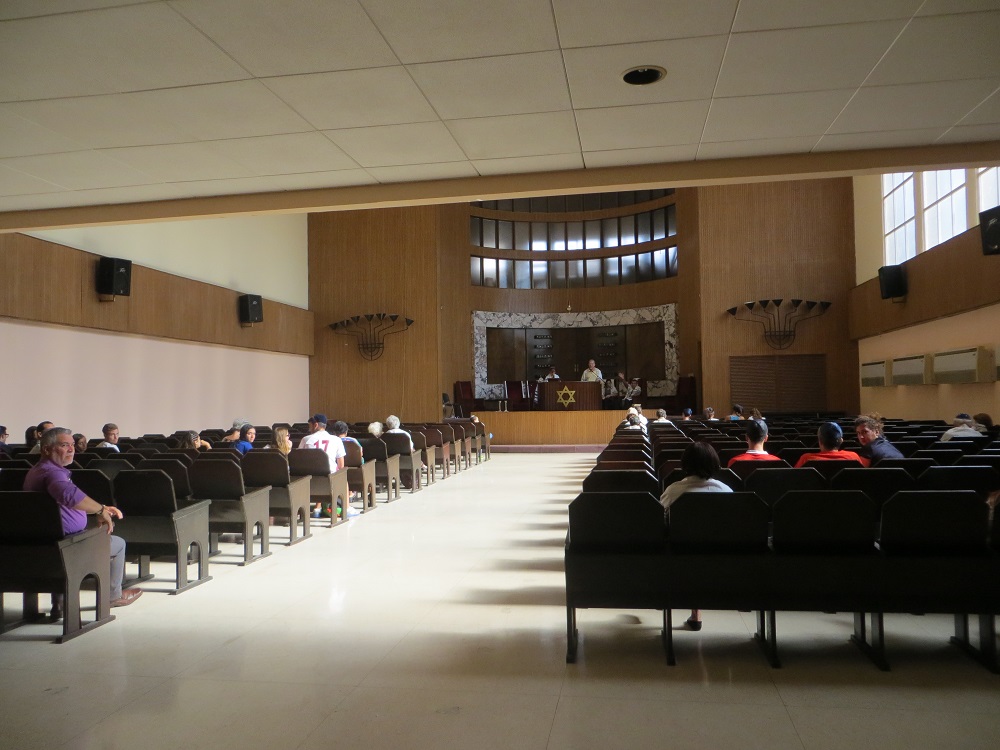
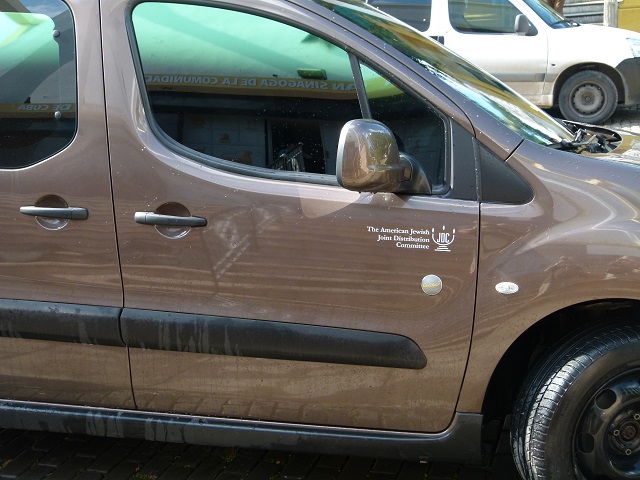
Above, you see the beautiful Beth Shalom (House of Peace) synagogue we visited in Havana, as well as a car that belongs to the synagogue (it looks modern, i.e. not pre-revolution). The car bears the marking of The American Jewish Joint Distribution Committee (JDC), a global Jewish humanitarian assistance organization that has operated since 1914.

In 1945 the Jewish population of Cuba was around 25,000, most of whom lived in Havana. Of that number, 94% emigrated shortly after the country’s revolution in 1959; the majority of them came to the United States. Today there are about 1,500 Jews in Cuba and three functioning synagogues in Havana, including Beit-Shalom.

Havana’s Jewish community received some unwelcome publicity in 2014 because part of America’s relaxation of the embargo on Cuba hinged on the release of Alan Gross. Alan Gross worked as a contractor for USAID (United States Agency for International Development). He was arrested in 2009 by the Cuban government while working on a program to bring satellite phones and computer equipment to Jewish synagogues in Havana without the government’s permits required by Cuban law. He spent 5 years in Cuban prison prior to his release. In truth, Mr. Gross would likely have been arrested as a spy in many other countries for similar activities, but the relationship between US and Cuba meant that his arrest and eventual release were especially politically charged.

Meanwhile, the recently announced yacht race between Miami and Havana is a clear and festive example of the relaxation of the embargo.

We arrived in Miami a few days before our scheduled departure to Cuba and stayed with some friends south of the city. One of the reasons for our early arrival was a meeting between Holocaust survivors and liberators that took place in Bradenton on the Gulf coast. It was a four hour drive from the place where we were staying, and the terrain of the whole area was as flat as I have ever seen, with wide highways that made for an easy and enjoyable drive. We met our friends at the Miami airport before boarding our flight to Cuba. To kill time, they had brought a recent issue of the New Yorker magazine. One relevant article caught our collective eyes: Elizabeth Kolbert’s “The Siege of Miami: As temperatures climb, so, too, will sea levels.” It is a long article, but I have included a few paragraphs that provide the essence of her message:

“…I arranged to meet up with Hal Wanless, the chairman of the University of Miami’s geological-sciences department. Wanless, who is seventy-three, has spent nearly half a century studying how South Florida came into being. From this, he’s concluded that much of the region may have less than half a century more to go.”

“According to the Intergovernmental Panel on Climate Change, sea levels could rise by more than three feet by the end of this century. The United States Army Corps of Engineers projects that they could rise by as much as five feet; the National Oceanic and Atmospheric Administration predicts up to six and a half feet. According to Wanless, all these projections are probably low. In his office, Wanless keeps a jar of meltwater he collected from the Greenland ice sheet. He likes to point out that there is plenty more where that came from. “Many geologists, we’re looking at the possibility of a ten-to-thirty-foot range by the end of the century,” he told me.”

“To cope with its recurrent flooding, Miami Beach has already spent something like a hundred million dollars. It is planning on spending several hundred million more. Such efforts are, in Wanless’s view, so much money down the drain. Sooner or later, and probably sooner, the city will have too much water to deal with. Even before that happens, Wanless believes, insurers will stop selling policies on the luxury condos that line Biscayne Bay. Banks will stop writing mortgages.”

A recent report on storm surges in the United States listed four Florida cities among the eight most at risk. (On that list, Tampa came in at No. 1.) For the past several years, the daily high-water mark in the Miami area has been racing up at the rate of almost an inch a year, nearly ten times the rate of average global sea-level rise. It’s unclear exactly why this is happening, but it’s been speculated that it has to do with changes in ocean currents which are causing water to pile up along the coast. Talking about climate change in the Everglades this past Earth Day, President Obama said, “Nowhere is it going to have a bigger impact than here in South Florida.”

The region’s troubles start with its topography. Driving across South Florida is like driving across central Kansas, except that South Florida is greener and a whole lot lower. In Miami- Dade County, the average elevation is just six feet above sea level. The county’s highest point, aside from man-made structures, is only about twenty-five feet, and no one seems entirely sure where it is. (The humorist Dave Barry once set out to climb Miami-Dade’s tallest mountain, and ended up atop a local garbage dump nicknamed Mt. Trashmore.) Broward County, which includes Fort Lauderdale, is equally flat and low, and Monroe County, which includes the Florida Keys, is even more so.

But South Florida’s problems also run deeper. The whole region indeed, most of the state, consists of limestone that was laid down over the millions of years Florida sat at the bottom of a shallow sea. The limestone is filled with holes, and the holes are, for the most part, filled with water. (Near the surface, this is generally freshwater, which has a lower density than saltwater.)

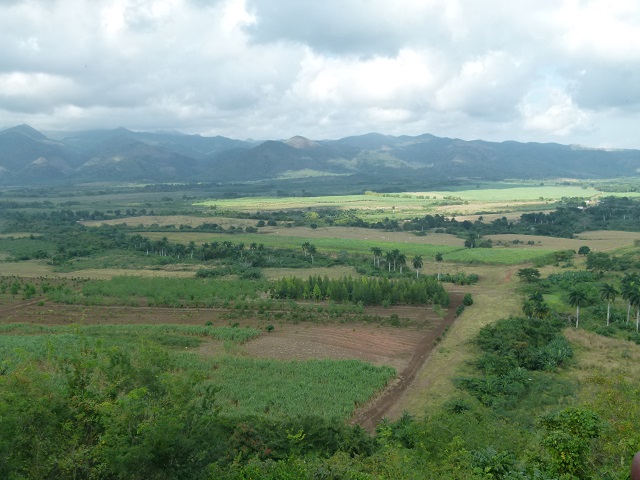
In other words, the good times in Miami might not last much longer as the effects of climate change increase. I encountered a parallel situation during my last visit to Southern Africa. On my way to a conference in Mauritius (July-August 2013 blogs), we visited South Africa. A local family in Cape Town hosted us for dinner. As the conversation flowed and we told our hosts where we were going, they mentioned that among white South Africans, Mauritius is a popular place to buy property as an insurance against racial deteriorations in South Africa. I asked them if they took into consideration the impact of climate change on their choice of sanctuary, and got a confused stare in response. The topography of Mauritius (July 30, 2013) has some similarities to that of Cuba. The photograph below shows a beautiful landscape that is characteristic of the area we visited. It is certainly not as flat as southern Florida and one might easily consider it a perfect refuge in case of a water “siege” on Miami.

Trinidad, Cuba Valle Ingenios landscape

Valle de los Ingenios near Trinidad, Cuba

Indeed, there was a related scene in the popular 2004 movie The Day After Tomorrow. In the movie, global warming immediately caused a big freeze all over the United States. Americans that could, including powerful government officials, escaped to Mexico (which was somehow immune to the freeze). There was also the accompanying debate about immigration and refugees from the extreme weather.

While the timeline of the disasters in the movie was a bit of an exaggeration, we had better keep up friendly relationships with our neighbors. Our moment of need might come sooner than we expect.

Posted in Anthropogenic, Climate Change, Conference, IPCC, Sustainability | Tagged , , , , , , , , , , , , , , , , , , , , , , , , , , , , , , , , , , , , , , , , , , , , , , , , , , , , , , , , , , , , , , , , , , , , , , , , , , | Leave a comment

Guest Blog by Jake Levin: Study Abroad in Havana, Cuba

Hello! This is guest blogger Jake Levin. By way of background, I’m a senior Macaulay Honors College student studying political science and philosophy at Brooklyn College, and I recently returned from a month spent studying abroad in Havana, Cuba. I took Spanish courses at the University of Havana and conducted independent research on the social, political, and economic influencers on the relationship between the two nations. It was wonderful to gain an on-the-ground sense of the conflict, and to hear Cuban diplomats and citizens (among others) present their perspectives on their “imperial neighbor to the north.” In lieu of Professor Tomkiewicz’s usual writing on the actual climate, I will provide a brief introduction to the political climate in Havana, Cuba and here in the US. I hope to provide another blog post in the near future detailing the Havana/Miami/Washington triangle that orchestrates US policies toward Cuba.

While there are a number of insights I think can only develop after having spent time on the island, I would like to preface my comments with a disclaimer: I am a white, American man who spent a significant amount of time in a foreign country with a program administered by other white Americans. I did live with a Cuban family, but my perspective is still that of someone with only decent Spanish and an outsider’s lens on Cuban culture. I will make all attempts not to speak for a country or an entire population. If I do make assertions that are broad or unfair, please forgive me. I represent a dominant racial group that in Cuba receives an advantage much like whites in America; it’s fascinatingly tragic, but let’s set aside the topic of race in Cuba for another post.

It is frequently said that Cuba is a country of contradictions. Perhaps what impressed and confused me most about my time there was the political acumen and participatory interest of its citizens. Most Cubans I met were interested and invested in outcomes, policies, and governance. Yes, there is one dominant political party, and yes, the vast majority of elected officials are members of that party. Yes, political opposition is routinely silenced, and yes, the gravest of human rights injustices involve political prisoners, and the absence of freedom of information, freedom of thought, and freedom of expression.

The first major and open demonstration of political opposition since the revolution happened in 2005. Still, according to the International Institute for Democracy and Electoral Assistance, the average Cuban election sees more than 95% participation. These are non-mandatory, and there is little evidence that there are repercussions for citizens who choose not to vote. The process is conducted in a town-hall nominating format, with municipal candidates presenting their credentials to their constituents and voters approving or denying them in nominating assemblies. Provincial candidates go through multiple vetting rounds at the local level. Political scientists and philosophers have debated the democratic or non-democratic nature of the political process for decades – while likely not a system of which John Dewey would approve, it is a form of democracy. The omniscient hand of Castro’s regime controls the message and limits political diversity, but candidates do work for their constituents fixing potholes and the like. My host family showed us the phone listing for their local representative’s office, and mentioned that they can call at any time if they’re having an issue. When I asked my host father if there was any information posted regarding the office’s hours or who is best to contact for which issue, he shrugged his shoulders and shook his head. “You call, and maybe someone answers.”

Despite the appearance of participatory democracy, the internal political situation regarding dissident activity is dire. According to Human Rights Watch’s 2015 World Report, the curtailed press freedoms make it difficult to quantify just how many political prisoners are currently jailed.

On Political Prisoners:

Even after the conditional release of dozens of political prisoners in December 2014, dozens more remain in Cuban prisons according to local human rights groups. These groups estimate that there are more political prisoners whose cases they cannot document because the government prevents independent national or international human rights groups from accessing its prisons.

Cubans who criticize the government continue to face the threat of criminal prosecution. They do not benefit from due process guarantees, such as the right to fair and public hearings by a competent and impartial tribunal. In practice, courts are “subordinated” to the executive and legislative branches, denying meaningful judicial independence.

On Freedom of Expression:

The government controls all media outlets in Cuba and tightly restricts access to outside information, severely limiting the right to freedom of expression. Only a very small fraction of Cubans are able to read independent websites and blogs because of the high cost of, and limited access to, the Internet. While people in cities like Havana, Santiago de Cuba, or Santa Clara have access to the Internet, people in more rural areas are not able to go online.

A May 2013 government decree directed at expanding Internet access stipulates that the Internet cannot be used for activities that undermine “public security, the integrity, the economy, independence, and national security” of Cuba—broadly worded conditions that could be used against government critics.

A small number of independent journalists and bloggers manage to write articles for websites or blogs, or publish tweets. Yet those who publish information considered critical of the government are sometimes subject to smear campaigns, attacks, and arbitrary arrests, as are artists and academics who demand greater freedoms.

In May 2013, the director of the government-run Casa de las Americas cultural institute, Roberto Zurbano, published an article in the New York Times highlighting persistent inequality and prejudice affecting Afro-Cubans. He was subsequently attacked in the government-controlled press and demoted to a lesser job at the institute.

This is one of the major sticking points in the US-Cuba relationship. The US decries the oppression of speech and expression, while Cuba retorts with figures of our high incarceration rates and lack of political agency for minorities and persons of color. Some reports say there has been an uptick in the number of arrests and assaults of dissidents since relations began normalizing. Still, the government (who seeks to keep it quiet) disputes the veracity of this data. They claim it’s a plot by the CIA – they have good precedent for thinking that– to malign the Cuban government. I think American commercial interests are too strong to allow this oppression – however tragic – to stop the opening of flights and commerce on the island. It will be fascinating to see what happens when direct mail service and other amenities resume on the island. Will dissidents begin communicating more regularly with American human rights groups?

When it comes to international politics – and specifically US politics – Cubans are informed and alert. We were sitting around the dinner table one evening and the conversation moved to American politics. I asked what they knew about congress, Cuban-related legislation, and the 2016 Presidential election. I naively thought I would be schooling them, and didn’t expect much. My host “dad” quickly named Congresswoman Ileana Ros-Lehtinen and Congressman Mario Diaz-Balart, and listed specific sections of the Cuban Adjustment Act, the Toricelli Act (1992), and the Helms-Burton Act (1996) that he found especially offensive. These are key people and pieces of legislation that have enforced or enhanced the embargo (or, to Cubans, “the blockade”) against the island. My host resented much of the older, dissident community in Miami, and was well aware of the strong Cuban-American lobby. “If Ted Cruz or Marco Rubio get elected President, it would be devastating for Cuba,” he said. I responded, “Cuba isn’t the only thing that would be devastated.” He smiled and shook his head in agreement.

Here’s a moment where I reflected on the value of travel and study abroad. Until this point, I hadn’t had the opportunity to spend much time with citizens of other countries, and (ashamedly) had very low expectations for them. I shouldn’t have been, but I was blown away. I know plenty of Americans who couldn’t name a single member of congress or a piece of legislation passed in the last century.

Perhaps the Cubans’ knowledge is due to their national media being controlled by the state. Perhaps it’s a result of the Cuban government’s agenda to vilify their neighbor to the north, which emerges from a long history of American presence on the island. Their war for independence concluded at the same time Americans began quartering soldiers and sailors at Guantánamo Bay. I would encourage you to read about the Platt Amendment, as well as the history of the US and Spain in Cuba. At a congressional hearing in August of 1960, Ambassador Earl T. Smith famously said, “Senator, let me explain to you that the United States, until the advent of Castro, was so overwhelmingly influential in Cuba that the American Ambassador was the second most important man in Cuba; sometimes even more important than the President.”

I don’t think it’s surprising that a small island country that has been handed off between global superpowers has a citizenry engaged in the political process. Internet access is increasing (for the wealthy and privileged), an international music festival is being planned for the first time in Havana to increase tourism and cultural exchange, and visits from high-ranking members of the US government like the Secretary of Commerce and Secretary of Transportation have occurred or will occur in the next few months. President Obama is planning to visit this spring, which would make him the first sitting president to visit the island since Calvin Coolidge in 1928. Progress is slow and contradictory; some reports say the Cuban Ministry of Foreign Affairs takes months to respond to American diplomatic communications.

What you learn living in another country is more valuable than any academic study. The closeness I felt with Cubans as they shared their language, opinions, interests, distastes, distrusts, fears, creativity, and ideas for their future was powerful.

This post is mostly a collection of thoughts and connections regarding the political climate in Cuba and the US; it is far from complete and amounts to a very rudimentary analysis of a complex and nuanced situation. I encourage Professor Tomkiewicz’s readers to follow Cuban-US relations closely, as they will continue to evolve extensively over the next decade.

Posted in Climate Change, Education, UN | Tagged , , , , , , , , , , , , , , , , , , , , , , , , , , , , , , , , , , , , , , , , , , , , , , , , , , , , , , , , , , , , , , , , , , , , , , , , , , , , , , , , , , , , , , , , , , , , , , , , , , , , , , , , , , , , , , , , , , , , , , , , , , , , , , , , , , , , , , , , , , , , , , , , , , , , , , , , , | 1 Comment

State Destruction and the Cuban Embargo

My small series of blogs regarding Cuba cannot possibly have a global impact on these issues, so what am I doing writing it?

In last week’s blog I warned about the dangers of a country (or group of countries) trying to destroy other states for its own political or economic reasons. I strongly implied that was the US’s aim with Cuba as of the Cuban revolution. Our government has used its economic embargo and intelligence operations toward that end.

Nuclear holocausts and disease pandemics aside, most of the anthropogenic impacts on the physical environment directly result from global population growth and that increasing population’s desire to increase their standard of living. The UN recently published a survey of future global population:

29 July 2015 – The world’s population is projected to reach 8.5 billion by 2030, 9.7 billion by 2050 and exceed 11 billion in 2100, with India expected to surpass China as the most populous around seven years from now and Nigeria overtaking the United States to become the world’s third largest country around 35 years from now, according to a new United Nations report released today.

Moreover, the report reveals that during the 2015-2050 period, half of the world’s population growth is expected to be concentrated in nine countries: India, Nigeria, Pakistan, Democratic Republic of the Congo, Ethiopia, Tanzania, the United States, Indonesia and Uganda.

The Paris COP21 meeting clearly showed that any global decision to mitigate global dangers rests on commitments and contributions from functional sovereign governments.

The monopoly of the legitimate use of physical force, also known as the monopoly on violence (German: Gewaltmonopol des Staates), is a core concept of modern public law, which goes back to Jean Bodin‘s 1576 work Les Six livres de la République and Thomas Hobbes‘ 1651 book Leviathan. As the defining conception of the state it was first described in sociology by Max Weber in his essay Politics as a Vocation (1919). Weber claims that the state is any “human community that successfully claims the monopoly of the legitimate use of physical force within a given territory”;[1] thus, “the modern state is a compulsory association which organizes domination.”[2] In other words, Weber describes the state as any organization that succeeds in holding the exclusive right to use, threaten, or authorize physical force against residents of its territory. Such a monopoly, according to Weber, must occur via a process of legitimation.

According to Raymond Aron, international relations are characterized by the absence of widely acknowledged legitimacy in the use of force between states.[3]

Regardless of whether one accepts the concept or not, with the present lack of enforceable global governance, the execution of any global policy rests with the states. Not all states have governments that can shoulder this responsibility.

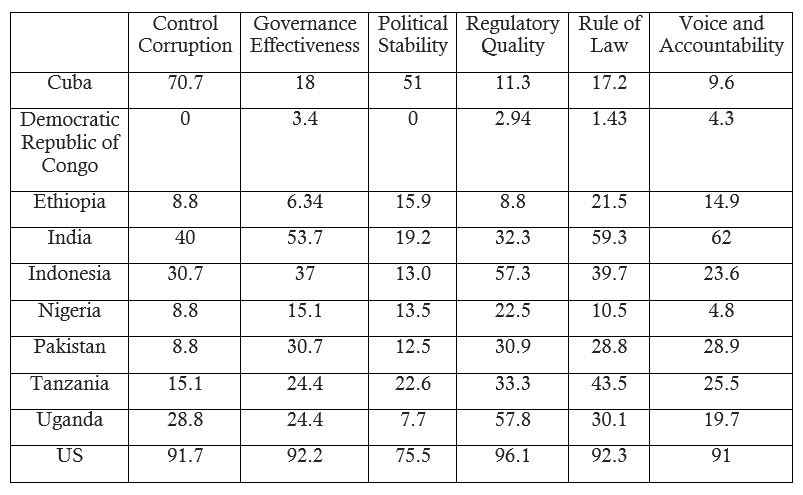
The UN population projection lists 9 states whose near future population growth will have the strongest global impact. The table below provides the percentile rank of the 9 fastest growing countries; I have added Cuba for comparison. The World Bank ranks the quality of countries’ governance in terms of 6 indicators. Lower percentiles represent bad governance, while high percentiles equate to effective governance.

Table of Fastest Growing Countries

The UN population analysis predicts that by the end of the century Africa will surpass Asia as the most populated continent and grow to include more than 4 billion people. Five out of the nine fastest growing countries in the world are located in Africa, but those five are barely functioning states. A look at the table doesn’t inspire a great deal of confidence in these countries’ abilities to lead any global mitigation effort.

Cuba’s entry clearly indicates that its present governance has great room for improvement; it hardly needs the US to destabilize it further by way of the embargo.

The United States embargo against Cuba (in Cuba called el bloqueo, “the blockade”) is a commercial, economic, and financial embargo imposed by the United States on Cuba. An embargo was first imposed by the United States on Cuba on 19 October 1960 (almost two years after the Batista regime was deposed by the Cuban Revolution) when the U.S. placed an embargo on exports to Cuba except for food and medicine after Cuba nationalized American-owned Cuban oil refineries without compensation. Cuba nationalized the refineries following Eisenhower‘s decision to cancel 700,000 tons of sugar imports from Cuba to the U.S.[1] and refused to export oil to the island, leaving it reliant on Russian crude oil. All American oil companies refused to refine Russian oil, leading the Cuban government to nationalize the refineries.[2][3] On 7 February 1962 the embargo was extended to include almost all imports.

Currently, the Cuban embargo is enforced mainly through six statutes: the Trading with the Enemy Act of 1917, the Foreign Assistance Act of 1961, the Cuban Assets Control Regulations of 1963, the Cuban Democracy Act of 1992, the Helms–Burton Act of 1996, and the Trade Sanctions Reform and Export Enhancement Act of 2000.[5] The stated purpose of the Cuban Democracy Act of 1992 is to maintain sanctions on Cuba so long as the Cuban government refuses to move toward “democratization and greater respect for human rights”.[6] The Helms–Burton Act further restricted United States citizens from doing business in or with Cuba, and mandated restrictions on giving public or private assistance to any successor government in Havana unless and until certain claims against the Cuban government were met. In 1999, President Bill Clinton expanded the trade embargo by also disallowing foreign subsidiaries of U.S. companies to trade with Cuba. In 2000, Clinton authorized the sale of “humanitarian” U.S. products to Cuba.

At present, the embargo, which limits American businesses from conducting business with Cuban interests, is still in effect and is the most enduring trade embargo in modern history. Despite the existence of the embargo, the United States is the fifth largest exporter to Cuba (6.6% of Cuba’s imports are from the US).[15] However, Cuba must pay cash for all imports, as credit is not allowed.[16].

America’s embargo against Cuba affects economic, commercial and financial matters. By US law, it will last as long as the Cuban government refuses to move toward “democratization and human rights,” and yet we have seen that Cuba is far from the worst country with regards to implementing those issues. The US also has financial claims of $6 billion against the Cuban government – a result of the broad nationalization that came with the revolution. Again, Cuba is not the worst such offender (Argentina’s recent default comes to mind). Meanwhile, the UN General Assembly has passed an almost unanimous resolution every year since 1992 condemning the embargo. Most international human rights groups agree and President Obama recently denounced the embargo as well. The embargo is an abomination that cannot be stopped as long as the American Congress refuses to pass a resolution to negate it.

Most things in Cuba are run by the state, but the economy is changing fast; in many aspects, it resembles that of China. While visiting Cuba, I had a lot of conversations with locals about what will happen next. The consensus prediction was that the embargo will be canceled sooner or later.

One of the “educational” components of our trip was a short visit to a small facility that keeps old (pre-revolution) American cars running. We had a nice tour of Havana riding in one of these cars and ending with a chat with the shop’s owner. Our driver spoke fluent English; it turned out that he was an English professor at the university but had quit his job in favor of driving around tourists because the pay was much better. He was not alone in this decision. The university is government run and the tuition is free. That unfortunately means that the academic staff is paid very little. This is true with other professional jobs as well. One of the results has been the relatively large emigration of professionals to richer, more market-oriented countries or, alternatively, to private, service-oriented jobs within Cuba. Such a brain-drain is a big loss for any country but it is not restricted to Cuba. The table in the January 26, 2016 blog shows that the pattern is common to other poor Central American and Caribbean countries.

America had a tight-knit, dominant relationship with Batista’s government, which reigned in the roughly 50 year period between Cuba’s independence and its revolution. Our impression was that the embargo will never succeed in convincing Cuba to willingly revert to something that resembles that arrangement, but market forces will bring about changes to its governance as the economy becomes more and more dependent on a service economy and tourism.

My next few blogs will focus on Cuba’s energy and water issues and the joint interests Cuba and the US have in the very narrow strait of water that separates them.

Posted in Anthropogenic, Climate Change, COP21, Education, IPCC, Sustainability, UN | Tagged , , , , , , , , , , , , , , , , , , , , , , , , , , , , , , , , , , , , , , , , , , , , , , , , , , , , , , , , , , , , , , , , , , , , , , , , , , , , , | 1 Comment

The Holocaust, Nuclear Winter, and the Cuban Embargo

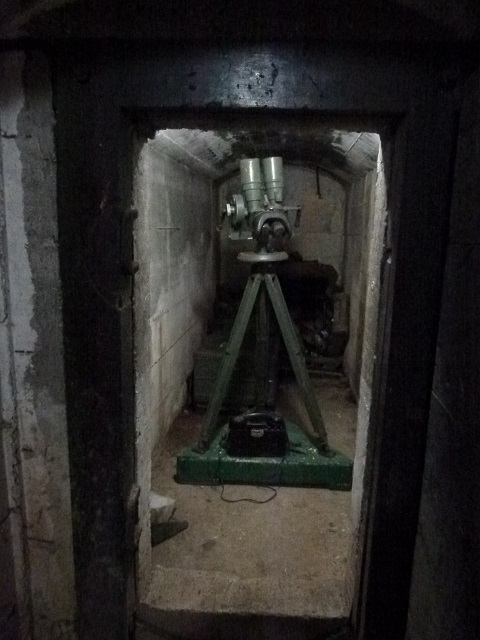
Cuban Missile Crisis, cold war, bunker, HavanaCuban Missile Crisis, trenches, bunker, binocular

I am starting to write this blog on International Holocaust Remembrance Day, Wednesday, January 27th. Today marks 71 years since the liberation of Auschwitz. The end of the week will also mean the beginning of a new semester and back to teaching for me.

I had a cheerful time over the semester break reading about both the Holocaust and the consequences of a nuclear Armageddon before my trip to Cuba. The Holocaust book was Black Earth: The Holocaust as History and Warning by Timothy Snyder. One of my colleagues, a history professor at my school, recommended it to me as the only book he knows of that makes an explicit connection between climate change and the Holocaust. I had heard plenty about The Cold and the Dark: The World after Nuclear War by Paul R. Ehrlich, Carl Sagan, Donald Kennedy and Walter Orr Roberts, but had never read it.

The connection between climate change and the Holocaust is a repeated theme here on Climate Change Fork, starting with my first blog. A new aspect that emerged to me reading Snyder’s book was the importance of the destruction of state in the Nazis ability to industrialize the murder of Jews. The Nazis believed that annihilating Jews would rebalance the planet to a German advantage. To accomplish this, the Germans set about destroying other states with large Jewish populations. They absorbed Austria, tore apart Czechoslovakia and demolished Poland. In fact, some parts of Poland were hit twice: once by the Soviets and once by the Germans. The destruction of the three Baltic States and significant parts of the western Soviet Union accounted for nearly 5 million murdered Jews. That number represents an estimated 90% of the Jewish population of those states. States that were occupied by the Germans but remained functional, such as France, Holland, Belgium, Denmark, Norway, and even Germany, lost a relatively smaller percentage of their Jewish population. Snyder argues that as long as a state functions – in any capacity – it has the power and obligation to protect its citizens.

My visit to Cuba gave a very strong impression that the United States did almost everything in its power to destroy the state government of Cuba following the 1959 revolution in which Castro’s forces deposed Batista’s regime. The United States tried to accomplish this destruction primarily via economic means (i.e. through the embargo and other measures). That said, there were also several documented attempts to reach the same goal using military means, mainly through CIA activities; the most publicized of these was the Bay of Pigs infiltration.

Paul Ehrlich and Carl Sagan’s book summarizes the 1983 Conference on the Long-Term Worldwide Biological Consequences of Nuclear War. It quantifies the physical global events that would take place in the aftermath of a nuclear war. Most of the cases that it shows assume given destructive powers that are a mere fraction of the nuclear arsenal that was available at the time of the Cuban Missile Crisis both to the Americans and to the Russians. The concept of a nuclear winter arose from these discussions.

One of the most striking yet simple questions came from the audience after Carl Sagan’s talk: What would happen after a “successful” first strike by one of the sides? The definition of a “successful” first strike was always understood to be one large enough to destroy the capabilities of the other side to respond. Carl Sagan answered, and the other participants agreed, that in most likelihood, if the first strike were to pass some minimum threshold of megatons exploding (Larger than at Hiroshima and Nagasaki but a small fraction of the two superpowers’ arsenals), the striker would commit a collective suicide because the impact of the strike would be global. This response echoes my definition of uncontrolled anthropogenic climate change as self-inflicted genocide on a global scale.

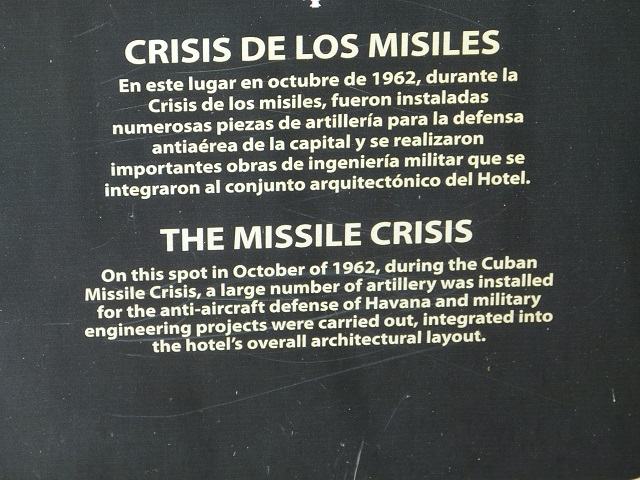
Following its revolution, the new Cuban government didn’t take the hostilities by the United States lightly; nor did it submit to our demands. This was at the height of the Cold War and Cuba found a formidable ally in the Soviet Union. This led, among other things, to the Cuban Missile Crisis. The two photographs were taken on the grounds of one of Havana’s most famous hotels: Hotel Nacional. While the hotel is now swarming with rich Western tourists – many of them Americans, in 1962 the hotel was converted into a major anti-aircraft defense position to protect against an air attack. The bunkers that remain remind us that this event brought the US, Cuba, and Russia the closest to a major nuclear conflict since 1945. As Carl Sagan and Paul Ehrlich aptly pointed out, such a conflict would not have stayed confined to these three countries.

Fortunately, the US and Cuba are now in the process of thawing their relationship, thanks mostly to President Obama’s executive orders. The embargo was put in place by Congress and cannot be lifted without a matching Congressional resolution, but that option is not currently on the table. Two of the leading Republican presidential candidates, Senators Ted Cruz and Marco Rubio, are second generation Cuban immigrants with families that left Cuba either directly before or after the revolution. Both of them want Cuba to bend to the US’s whims before they will agree to lift the embargo.

Posted in Anthropogenic, Climate Change, Conference, Education, Sustainability | Tagged , , , , , , , , , , , , , , , , , , , , , , , , , , , , , , , , , , , , , , , , , , , , , , , , , , , , , , , , , , , , , , , , , , , , , , , , , , , | 1 Comment

Back From Cuba

Old_New_Havana Old cars_Cuba

For the semester break I decided to “unwind” with a book about the Holocaust and one on the consequences of a nuclear Armageddon – one covering the painful past and the other looking at a possible end of human civilization. To spice up the vacation, my wife and I decided to travel to Cuba. Given America’s timely relaxation of its travel embargo to the country, we figured it would be interesting to observe the transitions.

The easing of the embargo still does not mean that one can just jet over to Cuba to enjoy a Mojito on the beach and conclude the day listening to great Cuban music. One has to follow strict American guidelines that include being part of a tour. The rule is that

Americans who wish to travel to Cuba will have to meet one of 12 different criteria for authorized travel, as they have in the past. Those categories include family visits, official business of the U.S. government, foreign governments, and certain intergovernmental organizations; journalistic activity; professional research and professional meetings educational activities; religious activities; public performances, clinics, workshops, athletic and other competitions, and exhibitions.

My wife and I don’t like to travel in groups. Fortunately, we contacted a company called “Cuba Educational Travel” that specializes in individualized educational tours. We got together with another couple that likes to travel in a similar way and went on a nine day tour focused on Havana and Trinidad.

As far as I know, the US does not do much to ensure that travelers are actually learning during these “educational” tours of Cuba. Nobody asked us any questions on our way in or out. The US government does not provide tests at any stage of the visit and they certainly don’t require us to repeat the exercise if we don’t demonstrate sufficient learning – as we do in the classroom. However, I am in the business of education, so test or no test, I feel obliged to share what I have learned.

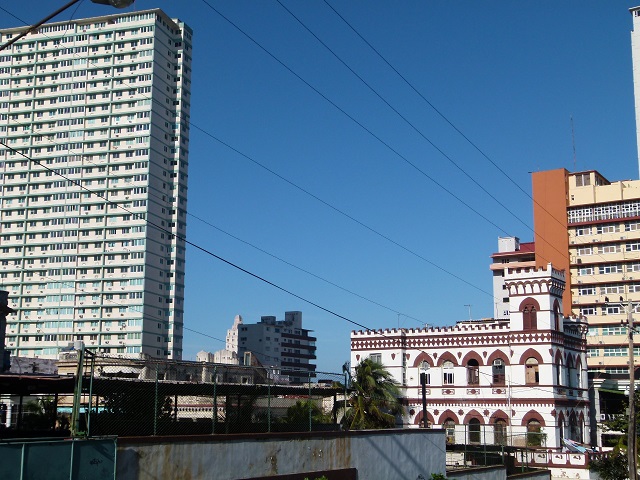
The two photographs at the top were taken in Havana. The first one represents a mixture of colonial and modern architecture in Havana. Cuba won its independence from Spain in 1898; the colonial period spans from Columbus’ arrival until that time.

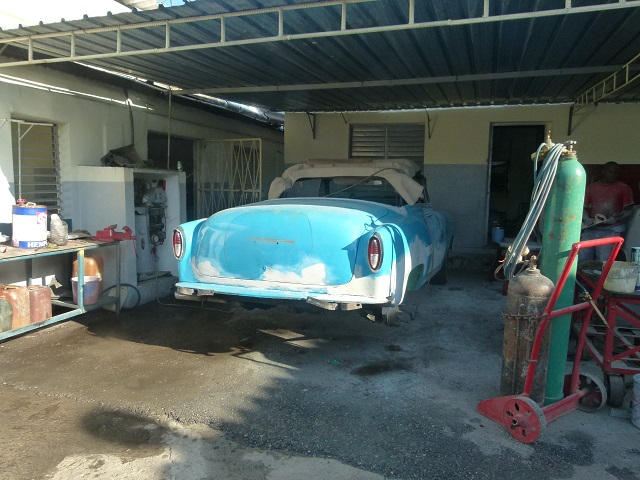
The second photograph is of a Cuban auto shop repairing a pre-1959 American Chevrolet. Here is what Bloomberg says about Cuba’s classic American cars:

When Fidel Castro came to power in 1959, he made it illegal for anyone to import cars without government permission. The mandate arrested automotive history on the island, and curvaceous mid-century Chevys, Studebakers, and Buicks still rumble down Havana’s Malecón, much as they did half a century ago. Now, with the easing of relations between the U.S. and Cuba, some of the nearly 60,000 vintage cars in Cuba could eventually make their way into collectors’ hands stateside.

Cuba loosened some trade restrictions on automobiles earlier this year [2014], allowing new cars to be bought and sold on the island. Lifting the U.S. trade embargo on the island—a decision that must be made by Congress, not President Barack Obama—would let Cuba’s classic automobiles return to the U.S. after so long. If that does happen, the buyers won’t be traditional car collectors, who prize low mileage and automobiles in pristine condition. For one thing, Castro’s restriction on auto imports stopped the flow of replacement parts, so while a Cadillac convertible in Cuba may look authentic at first blush, a closer look reveals both hundreds of thousands of miles on the odometer and a bevy of makeshift fixes, perhaps even (gasp!) a Peugeot diesel engine under the hood. That said, experts anticipate a niche market of buyers willing to pay a premium to own a piece of Cuban history.

Cubans are very proud of their ability to keep the old American cars running. If you take a cab in Havana or any other Cuban city, it is very likely that you will ride in an old American car, although there are now sometimes alternatives available due to relaxations of the import ban.

My next few blogs will delve into Cuba’s efforts to mitigate and adapt to climate change, as well as is the very confrontational relationship between Cuba and the United States since the Cuban revolution.

The table below summarizes some key indicators that will be relevant to these discussions about Cuba. My source for most of the information was the World Bank (data.worldbank.org/indicator); I used incarceration rates from Wikipedia, the United Nations’ data for the Human Development Index, and I took migration numbers from the recent issue of the CIA World Factbook. The table includes Cuba and the United States for obvious reasons but it also includes three other countries in Central America with similar populations and somewhat similar colonial histories to that of Cuba, to serve as reference points.

The Gini coefficient measures economic equality; 0 represents perfect equality and 1 is “perfect” inequality. Cuba’s most recent Gini coefficient was not available through the Word Bank, but it rose from 0.24 in 1986 to 0.38 in 2000.

The Human Development Index is a composite statistic of life expectancy, education, and income per capita. In principle, these factors tell us about the area’s ability to thrive and grow.

Indicators Cuba Dominican Republic Haiti Honduras US
Population (Thousands)(2014) 11,379 10,406 10,572 7,962 319,000
GDP/Capita (2013) (Current US$) 6,790 5,969 810 2,356 52,980
Access of Electricity(2012) (% of population) 100 98 37.9 82.2 100
CO2 emission (2011) (MT/Capita) 3.2 2.2 0.2 1.1 17.0
Adult literacy (2012)(% of population aged 15+) 100 90 ——– 85 ——–
Fertility rate (2014) (Birth/woman) 1.6 2.5 3.1 2.4 1.9
Life Expectancy at birth (2014)(females) 81 76 65 76 81
Infant mortality rate (2014) (per 1000 births) 4 26 54 18 6
Human Development Index (2014) 0.769 0.715 0.483 0.606 0.914
Gini Coefficient (2013) ——– 0.471 0.608 0.574 0.411
Incarceration rates (per 100,000) 510 233 97 196 698
Number of migrants/1000 -3.64 -1.91 -2.76 -1.16 +3.86

Next week I will look into the origin and impact of the American embargo on Cuba.

Posted in Anthropogenic, Climate Change, Education, Sustainability | Tagged , , , , , , , , , , , , , , , , , , , , , , , , , , , , , , , , , , , , , , , , , , , , , , , , , , , , , , | Leave a comment

Regulating Subsidies

Brent Crude Oil Price PredictionsThe figure above shows the price of Brent crude oil as recorded at the end 2014, along with predictions by two respected financial organizations and the futures market for this past year. The real price today (December 30, 2015) is $36.50 – a drop of about 70% in a year and a half’s time. As it turns out, nobody was right. 🙁

One of the holy grails of the much-needed transition away from fossil fuels toward sustainable energy sources is finding a way to make sources such as solar and wind price-competitive with fossil fuels. Indeed, over the last few years, a combination of technological developments and production shifts to developing countries, combined with market expansion, did considerably reduce the price of sustainable energy resources and their use expanded considerably.

To help this trend, everyone agreed that we needed to increase the price of fossil fuels at the same time as lowering the cost of the sustainable energy sources. Countries or regions could make that transition to being more “green” (see the map in the May 19, 2015 blog) by changing the price of carbon either through a Cap and Trade policy or a carbon tax.

Carbon pricing was one of the key recommendations of the Kyoto Protocol, but you hardly heard a mention of it in Paris this past year. It was there within the individual country reports but was notably missing from the COP21 agreement itself. By now, everybody has realized that pricing is not the only game in town. If it were, one would expect that a 70% price drop in fossil fuels over a year and a half would lead investors to completely stop acquisitions of sustainable energy sources. In that case, the market would shift back toward fossil fuels, restoring the old balance of global supply and demand and weakening the growth of sustainable energy. As I already showed six months ago (July 2015), this did not happen. Global installation of wind and solar continues to increase.

However, there were major efforts to reduce (or stop) subsidies of fossil fuels – both on the consumption and production sides. This effort did not find its way into the final agreement but, in my opinion, it will have a major impact regardless of the price of oil.

The FFFSR (Friends of Fossil Fuels Subsidy Reform) is a recently formed organization whose chief objective is to lobby countries and organizations to stop fossil fuel subsidies. They made their efforts known throughout the conference. The UNFCCC’s Newsroom summarized their goals:

Paris, 30 November 2015 – An unprecedented coalition of close to 40 governments, hundreds of businesses and influential international organizations has called today for accelerated action to phase out fossil fuel subsidies, a move that would help bridge the gap to keep global temperature rise below 2°C.

On the opening day of the UN Conference on Climate Change (COP21), New Zealand Prime Minister John Key formally presented the Fossil Fuel Subsidy Reform Communiqué to Christiana Figueres, Executive Secretary of the UN Framework Convention on Climate Change (UNFCCC), on behalf of the Friends of Fossil Fuel Subsidy Reform, The Prince of Wales’s Corporate Leaders Group and other supporters of the Communiqué.

The Communiqué calls on the international community to increase efforts to phase out perverse subsidies to fossil fuels by promoting policy transparency, ambitious reform and targeted support for the poorest.

Governments spend over $500 billion of public resources a year to keep domestic prices for oil, gas and coal artificially low. Removing fossil fuel subsidies would reduce greenhouse gas emission by 10 per cent by 2050. It would also free up resources to invest in social and physical capital like education, healthcare and infrastructure, while leveling the playing field for renewable energy.

Here are some important details to keep in mind:

Setting the scene

There is a widespread high-level consensus that in order to rewire the economy towards de-carbonisation, fossil fuel subsidies will need to be phased out. This is, however, politically, socially and economically complex with a series of barriers preventing rapid progress.

The IEA’s World Energy Outlook on Energy and Climate (2015) states that “despite the recent prolonged period of high oil prices, which pushed the cost of subsidies to crippling levels in some countries, the political climate to enact reform has become more conducive in many cases as international prices have fallen”. The report shows that in particular lower prices have been fundamental to recent fuel pricing reforms in parts of Asia such as Indonesia (recently eliminated gasoline subsidies and capped diesel subsidies). Other countries have also eliminated subsidies such as Malaysia for both gasoline and diesel, Thailand for liquefied petroleum gas (LPG) with an increase in the price of compressed natural gas (CNG). Of note is also the Indian government’s recent deregulation of diesel prices.

Recent reforms have been concentrated in net-energy importing countries, but there are also good reasons for reforms in net-exporting countries as oil export revenues decline and governments seek to protect other spending priorities. As in importing countries, reforms may be more palatable to consumers at a time of relatively low international prices. Venezuela and Kuwait (among the largest subsidisers) are reported to be considering reforms, while Iran has previously made reforms and has more scheduled.

The G8, G20, IMF, IEA, OECD and the World Bank have all referred to the phase out of in-efficient fossil fuel subsidies as essential to transition to a low carbon economy and necessary to reduce our global carbon footprint. It has been estimated that the total elimination of fossil fuel subsidies globally will reduce GHG emissions by 13 per cent. However, we recognize that some countries face circumstances under which they believe there are powerful short term drivers for the maintenance of subsidies and that reform will be dependent on particular national circumstances and changing market conditions.

How big are fossil fuel subsidies?

The International Energy Agency (IEA) estimates the total fossil fuel subsidy to amount to $548 billion in 2013. This is based on the gap between what consumers pay and the actual cost of supply, but doesn’t consider the environmental and health costs. The OECD calculate that direct budgetary support and tax expenditure for fossil fuel consumption and production in OECD countries amounted to $50-90bn annually between 2005 and 2011. A recent report by an IMF working group estimates that the total cost of subsidies for fossil fuels, including direct subsidies and the environmental and health costs their use imposes were $4.9 trillion (6.5 percent of global GDP) in 2013. In addition to reducing emissions, the IMF calculates that eliminating these subsidies in 2015 could raise government revenue by $2.9 trillion and cut premature air pollution deaths by more than half.

Although it is important to note that the IMF, IEA and OECD do not define subsidies in the same way and hence the estimated costs from subsidies vary between at least $548 billion to $4.9 trillion, the most important message from all three organizations and others is that the costs are high and that the elimination of subsidies would have a net positive impact on the reduction of GHG emissions and pollution.

The issue is complex, especially because there are differences between the subsidies to producers and those to consumers in developing countries; we will follow it closely.

Posted in Anthropogenic, Climate Change, Conference, COP21, IPCC, Sustainability, UN, UNFCCC | Tagged , , , , , , , , , , , , , , , , , , , , , , , , , , , , , , , , , , , , , , , , , , , , , , , , , , , , , , , , , , , , , , , | Leave a comment

COP21: Industry Commitments to Sustainability and Using Consumer Pressure to Keep Promises

Last week’s blog looked at Unilever’s CEO’s attempts to make his company sustainable. Unilever is not alone in promising to be more environmentally friendly in the long term. One of the less discussed achievements of COP21 was the mobilization of major nongovernmental organizations to provide their own commitments to sustainability and post them electronically for everyone to see on the UNFCCC site. As of the day I’m writing this, these commitments include 2,254 cities, 150 regions and 2,034 companies.

UNFCCC Climate Commitments - Cities, Regions, CompaniesThis is one of the most encouraging demonstrations of the bottom-up approach to global energy transition that we need to mitigate anthropogenic climate change. That said, it suffers from the same lack of enforcement authority as the sovereign countries that signed the formal COP21 agreement. A new CEO with some earning difficulties might decide that he or she wants nothing to do with these commitments, and happily revert back to carbon-emitting fossil fuels. However, in many cases, the timeline for these commitments is now; there is no need to wait until 2023 for the initial compliance evaluations.

Table 1 shows some of the commitments from various companies, along with their timing (where available).

Table 1 – Companies with 100% of renewable power targets

Organization Country %Renewable Target Year
Marks and Spencer UK 100 2012
Royal KPN Netherlands 100 2013
CommerzBank Germany 100 2013
Almiral SA Spain 100 2014
Bankia Spain 100 2014
Microsoft US 100 2014
SAP Germany 100 2014
Steelcase US 100 2015
Voya Financial US 100 2015
Hannover Ruck Germany 100 2015
Alstria Germany 100 2016
Infosys India 100 2020
Autodesk US 100 2020
Goldman Sachs US 100 2020
IKEA Netherlands 100 2020
Kingspan Ireland 100 2020
RELX UK 100 2020
Royal Philips Netherlands 100 2020
SGS Switzerland 100 2020
UBS Switzeland 100 2020
Vaisala Finland 100 2020
Yoox Italy 100 2020
JCDecaux France 100 2022
Nike US 100 2025
Elion Resources China 100 2030
Mars US 100 2040
Apple US 100 NA
Avant Garde Innovation India 100 NA
BT Group UK 100 NA
Commercial Limited UK 100 NA
DSM Formula E Netherlands 100 NA
Givaudan Switzerland 100 NA
Google US 100 NA
H&M Sweden 100 NA
Infigen Energy Australia 100 NA
Nestle Switzerland 100 NA
Procter and Gamble US 100 NA
Proximus Belgium 100 NA
Salesforce US 100 NA
Starbucks US 100 NA
Unilever Netherlands 100 NA
Walmart US 100 NA

As with countries, peer pressure (or in this case, consumer pressure) means that being the first to renege on these commitments will probably require some nerve. The public’s response will tell us a lot about what we, collectively, are willing to do to make change happen. It will also be instructive as to how we plan to live with the consequences of our actions or inactions. Public opinion can have a much bigger impact on company policy than it does on sovereign countries. We live in a capitalist society, so consumer pressure and investments (via the stock market or through mergers and acquisitions) make a big difference. In most companies such pressure can result in major management changes and can serve as a very strong deterrent to being the first to back out of a promise.

My next blog (which I’m writing now) will be posted two days after my return from Cuba. I’ll look into two additional actions that sovereign state members of the UNFCCC can take to supplement their COP21 commitments before the scheduled evaluations start.

Posted in Anthropogenic, Climate Change, COP21, IPCC, Sustainability, UN, UNFCCC | Tagged , , , , , , , , , , , , , , , , , , , , , , , , , , , , , , , , , , , , , , , , , , , , , , , , , , , , , , , , , , , , , , , , , , , , , , , | Leave a comment

Mini-Post: 4 Links from the Week of January 4th

As you may know, I share links regularly on my social media accounts (Twitter, Facebook), but I have gathered a handful of stories over the week for you to enjoy here. Several of them directly relate to my recent and upcoming posts about how companies and consumers can affect sustainability.  Have a great weekend!

How Unilever, GE, Ikea Turn a Profit from Sustainability

Tackling Climate Change through Budget Transparency

An Investment Strategy to Save the Planet

America has been duped on climate change

Posted in Anthropogenic, Climate Change, Sustainability | Tagged , , , , , , , , , , , , , , , , , , , , , , , , , , , , , , , , , , , , , | Leave a comment