Dubai: City of Contradictions

Dubai, UAE, United Arab Emirates, proposal, dome, development, sustainable, mall of the worldFigure 1 – The proposed “Mall of the World” in Dubai

Last week, I posted some outlines of the trip that my wife and I took over the summer. The trip anchored on three family weddings that took place in Brisbane, Australia; Paris; and Krakow, Poland, as well as a commitment in Germany. The latter was an event near Magdeburg, Germany, where a school is leading an effort to erect a monument to both the American army and those that they liberated, including me, my mother, my uncle, and 2,500 other survivors of the Bergen-Belsen concentration camp (see the June 11th blog from this year).

As I mentioned last week, this was a very long trip and we needed some breaks, especially on the way from Australia to Europe. We decided that Dubai would be a good place to stop: we had never visited but many of our friends had recommended that we do so. We were a bit hesitant because we knew what to expect there at the height of the summer. Figure 2 shows the temperature and precipitation by month. We visited in the beginning of August. It was obvious to us that we would end up jumping from one air-conditioned place to another, with very little time spent outdoors. However, one of the aspects that interested me most (and fortunately interested my wife as well), was that it might give us a “realistic” picture of what we might expect the world to look like by the end of the century in a business as usual scenario (barring us fleeing to Mars).

weather, celsius, temperature, rainfall, precipitation weather, fahrenheit, temperature, rainfall, precipitationFigure 2 – The difference in precipitation between the driest month and the wettest month is 28 mm. The average temperatures throughout the year vary by 15.6 °C (Δ 28°F).

https://en.climate-data.org/asia/united-arab-emirates/dubai/dubai-705/

I found the opening picture (Figure 1) on the site ZME Science. It shows one of the solutions that was—and perhaps is still—being seriously considered. The site explains it this way:

Appropriately called Mall of the World, the city will cover an area of 48 million square feet and will set new records for various large behemoth structures: the largest indoor theme park in the world (the one actually covered by the dome), the largest mall (8 million sq. ft.), along with 20,000 hotel rooms catering to all types of tourists, and a cultural district with theaters built around New York’s Broadway, Ramblas Street in Barcelona, and London’s Oxford Street. If you ever had any doubt the Saudis have a thing for the ‘big’, here you go…

Aside from the obvious mistake in this paragraph that we are not talking about Saudi Arabia but rather about the United Arab Emirates (Dubai is the largest city in the UAE and the home of about half the country’s population), the description is more or less accurate.

Can we expand the concept globally? Many countries are trying on a local scale (see the October 24, 2017 blog) but none have attempted the scale shown in Figure 1. Maybe Dubai is the right place to start.

Of course, Dubai has a somewhat dubious recent history and there are some possible dark sides to these proposed developments:

Three decades ago, Dubai was little more than desert.

The city exploded in prosperity after the United Arab Emirates discovered oil in 1966, leading to a development boom that has resulted in the world’s tallest building, the second-biggest mall, one of the most luxurious hotels, and more skyscrapers than any city besides New York and Hong Kong.

Oil and gas now accounts for less than 1% of Dubai’s economy, down from 50% at one point, according to Bloomberg.

But for those looking at Dubai and wishing their country or city would use it as a model, Dubai may be more of a cautionary tale. The shiny, glass towers hide the trampling of the hundreds of thousands of migrant workers that built them. They hide the often opaque and arbitrary legal system, and the fear over what happens to the economy when the cranes stop building and the flow of foreign investment dries up, as happened in 2009.

Publications such as the UK’s Independent have further amplified the more nefarious aspects of the country and the project: “This is a city built from nothing in just a few wild decades on credit and ecocide, suppression and slavery.”

I am including some of the pictures I took during my visit: Dubai, UAE, United Arab Emirates, development, sustainable, Burj Khalifa, tower, mall

Figure 3 – The Dubai Mall and Burj Khalifa tower

Dubai, UAE, United Arab Emirates, development, sustainable, Burj Khalifa, tower, mall

Figure 4 – Near the Dubai Mall

Once you enter the Dubai Mall, the heat is no problem. Nor is the income distribution (for you!). This is one of the biggest malls in the world, with luxury stores from all over the planet, American-sized prices, and as many restaurants as you care to count. The entertainment includes a great aquarium, on-site scuba diving, and the world’s largest fountain. You can also climb the world’s tallest building (so far), the Burj Khalifa (this comes with a US $200 price tag that we skipped), and so on.

Dubai, UAE, United Arab Emirates, development, construction, Expo 2020Figure 5 – Major construction in preparation for Expo 2020 in Dubai

Construction activity is everywhere—as shown in Figure 5—mainly in anticipation of Expo 2020. However, a recent Reuters poll predicts a sharp decline in house prices.

Figure 6 shows a different picture of Dubai: that of the old city, still critically dependent on window air conditioners.

Dubai, UAE, United Arab Emirates, air conditioning, air conditioner, old, A/CFigure 6 – Old Dubai

Sustainable City

However, the most striking example of a direction that Dubai might be taking came during our first day there, when we visited its “Sustainable City.” According to Wikipedia:

The Sustainable City is a 46 hectare property development in DubaiUnited Arab Emirates. Situated on the Al Qudra road, it is the first net zero energy development in the Emirate of Dubai. The development includes 500 villas, 89 apartments and a mixed use area consisting of offices, retail, healthcare facilities, a nursery and food and beverage outlets. Phase 2 of the development will include a hotel, school and innovation centre.

The City was developed by Dubai-based Diamond Developers, whose Chief Executive Officer, Faris Saeed, has stated that much of his inspiration for the development came from UC Davis West Village.

Key elements of the City include:

  • a residential area of 500 townhouses and courtyard villas inspired by Dubai’s old Bastakiyadistrict
  • 11 natural ‘biodome’ greenhouses, organic farm and individual garden farms for local food production that use a passive cooling method with fans and pads.
  • 10 MW peak solar production
  • waste water recycling, with segregated drainage for greywater andblackwater using papyrus as a biofilter
  • biking and shaded jogging trails
  • charging stations for electric cars
  • an equestrian center

Apart from periphery roads and car parking areas, the development is a car-free site.

The parking areas are topped by solar shading featuring solar panels that are connected to an electrical grid to supply energy into different sections of the city.

Panels are also placed on the roofs of all of the houses.

The construction waste is reused to furniture the public spaces.

The townhouses have UV reflective paint to reduce the thermal heat gain inside the houses.

Here are some pictures from inside the Sustainable City:

Dubai, UAE, United Arab Emirates, development, sustainable, sustainable cityFigure 7 – A model of the full Sustainable City

Dubai, UAE, United Arab Emirates, development, sustainable, sustainable city, greenhouse, plants, growthFigure 8 – A greenhouse

Dubai, UAE, United Arab Emirates, development, sustainable, sustainable city, solar, solar power, renewable energy, renewable, humidity, dehumidifier, water, heatFigure 9 – Solar-powered dehumidifier and water heater

Dubai, UAE, United Arab Emirates, development, sustainable, sustainable city, solar, solar power, renewable energy, renewable, ozone, ozonator, technology, water, sterilization, Figure 10 – Solar-powered ozonator for cleaning

The United Arab Emirate’s officials have collected articles about its efforts to make the country and the city of Dubai sustainable on a site called The Sustainabilist.

Energy storage, so essential in any setting that relies on sustainable solar energy, was not mentioned. Nor was doing so necessary on the part of the Sustainable City’s tour guides. The city has an agreement with the emirate that all renewable energy is routed through (and stored by) the emirate’s mostly fossil-fueled power company. They buy it at the same price as traditional fuels, and those who produce it can then drawn upon it when needed for the same price. This process of selling excess solar power to a utility and then using it later is called load leveling. In Germany, the price that you get from the utility for the access energy that you deliver is only 10% of what you have to pay when you draw upon it later. That the UAE is offering equal prices for both directions constitutes a great subsidy. Not only that, UAE’s utility companies signed long, 25-year or more contracts to buy electricity from these solar power plants, which gives the solar developers more time to pay off the initial investment, making for cheaper solar power overall.

Next week I will start to explore other stops from this trip.

Posted in Climate Change, Sustainability | Tagged , , , , , , , , , , , , , , , , , , , , , , , , , , , , | 9 Comments

Around the World in 5 Weeks: Three Weddings, Climate Change, and the Holocaust

Travel

My wife joined me on a whirlwind trip from New York City to Brisbane and Melbourne, Australia to Dubai, UAE to Paris, France to The Hague, Netherlands to Farsleben and Berlin, Germany to Krakow, Poland. We returned a few days ago and started back to work the day after we arrived.     New York City, NYC, Brisbane, Melbourne, Australia, Dubai, UAE, Paris, France, The Hague, Netherlands, Farsleben, Berlin, Germany, Krakow, PolandFigure 1 – Map of our travels (it’s a little hard to see the specifics but you get the idea)

The trip combined family occasions with the commemoration of Holocaust events that relate to my history. I also looked at climate change issues and even snuck in some simpler tourist curiosities (sometimes you just need a break).

To be more specific, the three weddings took place in Brisbane, Paris, and Krakow. The Holocaust connection was confined to Germany. As to climate change, the most relevant areas were Dubai, The Netherlands, and Germany. I will give more details about these activities in future blogs.

Most of the Holocaust-related parts of this trip took place in Farsleben, Germany; I described the planned events in my June 11th blog on D-Day. I am writing this blog on Sunday, September 1st, 80 years after the Nazi invasion of Poland that marked the start of WWII. This year also marks the 80th year since I was born in Warsaw, Poland to a Jewish family.

Here are four photographs to give you some highlights of the trip:

Berlin, wall, topography of terror, planet, Nazi, Germany, museum

Figure 2 – Portion of the Berlin Wall with graffiti that says, “save our planet”

Berlin now has a Topography of Terror museum on the site of buildings which during the Nazi regime held the headquarters of the SDEinsatzgruppen, and Gestapo. The portion of the Berlin Wall above is part of this museum.

Figure 3 – Solar cells in Hillersleben

Meanwhile, Hillersleben—the Displacement camp where the American soldiers that liberated me first took me (see July 5, 2016 blog for more details)—now has an extensive area of solar cells for energy capture, along with major wind farms nearby.

Figure 4 – The Sustainable City in Dubai

Figure 5 – Pepper-growing greenhouse near Rotterdam

Carbon footprints

With all our good intentions for this trip, I still have to address the adverse effects such a trip contributed to the atmospheric chemistry that enhances anthropogenic climate change. Greta Thunberg’s recent trip to New York City (by boat) only accentuated that issue. I wrote about her here before (August 6, 2019 blog). She is working hard to prevent trips similar to what I took and is advocating that people refrain from flying. She is 16 and I am 80; our comfort requirements and available time are different—many factors contribute to different choices.

The total mileage of my trip (based on the airplane mileage I gained) was 27,940 miles (46,659 km). That is about 10% longer than the circumference of the Earth (24,901 miles). If I confine myself to a single type of aircraft—the Airbus A380 that I actually used on several of the legs, I can do some of the math. The manufacturer claims that the carbon footprint of this airplane is 75g per passenger seat per km. Fortunately, I can afford to fly these kinds of distances in business class. However, the expanded legroom and personal space that upgrade entails translates to fewer persons per square foot and thus larger footprints per person.

Given that the footprint data that I quote doesn’t differentiate between classes on the plane, I double the contribution (this approximation is most likely on the low side). So, my carbon footprint is 150g per km, meaning my total carbon footprint for the trip is about 7 metric tons. This carbon footprint is equivalent to a year and a half in a “typical” passenger car with a fuel efficiency of 22 miles/gallon that is driven 11,500 miles/year and emits 4.6 metric tons carbon dioxide per year.

4.6 metric tons per year x 1.5 years = 6.9 metric tons CO2

In order to compare the emissions from the car and the plane, in terms of grams of CO2 per km, I must first convert my metrics so that they match:

11,500mi x 1.6 = 18,400km

4.6MT = 4,600,000g

250g/km > 150g/km

In other words, if we assume that there are no other passengers in the car the air travel is significantly more efficient, even if we don’t consider travel time. No matter how we look at it, though, it is a very large carbon footprint. The only difference is that the airplanes will fly these routes whether or not my wife and I take these flights, while the car will stay in the garage and emit nothing if we decide not to go anywhere.

As I promised earlier in this blog, I will follow in the next few weeks with more detailed descriptions of our observations. I’ll leave you to be the judge of whether or not our efforts justify the damage that we have contributed to the environment.

Posted in Anthropogenic, Climate Change, Holocaust, Sustainability | Tagged , , , , , , , , , , , , , , , , , , , , , , , , , , , , , , , , , , , , , , , , , | 5 Comments

Guest Blog: US Medical Schools Must Train Medical Students for Climate Change

This week, a medical student friend of mine presents a guest blog. As always, we welcome your comments and questions. We’d love to start a discussion about this topic.

SA is a second year medical student interested in global surgery. She is a native New Yorker and a proud graduate of Brooklyn College.

As a medical student cramming my brain with vast quantities of information on the fundamentals of the physical exam and how to take down medical history, I still have not gotten used to the idea of actually taking care of patients on my own. In between classes and research, I barely have enough time to sleep, let alone contemplate what it may actually look like to take care of patients on an everyday basis. But, for the past year of medical school, I have trained hard to learn the knowledge and skills I will need to address a multitude of increasingly complex health care issues that will inevitably affect the lives of my future patients.

Arguably one of the most pressing health care issues facing US patients is anthropogenic climate change, an impending public health crisis that threatens to disrupt food systems, exacerbate chronic disease conditions, and drive up rates of respiratory illnesses and vector-borne diseases globally. Climate change is already disproportionately impacting vulnerable communities, creating waves of “climate migrants” in the wake of floods, droughts, and other extreme weather events.

Along with multidrug resistance and lead contamination of public water supply systems in cities such as Newark, climate change is high on the list of public health threats I worry about. Regardless of whether I am prepared to confront the realities of being a care provider, I recognize that I will inevitably be forced to deal with the devastating repercussions of climate change at least once over the course of my medical career.

This is a grim realization, but it is one that is spurring students like myself into action. This past January, I was given the opportunity to meet with leading climate change experts and physician advocates at the New York Academy of Medicine’s 2019 Clinical Climate Change Conference. The faculty at the Icahn School of Medicine at Mount Sinai organized the conference. It provided a forum for physicians and allied health professionals to discuss the impact of anthropogenic climate change on patient health outcomes and ways to mitigate these adverse effects.

Similarly, as an organizer of the Advocacy in Medicine (AIM) Conference at the New York Academy of Medicine, I am facilitating a workshop for medical students on climate change and health. I chose to organize the AIM conference because I wanted to mobilize medical students to become effective future care providers, advocates, and educators in this realm. More recently, I co-authored a Health Affairs op-ed on the need for the Centers of Medicare and Medicaid Services (CMS) to mandate sustainability reporting for US hospitals. It’s a measure that I believe is essential: collecting baseline data on health systems’ environmental impacts. Without knowledge of what is currently happening, it is difficult to identify which areas need the most attention moving forward.

Still, organizing conferences and writing op-eds are insufficient ways of engaging and educating the nation’s future physician workforce on climate change. That is why we need broader institutional-level change, particularly in the form of US medical schools creating climate change-focused curricula.

This past June, the American Medical Association voted to create a baseline curriculum that physician educators can utilize to inform their students of the myriad impacts of climate change on patient health. Several schools, including the Icahn School of Medicine at Mount Sinai, University of California, San Francisco (UCSF), University of Minnesota Medical School, and University of Illinois College of Medicine at Urbana-Champaign are stepping up to the challenge.

For the past two years, Sinai has offered first year medical students the opportunity to work on a global health summer project focused on integrating clinically relevant material on climate change into course content related to medical microbiology and the social and environmental determinants of health.

UCSF has introduced elective courses covering food security and environmental sustainability. Encouragingly, 187 schools have joined Columbia University’s Mailman School of Public Health consortium to promote climate-focused curricula at their respective graduate programs. For physicians who are already practicing, the Yale School of Medicine offers a continuing education certificate and the University of Colorado School of Medicine offers a fellowship for emergency physicians interested in climate-related medicine.

While medical schools must take urgent action on this issue given the scale and magnitude of climate change, there are significant barriers to introducing climate-focused curricula. One challenge involves the breadth of material that medical students are already expected to learn in a very short period of time.

Medical schools boast overloaded, dense curricula and frequent examinations. Indeed, academic demands and the pressure to consistently perform on par with their peers adversely impact medical students’ mental health, leading to increased suicidal ideation, burnout, and elevated substance use amongst medical students.

Adding to an already arduous and time-consuming curriculum can be challenging. Secondly, the consequences of climate change are not yet tested on Step 1 of the United States Medical Licensing Exam (USMLE), which is perhaps the most important examination a medical student will take during medical school. In other words, there is little immediate incentive for medical students to master these concepts while in school. Given their time constraints, it is more likely that students will focus their energy on understanding elements that will be relevant for passing their Board exams.

Thirdly, in the clinical setting, there is a systemic lack of focus on communicating environmental concerns to patients. This type of inertia is difficult to overcome when there is very little training and infrastructure for physicians to address the environmental and psychosocial determinants of health. Meanwhile, primary care physicians are often allotted a mere 15 minutes to speak with each of their patients. Severe time constraints and increased administrative burdens leave little time for physicians to adequately address climate change in their discussions with patients.

And yet, all of these challenges are not insurmountable; they could be sufficiently addressed if medical education focused on producing more environmentally conscious and eco-literate physicians. After all, medical students need to know that they will be cogs in a health care system that is currently the world’s seventh largest producer of carbon dioxide emissions. In 2013, it released 614 million metric tons of carbon dioxide equivalents— other greenhouse gases (methane, nitrous oxide, water, etc.) measured in terms of how much Co2 is needed to produce the same greenhouse effect.

Board examinations should incorporate the health effects of climate change in order to incentivize students to learn this material for their future practice. Medical schools need to update their curricula to include the most clinically relevant information rather than a hodgepodge of basic science minutiae that will never even appear in Board-style questions.

For physicians who are already practicing, there should be increased pressure on administrators to provide avenues for more time with patients so physicians can discuss climate change in the clinical setting. Departments should allocate resources to adequately train physicians in proper and effective communication with their patients on climate change and other environmental and psychosocial determinants of health.

The time to act is now. Effective health care delivery in this country largely depends on training the next generation of care providers to understand the effects of climate change on patient health outcomes. And as future care providers, medical students must be committed to fighting climate change, just as they are committed to combating the spread of infectious diseases and the persistence of inequities as key drivers of human disease and suffering.

Posted in Anthropogenic, Climate Change, Education, Guest Blog, immigration, refugee, Sustainability | Tagged , , , , , , , , , , , , , , , , , , , , , , , , , , , , , , , , , , , , , , , , , , , , , , , , , , , , , , , , , | 6 Comments

Income Inequality: Climate Apartheid

About three months ago (May 14, 2019) I featured a student-written guest blog on income inequality. That blog centered on transportation. It wasn’t the first time that we have addressed the issue on Climate Change Fork. Previous blogs that focused on the issue include:

January 7, 2014: Why Do We Care About Inequality?

August 19 & 26, 2014: Income Inequality – Piketty; Inequality – Responses to Piketty

September 2, 2014: Income Inequality – Science Magazine

September 9, 2014: Income Inequality – Climate Change

August 4, 2015: China – The Price of Progress: Inequality and Transparency

February 19, 2019: The Green New Deal Resolution: Is it Viable?

May 14, 2019: Guest Blog: How Income Inequality Correlates with CO2 Emissions and What We Can Do About It

We are now, slowly but loudly, approaching the 2020 presidential election. Finally, climate change is becoming an important part of the agenda for many aspirational politicians—not only in the US but also abroad. While these candidates are not confined to the left-of-center subset, they mainly emerge from that direction. In many cases, this ties in to that part of the political spectrum increasing its focus on remediating the growing income inequality. The recent dialogues about the Green New Deal (see the February 19th blog) are a good example. Green jobs are a tantalizing promise. However, in all these discussions, what we are missing are direct, quantitative connections between these two issues. This shortcoming leaves the impression in many quarters that presenting the two issues as intertwined is more of a publicity stunt (“look at what good people we are!”) than an actual means of addressing strategies to solve societal issues.

I don’t think this has to be the case. I will try in this blog to identify some of the missing direct connections between the trends—especially in cases where the two are so intertwined that we cannot address one of these trends without also referencing the other.

I found a fitting new phrase that describes the intersection between income inequality and climate change: BBC reported on the recently coined term, “climate apartheid.”

Climate apartheid’ between rich and poor looms, UN expert warns

A UN expert has warned of a possible “climate apartheid”, where the rich pay to escape from hunger, “while the rest of the world is left to suffer”.

Even if current targets are met, “millions will be impoverished”, said Philip Alston, the UN’s special rapporteur on extreme poverty.

He also criticized steps taken by UN bodies as “patently inadequate”.

“Ticking boxes will not save humanity or the planet from impending disaster,” Mr Alston warned.

The Australian native is part of the UN’s panel of independent experts, and submitted his report – which is based on existing research – to the UN Human Rights Council on Monday.

I find the article and expression accurate and engaging. I have talked before about climate refugees and have no doubt that many in such situations as described above will soon be forced to flee their homes in search of the resources essential to their survival. The emphasis in the UN was on rich and poor countries but the divide also applies to smaller units.

Figure 1 shows a plot of the global income distribution, based on OECD (Organization for Economic Co-operation and Development) data:

global income distribution, income inequality, income

Figure 1Plot of global income distribution

You can see from the graph that in 2003 almost 1.5% of the world population earned roughly $400. Ten years later in 2013, the number of people with a similar income was only half of that. By 2035, the OECD projects that only about 0.4% (the highest plurality for the year) will earn between $1,000-2,000. I’m not sure if these numbers are adjusted for inflation but we can see that the trend is more money going to fewer people, especially as we look farther down the graph to where only a few individuals hold most of the money.

I have discussed the Gini coefficient before as a measure of inequality, specifically in the context of China (August 4, 2015); 0 is completely equal and 1 is completely unequal (one guy owns everything). In this case, the Gini values are represented in percentages. The world is a very unequal place.

To determine the impact of such unequal distribution on climate change, one must first figure out individuals’ expenses as a function of their incomes. To do this globally would be basically impossible. It would, for example, have to include considerations such as currency conversion and large differences in tradition and preference. Fortunately, the US census survey has provided an example:

Table 1 – Average Annual Expenditures of All Consumer Units by Income Level: 2009

income inequality, income, food, shelter, utilities, vehicles, cars, gas, gasoline, health, healthcare, pensions, social security

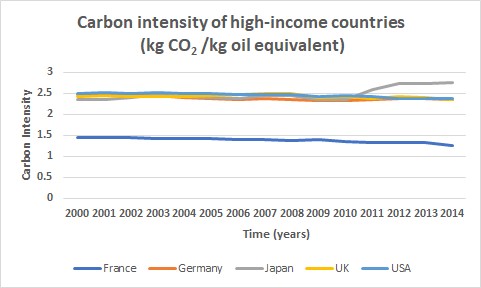
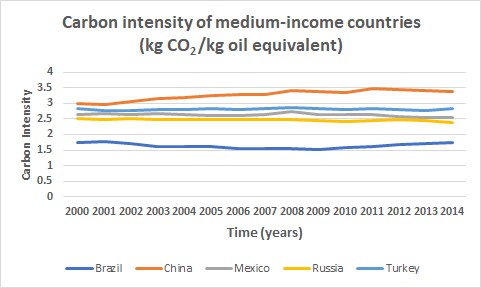
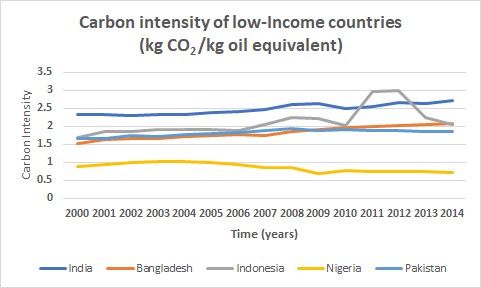
In the categories that obviously result in carbon emissions, such as food, utilities, and gasoline consumption, one can see saturation in expenditures for larger income brackets—those who can pay for the fanciest versions of everything. However, as we covered in the graph above, there are significantly fewer people in those brackets and the smaller numbers at the bottom add up quickly. In other words, the much larger numbers of lower income people will emit considerably more than the small number of high-income people, thus continuing the drivers of climate change. Increasing equality will mean contributing resources to low-polluting activity, thereby decreasing the carbon intensity of the world (pollution divided by GDP).

Posted in Climate Change, Economics, Sustainability | Tagged , , , , , , , , , , , , , , , , , , , , , , , , , , , , , , , , , , , , , , , | 16 Comments

Guest Blog: Chapin Zerner—Duckweed vs. Roundup & Spectracide vs. Salinity

Hi! This is guest blogger Chapin Zerner, checking in from East Northport, New York. I have made one previous appearance on Climate Change Fork, back in 2013—as the fourth grader who worked with Professor Tomkiewicz on an electricity audit science fair project in the hopes of a bid to Brookhaven National Labs. While I ultimately did not advance to the Brookhaven competition in fourth grade, my love of science was in no way quashed.

In fact, in the years since, I have worked on four science fair projects at junior high and high school levels. These endeavors have focused on a variety of subjects, including two astrophysics projects (the latter of which was under the guidance of Professor Tomkiewicz) and two biology projects. The one of most relevance to the increasingly pertinent issue of climate change was that I developed starting in July of 2018 and continued to pursue through many science fairs into April of 2019.

This experiment focused on the relationship between the phytoremediator plant, Lemna minor L., colloquially known as duckweed, and harmful, chemical-ridden pesticides. This testing was all completed in high-salinity environments (more on that later). I titled the paper chronicling this experimentation: “The Effect of Increased Salinities and Introduction of Phytotoxic Pesticides Roundup and Spectracide Triazicide on the Health and Phytoremediation of Lemna minor L.”

lemna minor, duckweed, experiment, roundup

Lemna minor L. (duckweed)

Part of my rationale behind using duckweed as the specimen for this experimentation was its role in the environment as a model organism. In other words, the effects displayed in the behavior of duckweed will more likely be transferrable to other organisms similar in structure than would a randomly chosen aquatic plant. Additionally, duckweed has a unique ability to act as a phytoremediator in its environment—effectively ridding its immediate environment of any harmful agents found in trace amounts. Much research has been done on this ability of Lemna minor L., with respect to heavy metals.

However, my most critical reason for using duckweed specifically was its close relation to its sister species, Oryza sativa—common Asian rice. Rice is one of the most widespread ingredients throughout world cultures, and feeds approximately a quarter of the world’s population, exemplifying its role as an international staple crop. Likewise, I chose the pesticides Roundup and Spectracide due to their widespread use as herbicides and insecticides, respectively.

The facet of this research that was, in my opinion, the most relevant to global climate change was that of the preliminary saltwater testing. The effects of melting ice caps, glaciers, and overall rises in sea levels are well documented, and often result in a phenomenon known as saltwater intrusion. Characteristics of saltwater intrusion include the encroachment of brackish and saline water into coastal freshwater sources, namely aquifers. Thus, freshwater organisms, such as our beloved duckweed, are adversely affected.

While there was a plethora of research surrounding saltwater intrusion and its effects on freshwater environments, the environmental field was severely lacking in the respect of climate change plus other environmental shifts. That is to say: climate change does not occur in a vacuum. There are other factors that experience alterations at the same or at similar rates to climate change, sometimes in conjunction and sometimes individually. Hence, the infiltration of saline water to aquifers interrelates to the infiltration of harmful man-made chemicals to drinking sources such as aquifers.

Since the combination of pesticides and saline water has the potential to be a deadly one, affecting both liquid and solid sources of sustenance, my partner and I deemed this research to be a worthy endeavor. So, we went about experimenting with a control of fresh water: 0 millimolar (mM, one thousandth of a mole per liter) salt water. In addition, we had four experimental groups: 25 mM, 50 mM, 75 mM, and 100 mM. We ran these trials several times with a minimum of 10 gametophytes—individual duckweed organisms—per testing vessel. These trials were run with only salt water. At this point in experimentation, no pesticides had yet been added.

Following the collection of data and analysis of preliminary results, we chose two experimental groups for further testing with the addition of pesticides: 25 mM and 75 mM saltwater solutions, as well as the fresh water control. These concentrations were chosen due to quantitative and daily qualitative results showing there to be the greatest extremes in stratification here. Duckweed was healthiest at a 25 mM salt solution, and least healthy at 75 mM; the highest salt concentration, 100 mM, seemed to kill the Lemna minor L. too rapidly to be of any use in further testing.

We then chose a high and a low concentration of each Roundup and Spectracide to add to the chosen saline solutions. These trials were also run in duplicate, with a minimum of 20 gametophytes per testing vessel. After several days of trials, and a surplus of assessments and chemical testing, we were surprised at the determined results. Roundup, the herbicide made to kill plant life such as Lemna minor L., was less effective at killing duckweed in our experimentation than was its insecticide counterpart, Spectracide. This was hypothesized to be due to the potency of active ingredients in each solution.

These increased salinities are hypothesized to have served as catalysts for the active ingredients of Roundup and Spectracide, although to a lesser extent in the case of Roundup.

An additional finding included the realization that the effectiveness of glyphosate, the active ingredient of Roundup, is contingent on the presence of the shikimate pathway, a seven-step metabolic process found in plants. It is this process that kills the unwanted plants. Companies such as those that produce Roundup may claim non-toxicity to humans due to the fact that mammals do not contain the shikimate pathway. However, the human gut microbiome, an integral part of human health, contains microbiota, which do utilize the shikimate pathway. This suggests that Roundup entering the body by any means, whether it be by eating plants sprayed with the chemical, or, as evidenced by multiple lawsuits, by working in close contact with it, is likely extremely detrimental to human health.

Once again, this process is exacerbated by the presence of high-saline environments. This, coupled with saltwater intrusion and the encroachment of sea levels, is not a favorable combination for human health. On the other hand, Spectracide does not utilize the shikimate pathway like Roundup. Rather, it forces open ion channels in the targeted insect, leading to paralysis and eventual death. Thus, the effects of Spectracide on human health in the presence of salt is not as well understood, but certainly does pose a threat.

For me, this study demonstrated the depth of the unknown in terms of hazard-levels for chemicals such as Roundup, especially in conjunction with global climate change and altered saline concentrations in aquifers and beyond.

I would like to thank Professor Tomkiewicz for the opportunity to discuss my research here. Please contact me if you have any questions. Meanwhile, here is a link to my full paper.

Posted in Climate Change, Guest Blog, Sustainability, Water | Tagged , , , , , , , , , , , , , , , , , , , , , , , , , , , , , , | 1 Comment

Children and Climate Change

Greta Thunberg, future, children, Swedish

Greta Thunberg

Children are our future, and this is especially true with regards to climate change. They are the ones that will bear the brunt of its effects. Fortunately, some of them are well aware of this and taking action: our grandchildren will show the way, with Greta Thunberg in the lead. I took her picture from a piece in The Hill that describes some of her main activities:

Greta Thunberg, the Swedish teen who inspired a massive youth movement to combat climate change, announced that she would be donating the proceeds from her newest book to charity.

“Some of my [speeches] have been released as a book by Penguin Random House. It’s out now,” Thunberg, 16, tweeted Monday.

“All of my earnings will go to charity. Just like the other books by me + my family.”

Thunberg, the founder of Youth Strike for Climate, began advocating for climate change policy last year by walking out of school to protest weekly outside the Swedish Parliament.

Her school strike inspired thousands of students worldwide to walk out of their classrooms and demand action on climate change from their political leaders.

“No One Is Too Small to Make a Difference,” published by Penguin Random House, is a selection of 11 of Thunberg’s speeches, according to The Guardian.

Thunberg, who has also addressed world leaders at a United Nations climate conference, was nominated for the Nobel Peace Prize earlier this year.

“Greta Thunberg has launched a mass movement which I see as a major contribution to peace,” said Freddy André Øvstegård, a Socialist member of the Norwegian Parliament.

In February, an estimated 10,000 students skipped school for a climate protest in the United Kingdom. And in January, about 12,000 students in Belgium skipped school on multiple occasions to take part in a climate protest.

I really hope that she wins the Nobel Prize!

What else can children do? They can lead the change in perception, starting at home:

“Children can foster climate change concern among their parents”

Danielle F. Lawson, Kathryn T. Stevenson, M. Nils Peterson, Sarah J. Carrier, Renee L. Strnad & Erin Seekam

The collective action that is required to mitigate and adapt to climate change is extremely difficult to achieve, largely due to socio-ideological biases that perpetuate polarization over climate change1,2. Because climate change perceptions in children seem less susceptible to the influence of worldview or political context3, it may be possible for them to inspire adults towards higher levels of climate concern, and in turn, collective action4. Child-to-parent intergenerational learning—that is, the transfer of knowledge, attitudes or behaviours from children to parents5—may be a promising pathway to overcoming socio-ideological barriers to climate concern5. Here we present an experimental evaluation of an educational intervention designed to build climate change concern among parents indirectly through their middle school-aged children in North Carolina, USA. Parents of children in the treatment group expressed higher levels of climate change concern than parents in the control group. The effects were strongest among male parents and conservative parents, who, consistent with previous research1, displayed the lowest levels of climate concern before the intervention. Daughters appeared to be especially effective in influencing parents. Our results suggest that intergenerational learning may overcome barriers to building climate concern.

What about legal resources? Can children sue the government and their parents’ generations for destroying their future? They’ve certainly tried:

Three federal judges heard arguments Tuesday about whether young people have a constitutional right to be protected from climate change. In the lively, hourlong hearing, the judges, from the Court of Appeals for the Ninth Circuit, pushed skeptically on the arguments of both sides.

Education is key. Type “teaching climate change” into the search box at the top of the page and you will find 47 entries from the over 7 years that I have been blogging here. One of these is a guest blog from Randee Zerner (April 1, 2013) about how her 4th grade kid started pushing her family to take its own steps to mitigate climate change:

My son, who is in the 4th grade, is required to participate in a science fair project. Last year, we did a composting project, were he received honorable mention. This year, his goal was to surpass that and win the chance to go to Brookhaven Labs. So naturally, we asked our friend Professor Tomkiewicz what environmental project he would suggest. The recommendation was an energy audit of our home, with ideas for ways to reduce our carbon footprint. We then asked another of my mother’s coworkers, and she suggested a study about snails. My son, being who he is, chose the more complex project.

For the next 6 weeks, the energy audit became the central activity of our home. We first had to list all of the light sources in all the rooms in the house and record the wattages for each bulb. In order to get a seven day average of our electricity usage, my son put a piece of paper on every light switch in the house. For seven days, every member of the family had to write down the time the light was turned on and off in every room. At first we had fun calling out to each other, “Did you write down the time?” As the days passed, at times, we either kept the lights on (A rare occurrence, since we are very conscious of turning off the lights when leaving a room), or did not turn them on at all. Which led to our going to the bathroom in the dark more often than not (for boys, not an easy task).  Over time, we learned that the natural light during the day was usually sufficient for most activities.

My son used a Kill-A-Watt meter provided by Professor Tomkiewicz. We connected this device to our refrigerator, garage refrigerator, deep chest freezer, microwave, toaster, computer, TV/cable box, apple device charger, and telephone. We were unable to do this with the dishwasher, oven, washer and dryer, so we took the information from those appliances and asked our energy guru to help figure the kWh of these appliances.

Then the real fun began, and we did all of the math problems and converted the watts into kW and then into kWh (After figuring out the average time the lights were on). After many emails back and forth with Professor Tomkiewicz to make sure our formulas were right, we then figured out the sum of the kWh for both lights and appliances. At this point, we were calling our guru to check our work (Wondering if maybe, at this point, he regretted helping out?). We then compared our final sum of kWh usage to our electrical bill. The emails were going back and forth at a rapid pace – we were trying to show all of our work and to double-check everything. We were so proud of everything… and then our guru dropped the bomb: “Where is the carbon footprint?” At which point, my son and I looked at each other and said, “How do we figure that out?” As usual, we were then given yet another formula (I’m so happy my son loves math). My son then typed up some suggestions for us to do as a family to decrease our energy use.

The board was finally put together and handed in; we celebrated by leaving on some lights for a little while, (Shh, don’t tell anyone). Tuesday night, we went to school to see the board presented along with 100 others.  Of course, we thought ours was the best, but we had to admit there were some other great projects. The teacher told my husband and me that she recommended our son’s project for honorable mention; been there, done that – hoping for more! We will find out tomorrow.

Meanwhile, of course, for those children who don’t yet know about the problem, the more traditional flow of information remains. Parents and teachers can (and should) explain climate change to youngsters. In doing so, they might even be able to process their own beliefs and concerns.

Psychologists say the way parents and teachers talk about climate change with children has an effect on their young psyches.

“A lot of people, when they talk to kids, are processing their own anxiety and fears,” said John Fraser, a psychologist and chief executive of New Knowledge, a social science think tank that studies health and the environment. “Do you think kids won’t be scared, too? As a culture, we haven’t developed good tools to talk about these things.”

Janet K. Swim, a professor of psychology at Penn State University, said she emphasized several steps for parents (and teachers, for that matter) to take when talking about climate change with youngsters.

“You should start off with something positive, like, ‘We like the planet,’” she said. This should be followed with taking children outside to appreciate nature. For city dwellers, this is as simple as going to a park. Families in more rural areas can hike.

“The goal is for them to appreciate the beauty of nature,” Dr. Swim said. “They should be thinking about what is good in the environment.”

This serves a purpose: connecting children to a world larger than their own.

“There is this thinking that young kids will understand what we are talking about,” Dr. Fraser said. “But summer and fall are new. They are only beginning to understand the seasons. Nature, to them, is a tree.”

This interplay between generations is even taking place before conception: some people are refusing to have kids at all because of climate change. Personal experience from teaching has shown that the students who have expressed this sentiment have been exclusively female. Why? I will return to this issue in a future blog, where I will revisit my discussion of major global changes in fertility rates all over the planet.

Posted in Anthropocene, Anthropogenic, Climate Change, Education, Electricity, Energy, Sustainability | Tagged , , , , , , , , , , , , , , , , , , , , , , , , , , , , , , , , , , , , , , , , , , , , , , | 8 Comments

Vacation Notice

This week I am taking a break from the blog, so there will be no post. Please do come back next Tuesday, when I promise to continue our discussions.

Posted in Climate Change | Tagged | Leave a comment

Extreme Heat: Big Cities, 2050

We are entering new levels of extreme heat. June 2019 was the warmest June ever recorded. The Weather Channel summarized it:

At a Glance

  • Four separate analyses, including from NOAA and NASA, found Earth’s warmest June on record was in 2019.
  • Earth is on track for one of its warmest years dating to 1880 based on trends from the first six months of 2019.
  • Among areas most above average in June were Europe, Siberia, Arctic Canada and Alaska.
  • This was despite a relatively mild June in parts of the U.S.

I am writing this blog in the middle of a blistering heat wave in New York City—the humidity index here has exceeded 100oF for three consecutive days (see July 3, 2018 blog) —and 50,000 people lost their power. Not surprisingly, we are bombarded with publications about air conditioners (1.5 billion units are currently in use globally, a number expected to increase to 5.6 billion by mid-century) and severe water shortages that serve as canaries in a coal mine for the deadly impacts of climate change. Dubai has a permanent heat wave. Its hotels, cars, and shopping malls have air conditioning but 90% of the population there are workers with no such access. Even Europe is facing deadly heat waves and only about 10% of the people there are equipped with air conditioners. The Red Cross issued a 94-page report advising cities on how to protect their citizens.

A few days ago, the BBC published a list of eleven cities worldwide and their expected temperatures for the warmest months in 2050. That’s only one generation away. I compiled the BBC data and the cities’ most recent populations. I’m sure we’ll see a change in the latter number.

Table 1 – Expected temperature changes in 2050 vs. most recent populations in 11 major cities worldwide

City Expected Temperature Change in 2050 (oC) Population (Millions)
Ljubljana, Slovenia 8 0.7
Madrid 6.4 3.3
Seattle 6.1 0.7
London 5.9 7.6
Moscow 5.5 10.4
Mexico City 4.2 12.3
New York City 4 8.2
Delhi 3.5 10.9
Istanbul 3.4 *14.8 (largest)
Beijing 1.9 11.7
Tokyo 1.9 8.3

At the moment, Ljubljana, Slovenia, which ties with Seattle for the smallest population on the list, is projected to have the most drastic change—a whopping 8oC (14.4oF!), while Istanbul, with the largest population, will “only” rise by 3.4oC (6.12oF).

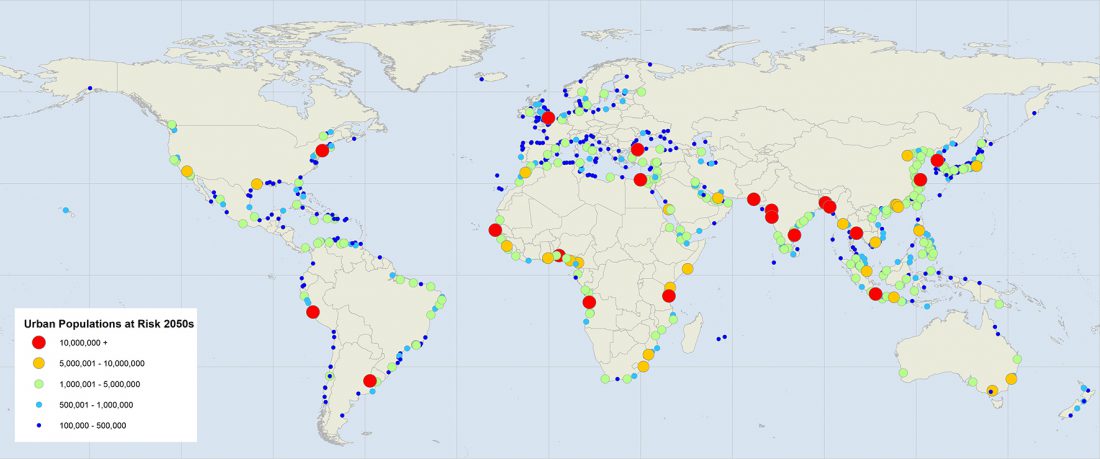
Figures 1 and 2 are from the C40 initiative (See July 9, 2019 and June 4, 2019 blogs); they provide a striking illustration of the projected change.

Urban populations, risk, extreme heat 2000s, heat wave, future

Figure 1 – Urban populations at risk, 2000s

Urban populations, risk, extreme heat 2050s, heat wave, future

Figure 2 – Urban populations at risk, 2050s

  • The number of cities exposed to extreme temperatures will nearly triple over the next decades. By 2050 more than 970 cities will experience average summertime temperature highs of 35˚C (95°F). Today, only 354 cities are that hot.
  • The urban population exposed to these high temperatures will increase by 800 percent to reach 1.6 billion by mid-century.
  • Cities in countries that are less used to dealing with extreme heat are especially vulnerable. The 2003 heatwave in Europe led to 70,000 deaths.
  • Extreme heat puts pressure on essential services such as energy, transport, and health. During the 2016 heatwave India’s hospitals received twice as many patients as usual.
  • Heatwaves are an economic drain. They can cut goods and service outputs by more than 20 percent in sectors such as manufacturing and construction. Global economic costs of reduced productivity due could reach 2 trillion dollars by 2030.

Figure 3, from the same source, summarizes some of the consequences.

C40, extreme heat, heat wave, heatwave, summer, Figure 3

You don’t have to wait until 2050; you can envision the expected consequences now. The link here reports on mapping the trajectories of many cities within the US as their climates change over this time period.

If you figure out a city’s current temperature and precipitation, you can assume a business as usual scenario and calculate the city’s expected change by 2050. The cities that Vox examined in the article linked above will more closely resemble other ones that are farther south (sometimes hundreds of miles away). For example: staying put in St. Louis will be equivalent to moving to Tulsa; Minneapolis, to Des Moines; Albuquerque, to Elephant Butte, etc. In other words, to escape this plight, there will likely be a mass internal migration to the north, similar to what fish do each year. Think about the impact on real estate prices: what will the dynamics be during this transitional time and after? These changes will only continue.

Posted in Anthropocene, Anthropogenic, Climate Change, Extreme Weather, Sustainability | Tagged , , , , , , , , , , , , , , , , , , , , , , , , , , , , , , , , , , , , , , , , , , , , , , , , , , , , , , , , , , , , , , , , , , , , , , , | 2 Comments

Electricity Use: Lighting – Incandescent vs. LED

In this blog, I would like to go through some details about judicious selection of the lighting devices that we use (e.g. incandescent, compact fluorescent, halogen or LED) and when or how much we choose to use our electricity. It is a continuation of my exploration of best practices within the necessary energy transition.

My last few blogs focused on locally mandated zero carbon energy transitions, including those affecting where I work and live. Accordingly, I should be in a position to observe and report on these changes going forward, as well as potentially have some impact on aspects of the transition processes. Presumably, these local transitions will also have some ramifications on the global transition that is taking place—if only as examples of possible ways forward.

Key to all these transitions is the use of electricity. This is the most convenient and flexible—though not the most efficient and certainly not the most economical–energy form that we use. I highlighted these issues in my series of blogs in March and the beginning of April, about the electric power sector’s role in the transition, especially with regards to the popularization of electric cars.

Figure 1 illustrates US energy consumption by sector. Electricity comprises close to 40% of the total usage (2015).

US energy consumption by sector, industrial, transportation, electricity, commercial, residential

By Delphi234 – Own work, Wikimedia. Data is from US EIA MER Section 2.1., CC0

Figure 1Energy consumption by sector

As my series about electric cars demonstrates—because of its relative simplicity and flexibility—the effort to transition energy use through electricity is probably the most important current energy shift. Considering the fact that close to 20% of humanity is still deprived of electric power, this transition is in the process of being amplified. The movement to computer-driven technologies in all sectors of the economy is a major element in this shift.

This handover of much of the global GDP to electric power is the reason why, when my students, Kyle O’Carroll, Daniel Kruglyak, and Vikash Tewari, published a guest blog on April 30th about electricity use in the US, I was surprised with their findings. They showed that for the years 1997–2017, the ratio of electricity use to GDP decreased, instead of increasing as I had expected. This trend is so important that I am repeating it here in Figure 2 below. It means that, in spite of the major transition to electricity in major areas of the economy, electricity efficiency is rapidly increasing.

Ratio of Electricity Generation to GDP in the US, 1998-2017, efficiency, efficient, electricity, energy, GDP

Figure 2 – Ratio of electricity generation to GDP in the United States from 1998 to 2017 (April 30, 2019 guest blog)

Figure 3 breaks down how electricity is used in the US. The largest applications are in appliances and electronics, and air conditioning. These usages are likely to increase due to climate change and the rise of even more computerized aspects of modern life. Agencies such as the EPA’s Energy Star are usually the ones to monitor the energy conversion efficiency of various devices. If we follow their recommendations, chances are high that we will help increase efficiency of energy use—and in the process, reduce carbon emissions (assuming that the electricity is produced by burning fossil fuels) and save money on our electric bills.

electricity, use, US, home, air conditioning, A/C, water, heat, appliances, electronics, lighting

Figure 3

Lighting

Figure 4 itemizes the changes in the number of various light bulbs installed in the US from 2010-2016. Many branches of government are now providing encouragement for lighting efficiency in the form of free or highly subsidized LED light bulbs. This is a visible and painless way for us to show that we are good citizens, while taking steps to conserve electricity. If we get the LEDs for free, we don’t sacrifice anything by switching away from incandescents. Of course, this should only be a marker of good citizenship in countries where the government supplies such subsidized bulbs.

light bulb, incandescent, compact fluorescent, cfl, halogen, LED,

Figure 4

New York State is advertising the transition:

Upgrading lighting is a low-cost way to save energy and money in your home whether you own or rent. In comparison to conventional lighting options (such as incandescents, fluorescents, and halogens), energy-efficient light bulbs use less energy, cost less to operate, and can last up to 25 years longer.

There are many government rebate programs to replace incandescents with LED bulbs. However, once you sign up for such a program you are denying yourself the “fun” of balancing the economic and environmental considerations that should guide our behavior.

What if the bulbs were not subsidized and our consideration was purely economic? Should we replace the incandescent bulbs with LEDs? Below, I am including this quandary in the form of a problem and its solution (I usually give these to my general education students).

light bulb, cfl, LED, halogen, incandescent, fluorescent, watts, wattage, energy, wasted energy, lumens, voltage,

Graphic by George Retseck and Jen Christiansen, Scientific American
Sources: U.S. Department of Energy and Efficacy calculations based on currently available bulbs (traditional, halogen and compact fluorescent); SWITCH LIGHTING (led)

Figure 5Characteristics of the four light bulbs from Figure 4

Problem:

As shown in Figure 5, the average 100W incandescent bulb costs around $0.37 and lasts about 750 hours. Many countries (including the European Union, Brazil, and the US) are replacing it with more efficient bulbs. The rate of replacement in the US is shown in Figure 4. Given that the price of electricity is $0.11/kWh, under what conditions would it pay off to replace the incandescent light bulb with an LED one at a cost of $45 per bulb (data are from 2012—they are now significantly cheaper, ranging from $1.50-$5—but the exercise is still worth examining) and a lifetime of 20,000 hours?

Solution:

Assume that the light bulbs are on for X hours. The total cost of using the light bulb for that amount of time is equal to its original price + the hourly cost of electricity times X. The cost of electricity in kWh is equal to the power of the light bulb (in kW) times the hours the bulb is in use. This will produce an equation that looks like this:

Price of bulb + ($0.11/kWh)*(Wattage in kW)*(X hours) = Total cost

For the relatively short lifetime of the incandescent light bulb (750hrs) the total cost of the incandescent bulb will be:

0.37 + 0.11*0.1*750 = $8.62

0.37 + 8.25 = $8.62

That is considerably smaller than the cost of the LED ($45), so the replacement is not cost effective. For a longer time, equal to the lifetime of the LED (20,000hrs), the price of using the incandescent bulb will look like this:

0.37*(20,000/750) + 0.11*0.1*20,000 = $229.87

0.37*26.67 + 220 = $229.87

9.87 + 220 = $229.87

Meaning that we would be using approximately 27 incandescent light bulbs. As we can see, the price of the light bulbs will be negligible (less than $10); the real cost will come from the usage.

For the same period of time, the price of the LED will be:

45 +0.11*0.02*20,000 = $89

45 + 44 = $89

About half of the cost in this case comes from the price of the bulb and half from its use. How long is 20,000 hours? It is 2.3 years! Of course, your decision whether to switch over directly depends on the bulb’s intended use and considerations such as the ease in replacing it.

Timing Our Electricity Use

Meanwhile, I found the following communication from our local NYC power provider, Con Ed (indirectly), in Habitat magazine. It provides another opportunity to for us to balance our commitment to behavioral change with economy of energy:

The backdrop. Con Ed has a demand challenge. From May through September, when New York has its hottest and most humid days, the demand for electricity skyrockets. One way to meet this need is to do less with more.

Instead of digging up streets to install new electrical infrastructure, Con Ed digs into its corporate pockets and pays customers to use less electricity.

Simply speaking, you get paid when Con Ed asks you to reduce your electrical usage. This happens during the May through September season, and in years past has occurred about four times each period. There is also a mandatory test event. To make participation attractive at the get-go, Con Ed will pay you to sign up. Called a reservation fee, it depends on how much load you can commit, but a 50 kilowatt commitment could put $10,000 in your coffers.

Go deeper. There are two separate programs under the umbrella of Demand Response – one is peak shaving and the other is reliability (which is neighborhood by neighborhood). The peak shaving program is more appropriate for residential buildings who rely on building staff to manually adjust controls to reduce electric load. There are about 1,500 customers participating in both programs, says Shira Horowitz, manager of Demand Response.

This adjustment is known as load balancing and it’s not a bad idea given the massive numbers of people who use enormous amounts of electricity during the summer (witnessed by the chaos caused by the dramatic blackout here a few days ago). In a sense, it’s like a mini cap and trade system—in that it’s essentially a system of people selling their unused hours/potential for usage—but it does not include any actual limits on other individuals’ usages. The original link comes with some examples and numbers for our consideration.

As we saw in Figure 2, strategies like this one are bearing fruit.

Posted in Climate Change, Electricity, Energy, Sustainability, US | Tagged , , , , , , , , , , , , , , , , , , , , , , , , , , , , , , , , , , , , , , , , , , , , | 6 Comments

Buildings: Emissions

In urban environments, buildings are major contributors to climate change. In fact, according to the NYC Greenhouse Gas Inventory of 2016, they are responsible for two-thirds of New York City’s annual emissions. I have been looking at mitigation efforts of both my campus and my apartment. When I have discussed mitigation of university campuses, I have made the distinction between new and old buildings. Changes in construction and renovation stem from three forces: compulsory, top-down change, as mandated by legislation; collective self-motivation, and aspiration.

I live and work in New York City. In the compulsory column, we can now add the city council’s decision (see my June 4th blog), mandating landlords are required to retrofit all buildings larger than 25,000ft2 (2322 m2) with new windows, heating systems, and insulation by 2024. These changes should cut emissions (in comparison to calculations from 2005) by 40% in 2030, and double those cuts by 2050, for a total estimated reduction of about 80%. Landlords face heavy fines if they fail to meet these targets. This basically means that by 2050, the city’s buildings will be almost zero carbon, which is in line with the C40 initiative (June 4th blog) that ex-NYC mayor Bloomberg has coordinated (and partially financed). This is an example where the compulsory mandate and the aspirational mandate coincide (most likely not by accident— NYC is part of the C40).

In case this initiative takes hold, it is not difficult to predict that self-motivation will also play a role: somebody will probably form a well-publicized list that will rank buildings in a similar way to how the Sierra Club ranks campuses, prompting building owners to take action to climb these lists. Not only will doing so reflect good values and the desire to avoid fines, they may well impact the underlying real estate values.

The new NYC law, now known as Local Law 97 for 2019 or “NYC Building Emissions Law” is detailed and complex. You can read the summary at the bottom of the blog or by going here.

As indicated at the bottom of the second page of the summary, the emission limits begin in 2024 and the first compliance report is due in the middle of 2025. This is not a long time for such a transformation. The law is local, so different city governments can make changes before enacting their own versions. Businesses are already raising their voices—some support it and some complain about the costs and the exclusions. The law also extends to educational institutions and residential buildings.

My wife is the president of our co-op building and a strong environmentalist. Her immediate reaction to the law was, “OK, what do we do now?” This is almost the same question that I have raised in the context of the campuses: OK, we know what to do with new buildings—we simply tell the contractors to follow certain rules. But how do we tackle the problem of old buildings?

Let us start by analyzing the carbon emissions from a building—any building, old or new. Many publications, such as Energy Star’s Portfolio Manager, include instructions on how to do so. “Energy-related emissions” describes both direct and indirect forms. Both depend on the type of energy source that we are using. Direct emissions come from fossil fuels such as natural gas, gasoline, and oil. Indirect emissions include the fuels that our power companies are using to produce the electricity that we use. Any non-local power distribution (such as steam) should count as an indirect emission.

It is important for non-scientists to recognize that one can’t directly measure emissions. For direct emissions, one must use the “emission coefficients” that are published by organizations such as EIA (Energy Information Administration), which correlate the amounts of specific fuels that one uses with the standard emissions that result from burning these fuels. I use these coefficients to teach my students how to calculate emissions by using basic principles such as the chemistry of the fuels. Just type EIA into the search box at the top of the blog (click on the little magnifying glass) to see some examples. For indirect emissions, we need to find the fuel composition that our power company is using. My recent set of blogs about electric cars contains some of my best examples of this process (March 12, 19, 26, 2019). Next week’s blog will focus on electricity use.

The best way to save on energy-related emissions is obviously to use less energy. For this, we have to do an energy audit of a building, identify where the energy losses are, and try to minimize them. We can do this through better insulation, changing windows, using more efficient lightning, painting our roofs white or covering them with vegetation, and upgrading to better thermostats as well as energy certified refrigerators and air conditioners.

As usual, if you have the money and you don’t want to bother yourself with any of this, you can farm out the process. Most electric utilities now have the capacity to provide you with carbon-free electricity generated from renewable sources. You can now convert most of your energy use to electricity—this is not the most efficient or cost-effective method but you pay for convenience. It will cost you but as long as the electricity is being produced from renewable energy you will have no problem complying with the emissions mandate.

Below, I end this blog with the City’s two-page summary of the law, including a timeline with the new emissions requirements in NYC.

The Law: Summary of local law 97 NYC, buildings, emissions, law, carbon, urban green, energy, efficiency, efficient, green, timeline, legislation, government, governance

NYC, buildings, emissions, law, carbon, urban green, energy, efficiency, efficient, green, timeline, legislation, government, governance

Meanwhile, here are a few useful links:

Free NYC advisory on how to achieve these targets

NYC’s existing program for multifamily buildings

Handbook for carbon reduction for multifamily buildings

Energy consumption by age of buildings

Posted in Climate Change | Tagged , , , , , , , , , , , , , , , , , , , , , , , , , , , , , , , , , , , , | Leave a comment