The Election: Trust, Likability & Honesty

I am finishing writing this blog on Sunday, even though I had a draft ready yesterday. As I read the New York Times today, I came across Nicholas Kristof’s Op-Ed,  “Clinton’s Fibs vs. Trump’s Huge Lies.” It coincided almost exactly with my planned theme for this week.

ONE persistent narrative in American politics is that Hillary Clinton is a slippery, compulsive liar while Donald Trump is a gutsy truth-teller.

Over all, the latest CBS News poll finds the public similarly repulsed by each candidate: 34 percent of registered voters say Clinton is honest and trustworthy compared with 36 percent for Trump.

Yet the idea that they are even in the same league is preposterous. If deception were a sport, Trump would be the Olympic gold medalist; Clinton would be an honorable mention at her local Y.

Here’s the latest FiveThirtyEight poll:
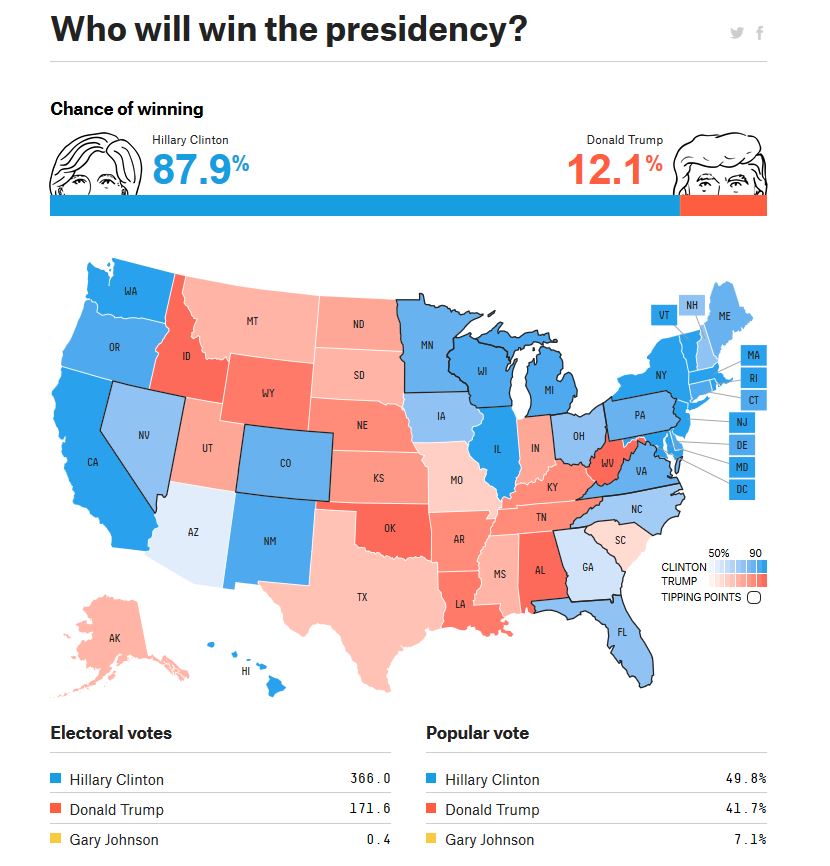
FiveThirtyEight Election Forecast 8-9-16

Nate Silver is my favorite polling guru and his organization updates its polls on a daily basis. He and others are warning that the current polls may change drastically in a few weeks, once the convention bounces decay and polls become more stable. The Olympics in Rio started on Friday and our collective attention will be glued to the games, which provides an excellent opportunity to freeze these results for a few more weeks. Meanwhile, Donald Trump will likely do something that increases the population’s reluctance to support him as the next president of the United States.

Here is David Brooks’ summary of Trump’s recent policy statement:

Over the past few days, Trump has destroyed this middle ground. He’s exposed the wet noodle Republicans as suckers, or worse. Trump has shown that he is not a normal candidate. He is a political rampage charging ever more wildly out of control. And no, he cannot be changed.

He cannot be contained because he is psychologically off the chain. With each passing week he displays the classic symptoms of medium-grade mania in more disturbing forms: inflated self-esteem, sleeplessness, impulsivity, aggression and a compulsion to offer advice on subjects he knows nothing about.

His speech patterns are like something straight out of a psychiatric textbook. Manics display something called “flight of ideas.” It’s a formal thought disorder in which ideas tumble forth through a disordered chain of associations. One word sparks another, which sparks another, and they’re off to the races. As one trained psychiatrist said to me, compare Donald Trump’s speaking patterns to a Robin Williams monologue, but with insults instead of jokes.

I have no idea if Brooks is a registered Republican but he is certainly the most right-of-center Op-Ed writer for the NYT so his words as to the qualifications of the Republican candidate should count.

To top it all off, there have been reports about Trump’s intention to use nuclear weapons:

Earlier this week, Joe Scarborough offered a pretty striking secondhand account of Donald Trump’s foreign policy acumen — or rather, his lack thereof.

“I’ll be very careful here,” the MSNBC host said, before passing along some hearsay. “Several months ago, a foreign policy expert on an international level went to advise Donald Trump, and three times he asked about the use of nuclear weapons. Three times, [Trump] asked — at one point, ‘If we have them, why can’t we use them?'”

This is really scary.

Yet, in spite these prospects, a recent letter to the New York Times immediately following the conventions presented the following perspective:

As a Sanders supporter, I will not be voting for Hillary. At this point, I’m left deciding between Gary Johnson and Jill Stein, who, like Bernie, were both actually against the Iraq war before it started.

Or, perhaps, just staying home. I am not alone. The two major candidates are the least popular in history, and the biggest reason their supporters give for voting for them is that they aren’t the other one.

I’m resigned to having a terrible president starting next January, but there’s no way I’ll be responsible for electing him or her.

The American Presidential elections are, by and large, a binary process. The last third party presidential candidate to win a national election was Abraham Lincoln in 1864. He ran against John Frémont (Republican) and George McClellan (Democrat). It’s a much more frequent phenomenon for third party candidates to attract a little more than 5% of the votes, thus becoming a major factor in a main party candidate’s winning or losing an election.

In terms of outcome, there is not much difference between voting for Gary Johnson or Jill Stein – or even joining the 100 million eligible voters (March 22, 2016) that abstain. In my book, if you are eligible to vote and decide not to vote, you give up your right to complain.

All of this brings me to my main reason for writing this blog. Why, in spite of all the evidence, do so many people – including the letter writer – rank their dissatisfaction with both candidates on the same level?

I have enumerated the reasons for not wanting Donald Trump to be president of the United States. What about Hillary Clinton?

By almost everybody’s admission, we have never had a presidential candidate with better qualifications. Of course, she is the first woman to be nominated by one of the two major parties, and it is possible that, as a nation, we are not yet ready for a woman president, regardless of her credentials. When directly polling for that, however, almost everybody denies that her gender is the dominating reason for disliking her candidacy. As Kristof mentioned, the vast majority cite her likability, honesty, and trustworthiness as the main reasons. Here is what the Washington Post writes about it:

Two sets of numbers from a Post-ABC News national poll in March starkly reveal the yawning gap between people who like/relate to Clinton and those who think she has the experience to do the job. Asked whether Clinton understands the “problems of people like you,” 49 percent said she does while 50 percent said she does not. But, when asked whether she has the “right experience” to be president, two thirds said she does while just 33 percent said she does not.

Now, compare those numbers to what I believe was the single most important question in the 2012 exit poll. Of the one in five voters who said a candidate who “cares about people like you” was the most important trait in deciding their vote, Obama beat Mitt Romney 81 percent to 18 percent. The election was, literally, won the backs of people who felt that Obama “got” them in a way Romney did not. If Clinton has a likability problem, Trump has a likability epidemic.

That same March Post-ABC poll showed just 30 percent of respondents felt favorably toward Trump while 67 percent had an unfavorable view — including a stunning 56 percent who felt “strongly” unfavorably toward the real estate mogul. (Clinton’s numbers were 46 favorable/52 unfavorable.) Just one in four (27 percent) said that Trump was honest and trustworthy. Twenty six percent said Trump understood the problems of people like them; 26 percent also said he had the right experience to be president.

We can try to quantify this concept by summarizing a recent NBC/WSJ poll of “feelings” toward the candidates:

After normalizing for the distribution of the polling to mimic the distribution of registered voters, the pollsters posed the following “simple” question:

Now I’m going to read you the names of several public figures, groups and organizations, and I’d like you to rate your feelings toward each one as very positive, somewhat positive, neutral, somewhat negative, or very negative. If you don’t know the name, please just say so. (RANDOMIZE EXCEPT BARACK OBAMA)

The table below shows the relevant answers.

Very Positive Somewhat positive Neutral Somewhat Negative Very Negative
Obama 36 14 10 12 28
Clinton 17 20 10 11 42
Trump 13 15 11 11 50

My own question is this: both Clinton and Trump scored low numbers in the positive/very positive categories, but the query was incredibly broad; what are the metrics here – to whom are they being compared? Given that Clinton and Trump are the two major party candidates, logic would dictate that the follow-up question ought to ask people to compare them against each other. As it stands, the way that the question is being asked doesn’t require any such assessment. Instead, we can only infer that each responder is comparing them to his or her ideal candidate. That is not a particularly helpful metric.

Going forward, I’ll be alternating between a continued discussion of my vacation and a looking at polling practices – including their use (or exclusion) of reference points and the potential ways in which the candidates can play the pollsters.
Posted in Election | Tagged , , , , , , , , , , , , , , , , , , , , , , , , , , , , , , , , , , , , , , , , , , , , , , , , , , , , , , , , , , , , , , , , , , , , , , , , , , , , , | Leave a comment

My Global Family Vacation

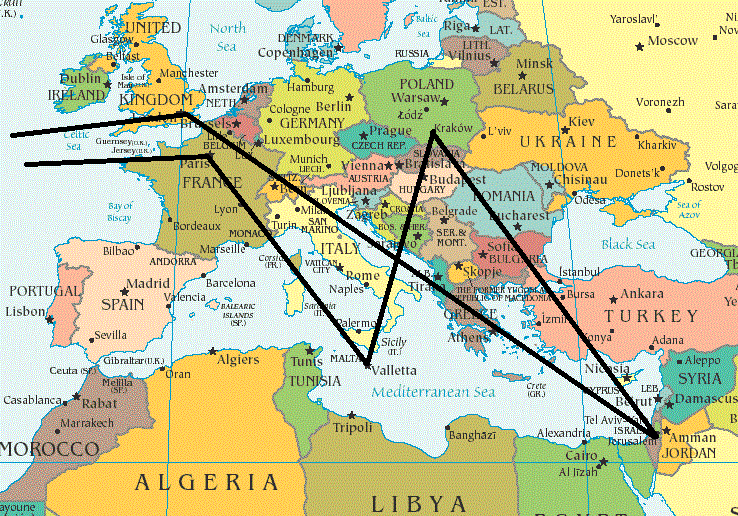
map, mediterranean, malta, UK, poland, france Map of my global family vacation
I have returned from my month-long vacation with my wife. One of the perks of being an academic is that my summers are my own. I show the route of my trip above. Clearly, this vacation was not planned to be relaxing; I had a great time but the many flights made it somewhat vexing. Unlike some of my travels, the purpose of this vacation was not to visit new places. In fact, with the exception of Malta, we have visited each of the areas multiple times before. We were pleasantly surprised by Malta’s quality as a small island state tourist destination and will definitely include it in future itineraries.

My main goal here was to meet up with (mostly elderly members of) family. Given our age group with regards to life expectancy, future opportunities to visit with each other may be limited. We also wanted to exchange and record stories that had never been shared.

Like me, almost all of the older family members were immigrants. Of course, some of their offspring were native born to their chosen homes. These meeting fit easily within my latest series of blogs about immigration. As you might imagine, almost all such stories within my family have their origin – whether directly or indirectly – in the Holocaust. Surviving relatives ended up in Australia, Israel, France, and England. Poland, where most of the elderly family members were born and experienced the atrocities of the Nazis, still plays an important part in many of the stories.

I found a lot of generational dynamics that mirrored my own experiences: the younger generations are too busy living their own lives and do not seem interested in the experiences of their elders. It’s only once those kids get older that they become more interested in such themes (this was the case for me personally), by which time, they are sometimes too late – those important links have already been lost.

In my case, I was fortunate that my mother put our experiences in the form of two books (July 5, 2016) and I was able to read them when I was ready. My interests awakened nearly 15 years after the books were published. Not everyone can write and publish books. Fortunately, technology now facilitates publishing opportunities that didn’t exist for my mother.

A few friends and I have developed a new application called Tapestry. Tapestry is a platform for capturing the human experience and promoting self-expression. It allows people to capture their lives’ adventures. It is not only a way to create a type of family heritage but also a chance to connect with people with whom you shared moments. You can find the platform on www.tapestry.life. I will share the stories that I heard during my vacation there and invite the younger generations to use the app for their own communication needs. In the process, I hope they are exposed to the stories of older generations.

The global immigration picture is the sum of individual, intertwined stories. We arrived in England just a few days after the somewhat surprising Brexit vote, during which the United Kingdom decided to exit the European Union. The strongest driving force behind this outcome was a desire stop the flow of immigrants into the UK. The pro-Brexit side made the questionable promise that such an exit would not hamper the UK’s free market access to the EU but would effortlessly stop free travel from the EU into the UK and also by some magic stop the global flood of refugees. After the vote, while it was made absolutely clear that this premise was a lie, it was also decided that the lie itself was not grounds to overturn the result. The ability to use lies and demagoguery to sway votes in direct democracies (as distinguished from representative democracies) is obviously not limited to the UK. One finds the same appeal in the US elections and in other European countries (See the series of blogs on Democracy vs. Oligarchy starting March 15, 2016).

From England we traveled to Israel. The refugee problem is at the center of the Palestinian-Israeli conflict and the issue of refugee resettlement vs. their use as a figurative political football. Poland is now part of the European Union and thus party to the EU’s refugee problems but it doesn’t have a unique issue with global ramifications. Malta is also member of the EU. On the other hand, a brief look at the map above shows that Malta is one of the closest gateways between North Africa and Europe. Many of the refugees that are now trying to reach Europe are desperate to escape unstable states in Africa, making Malta a key player in discussion of refugees and immigrants. Finally, in describing the situation in France, I will emphasize the perception that the influx of refugees without proper security screening is a major concern as a contributing cause of internal terrorist activities.

My next series of blogs will focus on separate geographical locations while attempting to combine local refugee issues with global ramifications as well as some aspects of the personal migrant issues specific to my family.

However, we also have an important election going on in the US with major immigration-related components, so future blogs will oscillate between the US election campaigns and the global immigration issues reflected in my vacation.

Posted in immigration | Tagged , , , , , , , , , , , , , , , , , , , , , , , , , , , , , , , , , , , , , , , , , , , , , , , , , , , , , | 2 Comments

Immigration: Quantifying Migration

The Scope of Present Global Refugee Issues:

Global migration (June 21, 2016) arises from people’s quest to survive and attain better opportunities. More specifically, people leave their homes:

  • Due to war/civil war
  • As a result of broken states
  • In search of better economic opportunities
  • To escape being a discriminated minority in terms of religion, affiliation, race, etc.
  • As climate refugees

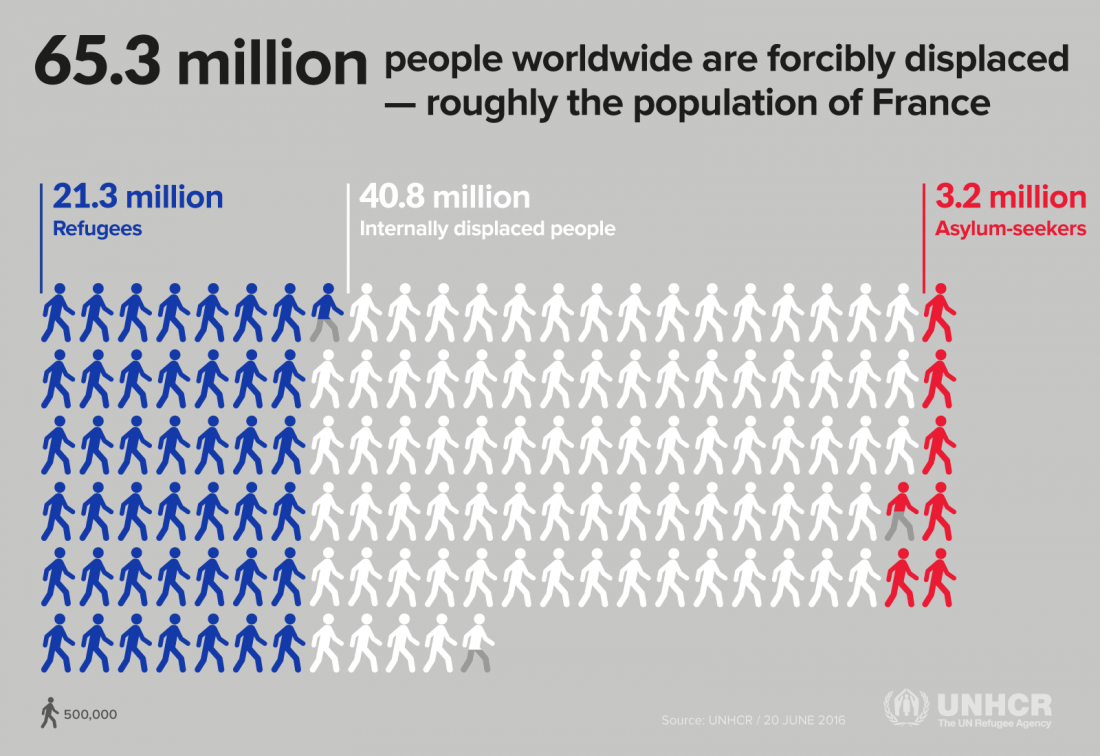
The people who are primarily looking for better economic opportunities are generally not labeled refugees; they know where they are going and leave for a specific purpose. Refugees are classified as those who are forcibly being displaced and are escaping from acute danger to their or their families’ existence. Figure 1 shows how the United Nations High Commissioner for Refugees (UNHCR) characterizes the tallied 65 million people that are presently classified as forcibly displaced.

forcibly, displaced, refugee, mapFigure 1  – UNHCR global trends – 2015 for forcibly displaced migrants.

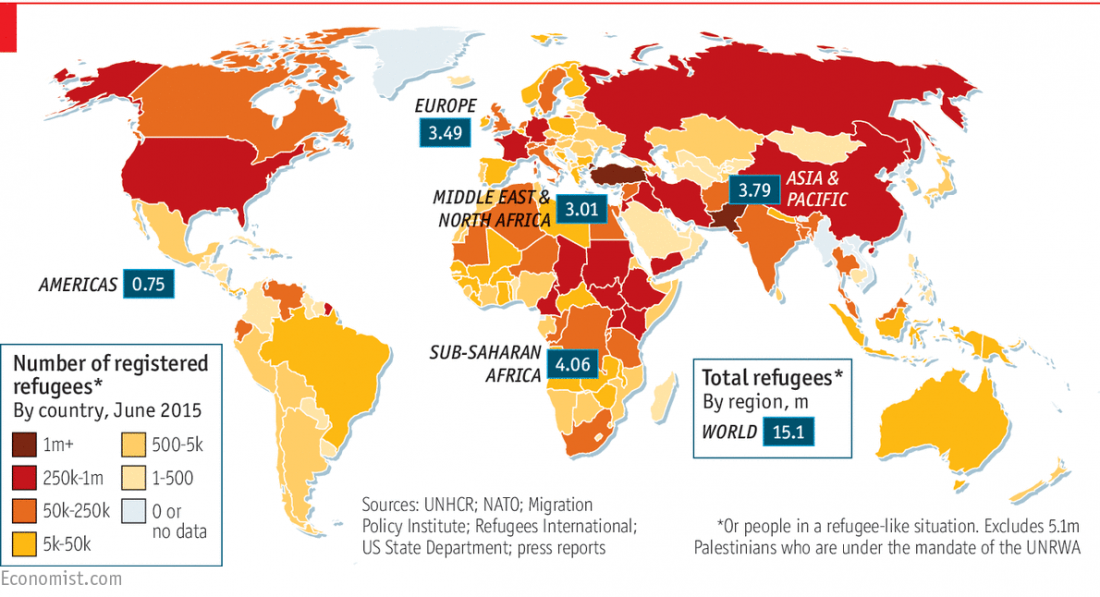
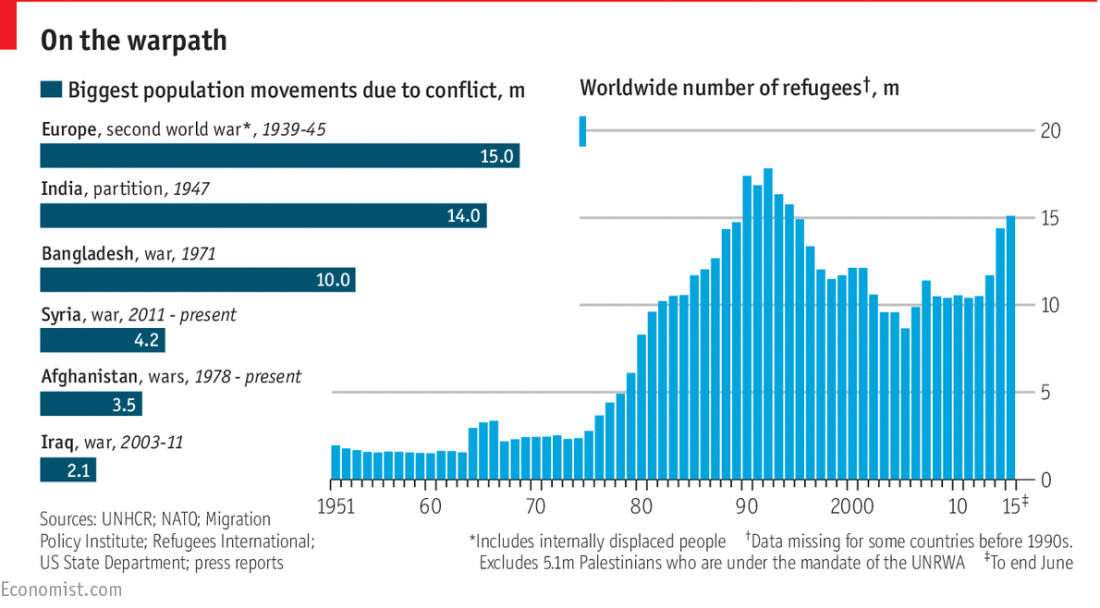
Figures 2 and 3 were taken from a recent special report The Economist published on the global refugee crisis. The figures describe the present global distribution of registered refugees and the recent history of major population movements. The data for these figures also originated from UNHCR reports.

refugee, registered refugee, global, distribution, mapFigure 2The global distribution of registered refugees

population, movement, immigration, emigrationFigure 3The recent history of the largest population movements

Migration and Demographics:

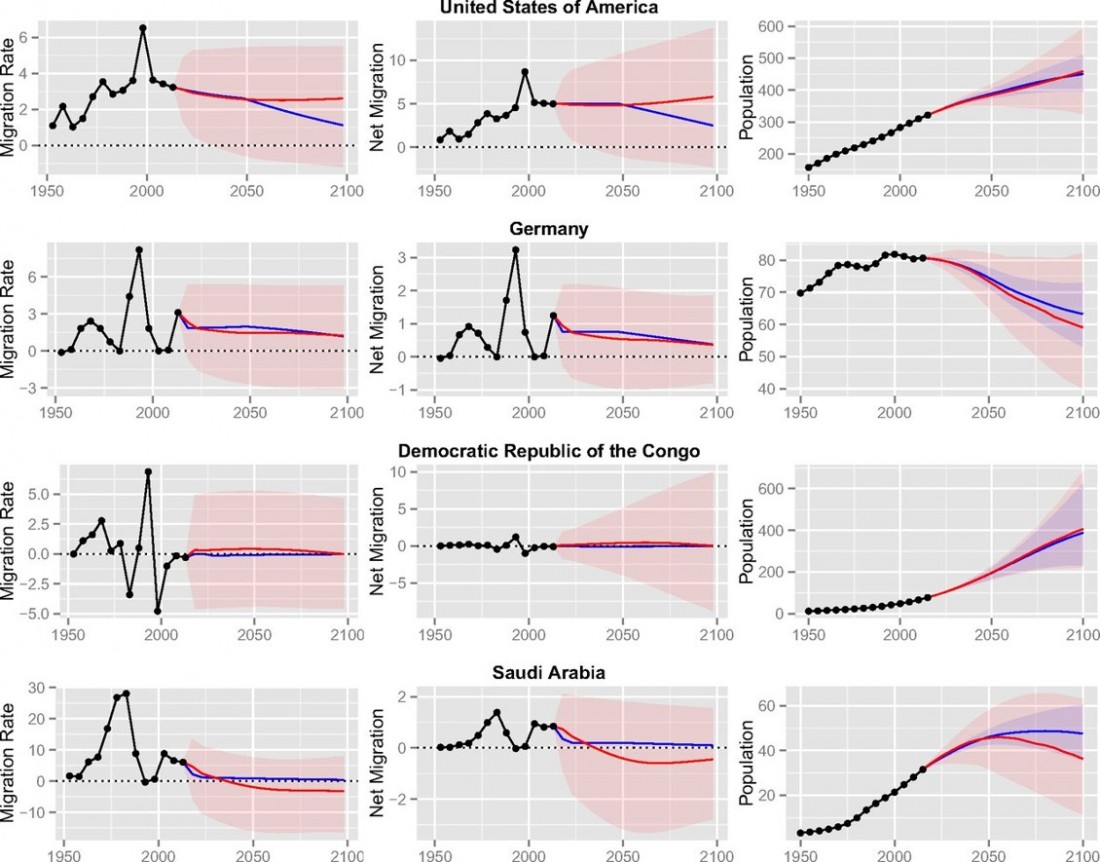
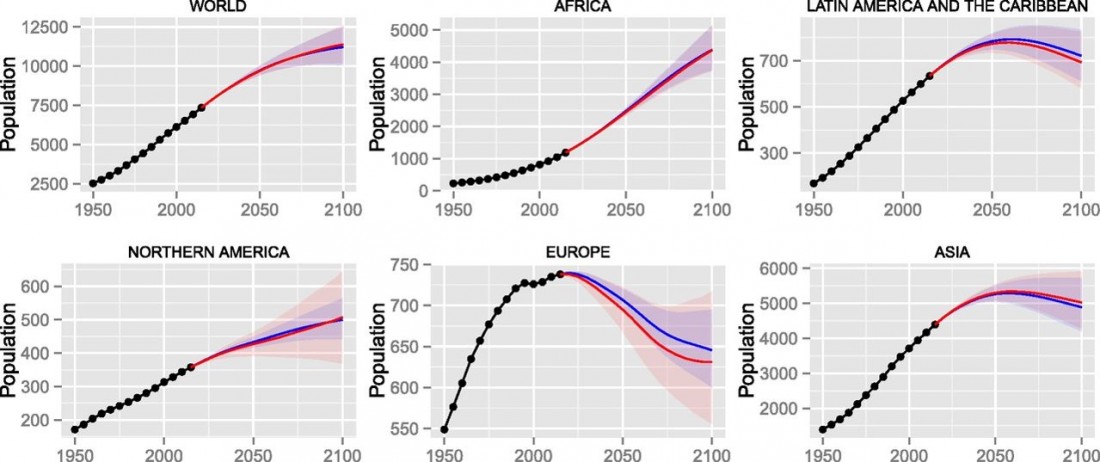
Every organization with a role in governance – from local and national governments to international organizations such as the UN – needs reliable estimates of the future demographics of the domain under its control. The first term in the IPAT identity (see June 28 blog) is the expected global population. Population in any territory is derived from the sum of births and deaths and the net balance between immigration and emigration. Estimates of birth rates based on fertility and death rates are usually extrapolated from the most recent statistics. Estimates of immigration and emigration are highly inexact and irregular but they are necessary for nearly every political, economic or social economic discussion. Statisticians from the University of Washington recently published their attempts at statistical assessment of global migration by country/region in one of the most prestigious and selective scientific journals: The Proceedings of the National Academy of Science. Figures 4 and 5 summarize the group’s main conclusions. The shaded areas indicate the enormous uncertainty of any prediction regarding migration.

migration, net migration, US, DRC, Congo, Germany, Saudi Arabia

Figure 4Comparison of deterministic projection estimates and the net migration for a few key countries

 PNAS, population, deterministic, prediction, projection

Figure 5Comparison of deterministic projection estimates and the net migration for global regions

Climate Refugees:

Up to now, we have focused on recent past and present factors of global migration. Climate refugees are a relatively new phenomenon, but almost every estimate says they will play an increasing role in influencing our collective action to mitigate the impact of anthropogenic climate change. I will close this blog with a few key paragraphs from a recent New York Times article describing some activities that are already taking place on this front:

In January, the Department of Housing and Urban Development announced grants totaling $1 billion in 13 states to help communities adapt to climate change, by building stronger levees, dams and drainage systems.

One of those grants, $48 million for Isle de Jean Charles, is something new: the first allocation of federal tax dollars to move an entire community struggling with the impacts of climate change. The divisions the effort has exposed and the logistical and moral dilemmas it has presented point up in microcosm the massive problems the world could face in the coming decades as it confronts a new category of displaced people who have become known as climate refugees.

… Around the globe, governments are confronting the reality that as human-caused climate change warms the planet, rising sea levels, stronger storms, increased flooding, harsher droughts and dwindling freshwater supplies could drive the world’s most vulnerable people from their homes. Between 50 million and 200 million people — mainly subsistence farmers and fishermen — could be displaced by 2050 because of climate change, according to estimates by the United Nations University Institute for Environment and Human Security and the International Organization for Migration.

Posted in Anthropogenic, Climate Change, immigration, Sustainability | Tagged , , , , , , , , , , , , , , , , , , , , , , , , , , , , , , , , , , , , , , , , , , , , , , , , , , , , , , , , , , , , , , , , , , , , , , , , , , | Leave a comment

Vacation Notice

This week I am taking a break from the blog, so there will be no post. Please do come back next Tuesday, when I promise to continue our discussions.

Posted in Climate Change | Tagged | Leave a comment

Guest Blog by Sofia Ahsanuddin: Immigration

“You broke the ocean in half to be here. Only to meet nothing that wants you.”

Nayyirah Waheed, Immigrant

Sofia Ahsanuddin

Dear Reader,

I am writing this blog post at a critical transitional point in my life. I have just graduated summa cum laude from college with a degree in political science and chemistry on the pre-med track. I have always intended to become a physician so that I can hold sick people’s hands and heal them. But now that I have spent the past few years studying political science, I realize that I need to find a way to thread policy into patient care.

At the moment, I honestly have no idea what the future holds for me. I sincerely hope that I will find a way to serve others with compassion and humility. To explore different options, I am now temporarily working as a Research Associate at the NYU Tandon School of Engineering and as Executive Director of the MetaSUB International Consortium at Weill Cornell Medicine. I am currently looking at novel methods of capturing the genomic composition of both the urban built environment and the human microbiome. In the one year that I have worked on MetaSUB, it has expanded to 58 cities in 32 countries across the globe.

This past June, I was fortunate enough to deliver my graduating class’ commencement address. This was an amazing opportunity for me to share something meaningful with my fellow graduates and so I chose to comment on the uncertainty of our times. I joked about Samuel Huntington’s Clash of Civilizations and spoke about the polarized discourse on immigration to Western countries. I subtly satirized the irony of anti-immigrant backlash in former colonial states like Britain and France and commented on the nature of populist outrage on both sides of the Atlantic. Illiberalism, I argued, has contributed to the stunning rise of Donald Trump in the United States and the unprecedented “Brexit” referendum in Europe. Demagogues convince many amongst us that immigrants pose an existential threat to the national identity and security of Western liberal democracies. As a Muslim American immigrant of Indian heritage, I realize that there is a peculiar sense of double consciousness that comes with reconciling a multiplicity of identities. I am an American – a Westerner – who is also deeply connected to my Islamic faith. While I still have a long journey ahead of me in becoming a better person, I see Islam as a powerfully transformative spiritual tradition that translates personal ethics into a deep commitment to social equity, justice, and compassion in the public realm.

Nevertheless, navigating public spaces has become increasingly difficult in the present political and social climate. I am chronically aware that my presence in the West angers many, regardless of my aspirations to help people. It is, as Hannah Arendt puts it, a schizophrenic form of existence. Before my national identity, I identify first as a Muslim because my religion is the prism through which I see the world. It is my moral compass, my inspiration, my reason for living. I could not imagine my life not being Muslim. It would be like not being able to breathe.

So when I read about Donald Trump’s proposal to ban Muslims from entering the United States or about Marine Le Pen’s desire to curb resettlement of Syrian refugees in France, I cannot help but marvel at the level of unveiled demagoguery and bigotry that is becoming increasingly rampant amongst many sectors of our societies. I inevitably feel a profound sense of sadness, alienation, and frustration when I am confronted by such vitriolic political rhetoric that paints all Muslims with a single brush.

At the same time, I acknowledge that this is not a uniquely Western phenomenon. Every group of people, including my fellow Muslims, has vilified other groups for any number of reasons. Extremist groups often use religion as a rallying cry to mobilize people in regions of the world that are still deeply theocentric to achieve very specific political agendas. Ironically, while extremist groups claim to speak on behalf of Muslims, they kill more Muslims than non-Muslims, as demonstrated in the recent bombings in Baghdad, Dhaka, Medina, and Istanbul. Many Western Muslims leaders, like my favorite scholar, Hamza Yusuf Hanson, are on ISIS’ hit list.

As an American Muslim, I hope that bigotry, xenophobia, and exclusionary policies have no place in our society despite our long history of it. I wish I could believe that racism and ignorance are antithetical to the values upon which this nation was built. While this may be wishful thinking, given our country’s very long history of racial exclusion and enslavement of non-white peoples, I believe that we have a responsibility to undo the wrongs of the past to create a more equitable, just, and humane future for our children.

I hope that this blog post will help me meditate on my past and family origins so that I can look to the future with optimism and certainty. Migration through time and space is a traumatic experience for many and it has been so for my family and I. We came to the United States in search of educational opportunities so that we could give back to our adopted home. However, in order to facilitate this process, immigrants need to feel like they belong. And I do not feel welcome in a place I have called home since infancy. It is crucial that the United States not marginalize, stigmatize, and criminalize the people who come to its shores in search of better lives.

If there is one good thing that has come out of my experiences, it is that I have developed the ability to understand and contextualize other people’s feelings of alienation and suffering. This is an indispensable skill to hone, particularly if one is as passionate about medicine and social justice as I am.  I hope it will serve me well in the near future.

– Sofia Ahsanuddin, July 2016

—-

I am part of an ethnoreligious group of people called the “Hyderabadi Muslims” of India. We are mostly found in the Old City of Hyderabad, where the vast majority of my relatives in India reside. I actually lived about twenty minutes away from the Charminar, a historic monument that was built by the Mughal ruler, Muhammad Quli Qutb Shah in 1591 CE. The Muslims of Hyderabad are distinct from the “Hindustani Musalmans” of Uttar Pradesh in northern India, many of whom are descendants of the Muslim refugees to Pakistan after the India-Pakistan partition of 1947. Aside from the Islamic religion, Indo-Persian cultural tradition, and the Urdu language, we do not have much else in common with the Muslims of Uttar Pradesh.

Hyderabad was previously known as the “City of Pearls” because of its status as the wealthiest of the princely states under British colonial rule. Jews, Turks, Arabs, and Africans flocked to Hyderabad because it was a major trading hub. The Yemeni Chaush peoples and the Siddi peoples of Bantu descent still reside in Hyderabad. The royal legacy of Hyderabad is apparent in its many modern public institutions – the hospital my family members go to when they are ill is named after Princess Durru Shehvar and the private school my cousins currently attend is named after Prince Muffakham Jah. I have been told that my ancestors were of Turkish and Arab descent and that they had settled in India for economic reasons. Family lore has it that one of my ancestors was a soldier in the Ottoman army. Because he was offered a parcel of uninhabited land on which to settle, he migrated to Hyderabad. My native tongue, Hyderabadi Urdu, is a distinct Dekhani language that fuses Turkish, Arabic, and Persian with the native languages of Marathi and Telegu.

My family was not directly impacted by the India-Pakistan partition, which initiated the largest human migration in all of recorded human history. While Hyderabad was violently annexed to the Dominion of India, with the loss of an estimated 200,000 lives, many members of my family made the unusual choice to remain in India. I am not really sure as to their reasons but I can only imagine that they believed it was a safer, more stable option than crossing the Indian-Pakistani border at a time of great political and social turmoil. My grandmother used to tell me stories of the communal uprisings against the “Angrez” (the British) and her childhood memories watching people leave to join militias to fight for Indian independence. My father’s side of my family is said to have come to Hyderabad from Sindh, which is in modern-day Pakistan.

Upon the British’s departure from India, it gave all of the princely states, including Hyderabad, the choice to join either Pakistan or India. The Nizam of Hyderabad at that time stubbornly refused to join either state, instead desiring political autonomy. Political and military mobilization of people along religious lines occurred which exacerbated Hindu-Muslim violence. The Hindu majority of Hyderabad opted to join the newly created Indian state. In 1947, the Indian government conquered Hyderabad, much to the chagrin and dismay of the Muslims. The subsequent “Fall of Hyderabad” resulted in the loss of privileged status for many Muslims and led to the migration of thousands of Hyderabadi Muslims to neighboring Pakistan.  It is no wonder that there is another city called “Hyderabad” in Pakistan. At that time, many Hyderabadi refugees dreamed that Pakistan would be the ideal “Islamic state” with progressive values. Most unfortunately, that dream has yet to come true because Pakistan is rife with political corruption, extremism, poverty, and sectarian violence, which is sadly the case for many postcolonial nation-states. Pakistan is one of many Muslim-majority countries that was once at the height of civilization but is now in a visible state of decay.

At the time of my birth, rapid changes were taking place throughout Hyderabad and my own family. Hyderabad was industrializing and was quickly transitioning into a global hub for IT and the telecommunications industries. The Old City is now mostly a residential location with a few tourist attractions, like the Golkanda fort and the Faluknama Palace, all relics of the Mughal Empire. The Old City’s dusty streets are dilapidated and its infrastructure requires extensive improvement. In direct contrast, the “New City” boasts of technological advancement and innovation as it is home to India’s “Genome Valley” and reputable transnational companies like Dell. Due to a severe shortage in economic and educational opportunities for Muslims in Hyderabad and the growing disparity in living conditions between Hindus and Muslims, many of my family members decided to immigrate to Western countries or Arab Gulf states.

Our circumstances have made us a part of the Hyderabadi Muslim diaspora. One of my uncles immigrated to Saudi Arabia in search of a secure, comfortable lifestyle with a steady job. He works for Saudi Aramco, which is often referred to as the world’s most lucrative and valuable company. My other uncle travelled from India to Saudi Arabia and then again to Canada with the hope of providing his four children with better educational opportunities.  With a few extended family members living in Australia, Dubai, Abu Dhabi, Holland, and the United Kingdom, I can say that it is a truly transcontinental experience connecting and communicating with family all over the world. I still have relatives who reside in India, but I have a harder time communicating with them because of the language barrier. I can speak Urdu, but I have an American accent.

My father immigrated to the United States in the 1980s because of economic need. My grandfather supported his decision to leave the country because my father had four daughters to provide for and had no sons. In India, it is not easy to raise daughters in a very patriarchal society. My father had pursued graduate degrees in both mathematics and Arabic but found it extremely difficult to make a living despite his academic credentials.

I grew up in the Bronx, connected to Hyderabad, and exposed to a rich variety of other cultures and religions. As a child, I learned how to dance to hip-hop music with the companionship of many of my black and Hispanic friends. I had very few Caucasian friends growing up but that changed when I attended an all-girls Catholic school. I joined the chorus – becoming one of the lead soloists – as well as both the basketball and robotics teams, all while wearing salwar kameez at home and listening to South Asian ghazals on the television. My parents would speak to me in Urdu at home and I would regularly see my mother poring over Siasat and The Daily News for news updates in Hyderabad and New York City. During college, I lived a few blocks away from an Afro-Caribbean community and an Orthodox Jewish community in the Midwood neighborhood of Brooklyn. The Jewish section was one of my favorite places to stroll at night because of its quaint and suburban atmosphere.

While “muhajir” is a term that is often used to refer to the Indian Muslim refugees who fled to Pakistan after the partition, I would argue that my family and I are “muhajirs” to the Gulf States and the Western world. We were left with very few options but to leave our ancestral home and to adopt many aspects of the culture and language of our new homes. Once we all finally finish school, my sisters and I will all be doctors and lawyers. Two of my sisters and I are passionate about health disparities and my eldest sister has done a lot of international human rights work. I do not think this is a coincidence.

Presently, some of my Indian and Saudi family members are looking into immigrating to the United States for graduate study and permanent residence. They tremendously respect my parents and sisters for having made it so far in life, comparatively speaking. I cannot stress how grateful I am to my parents for choosing to come to this country. I know that I would not have had the same opportunities if I were back in India or anywhere else.

Posted in Climate Change, Education, immigration | Tagged , , , , , , , , , , , , , , , , , , , , , , , , , , , , , , , , , , , , , , , , , , , , , , , , , , , , , , , , , , , , , , , , , , , , , , , , , , , , , , , , , , , , , , , , , , , , , , , , , , , , , , , , , , , , , , , , , , , , , , , , , , , , , , , , , , , , , , , , , , , , , , , , , , , , , , , | 6 Comments

Immigration: My Migration History

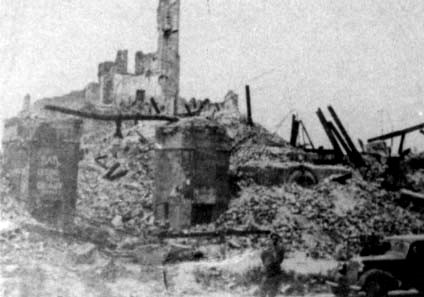
Micha family homeThis is what remained of my family’s house in Warsaw after WWII. There is no longer any trace of it. I gave a brief summation of my early life when I wrote my first blog (April 22, 2012).

I was born in Warsaw, Poland in May, 1939. The first three years of my life were spent in the Warsaw Ghetto, as the Nazis developed their plans for systematic Jewish genocide. Before the destruction of the Ghetto in 1943, I was hidden for a time on the Aryan side by a family friend, but a Nazi “deal” to provide foreign papers to escape Poland resulted in my mother bringing me back to the Ghetto. Then a Nazi double-cross sent the remnants of my family not to safety in Palestine, but to the Bergen Belsen concentration camp as possible pawns in exchange for German prisoners of war. As the war was nearing an end, in April 1945, we were put on a train headed to Theresienstadt, a concentration camp further from the front lines. American tank commanders with the 743rd tank battalion of the American 30th Division intercepted our train near Magdeburg in Germany, liberating nearly 2500 prisoners. Within the year, my mother and I began building new lives in Palestine.

I am now a professor of Physics, studying the causes of global warming. I have just published a book on the topic: Climate Change: The Fork at the End of Now (June 2011 by Momentum Press). I publish literature regularly on climate change and energy, founded the Environmental Studies undergraduate program at Brooklyn College of CUNY, and have taught climate change on various levels for the last 15 years or so.

In addition, I speak three languages, Polish, Hebrew and English – a reflection of my immigration pattern, but I’d describe my knowledge of my birth language as “Kitchen Polish” as I never had any formal schooling in Poland.

We spent the time between our liberation by the American Army and our emigration to Palestine (now Israel) in the displaced persons camp of Hillersleben. We were part of a mass exodus that took place as a result of the Holocaust. My mother’s book, Of Bombs and Mice, details our life in the Warsaw Ghetto during the first three years of my lifetime. Below is an excerpt describing the period directly after our liberation.

Of Bombs and Mice book coverMy mother’s book about the Warsaw Ghetto
“My little angel, my sweetest baby in the World! Isn’t it fantastic that we are alive, so miraculously alive!” exclaimed Nata, showering wild kisses upon her six-year-old son Bobush. The naked, emaciated body of the blond boy eluded her grasp and Bobush ran away, his mischievous blue eyes set in a cherubic, pallid face, watching her intensely from a safe distance.

“I don’t want to be dressed, I want to go out now!” shouted Bobush, scratching himself all over with both dirty hands. Passing quickly from one mood to another, Nata started to weep. She cried hysterically: “you monster! You naughty boy! Come here at once or you’ll get a good spanking. If your father could have lived to see you now! Your poor grannie would…

She never finished the sentence, and after short fight with the struggling boy she managed to dress him, and herself, in the clothes she had found in the villa. Afterward she threw her own lice-infested clothes into the street, and they both went out to join the looting crowds.

The garden-town called Hillersleben, with its magnificently furnished houses, where-almost dying from starvation and disease-they had been transferred from the stinking, ghost-like train by the victorious Americans, had been the residential area for Hitler’s elite. The wide avenue, set in a frame of blooming trees, were in a state of riot now. Dressed in rags, looking for living skeletons, or horribly swollen, the liberated inmates of the concentration camps were wandering around, or wildly running through the thronged streets and flower-bedecked lawns, shouting, wildly waving their arms about, behaving without rhyme or reason. They invaded deserted villas and cellars well stocked by many prudent German Hausfrau, and they took everything in sight. From behind brightly-colored jam jars one could hear licking and swallowing noises and grunts of delight. Bizarre-looking figures were staggering under heavy suitcases full of loot and exchanging bewildered remarks.

“Who would have believed it yesterday? And so we have survived!”

I am Bobush and my mother is Nata.

I was an immigrant twice – once as a refugee. I was lucky because in both cases my country of choice actually wanted me. After the war, the Jewish Agency was looking for surviving Jewish families (especially those with children), to bring to Palestine to participate in the formation of Israel. I didn’t so much grow up in Israel as grow up with Israel. I went to two boarding schools designed to impart a mixture of standard education and agricultural work. Later, I served in the army, where I took part in one war and a number of skirmishes. I received my academic degrees and training at the Hebrew University and married another scholar. As many of our contemporaries were doing, we went to the US as postdoctoral fellows. Neither of us could find a job in Israel but we were both offered good professional opportunities in the US, so we stayed.

It is estimated that the European theatre of WWII displaced 6-8 million civilians. According to Mercy Corps, an international development agency that helps people survive after conflicts of all sorts, there are already 4 million Syrian refugees in 5 host countries. That number pales in comparison to the additional 16 million still in need of assistance throughout Syria and does not even begin to take into account the millions more refugees trying to escape from Iraq, Iran, Afghanistan, Yemen and various African countries. These people have not simply chosen to leave their home countries. They are fleeing violence and injustice, trying to make a life for themselves and their families.

Next week I will publish a guest blog by a first generation immigrant, a young Muslim student that has just graduated as the valedictorian of my university’s Honors College. She will describe her own set of experiences. Each of the millions that willingly leave or are forced to abandon their country, culture, and language, has a different story that emerges as part of the collective.

Posted in Climate Change, immigration | Tagged , , , , , , , , , , , , , , , , , , , , , , , , , , , , , , , , , , , , , , , , , , , , , , , , , , , , , , , , , , , , , | Leave a comment

Immigration: IPAT

Noah Smith wrote an article in Bloomberg about how to convince the Japanese to have more kids:

Japan would like to stabilize its rapidly aging population, and there are really only two ways to do that. It can let in tons of immigrants, or it can find some way to raise fertility. Otherwise, it had better resign itself to decades of sluggish economic growth, as hard-working young people are required to carry a larger and larger pyramid of retired old people on their backs. Its social security system will go bankrupt, the health care system will struggle, and interest rates might stay at zero permanently.

We have covered this issue earlier. Here is how Jim Foreit concluded his guest blog (January 14, 2014):

Half of the countries worldwide now have sub-replacement fertility. The downside to this trend is shrinking labor forces – a factor which has led some governments to try to reverse the course and increase fertility. Romania banned abortion, and fertility briefly increased – until illegal sources of abortion appeared to meet demand. Other countries like France and Germany in the 1930s provided families with generous incentives ranging from free childcare to cash payments for additional children, but these actions did not produce substantially higher fertility. The relaxation of China’s one-child policy may result in higher fertility, but the effects will not be known for several years.

A sub-replacement fertility world seems inevitable, with fewer productive adults supporting larger numbers of the elderly. What this will mean for human welfare will depend on both the future productivity of working adults and living the expected living standards for their parents.

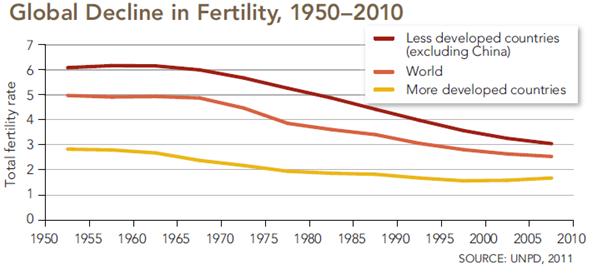
I have also posited that money and women’s education are among the best contraceptives. Figure 1 was taken from the special Science magazine issue published when humanity passed the population mark of seven billion.

Global Decline in Fertility 1950-2010Figure 1Global Fertility Rates

Developed countries as a group are way below the replacement rate fertility of 2.1. In other words, short of increasing fertility, if rich countries wish to avoid the consequences of shrinking populations, they will have to resort to immigration.

This brings us to the important role that immigration can play in mitigating climate change and the related Anthropocene.

The IPAT identity describes the indicators responsible for emission of carbon dioxide. (November 26, 2012):

There is a useful identity that correlates the environmental impacts (greenhouse gases, in Governor Romney’s statement) with the other indicators. The equation is known as the IPAT equation (or I=PAT), which stands for Impact Population Affluence Technology. The equation was proposed independently by two research teams; one consists of Paul R. Ehrlich and John Holdren (now President Obama’s Science Adviser), while the other is led by Barry Commoner (P.R. Ehrlich and J.P. Holdren; Bulletin of Atmospheric Science 28:16 (1972). B. Commoner; Bulletin of Atmospheric Science 28:42 (1972).)

The identity takes the following form:

Impact = Population x Affluence x Technology

Almost all of the future scenarios for climate change make separate estimates of the indicators in this equation. The difference factor of 15 in GDP/Person (measure of affluence), between the average Chinese and average American makes it clear that the Chinese and the rest of the developing world will do everything they can to try to “even the score” with the developed world. The global challenge is how to do this while at the same time minimizing the environmental impact.

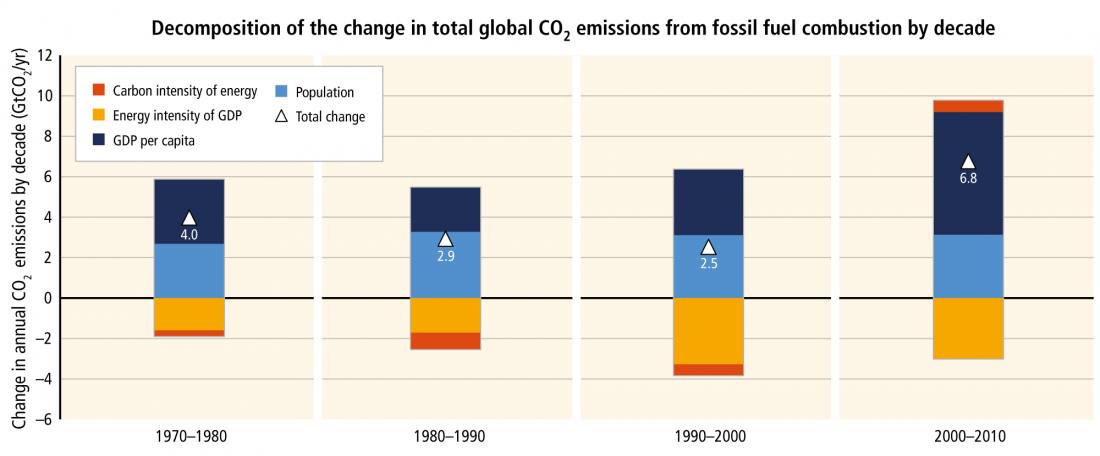
I showed the identity’s various indicators’ contributions to carbon dioxide emissions in a blog (February 24, 2015) about energy transition in India. Figure 2 shows the evolution of these contributions.

Change in annual CO2 emissions by decade

Figure 2 – Decomposition of the change in total global CO2 emissions from fossil fuel combustion by decade (IPCC Fifth Assessment Synthesis Report)

Currently (2001 – 2010), the global upsurge in the standard of living, (expressed as an increase in the GDP/Capita) is the main leading indicator of rising emissions. The second best indicator of rising emissions is population growth. Going back to Figure 1, the most effective way to regulate population growth is to increase in GDP/capita. From there, we reach the hypothesis that immigration from poor countries to rich ones is perhaps the most efficient way to regulate both the global population growth and the rise in emissions. Immigrant families usually achieve the lower fertility rates of the host countries within one generation. The influx of new residents would balance the declining populations of developed countries. Poor developing countries, whose fast increase in global GDP/capita has been mirrored by quickly escalating emissions, would meanwhile support fewer people and thus emit less. Attempts to block immigration ensure that rich countries will suffer economic stagnation, poor countries will continue to founder in the misery of poverty. Illegal attempts to block immigration not only reduce global security but also impair efforts to fight international threats like climate change.

Posted in Anthropogenic, Climate Change, IPCC, Sustainability | Tagged , , , , , , , , , , , , , , , , , , , , , , , , , , , , , , , , , , , , , , , , , , , , , , , , , , , , , , , , , , | Leave a comment

Immigration: The Physics

Next week I will leave for my summer break. This time we are taking a complicated tour, starting in England a week after the Brexit referendum. Next we will spend a few days in Israel before continuing to Poland, Malta, and France; then back to England and home. I am familiar with this terrain; the only place new to me will be Malta, where I will spend about a week. I’ll spend most of the time with friends and family in each country. Even in Malta, I will double my tourism with seeing my Australian family members who wanted to escape their country’s winter.

Aside from visiting family and friends, I will be paying attention to how the influx of refugees is impacting the various countries. The refugee crisis has drastically affected the “safe havens” where they flock. BREXIT is driven in large part by the fear of the refugee incursion. When I discussed the emergence of Donald Trump as a leading (now presumptive) Republican Presidential candidate (March 8, 2016), I wrote:

United States residents are not the only ones alarmed. The European press is fully covering the turmoil with great apprehension. As many US publications have noticed, however, the Europeans shouldn’t be surprised. Donald Trump actually fits in very well within recent political trends in Europe.

Political figures like Italy’s Silvio Berlusconi have many similarities to Donald Trump. Not only was he a candidate for high political office but he actually served as Prime Minister four times. Meanwhile, Victor Orban, the President of Hungary, is very busy building fences to block the refugees that are seeking security in Europe. Jean-Marie Le Pen and his much more media-savvy daughter Marine Le Pen also fit into this category. The memorable French presidential election of 2002 saw the National Front candidate win the first round against the serving socialist Prime Minister Lionel Jospin only to then be defeated by the Conservative Jacques Chirac 82% – 18% because almost everybody in France was truly alarmed by Le Pen’s policies. In fact, just a few days ago, neo-Nazis were elected to the Slovakian parliament for the first time.

Much of this shift, including the shift in the United Stated is emerging because of fear of being swamped by refugees.

Today I’m starting a new series about human migration/emigration/immigration and its global impact on almost every aspect of our lives, including climate change.

To begin with, immigration plays a big part in the evolving physics of the human-dominated Anthropocene (see the previous series of blogs). This is directly linked to the notions of entropy and the Second Law of Thermodynamics. These are not simple concepts and they might sound like gibberish to the uninitiated. Given how integral these ideas are to the themes of this blog, I figured that over the last four years I must have covered them in depth. Apparently I was wrong. Although putting “Second Law of Thermodynamics” in the search box came up with a few related blogs, the term “entropy” provided a single entry, which quotes somebody using the phrase in relation to income inequality. It is time now to rectify this omission.

I devoted two pages in my book, Climate Change: The Fork at the End of Now to the topic:

ENTROPY

The law of conservation of energy is a fundamental, universal law (meaning that we believe it to apply throughout the universe) that puts limits on our ability to create “something from nothing” at least as far as energy is concerned. It tells us that we cannot drive a car or operate an electrical power station without feeding it with some sort of fuel. We cannot create a perpetual motion machine that will move constantly without supplying it with energy. This sort of limitation offends some of us, but for most of us it is not very surprising. It is one of the pillars of the work ethic that we were exposed to since early childhood and try to pass on to our children and grandchildren.

What about the following scenario? Imagine that we are cruising on a vast ocean. The ocean contains a very large number (around 1045) of molecules of water. Each molecule moves randomly in all directions and interacts with other water molecules. All this energy is the internal energy of the ocean. Can we create an engine that will use a very small fraction of this energy to propel the ship? We are not violating any conservation law— we are not even depleting any reservoir because the sun will continue to hit the water, and our energy withdrawal will hardly cause any temperature change in the ocean. In practical terms, for us as passengers on that ship, we would be able to cruise the oceans forever without using any fuel (indirectly we are using solar energy)—we would enjoy a perpetual motion machine without violating the energy conservation law. Well, not surprisingly, we cannot do that. If it is too good to be true it probably is, but why?

The reason is that there is another fundamental law, as basic as the energy conservation law (some even think more basic) that states that left on its own, a system tends to evolve in such a way as to increase disorder. To paraphrase it: left on its own, the universe tends to evolve to a state of maximum mess (just like my grandchildren do to a room full of toys). You will notice that the statements start with “left  on its own,” which means that my grandchildren can still fix up their room—but they will have to put energy into the effort; if they are not willing to exert the energy, the room will get messier and messier. This law is known as the second law of thermodynamics; thermodynamics is the scientific discipline that deals in processes involving the flow of heat. The first law of thermodynamics deals with the application of the law of conservation of energy to thermal processes. This all sounds a bit philosophical—why do we need it here? How can we use it to show that we cannot have our dream cruise? We need it because, as I will show in Chapter 6 when I discuss the solar energy cycle, the only commodity we get from outer space in a constant supply is “order” for us to dissipate. This “order” is carried by the solar radiation. In a sense, the greenhouse effect is a perturbation on this “order in” and “disorder out” balance that we engage in with the sun. We should get serious about the concept and try to quantify it in a way that will allow us to do some calculations and predict or explain some important observations in a quantitative way.

The physical property associated with this trend to “disorder” is called entropy. We connect it to thermal processes through a very simple equation:

Change in entropy = Q/T

Q in this equation is the amount of heat coming in to heat the system (when Q is positive) or going out to cool the system (when Q is negative). T is the absolute temperature (in the Kelvin scale). The rationale behind this definition is that the absolute temperature, T, is associated with the average energy per molecule. So the ratio Q/T represents the average number of molecules that share the given amount of heat Q. Because all these molecules move in all possible directions, the disorder will increase with the number of possible, equally probable movements. This is analogous to a room with many drawers that have items randomly distributed, as compared to a single drawer stuffed with items. The disorder in the first case is considered to be much higher than in the second case.

Let us restate the second law of thermodynamics in terms of entropy: Left on its own, a system will evolve in a way that will increase its entropy. So what happens with our wonderful cruise? The only thermal process involved is the extraction of heat from the ocean. We are decreasing the heat contents of the ocean (negative Q in equation 5.4) without any compensating increase in entropy because the heat energy is converted to work that represents a very low-entropy (high-order) process, hence the net result of the process is decrease in entropy— which is forbidden by the second law.

Let us apply the principle to another issue: we take a hot object and put it in contact with a cold object—what happens? Our everyday experience tells us that heat will move from the hot object to the cold object and that, as a result, the temperature of the hot object will decrease and that of the cold object will increase until the two objects equal the same temperature. From a perspective of energy conservation, heat can move either way without violating the law. T(H), the temperature of the hot object, is larger than T(C), the temperature of the cold object. So Q/T(H) will be smaller (due to the bigger number in the denominator) than Q/ T(C) . If we extract heat from the hot object (Q negative) and put it in the cold object (Q positive), the entropy of the hot object will decrease, but the entropy of the cold object will increase by larger amount, so the change in entropy is positive and in agreement with the second law.

As a final example, let us construct an abstract power station and try to see if the second law imposes any limit on our ability to generate power. This will be useful later when I discuss possible alternatives to current energy sources. The most common power stations generate electrical power by rotating a coil inside a magnet. Usually the rotation of the coil is performed by a steam turbine; hot steam at around 400°C enters the turbine to rotate the coil that generates the electricity. We get the steam by heating water with whatever energy source we choose— nuclear, coal, natural gas, and so forth. Whatever energy source we use, the energy of the hot steam is converted into the mechanical energy in the rotation of the coil that results in the production of electrical power. The internal combustion engine, which is mostly responsible for the propulsion of our cars, works on a similar principle: we inject a mixture of gasoline and air into a cylinder, the mixture gets compressed, and a spark ignites the mixture to a temperature higher than 1000°C. The fuel gets “burned,” meaning that the hydrocarbons get oxidized by oxygen to produce carbon dioxide and water. The oxidation releases energy that heats the gas. The hot gas expands to push a piston that rotates the crankshaft that, in turn, rotates the wheels. We are converting the chemical energy in the fuel (by burning it) into heat energy and converting this heat into the mechanical energy of the car. In both cases an exhaust of cooler steam or exhaust gases exits the engine. The second law imposes an absolute limit on to the efficiency of converting the heat energy. The limit depends on the operating temperature of the engine (approximately 400°C for the electric generator and 1000°C for the car engine). This limiting efficiency is called the Carnot efficiency after the French physicist Sadi Carnot (1796– 1832). It states that

Maximum efficiency (as a percentage) = (1 – T(C)/T(H) ) × 100.

The temperatures here are in Kelvin— for the electric generator the hot source (hot steam) reaches the temperature of 400°C = 400 + 273 = 673 K. The cold sink is the exhaust gas that at ambient temperature will be 25°C = 25 + 273 = 298 K.

So the maximum efficiency of the generator will be = (1 – 298/673) × 100 = 56%.

The concepts of entropy and the Second Law of Thermodynamics have expanded from describing the physical world to the workings of society as well. Within the focus on human migration, the emphasis lies with “left on its own, a system tends to evolve in such a way as to increase disorder,” Under this logic, immigration acts as an interrupter – the sovereign states are no longer left on their own. It’s an important step; while there are often disparities between the states, their cross-mixing can help with stability. In contrast, actively fighting against immigration negates that interruption.

Thermodynamics doesn’t have much to say about rate of the processes; it only describes the delicate equilibrium that so many states strive towards. If Donald Trump succeeds in building his high wall on the Mexican border, it will inevitably slow down immigration between the two countries. European countries, meanwhile, are themselves scrambling to construct barriers. This has an impact. What Physics has to say about the situation is actually rather self-evident: on a global scale, countries are competing to optimize their conditions and catch up with more developed states, but they face obstacles along the way.

I will continue this discussion in the next few blogs to try to highlight the consequences of this push-pull mechanism.

Posted in Climate Change | Tagged , , , , , , , , , , , , , , , , , , , , , , , , , , , , , , , , , , , , , , , , , , , , , , , , , , , , , , , , , , , , , , , , , , , , , , , | Leave a comment

Educating for the Anthropocene: Learning Science in an Informal Environment

Political decisions in the Anthropocene require an understanding of the interactions between humans and the physical environment, as well as how to make them sustainable for future generations. These decisions cannot be limited to a small group of scientist advisors; there needs to be a common language between the scientists and the decision makers. We can only make that sort of common language prevalent amongst the general public if we extend our education beyond our short school careers to encompass the rest of our lives.

Such efforts must be global but I will focus on progress within the United States.

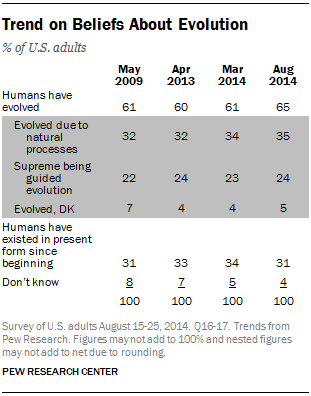
In a previous blog in this series (May 17) I outlined Pew Research survey data about the disconnect between the beliefs of the general public and scientists (chosen from AAAS membership). I looked at the different views on human evolution, climate change, and the Big Bang mechanism.

I am including another chart from the same Pew Research site regarding public perception of human evolution:

Pew Poll Public View of Evolution

The 55% (August 2014) of US adults who actively stated they don’t believe humans evolved due to natural processes (supreme being guided evolution + existed in present form) are probably eligible voters in any upcoming election – including the presidential race.

National Academies held a committee regarding how people learn science and published a book summarizing its conclusions:

Do people learn science in non-school settings? This is a critical question for policy makers, practitioners, and researchers alike—and the answer is yes. The committee found abundant evidence that across all venues—everyday experiences, designed settings, and programs—individuals of all ages learn science. The committee concludes that: Everyday experiences can support science learning for virtually all people. Informal learning practices of all cultures can be conducive to learning systematic and reliable knowledge about the natural world. Across the life span, from infancy to late adulthood, individuals learn about the natural world and develop important skills for science learning.

  • Designed spaces—including museums, science centers, zoos, aquariums, and environmental centers—can also support science learning. Rich with real-world phenomena, these are places where people can pursue and develop science interests, engage in science inquiry, and reflect on their experiences through sense-making conversations.
  • Programs for science learning take place in schools and community based and science-rich organizations and include sustained, self-organized activities of science enthusiasts. There is mounting evidence that structured, non-school science programs can feed or stimulate the science-specific interests of adults and children, may positively influence academic achievement for students, and may expand participants’ sense of future science career options.
  • Science media, in the form of radio, television, the Internet, and handheld devices, are pervasive and make science information increasingly available to people across venues for science learning. Science media are qualitatively shaping people’s relationship with science and are new means of supporting science learning. Although the evidence is strong for the impact of educational television on science learning, substantially less evidence exists on the impact of other media—digital media, gaming, radio—on science learning.

Learners in informal environments:

Strand 1: Experience excitement, interest, and motivation to learn about phenomena in the natural and physical world.

Strand 2: Come to generate, understand, remember, and use concepts, explanations, arguments, models, and facts related to science.

Strand 3: Manipulate, test, explore, predict, question, observe, and make sense of the natural and physical world.

Strand 4: Reflect on science as a way of knowing; on processes, concepts, and institutions of science; and on their own process of learning about phenomena.

Strand 5: Participate in scientific activities and learning practices with others, using scientific language and tools.

Strand 6: Think about themselves as science learners and develop an identity as someone who knows about, uses, and sometimes contributes to science.

There is a clear and strong commitment among researchers and practitioners to broadening participation in science learning. Efforts to improve inclusion of individuals from diverse groups are under way at all levels and include educators and designers, as well as learners themselves. However, it is also clear that laudable efforts for inclusion often fall short. Research has turned up several valuable insights into how to organize and compel broad, inclusive participation in science learning. The committee concludes:

  • Informal settings provide space for all learners to engage with ideas, bringing their prior knowledge and experience to bear.
  • Learners thrive in environments that acknowledge their needs and experiences, which vary across the life span. Increased memory capacity, reasoning, and metacognitive skills, which come with maturation, enable adult learners to explore science in new ways. Senior citizens retain many of these capabilities. Despite certain declines in sensory capabilities, such as hearing and vision, the cognitive capacity to reason, recall, and interpret events remains intact for most older adults.

Recommendation 1: Exhibit and program designers should create informal environments for science learning according to the following principles. Informal environments should

  • be designed with specific learning goals in mind (e.g., the strands of science learning)
  • be interactive
  • provide multiple ways for learners to engage with concepts, practices, and phenomena within a particular setting
  • facilitate science learning across multiple settings
  • prompt and support participants to interpret their learning experiences in light of relevant prior knowledge, experiences, and interests
  • support and encourage learners to extend their learning over time

Recommendation 2: From their inception, informal environments for science learning should be developed through community-educator partnerships and whenever possible should be rooted in scientific problems and ideas that are consequential for community members.

Recommendation 3: Educational tools and materials should be developed through iterative processes involving learners, educators, designers, and experts in science, including the sciences of human learning and development.

Front-Line Educators

Front-line educators include the professional and volunteer staff of institutions and programs that offer and support science learning experiences. In some ways, even parents and other care providers who interact with learners in these settings are front-line educators. Front-line educators may model desirable science learning behaviors, helping learners develop and expand scientific explanations and practice and in turn shaping how learners interact with science, with one another, and with educational materials.

They may also serve as the interface between informal institutions and programs and schools, communities, and groups of professional educators. Given the diversity of community members who do (or could) participate in informal environments, front-line educators should embrace diversity and work thoughtfully with diverse groups.

Recommendation 4: Front-line staff should actively integrate questions, everyday language, ideas, concerns, worldviews, and histories, both their own and those of diverse learners. To do so they will need support opportunities to develop cultural competence, and to learn with and about the groups they want to serve.

I have been aware of the urgent need to expand science education for some time. Many years ago I attended a contractors meeting about researching new solar cells. The Department of Energy (DOE) was funding this research. Its representatives organized the meeting and took part in the discussions. One of the representatives’ comments is now permanently lodged in my brain. He told us never to use logarithmic functions in our reports. The DOE representative was a scientist and personally had no problem with logarithmic functions. His argument was that it is congressmen and their staffs who must read the reports and then approve the DOE budgets that support our work. These are the people who struggle with logarithmic functions; these are the members of the public that we must equip with the knowledge necessary to govern the Anthropocene. I have often discussed logarithmic functions in this blog (August 6, 2012) and have emphasized how essential it is to convey quantitative information. It is imperative that instead of “dumbing down” material we focus on educating its readers.

The National Academies committee on learning science in informal settings was comprised of scientists from various disciplines. Their report extends teaching science to other settings besides traditional school environments and provides assessment tools for the effectiveness of learning in such alternative environments. The audience of learners that they address is not much different from the audience that schools target when trying to increase their science enrollment. It does not extend to the “general public” and does not address the most basic element of the scientific method that should be kindled within every one of us. (June 18, 2012):

We Are Not Prophets

The Popperian scientific method is based on refutability. We develop a hypothesis and/or theory based on everything that we know, and we should be able to test the theory based on predictions for observations that we haven’t yet made. If the tests fail, we change the theory. This amounts to prediction of future results. Since we are part of the system, failure might mean closing the window that allows us to survive. The science we’re talking about here is more like medicine – we have to make a rational diagnosis about the changes that take place in the physical world, but if our predictions might result in a harmful impact, we will need to act. On this scale, actions to restore equilibrium must become part of the science that we practice.

We cannot understand, vote or govern in the Anthropocene without believing in this fundamental basis of science.

Posted in Anthropogenic, Climate Change, Conference, Education, Sustainability | Tagged , , , , , , , , , , , , , , , , , , , , , , , , , , , , , , , , , , , , , , , , , , , , , , , , , , , , , , , , , , , , , , , , , , , , , | Leave a comment

Educating for the Anthropocene: The Global Picture

Just as the Anthropocene is global, so its governance must be as well. Of course, this is easier said than done; countries are the only sovereign entities we have, meaning that any such global governance can only be attained through consensus.

Worldwide environmental issues such as the anthropogenic destruction of stratospheric ozone and the anthropogenic chemical changes that we inflict on the atmosphere, are early manifestations of an ill-governed Anthropocene. We are dealing with the uneven geographical distribution of the security burden that has resulted from broken states and their fleeing refugees. On another facet, there are economic opportunities that serve as manifestations of the present global flux and likewise lead to massive migrations. Understanding of the global forces in action is vital – not only for those assigned the responsibility of governing but also for those that elect them.

The attempt to introduce a common core in the American educational system was strongly motivated by the fact despite our vast available resources, US students lag behind those educated elsewhere, even in places with fewer funds to devote to schooling.

It is time to take a better look at international education efforts.

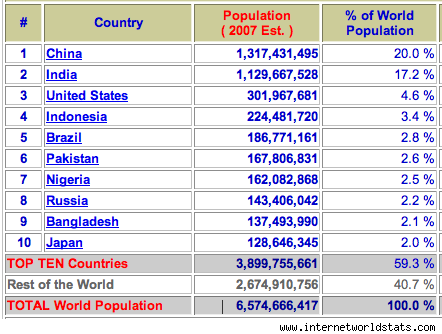
By their nature, educational systems are local. We cannot look at the educational efforts of close to 200 countries on this platform. Instead, I will focus on the US in comparison to nine other countries that together constitute about 60% of the world population. The countries are listed in the table below:

10 most populous contries 2007 Table 1List of the world’s 10 most populous countries.

Wikipedia breaks down its international rankings into 10 different categories; it lists 13 sections within the category of education and innovation. International rankings are based on either equivalent tests within comparable groups of students or on surveys of people’s opinions from different countries. Table 2 shows a comparison of both sets of results. The educational ranking and the country ranking columns are based on US News surveys and the PISA (Programme for International Student Assessment) columns are based on equivalent tests.

Country Educational ranking Country ranking PISAMath PISAScience PISAReading
China (as represented by Shanghai) 22 17 613* 580* 570*
India 29 22
US 3 4 481 497 498
Indonesia 44 42 375 382 396
Brazil 27 20 391 405 410
Pakistan 59 56
Nigeria 58 57
Bangladesh
Russia 20 24 482 486 475
Japan 8 7 536 547 538

Table 2 – Educational ranking, country ranking and PISA scores (2012) of the most populated countries.

The data in the first two columns is based on surveys:

  • The Best Countries for Education are ranked based on scores on a compilation of three equally weighted country attributes: has top quality universities, well-developed public education system and would consider attending university there.
  • The Best Countries ranking evaluates 60 countries across 24 rankings drawn from a survey of more than 16,000 global citizens.

The methodology of the PISA tests is as follows:

Each student takes a two-hour handwritten test. Part of the test is multiple-choice and part involves fuller answers. There are six and a half hours of assessment material, but each student is not tested on all the parts. Following the cognitive test, participating students spend nearly one more hour answering a questionnaire on their background including learning habits, motivation, and family. School directors fill in a questionnaire describing school demographics, funding, etc. In 2012 the participants were, for the first time in the history of large-scale testing and assessments, offered a new type of problem, i.e. interactive (complex) problems requiring exploration of a novel virtual device.

The US News ranked 60 countries. England came first in country ranking and 3rd in educational ranking. Iran is last in terms of education. All 10 of the most populous countries except for Bangladesh show up on the list.

The PISA (Programme for International Student Assessment) is based on testing 15 year olds in 65 countries – including OECD and affiliated countries. India, Pakistan, Nigeria, and Bangladesh are not on the list. More than that, China is represented solely by Shanghai. Indeed, all the top rated “countries,” in addition to Shanghai, are the Chinese cities of Hong-Kong, Taipei, Macao and the City State of Singapore. Shanghai certainly doesn’t qualify to be in our table but the inclusion has been widely adopted with a clarifying comment. The OECD average PISA scores are 494 in math, 501 in science, and 496 in reading. That puts the US score slightly below the OECD average in math and slightly above it in science and reading.

Country Global ranking 100,000*Educational Index (2013)/GDP/Capita(2014)
China 7.67 
India 29.9
US 28 1.63
Indonesia 69 17.3
Brazil 60 5.64
Pakistan 22.9
Nigeria 13.3
Bangladesh 41.1
Russia 34 6.12
Japan 4 2.43

 Table 3

*Global country ranking and Educational Index normalized to the countries’ GDP.

Table 3 provides two kinds of additional scores: The Global ranking column, published by the OECD and reported by BBC, ranks performance in math and science. This ranking is based on an amalgamation of international assessments, including the OECD’s PISA tests, the TIMSS tests run by US-based academics, and TERCE tests in Latin America, putting developed and developing countries on a single scale. The top five places are all taken by Asian countries – Singapore, Hong Kong, South Korea, Taiwan and Japan. The BBC site included the following comment:

“These countries are also very good at attracting the most talented teachers in the most challenging classrooms, so that every student has access to excellent teachers.”

I personally compiled and normalized the Education Index of the 10 most populous countries according to their GDP/Capita.

Education index EI is calculated from “Expected years of schooling” EYS (Number of years a child of school entrance age can expect to spend in a given level of education) and “Mean years of schooling” MYS (Average number of completed years of education of a population [25 years and older]). “Expected years of schooling” is indexed by dividing by 18 and “Mean years of schooling” is indexed by dividing by 15. Education index is obtained by averaging these two indices. The maximum for “Mean years of schooling”, 15, is the projected maximum of this indicator for 2025. The maximum for “Expected years of schooling”, 18, is equivalent to achieving a master’s degree in most countries.

In other words, the Educational Index is based on effort – not on achievement by students or an inspiration where to study.

The GDP/Capita data were taken from the World Bank.

It should be clear from the last column in table 3 that the poorest developing countries actually spend a considerably larger percentage of their resources on education than the rich OECD countries. In fact, the US is the lowest on this scale.

This month my wife and I will travel to Europe – including England, France, and Poland. I will also visit both Israel (where I have family and friends) and the island of Malta, where I will meet my Australian family; it is winter for them and they wanted a taste of warmer weather. During the trip, aside from the social aspects, I will try to delve into the massive migration from the Middle East and Africa that is overwhelming Europe. As I discussed in the context of last summer’s trip to China (July 21November 10, 2015), the promise of better educational opportunities is a strong driving force for people to leave their countries. Poor countries are well aware of this potential “brain drain,” a factor that likely serves as one of the strongest incentives to put as many resources in their educational system as they can.

Posted in Anthropogenic, Climate Change, Education | Tagged , , , , , , , , , , , , , , , , , , , , , , , , , , , , , , , , , , , , , , , , , , , , , , , , , , , , , , , , , , , , , , , , , , , , , , | Leave a comment