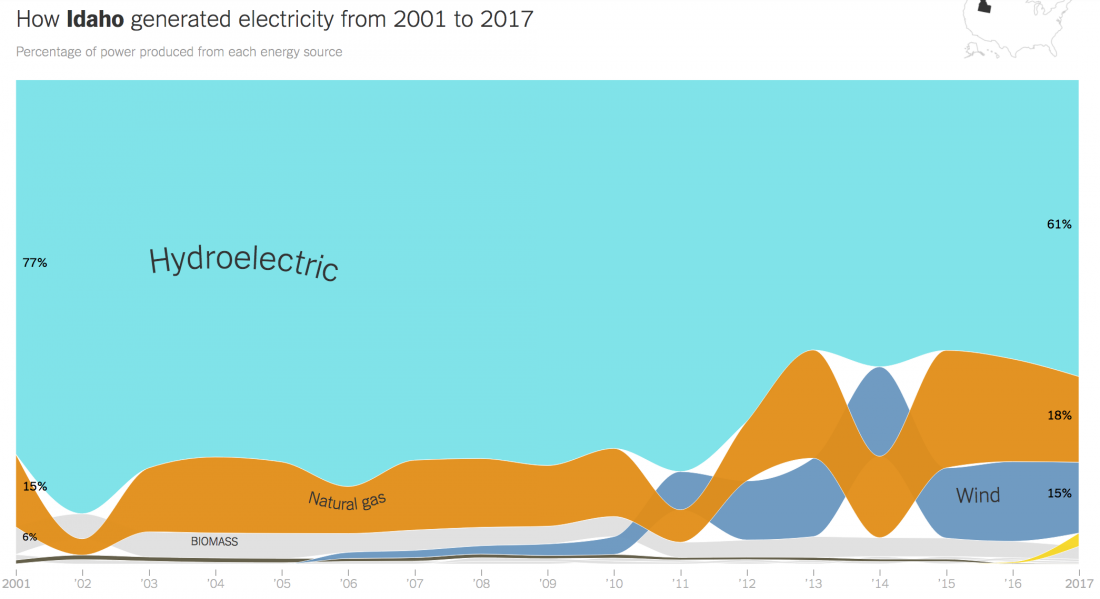
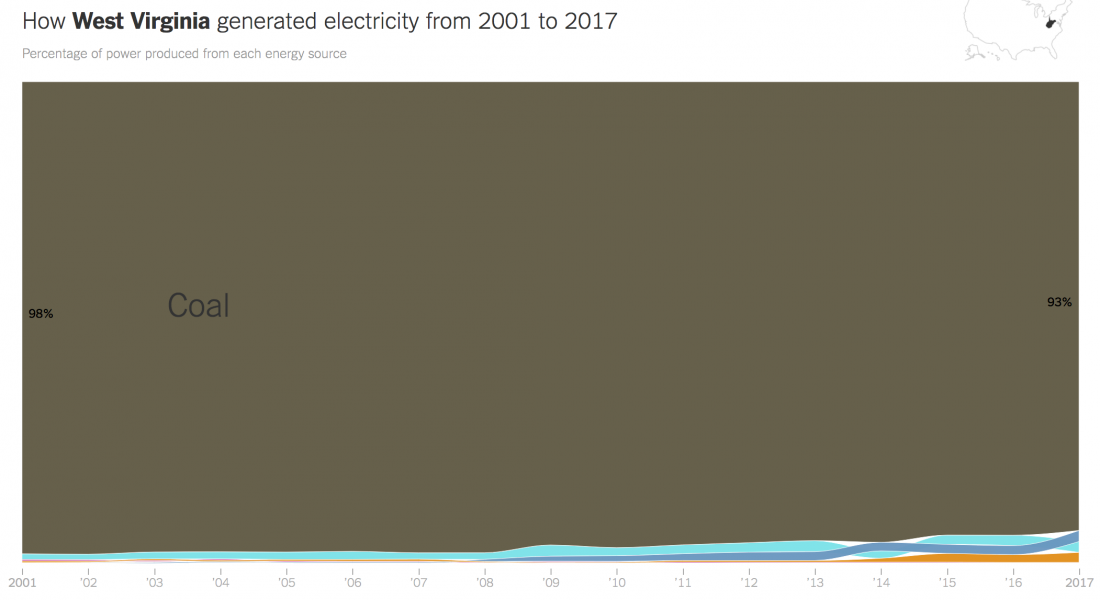
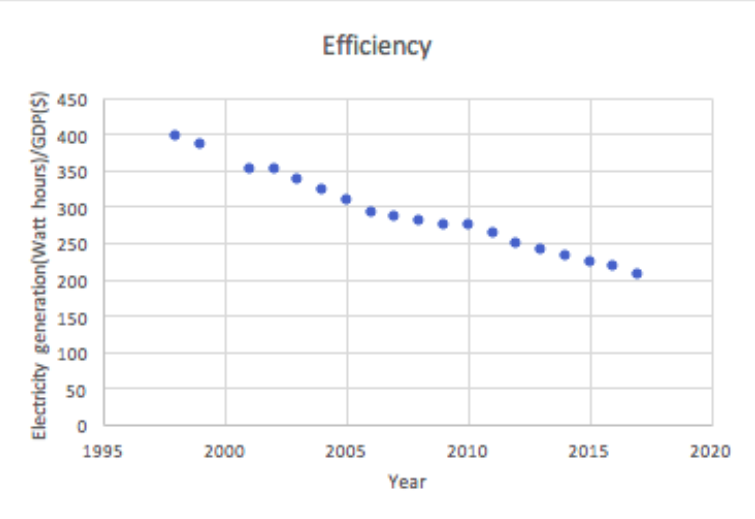
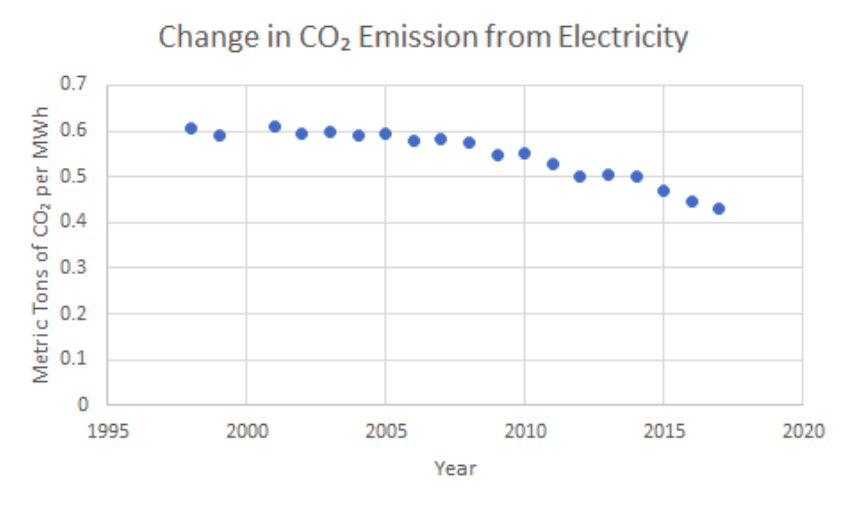
Electric Cars, Power Sources, and Truth in Advertising: Doing the Math

As I have often mentioned here, I teach two courses that relate to climate change at my university: the advanced Physics and Society and the general education Energy Use and Climate Change. This blog plays an important role in both classes. I try to teach advanced physics students how to relate to current events in a language that is understandable to the voting public. I also try to teach general education students how to analyze relatively complex societal issues that relate to the physical environment on a level where they can make judgements based on first principles in sufficient depth to be able to vote and participate in the political and social dialogue.

You will be the judge of the advanced physics students shortly when they submit four guest blogs on key issues that we are facing today. You have also gotten to judge the general education students on the various comments that they have posted throughout (see for example my April 7, 2015 blog).

Understanding societal issues that affect our physical environment necessarily involves numbers and data. Today’s blog on electric cars and power sources, which follows last week’s blog on the same topic, is a good example of this effort.

Last week I challenged you to address examples of two problems related to car transportation, analyzing truth in advertisement from first principles. I promised you I’d go over the solutions this week. It turns out that the solutions to these two problems open doors to much larger issues. I am repeating the figure and the table that provides the basic input to spare you the discouraging effort of flipping back and forth with the earlier blog. Here we are:

Problem 1:

In the figure below, the only parameter directly measured is fuel economy.

fuel economy, car, environment, gas, greenhouse gas

The input data include: fuel economy of 26 MPG (miles per gallon); fuel consumption of 3.8 gallons per 100 miles; $2150 annual fuel cost; savings of $1850 in fuel costs over 5 years. The environmental impact shows up on a sliding scale (1 to 10 where 10 is the best).

I asked students to quantitatively determine the assumptions needed to calculate the other numbers in the banner, using the minuscule font that reads as follows:

Actual results will vary for many reasons, including driving conditions and how you drive and maintain your vehicle. The average new vehicle gets 22 MPG and costs $12,600 to fuel over 5 years. Cost estimates are based on 15,000 miles per year at $3.70 per gallon. MPG is miles per gasoline gallon equivalent. Vehicle emissions are a significant cause of climate change and smog.

Solution:

Fuel consumption of 26 MPG means 100/26 = 3.8 gallons per 100 miles (rounding all answers to the nearest tenths). Fuel costs of $3.70 per gallon means 3.8 x 3.7 = $14 per 100 miles of travel. With 15,000 miles/year, the annual cost for fuel will be $2100. The reference car makes 22 MPG or 100/22 = 4.5 gallons per 100 miles, so with the same 15,000 miles/year, the annual cost will be $2550. The savings will be 2550 – 2100 = $450 per year and 5 x 450 = $2250 per 5 years. This is a bit different from the $1850 in savings that the sticker advertises, albeit in a better direction. The environmental part of the sticker doesn’t provide any details and clicking on it gets us to the EPA (Environmental Protection Agency) site. In the almost unreadable part below the sliding scale, we learn that the environmental impact takes into account only the emissions from the exhaust, which amount to 347g CO2/mile.

This vehicle emits 347 grams of CO2 per mile. The best emits 0 grams per mile (tailpipe only). Producing and distributing fuel also creates emissions; learn more at fueleconomy.gov.

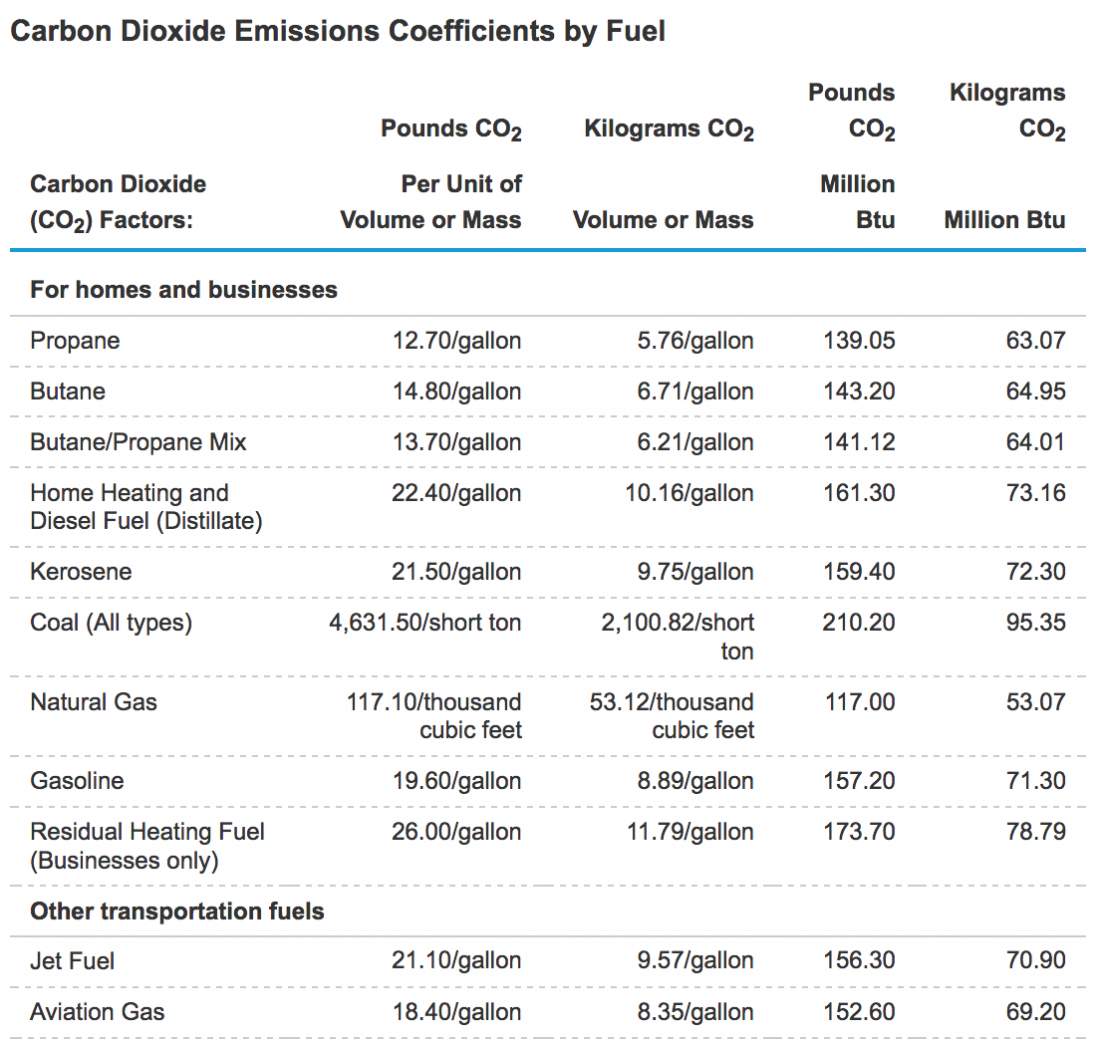
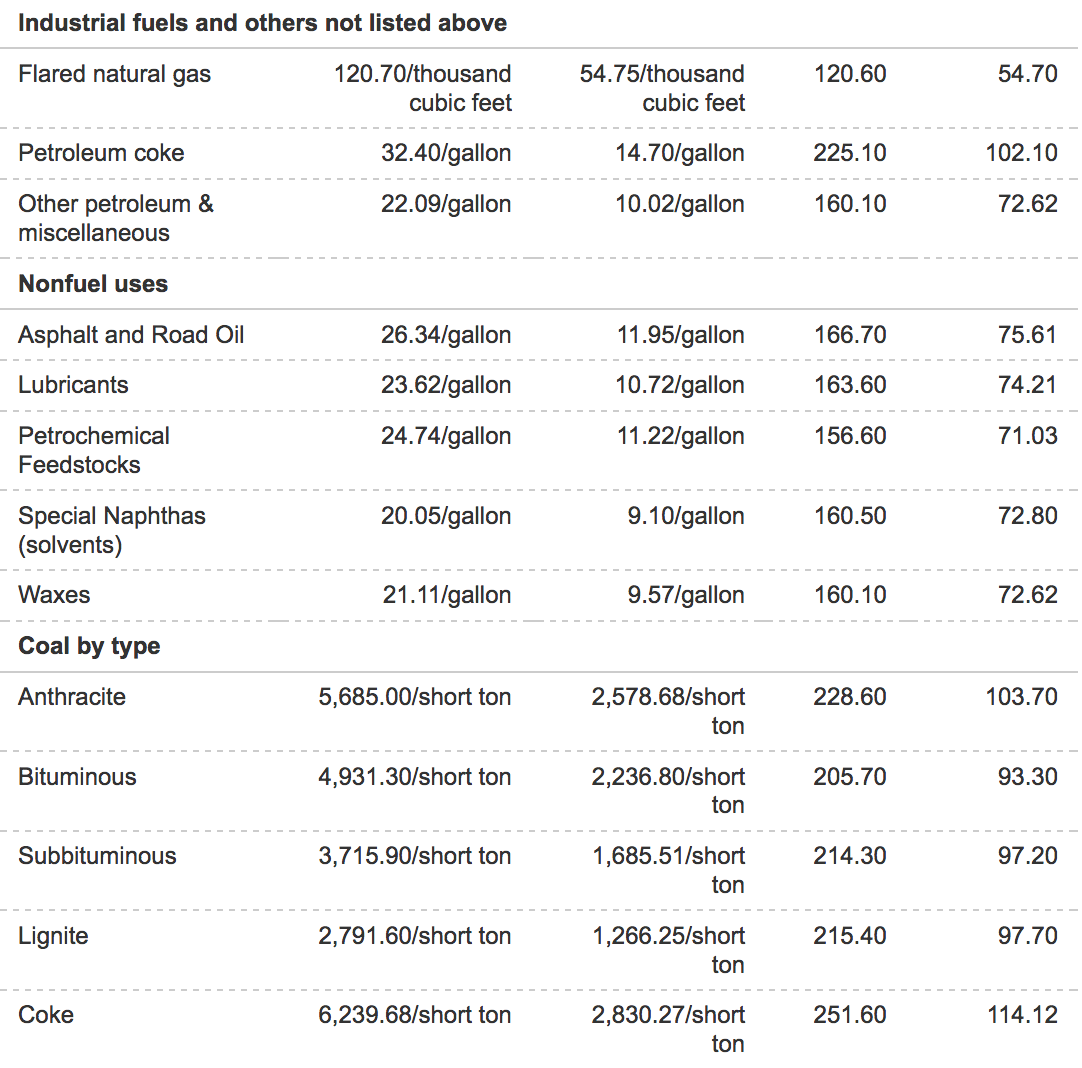
“Simple” calculation (the principle of which I show in Box 1) indicates that burning 1 gallon of gasoline liberates 8.3kg of carbon dioxide, which translates to 316g of carbon dioxide per mile traveled, which is closer to the number quoted in the sticker than 2250 is to 1850.

Problem 2:

The table below shows fuel costs for 100 miles of travel and carbon emissions of conventional and electric Nissan vehicles (data from The New York Times, May 29, 2011). Calculate the data in Table 2b from the data in Table 2a and pay attention to how you get there.

Solution:

I will leave aside the conventional Altima, which is basically the same as the previous calculation, and concentrate on the electric car. Just comparing the numbers for the two cars in 2b,  (without getting too into the math) we arrive at a fascinating conclusion – if the energy mix for the Leaf were different, it could conceivably have a higher carbon footprint than the Altima. As it stands, three fuels that power the electricity production for the Leaf, shown in the table, emit carbon dioxide: coal, gas, and oil. I will ignore the oil here because it’s only 1% of the mix. To power 100 miles of the Leaf, I need 7.27 x 3.3 = 24 kWh (kilowatt-hours is a unit of energy). 47% of this energy comes from coal and 20% comes from natural gas. Here we need some basic background information to calculate the resulting carbon footprint. I am including Box 1 from a chapter in my book that focused on calculating energy audits and carbon footprints.

Box 1 – Calculation of carbon footprints of electricity generation


Appendix 1 tells me that 1 kWh = 3414 Btu. This appendix also tells me that 1 Btu = 0.25 Cal.

Following our previous discussion, 1kwh* (3414Btu/1kwh)*(0.25Cal/1Btu) = 3414 × 0.25 Cal = 853Cal. So my average daily electric consumption is 7.9 × 853 = 6739 Cal/day. The typical conversion efficiency of an electric generator is 30%. So the actual energy needed to supply my 6739 Cal/day of electricity usage is actually 6739/0.3 = 22,463 Cal/day. As was discussed in Chapter 11, my utility company can use many primary fuels to produce this energy. I will use natural gas as an example, so our previous calculations for natural gas become relevant. The number of moles my utility company will need to produce my daily electric energy is 22,463/210 = 107 moles/day of methane. This corresponds to 107 × 16 = 1712 g (1.7 kg) of natural gas, the burning of which will produce 107 × 44 = 4708 g (4.7 kg) CO2. The calculations will change slightly (creating more CO2) if my utility company is using coal to produce the steam and change in a major way (creating no CO2) if my utility is using nuclear energy to boil the water or hydropower to run the turbines.


(You can Google any unfamiliar terms such as mole. If that doesn’t help, let me know so I can explain them more in depth.)

My calculations show that for the given power mix we emit 35.3lbs of carbon dioxide (not 63.6lbs as marked in the table). I will also neglect the fuel production cost of the power source. If, on the other hand, we say that the only power source is coal, we will get emissions of 63lbs—almost double.

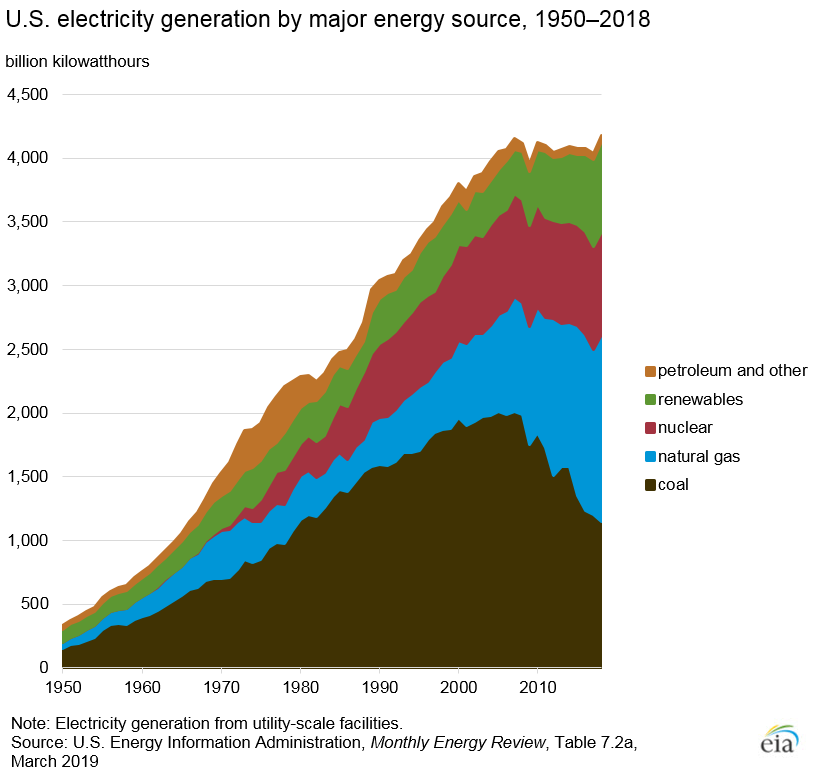
Table 2 below shows that use of 70% of world coal is concentrated in China, the US, and India. As last week’s blog showed, China and the US are two of the largest producers of electric vehicles. France gets more than 90% of its electricity from carbon-free fuels—72% from nuclear energy and 17.8% from renewables—meaning that it only gets about 8.6% from fossil fuels. In other words, it’s an ideal place to run electric cars.

Table 2 – Percentage of coal and natural gas that 7 high-power-consuming countries use
(source: BP). The world data are given in Terawatt-hours (trillion watt-hours) the rest of the data are given as percentages of those totals.

coal, natural gas, China, US, India, Russia, Japan, Germany, France, energy

My next blog will list the countries and cities that have announced commitments to block the sale of cars that emit carbon dioxide: no more fossil fuel-based cars. Unfortunately, the announcements have yet to include parallel commitments about changing the power sources for these cars.

Posted in Anthropocene, Anthropogenic, Climate Change, Education, Electric Cars, Sustainability | Tagged , , , , , , , , , , , , , , , , , , , , , , , , , , , , , , , , , , , , , , , , , , , , , , , , , , , , | 1 Comment

Electric Cars, Power Sources, and Truth in Advertising

diesel, electric, electric car, dirty, clean, comic, energy

Artist: Marian Kamensky

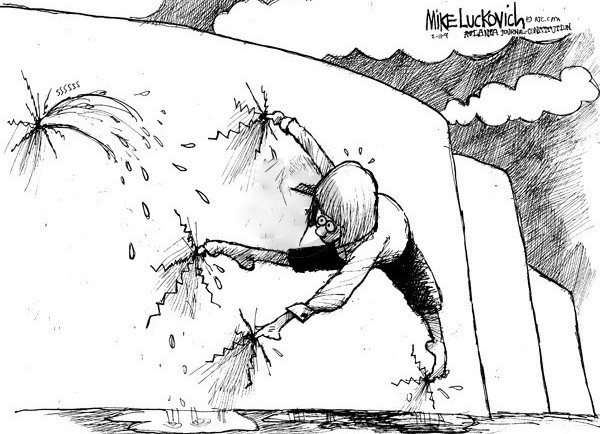
Close to three weeks ago (February 24th), I watched a 60 Minutes segment on electric car production in China. I was impressed with the Chinese efforts to promote the transition, including waiving the high tax on license plates in Shanghai (see my August 18, 2015 blog). 60 Minutes explained that this was an attempt to reduce the horrendous air pollution in the country’s large cities. The opening picture, which I found on the blog EV World, summarizes the issue (although in that blog’s context, it is used ironically, to demonstrate what the authors view as a mischaracterization). Electric cars obviously run on electricity, and as long the power sources for that electricity are not clean, the environmental arguments for electric cars don’t hold. My next few blogs will focus on this issue.

Figure 1 and Table 1, taken from the Wikipedia entry on electric cars, summarize the extent to which electric cars have penetrated the market.

electric car, cars, Canada, Japan, US, China, Europe, plug in, passengerFigure 1 – Global annual sales of electric passenger cars

Table 1 – Global sales of the top electric car producers and their countries of origin

electric car, cars, Canada, Japan, US, China, Europe, plug in, passenger, France, Germany

The Wikipedia entry has a section on the environmental aspects of these cars:

Environmental aspects [edit]

Electric cars have several benefits over conventional internal combustion engine automobiles, including a significant reduction of local air pollution, as they do not directly emit pollutants such as particulates (soot), volatile organic compoundshydrocarbonscarbon monoxideozonelead, and various oxides of nitrogen.[61][62][63]

Depending on the production process and the source of the electricity to charge the vehicle, emissions may be partly shifted from cities to the material transportation, production plants and generation plants.[1] The amount of carbon dioxide emitted depends on the emissions of the electricity source, and the efficiency of the vehicle. For electricity from the grid, the emissions vary significantly depending on your region, the availability of renewable sources and the efficiency of the fossil fuel-based generation used.[64][65][66]

The same is true of ICE vehicles. The sourcing of fossil fuels (oil well to tank) causes further damage and use of resources during the extraction and refinement processes, including high amounts of electricity.

In December 2014, Nissan announced that Leaf owners have accumulated together 1 billion kilometers (620 million miles) driven. This translates into saving 180 million kilograms of CO2 emissions by driving an electric car in comparison to travelling with a gasoline-powered car.[67] In December 2016, Nissan reported that Leaf owners worldwide achieved the milestone of 3 billion kilometers (1.9 billion miles) driven collectively through November 2016.[68]

Part of my objective in teaching classes on climate change to a student population that does not necessarily have a background in the sciences (many of them have never taken any chemistry or physics) is to enable them to judge environmental claims from first principles. Below, I am giving two examples from this effort that are relevant to the environmental claims of electric cars.

Example 1

In Figure 2 below, the only parameter directly measured is fuel economy. I ask students to quantitatively determine the assumptions needed to calculate the other numbers in the banner.

 fuel economy, car, environment, gas, greenhouse gasFigure 2 – A new sticker on fuel economy and the environmental impact of cars was introduced in May 2011

Try to do it and you will quickly find that the task is impossible—not because you lack the background or haven’t taken my course but because of the size of the small print at the bottom of the sticker.

Here is what you are missing:

Actual results will vary for many reasons, including driving conditions and how you drive and maintain your vehicle. The average new vehicle gets 22 MPG and costs $12,600 to fuel over 5 years. Cost estimates are based on 15,000 miles per year at $3.70 per gallon. MPG is miles per gasoline gallon equivalent. Vehicle emissions are a significant cause of climate change and smog.

With this information, the exercise should be easier. Let me know in the comment section how you are doing with it.

Example 2 – Comparison of energy use and cost of an electric vehicle vs. a conventional vehicle

Table 2 – Fuel costs for 100 miles of travel and carbon emission of conventional and electric Nissan vehicles (data from The New York Times, May 29, 2011).

Calculate the data in Table 2b from the data in Table 2a and pay attention to how you get there. Let me know in the comment section what you find. Tune in next week for my take.

Posted in Anthropocene, Anthropogenic, Climate Change, Sustainability | Tagged , , , , , , , , , , , , , , , , , , , , , , , , , , , , , , , , , , , , , , , , , , , , , , , , , , , , , , , | 1 Comment

Expanding Environmental Impact Statements


cartoon, mom, kid, entropy, EIS, environmental impact statement, epa, thermodynamics

Cartoon by Hugh Brown

I use the cartoon above to teach my students one of the most fundamental tenets of physics, unimaginatively called the “Second Law of Thermodynamics.” A quick Google search will tell you that thermodynamics is, “the branch of physics that has to do with heat and temperature and their relation to energy and work” (Wikipedia). The law states that, “left on their own, systems tend to maximize their disorder.” Disorder in physics is measured with a function called entropy (you can Google that as well). We don’t need the exact definition of entropy here; we can all grasp the concept of disorder. One of the better-known examples is the room of a small child, when left on its own. The room, obviously can be cleaned by adults—or if the child is a bit older, by incentivizing the child to do it himself. But this kind of “fixing” doesn’t defy the law because it means the room is not being “left on its own.” The point of an Environmental Impact Statement (usually employed when a structure is scheduled to be built or a massive project is underway) is to predict how a project will impact (create “disorder” in) the rest of the system or surrounding area and what kind of intervention will be needed to mitigate those detrimental effects.

Policymaking on all levels is now (very slowly) starting to factor in the impacts climate change has (or will have) on almost every global economic activity. I have described some examples in earlier blogs (just type economic impact into the search box above). The current political climate in many countries is not exactly encouraging for productive consideration. Nonetheless, these discussions are still taking place, with the hope that global environmental considerations will play increasing roles.

In the US, federal laws and regulations require an Environmental Impact Statement (EIS) to evaluate the effects of certain actions on the environment and to consider alternative courses of action. The National Environmental Policy Act of 1969 (NEPA) specifies when an environmental impact statement (EIS) must be prepared. NEPA regulations require, among other things, for federal agencies to include discussion of a proposed action and the range of reasonable alternatives in an EIS. Sufficient information must be included in the EIS for reviewers to evaluate the relative merits of each alternative. The Council for Environmental Quality’s (CEQ) regulations provide the recommended format and content.

In the European Union permits are required for activities such as:

  • the mineral industry (including the production of cement and asbestos and manufacturing glass);
  • production of organic and inorganic chemicals;
  • waste management (ie, the disposal and recovery of waste); and
  • other activities, including the production of pulp, paper and cardboard, pre-treatment and dyeing of textiles, tanning of hides and skins, disposal or recycling of animal carcasses, and intensive rearing of poultry or pigs.

Meanwhile, Bloomberg terminals now include ESG (Environmental, Social, and Governance) information (“Integrating Sustainability into capital markets”) that can be incorporated into many economic decisions.

Perhaps the most climate change-relevant information that can be incorporated in any of these search tools is the social cost of CO2 (SC-CO2). The US National Academies of Sciences, Engineering, and Medicine recently initiated discussions about possible related regulations and published a paper about it “Valuing Climate Damages: Updating Estimation of the Social Cost of Carbon Dioxide.

A recent court case examines incorporation of climate change in the EIS and is worth examining at some length. Below are selected paragraphs from the article, “Including Climate Change in Environmental Impact Analyses”:

D.C. Circuit holds federal energy regulators must consider pipeline project’s impact on climate change.

Is climate change a “reasonably foreseeable” consequence from a government agency’s approval of a natural gas pipeline? What if an entirely separate agency regulates the facilities that will actually burn the transported gas? And what if the construction of the new pipeline would enable the retirement of older coal-powered plants and thus lessen overall climate impacts?

A three-judge panel of a federal court of appeals recently grappled with these questions and determined that the Federal Energy Regulatory Commission (FERC)—in considering and approving the construction of a natural gas pipeline project—should have considered the eventual burning of natural gas when weighing environmental concerns.

In addition, the National Environmental Policy Act of 1969 (NEPA) requires that federal agencies produce an “environmental impact statement” (EIS) for all “major Federal actions significantly affecting the quality of the human environment.” The EIS must address potential “adverse” consequences of the action and possible alternatives to it.

Shortly after FERC completed its EIS for the natural gas pipeline at issue in Sierra Club v. FERC, the agency issued a certificate authorizing construction of the project.

The environmental groups challenging FERC’s approval of the project argued that the agency failed to perform a proper EIS. The groups expressed concern that the burning of the natural gas being transported by the pipelines could “hasten climate change and its potentially catastrophic consequences,” and that FERC had failed to take those effects into account when developing its EIS. After FERC denied the groups’ request to halt construction of the project, the groups sought review by the U.S. Court of Appeals for the District of Columbia Circuit—the federal court expressly granted authority by the Natural Gas Act to hear challenges to FERC’s orders.

The question for the court was whether FERC was required—in completing its EIS—to consider the fact that the natural gas carried by the pipelines would ultimately be used in Florida power plants, which would generate electricity and emit greenhouse gas.

The Efficient Market Hypothesis is an investment theory that I have discussed here before (February 21, 2017 and November 21, 2017). It states that in free markets, prices reflect all available information.

It’s high time that we make it mandatory to factor in the impact of climate change on every economic decision that we make.

Technically, this is feasible by using the dominant future scenario—currently based on the business as usual scenario (RCP8.5 in the IPCC lingo – see October 28, 2014 blog). The EIS can be examined periodically to reflect changes in the prevailing scenario. The scope of such a policy change will be narrower than that of the “Green New Deal” and it has a higher probability of attracting Republican votes and being effective in its contributions to mitigation and adaptation of climate change.

Posted in Anthropocene, Climate Change, IPCC, Sustainability | Tagged , , , , , , , , , , , , , , , , , , , , , , , , , , , , , , , , , , , , , , , , , , , , , , , , , , , , , , , | Leave a comment

To Make America Great Again, Please Stand Tall

I interpret standing tall as holding your head up and meeting oncoming challenges rather than burying it in a pile of sand to avoid reality (see the October 16, 2018 post on ostrich myths and the American government’s deliberate obtuseness on certain matters).

Last week’s blog focused on the “Green New Deal” and whether or not it’s viable. The proposed resolution for the new House of Representatives enumerates strategies for dealing with climate change. One of the matters Rep. Alexandria Ocasio-Cortez, D-N.Y, included in her proposed resolution was the stress that environmental refugees will impose on the United States. I added in another relevant source:

Since the resolution also directly addresses climate refugees in this ‘Whereas” and security threats to the US in subsequent ones, the authors could have also included the recent report by the US intelligence agencies (see May 23, 2017 blog)

Recently, Chuck Todd made the following pronouncement on his program, Meet the Press:

“Just as important as what we are going to do this hour is what we’re not going to do. We’re not going to debate climate change, the existence of it. The Earth is getting hotter, and human activity is a major cause. Period. We’re not going to give time to climate deniers. The science is settled, even if political opinion is not.”

A few days later, The New York Times reported that the White House has taken the opposite view:

White House Climate Panel to Include a Climate Denialist

The Pentagon and federal intelligence agencies have said that climate change is a threat. Now, the White House is planning a panel to study whether that is true.

WASHINGTON — President Trump is preparing to establish a panel to examine whether climate change affects national security, despite existing reports from his own government showing that global warming is a growing threat.

The article informs us that one of the last remaining climate change deniers resides in the White House, and is about to impact official reports—ones that fortunately, up to now, had remained disconnected from politics. In related news, on the same day, the media cited sources who claimed that Dan Coats, the Director of National Intelligence, is about to be fired. The reasons given did not include the recent intelligence report that I mentioned above but rather his public statements about US interactions with North Korea. That said, nobody that I know has any doubts about what this will mean for future reports on the topic. The intelligence reports are published every four years (see May 23, 2017 blog) so the next one will come out after the coming presidential election. We will see how that will play out.

To stand tall, we have to believe our own data and act on them—not give deniers the opportunity to “objectively” refute scientific evidence. Nor is this trend of denying data restricted to the federal level. The October 16, 2018 blog, which I mentioned above in connection to ostriches, lists a few cases on the state level—including Arizona, North Carolina and Florida—that actively oppose the use of scientific findings about climate change and its impacts to create legislation that would affect essential economic activities.

It is within Congress’s power to ban such practices. A legislation directed at mitigation or adaptation to climate change has a chance to pass both houses of Congress – provided that it maintains a narrow purview. Republicans who already believe in climate change would have the chance to jump on the bandwagon—and possibly reap political rewards. Many Republican senators are facing tough elections in 2020 and public opinion now favors standing tall with regards to both acceptance of and action against climate change. As you can see in Figure 1, about 60% of Americans are either alarmed or concerned; any politician that runs against this trend might face electoral consequences.

standing tall, America, public, climate change, alarmed, concerned, cautious, disengaged, doubtful, dismissiveFigure 1 – American attitudes toward climate change

These attitudes are starting to extend to awareness of local and personal impacts in addition to the wider acceptance of those on a national and global scale. Based on a recent Pew survey, this trend should have major electoral consequences:

local impacts, climate change, survey, public, US, standing tallFigure 2 – % of US adults who see local impacts of climate change

Effective legislative action doesn’t have to be revolutionary. In next week’s blog, I will try to show that expanding and enforcing requirements for Environmental Impact Statements (EIS) to specifically incorporate climate change impacts could do the trick.

Posted in administration, Anthropocene, Anthropogenic, Climate Change, Election, immigration, law, politics, refugee, Sustainability, Trump | Tagged , , , , , , , , , , , , , , , , , , , , , , , , , , , , , , , , , , , , , , , , , , , , , , , , , , , , , , , , , , , , , , , , , , , , , , , , , , , , , , , , , | 6 Comments

The Green New Deal Resolution: Is it Viable?

Alexandria Ocasio-Cortes, Green New Deal, resolution, mother jones

Alexandria Ocasio-Cortez presents her “Green New Deal.” Image: Mother Jones

The “Green New Deal” that Rep. Alexandria Ocasio-Cortez, D-NY, and Sen. Ed Markey, D-Mass, have proposed has became the talk of the town. People are alternately warning it could spell disaster and praising it as our potential saving grace. To start the discussion from a factual place, and leaving aside political considerations, I am including key excerpts from the actual resolution that Representative Ocasio-Cortez submitted to the House of Representatives. The full resolution comprises 14 pages and consists of the requisite two main sections: “Whereas” describes the background problems, and “resolved” proposes solutions. I am posting the beginnings of both sections, along with summaries of the rest:

116TH CONGRESS

1ST SESSION H. RES. ll

Recognizing the duty of the Federal Government to create a Green New Deal.

IN THE HOUSE OF REPRESENTATIVES

Ms. OCASIO-CORTEZ submitted the following resolution; which was referred to the Committee on —————

RESOLUTION

Recognizing the duty of the Federal Government to create a Green New Deal.

Whereas the October 2018 report entitled ‘‘Special Report on Global Warming of 1.5 oC’’ by the Intergovernmental Panel on Climate Change and the November 2018 Fourth National Climate Assessment report found that—

(1) human activity is the dominant cause of observed climate change over the past century;
(2) a changing climate is causing sea levels to rise and an increase in wildfires,
(3) global warming at or above 2 degrees Celsius beyond preindustrialized levels will cause—

(A) mass migration from the regions most affected by climate change;
(B) more than $500,000,000,000 in lost annual economic output in the United States by the year 2100;
(C) wildfires that, by 2050, will annually burn at least twice as much forest area in the western United States than was typically burned by wildfires in the years preceding 2019;
(D) a loss of more than 99 percent of all coral reefs on Earth;
(E) more than 350,000,000 more people to be exposed globally to deadly heat stress by 2050; and
(F) a risk of damage to $1,000,000,000,000 of public infrastructure and coastal real estate in the United States; and

(4) global temperatures must be kept below 1.5 degrees Celsius above preindustrialized levels to avoid the most severe impacts of a changing climate, which will require—

(A) global reductions in greenhouse gas emissions from human sources of 40 to 60 percent from 2010 levels by 2030; and
(B) net-zero global emissions by 2050;

The two reports referenced are recent and fully credible, and were approved by the current US government; I have discussed both on this blog. The Fourth National Climate Assessment was officially and directly approved by the federal administration. Separately, the American representatives to the IPCC gave their approval to the IPCC 1.5oC report.

Since the resolution also directly addresses climate refugees in this ‘Whereas” and security threats to the US in subsequent ones, the authors could have also included the recent report by the US intelligence agencies (see May 23, 2017 blog). Let me just quote the heading of the second “Whereas”:

Whereas, because the United States has historically been responsible for a disproportionate amount of greenhouse gas emissions, having emitted 20 percent of global greenhouse gas emissions through 2014, and has a high technological capacity, the United States must take a leading role in reducing emissions through economic transformation;

This paragraph also focuses on the responsibilities that the US bears for climate change. From here the resolution shifts gears to address the economy, income inequality, stagnation, general injustices, etc. within the country. It looks at our history, from the New Deal to WWII, and moving forward.

After listing the many conditions that make the resolution necessary, the document enumerates its suggestions for remedying the problems:

Resolved, That it is the sense of the House of Representatives—

(1) that it is the duty of the Federal Government to create a Green New Deal—

(A) to achieve net-zero greenhouse gas emissions through a fair and just transition for all communities and workers;
(B) to create millions of good, high-wage jobs and ensure prosperity and economic security for all people of the United States;
(C) to invest in the infrastructure and industry of the United States to sustainably meet the challenges of the 21st century;
(D) to secure for all people of the United States for generations to come

(i) clean air and water;
(ii) climate and community resiliency;
(iii) healthy food;
(iv) access to nature; and
(v) a sustainable environment; and

The first resolution covers a great deal of territory, spanning well beyond the environment. The second one, that I am not showing, specifies over 10 years’-worth of steps in national mobilization necessary to accomplish all of these goals.

The submission is a congressional resolution:

In each chamber of Congress, four forms of legislative measures may be introduced or submitted, and acted upon. These include bills, joint resolutions, concurrent resolutions, and simple resolutions. Both the House of Representatives and the Senate follow similar rules when making decisions on any of these actions. Both bills and joint resolutions are used when the focus is on making laws; a joint resolution can also be used to propose an amendment to the Constitution. Both concurrent and simple resolutions are used to delegate official internal Congressional business.

I assume that this is submitted as simple resolution for official congressional business, not as a bill or joint resolution intended to become the law of the land. I also imagine that Ms. Ocasio-Cortez can count probable supporting votes and thus doesn’t presume that even if approved by the House of Representatives, Senate approval will follow.

However, the resolution is now clearly entering the political dogfight:

  • Senate Majority Leader Mitch McConnell said Tuesday that the Senate would vote on the “Green New Deal” introduced by Sen. Edward Markey, D-Mass., and Rep. Alexandria Ocasio-Cortez, D-N.Y., last week.
  • The proposal, which is not expected to pass the GOP-dominated upper chamber, could force some Democrats to make a politically awkward calculation.
  • Ocasio-Cortez welcomed McConnell’s maneuver, saying that he and the GOP are “terrified of this winning vision of a just and prosperous future.”

Omitting some of the specificity in terms of timing, the resolution resembles the UN’s “Sustainable Development Goals” (SDG) that I described in the October 6, 2015 blog. The resolution could be much more effective if it separated the “green” part from the “New Deal” part. Next week I will look at possible alternative strategies that might achieve similar results while possibly attracting more bilateral support.

Posted in administration, Anthropocene, Anthropogenic, Climate Change, Extreme Weather, immigration, law, politics, refugee, Sustainability, Trump, UN, Water | Tagged , , , , , , , , , , , , , , , , , , , , , , , , , , , , , , , , , , , , , , , , , , , , , , , , , , , , , , | 8 Comments

Wisdom from Australia: Are You Reading This?

comic, weather, denial, climate change, global warmingIn my first blog that I posted more than six and a half years ago, I described my early Holocaust experiences and their connection to my interest in climate change. I was born in Warsaw, Poland three months before the German invasion. We were liberated by units of the American army less than two months before my sixth birthday. After our liberation, I went with my mother to Israel (it was British-controlled Palestine at the time). One of my cousins who is a few years older had similar experiences in the Holocaust (September 13, 2016). After liberation, his family also emigrated to Israel. After a few years, they moved to Australia. While he was in the Israeli army, he learned to be a draftsman. After he arrived in Australia, he got married, produced a wonderful family, and started to use his army-acquired skills to become a very successful builder.

We chat regularly and sometimes travel together (the September 13, 2016 blog describes our joint trip to Malta; the August 1, 2017 describes our joint trip to Thailand). Naturally, in addition to talking about what’s currently happening, we also discuss the past and the future. Our experiences from the Holocaust come up occasionally, as does my preoccupation with climate change—usually in the context of what is going on in Australia. The northern hemisphere usually only takes note of Australian summers during the Australian Open that takes place in Melbourne in January (it’s winter in much of the northern hemisphere, but it’s scorching summer in much of Australia). The last few summers in Australia have been exceptionally rough. I described the bush fires there (January 14, 2013 and October 3, 2017) twice.

It is becoming more and more obvious that attempts to mitigate climate change are no longer just an effort to make the lives of our children and grandchildren better—we are seeing climate change directly impact our own lives. The current US government’s attitude is well known. Every time that we have a cold spell like the recent polar vortex, our president prays for some global warming; he uses the brutal winter to refute climate change (don’t be surprised if these attitudes sound a bit contradictory). The comic at the top by Drew Sheneman sums up the attitude especially well. The Australian government’s approach is a bit harder to pin down because of the much higher frequency at which it changes hands. I remember an early visit to Australia when the issue of a carbon tax was on the agenda. At the time, many of my Australian friends were of the opinion that given the the country’s relatively small population (only 25 million people) they should be left alone, unregulated. But the impact on Australia is getting worse every year. The photo below shows a devastating photograph published a few days ago.

horse, dead, brumby, Australia, heat

A mass brumby death has been discovered in a remote location near Santa Teresa. Source: Facebook/Ralph Turner

The article provides a list of key points about the context of the photo:

  • Around 20 feral horses have been discovered in a dry waterhole in remote Central Australia
  • Arrernte man Ralph Turner said it was the first time he had seen anything like it
  • The region is heading towards its 13th day in a row above 42C [107.6oF]

Independent organizations including NOAA, NASA, the UK’s Met Office, and the World Meteorological Organization all just published detailed analyses of the most recent (2018) global impacts of climate change. All of them provided quantitative proof that 2018 was one of the four hottest years in the more than 130 years since we started tracing this indicator. Table 1 lists NOAA’s results of the 10 hottest years and their anomalies relative to the 1880-2018 average.

Table 1 – Ten Warmest Years (1880-2018)

With all of that, it is not surprising that my cousin and his family often follow my blogs. However, during our last chat, he admitted to me that he doesn’t read all of them. The essence of his complaint was as follows: when the blog deals with the Holocaust or with familiar European or Australian issues that he is familiar with, he is fine; when I deal with scientific issues, he hits a wall that discourages him from reading future blogs until I nudge him. His comment hit a sensitive point with me that convinced me to write this blog and ask for your collective help.

The main reason that I write this blog is to translate the science related to climate change into more accessible terms. I want to encourage people to mitigate the consequences of climate change on themselves, their children, and their grandchildren. Specifically, I am calling for both individual and collective actions, including participation in voting wherever it applies.

Throughout the almost seven years that I have been running this blog, I have gotten hundreds of comments. Almost all of these either agree or disagree with what I have written. I don’t remember getting a single comment that was focused on better understanding what was written, that would allow me to respond and improve my writing. I promise you I will directly answer every comment that does so. I want you to get what I’m saying.

Please help by letting me know if there are points upon which you need me to elaborate. Thanks!

Posted in administration, Anthropocene, Climate Change, Extreme Weather, Holocaust, Sustainability | Tagged , , , , , , , , , , , , , , , , , , , , , , , , , , , , , , , , , , , , , , , , , , , , , , , , | Leave a comment

Living in Ice and Trees: Interesting, But How Can it Work Year-Round?

I am starting to write this blog at home in NYC on Thursday, January 31st. The temperature this morning was 3oF (-16oC) and by early afternoon it went all the way up to 6oF. I started to read the paper and found out that in the Midwest, the temperature went below -50oF. I have a very close relative who is now a student in Madison, Wisconsin. I offered to give her some of my warm clothing that we used in the Arctic but she politely refused. Regardless, our trip to the Arctic served as good preparation for what we have been experiencing here.

In this blog, I want to focus on another aspect of the trip, aside from catching sight of the northern lights and investigating the thawing permafrost. Specifically, we experienced two unique hotel accommodations: the Icehotel and the Treehotel. Both of them are in Sweden; the first is located north of the Arctic Circle in Jukkastarvi (see map in the January 15 or January 22, 2019 blogs), while the second is just south of the Arctic Circle in Harads (100km from Lulea). The photographs below show rooms in both hotels (Figures 1 and 2 are from the Icehotel and 3-6 are from the Treehotel).

ice, hotel, bed, sculpture, room

Figure 1 – Icehotel room with jellyfish sculptures

ice, hotel, bed, sculpture, room

Figure 2 – Icehotel room with sculpture of head

tree, hotel, room, Sweden

Figure 3 – Treehotel room

tree, hotel, treehotel, Sweden, treehouse,

Figure 4 – Treehotel terrace

tree, hotel, treehotel, Sweden, treehouse,

Figure 5 – Treehotel walkway

tree, hotel, treehotel, Sweden, treehouse,

Figure 6 – Treehotel view from ground

Both places enjoy the distinction of being listed among the most interesting hotels in the world.

During our visit, the outside temperature at both locations was well below 0oF (-18oC).

Both hotels advertise themselves as year-round lodgings. It is not difficult to imagine this for the Treehotel but it is much harder to picture how this could be true for the Icehotel. Here is how it works:

As advertised, the Icehotel is constructed from ice. In January, when we were there, it was well below freezing outside, while the inside was kept at 14oF (-10oC). Sleeping bags were provided (along with warm sleeping clothes) to keep the temperature comfortable and the ice stable. I was OK with this; my wife was less so. Many of the structures are designed to melt in the spring and be rebuilt as the next winter approaches. Rebuilding starts in the late fall, using ice extracted from the nearby river. After it melts, the water returns to the same river. There are global architectural and sculptural competitions each year to design the next iteration. There’s wonderful art in the winter (see Figures 1 and 2).

I was surprised to find out that some of the structures—including the one that we stayed in—don’t go through this cycle but remain stable year-round. They accomplish this by keeping the interior at 14oF (-10oC) all year—with air conditioning, when needed. The outside remains stable via heat insulators. These modifications are achieved with a large supply of low-cost energy, 100% of which comes from an array of solar devices. Obviously, these only function when the sun is shining. The Arctic as a region experiences at least one day a year when the sun either never shines (winter) or never sets (summer).

This dependence on a large supply of electricity is even more visible at the Treehotel. As you can see in Figure 3, the rooms are large and modern. Figures 5 and 6 show how they are anchored to the trees in the forest. Figure 4 shows a very attractive and innovative tree-anchored terrace through which trees can actually grow. In theory, one could sit or stretch out there and observe a wonderful view; obviously, this is not the case at 14oF. In January, the terrace was locked. When we arrived, they emphasized the toilets—they do not use water for flushing. Instead, you press a button and the waste (confined to a paper bag) gets incinerated at 600oC (1112oF). It works, but not without a few obstacles (we were left to ourselves to navigate those).

Globally, such a solution is interesting. Around 60% of the world’s population does not have modern, flushing toilets available and has to use outhouses of one sort or another. One large impediment to improving this percentage is access to sanitary water sources. This proposed solution basically makes even the most modern toilet facilities operate like an outhouse, with no use of water. The idea would put less strain on our predicted increased water stress worldwide but it does necessitate significant amounts of electricity and/or gas.

When we were driven from one place to another, often in the middle of a snow storm, I couldn’t escape seeing the many electric cables hanging on the side of the road. I asked the driver how often the cables are affected by storms, with electricity shut down until they can be repaired. The answer was 4-5 times each winter. I asked how the toilets are used in those cases. He replied, “there is a plan B,” but we were never told what that entailed.

Meanwhile, to my fellow New Yorkers: enjoy this week’s reprieve from the bitter cold!

Posted in Anthropocene, Anthropogenic, Climate Change, Extreme Weather, Sustainability, Water | Tagged , , , , , , , , , , , , , , , , , , , , , , , , , , , , , , , , | Leave a comment

Permafrost in Danger

My October 16, 2018 blog started with an ostrich burying its head in the sand; I talked about state legislations that did not allow for serious consideration of climate change, sea level rise, or assured water supply when granting construction permits. As I promised last week, I will refocus here on our deliberate collective blindness to the dangers currently facing our permafrost. The January 15 blog this year featured a global map of the extent of permafrost melting caused by climate change.

85% of Alaska’s surface area includes permafrost. The impacts of permafrost melt are being felt keenly; the state has already implemented several new regulations aimed at mitigation:

Companies drilling oil and gas wells in Alaska will now have to dig deep enough to avoid problems stemming from thawing permafrost.

Alaska’s Oil and Gas Conservation Commission announced a regulation change on June 19 that requires companies to set surface casings for wells below the base of the permafrost.

The surface casing is basically a pipe that protects the well from outside contaminants and keeps the sides of the well from caving in.

The change in regulation comes after a BP well failed last year, and leaked oil and gas on the North Slope. The company blamed the spill on a piece of the casing that buckled after thawing permafrost put uneven pressure on it.

After that leak, and the revelation that the company had five other wells with similar designs in operation — state regulators called for a review of thousands of wells on the North Slope.

At the same time last year, the federal administration announced a seemingly contradictory policy:

Trump administration poised to undo Obama protections and open more of Arctic Alaska to oil drilling

The Bureau of Land Management is rewriting a 2013 plan, with the aim of opening up previously protected lands on Alaska’s North Slope.

The Trump administration on Tuesday launched a plan to overturn Obama-era protections and open up more Arctic land will be open to oil development.

To accomplish that goal, the U.S. Bureau of Land Management said it is kicking off a rewrite of the 2013 Integrated Activity Plan for the National Petroleum Reserve in Alaska, or NPR-A. That Obama-era plan for the western side of Arctic Alaska, the product of years of study, put about half of the approximately 23 million-acre reserve into protected status; the rewrite, announced in the Federal Register, will replace that with a more pro-development plan, the BLM said.

The action follows up on part of a 2017 order by Interior Secretary Ryan Zinke that seeks to promote more NPR-A development and provide for ‘‘clean and safe development of our Nation’s vast energy resources, while at the same time avoiding regulatory burdens that unnecessarily encumber energy production, constrain economic growth, and prevent job creation.”

Here is National Geographic’s definition of permafrost:

Permafrost is a permanently frozen layer below the Earth’s surface. It consists of soil, gravel, and sand, usually bound together by ice. Permafrost usually remains at or below 0C (32F) for at least two years.

The figure below shows the near-surface permafrost area as a function of various future socio-economic scenarios laid out by the IPCC. In a business as usual scenario, continuing our current practices, permafrost is projected to disappear (melt) toward the end of the century.

 IPCC, near-surface global permafrost, melt, projection, scenarioFigure 1 – IPCC near-surface predictions of global permafrost through various scenarios 2013– WGI-AR5 Figure 12-33

The starting point in this IPCC figure consists of about 13% of the global land (taken as 130 Mkm2).

Permafrost in Scandinavia is shown in Figure 2:

map of permafrost zonation, scandinavia, Norway, Sweden, Finland, Figure 2 – Permafrost zonation in Scandinavia

Permafrost thawing is a vital issue especially when you are trying to construct essential infrastructures such as buildings and roads on top, often without sufficient research as to the nature of the land that you are building on. But collapse is not the only threat. Permafrost warming also has the potential to amplify global climate change, because when frozen sediments thaw, they unlock organic carbon from the soil. Almost every known permafrost site throughout the world in which a borehole was drilled and the temperature was systematically measured over the last 30 years or so, has shown a constant increase in the temperature of the layer, steadily approaching the melting temperature (see “State of the Climate in 2017” by the American Meteorological Society – fig. 2.11).

As we traveled, we inquired about problems with the local permafrost. Unsurprisingly, for people in Tromso and around Lulea (see the previous two blogs) it was not an issue but around the high mountains—in Kilpisarvi, Finland where we took the beautiful pictures of the aurora borealis (last week’s blog), in Jukkarsajarvi, Sweden where the Icehotel is located (more on that next week), and in the ski resort of Bjorkliden—it is a big issue.

To get some sense of the enormity of this important consequence of climate change I will finish this blog with excerpts from two short pieces. The first is taken from the same site as Figure 2 and focuses on Scandinavia; the second concerns Russia—the country that at least until now has led all attempts to build on top of permafrost.

Here is the one from The Norwegian American:

Permafrost in Scandinavia: Permafrost thaw threatens mountains

New research shows in greater detail which parts of Scandinavian earth is permafrost. A more alarming challenge has recently arisen in the High North. Global warming may destabilize the mountains of Scandinavia as it progressively thaws the permafrost that binds them together. Unstable mountain slopes threaten roads, railroads, buildings, and lives. Moreover, thawing of the permafrost areas of the marshes of the High North may release enormous quantities of greenhouse gasses. The contribution from Scandinavian marshes is small compared to the contributions from the far larger marshes of Siberia, Alaska, and the Yukon. But it’s a substantiated threat, as clear signs of the degradation of Scandinavian marshes have been observed over the past 50 years. The challenge then is to understand how permafrost in mountainous areas will respond to future climate change.

This piece by Russian scientists looks into the requirements for building infrastructure on top of permafrost. It is taken from the interdisciplinary journal, Arctic, Antarctic, and Alpine Research, Volume 44, 2012 – Issue 3:

“Permafrost, Infrastructure, and Climate Change: A GIS-Based Landscape Approach to Geotechnical Modeling”

by Dmitry A. Streletskiy, Nikolay I. Shiklomanov & Frederick E. Nelson

Abstract:

Increases in air temperature have occurred in most parts of the Arctic in recent decades. Corresponding changes in permafrost and the active layer have resulted in decreases in ground-bearing capacity, which may not have been anticipated at the time of construction in permafrost regions. Permafrost model was coupled with empirically derived solutions adopted from Soviet and Russian construction standards and regulations to estimate the bearing capacity of foundations under rapidly changing climatic conditions, in a variety of geographic and geologic settings. Changes in bearing capacity over the last 40 years were computed for large population and industrial centers within different physiographic and climatic conditions of the Russian Arctic. The largest decreases were found in city of Nadym, where the bearing capacity has decreased by more than 40%. A smaller, but considerable decrease of approximately 20% was estimated for Yakutsk and Salekhard. Spatial model results at a regional scale depict diverse patterns of changes in permafrost-bearing capacity in Northwest Siberia and the North Slope of Alaska. The most pronounced decreases in bearing capacity (more than 20%) are estimated for the southern part of permafrost zone where deformations of engineering structures can potentially be attributed to climate-induced permafrost warming.

The Russian authors add:

Climate change may, however, have already been taking its toll through deformation of engineered structures in Arctic regions. A survey of infrastructure in industrially developed parts of the Russian Arctic (Kronik, 2001 Kronik, Y. A. , 2001: Accident rate and safety of natural-anthropogenic systems in the permafrost zone. In Proceedings of the Second Conference of Russian Geocryologists , 4: 138–146. [Google Scholar]) indicates that 10% of the buildings in Noril’sk, 22% in Tiksi, 55% in Dudinka, 35% in Dicson, 50% in Pevek and Amderma, 60% in Chita, and 80% in Vorkuta are in potentially dangerous states. Analysis of related accidents indicates that in the last decade they increased by 42% in the city of Noril’sk, 61% in Yakutsk, and 90% in Amderma.

For clarity, here is how Wikipedia describes “bearing capacity”:

In geotechnical engineering, bearing capacity is the capacity of soil to support the loads applied to the ground. The bearing capacity of soil is the maximum average contact pressure between the foundation and the soil which should not produce shear failure in the soil. Ultimate bearing capacity is the theoretical maximum pressure which can be supported without failure; allowable bearing capacity is the ultimate bearing capacity divided by a factor of safety. Sometimes, on soft soil sites, large settlements may occur under loaded foundations without actual shear failure occurring; in such cases, the allowable bearing capacity is based on the maximum allowable settlement.

In next week’s blog I will try to extract some useful information from the most unique Arctic living (or tourist) structures that might be useful in the global adaptation to a changing global climate.

Posted in Anthropocene, Anthropogenic, Climate Change, Extreme Weather, IPCC, politics, Sustainability | Tagged , , , , , , , , , , , , , , , , , , , , , , , , , , , , , , , , , , , , , , , | Leave a comment

Tromso, Norway: I’m Back!

Micha and Louise in front of the northern lights, aurora borealis

Picture taken by Jussi Rauhala from Kilpissafarif

This is my first blog after returning from the Arctic. As you can see above, I successfully crossed the northern lights off my bucket list. Our guide in chasing the beautiful phenomenon took the photo at our stop in Kilpissafarif, Finland (#1 below). I am reposting the map from last week to help you follow along.

map of northern Finland, Sweden, Norway

Figure 1 – Map of northern Finland, Sweden, and Norway

Here I will focus mainly on Tromso, Norway, where we started the trip. It’s the northernmost point in the map above—well into the Arctic Circle. Indeed, during our stay in Tromso, the sun was down all day. That said, from 9am-2pm, there was something called “civil twilight”—the period in which the sun is just below the horizon—when there is generally enough natural light to carry out most outdoor activities. The taxi driver that took us to our hotel strongly recommended that we buy ice grippers and put them on our shoes. For those of you who, like me, have never heard of these gadgets, I am showing an example in Figure 2.

ice gripper, shoe, ice, snow, Tromso, Norway

Figure 2 An ice gripper (there are spikes on the bottom for traction on ice)

It was evening when we arrived so we couldn’t see much but in the morning, the streets looked like wet ice-skating rinks.

ice, snow, Tromso, Norway, streets

Figure 3 – Tromso streets

After two falls—one of them resulting in a big bruise and broken pair of glasses—we sheepishly decided to follow the taxi driver’s advice. He was right: once we got our ice grippers we were able to navigate the terrain much more comfortably.

Arctic, temperature, temperature change, raise, history, ice, Tromso, Norway, day, night, warming

Figure 4 – History of December day and night temperatures in Tromso

Tromso sits on the shores of the Norwegian Sea, which is part of the Atlantic Ocean. It enjoys the comforting influence of the Gulf Stream. Figure 4 shows the history of December temperatures, both day and night, from 1931-2017. The recent warming is visible and almost everybody that we met in town attributed it to climate change. Not too many people remember 1931 personally.

You begin to feel the “real” Arctic once you leave the coast and drive inland. I will start to discuss the impact of the climate change on permafrost in the area where the first photo was taken. I’ll also look into some unique housing opportunities that are available there.

Posted in Anthropogenic, Climate Change | Tagged , , , , , , , , , , , , , | Leave a comment

The Arctic: We’re Going to Lapland!

I don’t have too many things on my bucket list but my wife and I have decided to use our winter school vacation to cross off one item from both our lists: going to see the aurora borealis (northern lights). As an added bonus, I’ll try to observe the impacts of climate change on the Arctic and report my findings to you.

This blog will be posted three days before we return from the trip but I am writing it two days before we leave.

Our destination is the area of Lapland, located at the northern part of Scandinavia, where Norway, Finland, and Sweden meet.

Map of LaplandFigure 1 – Lapland faces the Arctic Ocean

Figure 2 shows the specific locations that we will visit as we travel from Tromso, Norway to Lulea, Sweden. I used someone else’s map since we’re going to the same places – I didn’t bother to erase the original Japanese markings.

map of northern Finland, Sweden, NorwayFigure 2 – Our two-week trip from Tromso, Norway to Lulea, Sweden with the three stopovers in between

Figure 3 shows NOAA’s readings of the rising temperatures in the Arctic, as compared to the global average.

Graph of Arctic warming vs global averageFigure 3 – Time variation of Arctic temperature vs. global temperature

NOAA issued an Arctic report card last year:

– Surface air temperatures in the Arctic continued to warm at twice the rate relative to the rest of the globe. Arctic air temperatures for the past five years (2014-18) have exceeded all previous records since 1900.

– Atmospheric warming continued to drive broad, long-term trends in declining terrestrial snow cover on land, melting of the Greenland Ice Sheet and lake ice, increasing summertime Arctic river discharge, and the expansion and greening of Arctic tundra vegetation.

– Despite increase of vegetation available for grazing, herd populations of caribou and wild reindeer across the Arctic tundra have declined by nearly 50 percent over the last two decades.

– In 2018, Arctic sea ice remained younger and thinner, and covered less area than in the past. The 12 lowest extents in the satellite record have occurred in the last 12 years.

– Warming Arctic Ocean conditions are also coinciding with an expansion of harmful toxic algal blooms in the Arctic Ocean, threatening food sources.

– Microplastic contamination is on the rise in the Arctic, posing a threat to seabirds and marine life that can ingest debris.

The NOAA report only marginally mentions permafrost but a recent article by Jan Hort et. al. in Nature Communication posits that, “Degrading permafrost puts Arctic infrastructure at risk by mid-century.” The abstract of this article is given below, along with Figure 4, which maps the hazard potentials across the Arctic.

Abstract

Degradation of near-surface permafrost can pose a serious threat to the utilization of natural resources, and to the sustainable development of Arctic communities. Here we identify at unprecedentedly high spatial resolution infrastructure hazard areas in the Northern Hemisphere’s permafrost regions under projected climatic changes and quantify fundamental engineering structures at risk by 2050. We show that nearly four million people and 70% of current infrastructure in the permafrost domain are in areas with high potential for thaw of near-surface permafrost. Our results demonstrate that one-third of pan-Arctic infrastructure and 45% of the hydrocarbon extraction fields in the Russian Arctic are in regions where thaw-related ground instability can cause severe damage to the built environment. Alarmingly, these figures are not reduced substantially even if the climate change targets of the Paris Agreement are reached.

map of Arctic circle and degrading Arctic permafrostFigure 4 – Hazard potential from permafrost melting

Scandinavia looks small on this map but one can see a red dot in the area where we will be traveling (just left of the bottom right-hand inset). One of the most important points in my trip will be to observe the impact of the melting permafrost. More on that next week.

Posted in Anthropocene, Anthropogenic, Climate Change, Extreme Weather, Sustainability | Tagged , , , , , , , , , , , , , , , , , , , , , , , , , , , , , , , , , , , , , | 1 Comment