A Redefinition of Sustainability: The Unilever Case

The 1987 United Nations’ Brundtland Report (World Commission on Environment and Development) was the first platform to articulate the idea of “sustainable development” to a wide audience. The Report framed it as “…development that meets the needs of the present without compromising the ability of future generations to meet their own needs.” It posited that the only truly sustainable form of progress is that which simultaneously addresses the interlinked aspects of economy, environment and social well-being.

In the subsequent two years, around 140 alternative and modified definitions of “sustainable development” emerged. It has been estimated that there are currently some three hundred definitions of “sustainability” and “sustainable development” within the domain of environmental management and associated disciplines (see Johnston P., Everard M., Santillo D. and Robèrt K.H.: Reclaiming the Definition of Sustainability. Env Sci Pollut Res 14 (1), 60 – 66 (2007)).

My own definition of sustainability (January 28, 2013) rests upon humanity’s development of a global state of affairs that will allow us to flourish until we can build the technology for extraterrestrial travel and migrate to another planet once conditions here deteriorate.

  • For how long? – Forever! To repeat President Obama’s language – “We must act, knowing that today’s victories will be only partial, and that it will be up to those who stand here in four years, and forty years, and four hundred years hence to advance the timeless spirit once conferred to us in a spare Philadelphia hall.”
  • How to do it? – To achieve the sustainable objectives on this time scale, we will have to establish equilibrium with the physical environment and at the same time maximize individual opportunities for every human on this planet.

I felt compelled to add to this definition due to two events:

The first trigger was an article in the New York Times by David Gelles: “Unilever Finds that Shrinking its Footprints is a Giant Task.” Gelles describes the efforts that Unilever’s CEO, Paul Polman, is making to convert it to a sustainable company.

Paul Polman would like that to change. As chief executive of Unilever, Mr. Polman has made sustainable production — of Hellmann’s, Lipton tea, Dove soap, Axe body spray and all the other products Unilever makes — the company’s top priority. Detergents are being reformulated to use less water. Packaging is becoming more efficient. And Unilever is taking preliminary steps to make soybean oil, a main ingredient in mayonnaise, more eco-friendly.

And even as Unilever rushes headlong into this brave new world, a big question remains: What is sustainability, anyway? Despite its righteous timbre, it’s a fuzzy term that means different things to different people. When applied to the ingredients and processes in the 1,000 different mass-market brands Unilever makes, the complications multiply endlessly. Scores of issues arise in just one jar of Hellmann’s mayonnaise, starting with the soybean oil. Dig into the specifics of that one ingredient, and it becomes clear that what Unilever calls sustainable sometimes doesn’t mean all that much.

The second thing that prompted me to look into a new definition for sustainability was the realization at the end of the COP21 meeting that mitigation of anthropogenic climate change is the key to shifting from a world that puts a premium on economic growth to one that places that same importance on long term global stability. Such a change requires major shifts from business-as-usual scenarios (which can run into impossible extremes in terms of population growth, economic growth, use of natural resources, waste disposal etc.), to steadier scenarios that require equilibrium between human efforts to improve our standard of living and the physical environment.

Our goal should be to Help Unilever’s CEO define sustainability to make his company green, and then extend the algorithm to every global organization and government.

Unilever is a British-Dutch multinational consumer goods company co-headquartered in Rotterdam, Netherlands, and London, United Kingdom. Its products include food, beverages, cleaning agents and personal care products. It is the world’s third-largest consumer goods company measured by 2012 revenue, after Procter & Gamble and Nestlé.[5] Unilever is the world’s largest producer of food spreads, such as margarine.[6] One of the oldest multinational companies, its products are available in around 190 countries.[7]

Unilever was founded in 1930 by the merger of the Dutch margarine producer “Margarine Unie” and the British soap maker “Lever Brothers.” Margarine Unie was formed in 1927 but its “ancestors” (products of other mergers) can be traced back to 1872. Lever Brothers was founded in 1885.

I don’t want to go into the details of its present management structure – only to suggest that it create a Division for Business Sustainability. The head of that division would report directly to Mr. Polman, with affiliates in every other unit of the company. The division’s mission would be to make sure that Unilever continues to be a relevant, profitable business for at least another 85 years while also factoring in environmental costs – in the long term you cannot have business sustainability without having environmental sustainability. Of course, this will not be a simple task. True, its founding companies have been producing margarine and soap for more than 100 years, but various products become more or less viable over time, depending on the balance between production costs and proceeds.

As the World Resources Institute reports, companies like the shoe manufacturer Puma have started to look into the relationship between environmental costs and revenue.

The company valued the environmental impact of its operations and supply chain in 2010 at about $190 million, factoring in impacts like water use, greenhouse gas emissions, land use conversion, air pollution, and waste. The company is now using this statement as a way to drive environmental initiatives, which it views as key to its long-term commercial survival. Puma’s environmental profit and loss statement is helping employees, shareholders, and suppliers understand the magnitude of the company’s environmental impacts, prioritize which ones to tackle first, and incorporate this information into decision-making.

At Unilever, the transition will likely take time, including planning how to phase out products that are no longer feasible due to either cost, consumer preferences or environmental concerns. Sooner or later, that last factor will trigger regulatory actions and prohibitive costs in the supply chain. The Business Sustainability division would be in charge of collaborating with other divisions to supply this information.

The division would have access to the Life Cycle Assessment (LCA) of every product that the company makes and where it is produced. It would then be in charge of following up on the sustainability of every component of the LCA, assessing global and local conditions over the specified time scale with regard to how they would directly affect its products. At the top of the list, within this macro category, are the impacts of global and local sustainability in terms of population, energy use, availability of required commodities, work force, education, political climate, health of supply chain, etc.

All of this sounds as though it would necessitate a large new level of bureaucracy but with the help of decent computer information gathering and cooperation with both academic institutions and other company divisions, it could probably be done in long term, cost effective ways. Hopefully, such progress could help economists stop discounting the future and start treating the future with the respect that our children and grandchildren deserve.

Aside from its CEO’s stated desire to make Unilever a sustainable and profitable company, none of this is particularly unique. COP21 has provided posting opportunities for other companies to go in the same direction.

To use some of the language from the COP21 final agreement (See December 8 blog), climate change is starting to offer opportunities for common but differentiated progress for others in leadership to move their areas of responsibility to a more sustainable future.

This example of a bottom-up course for progress towards a sustainable society can easily be translated into top-down opportunities and incorporated into governance systems at all levels.

Posted in Anthropogenic, Climate Change, Conference, Education, IPCC, Sustainability, UN, UNFCCC | Tagged , , , , , , , , , , , , , , , , , , , , , , , , , , , , , , , , , , , , , , , , , , , , , , , , , , , , , , , , , , , , | Leave a comment

Assessment: Shenzhen’s Mudslide and a Prognosis for the Planet?

Shenzhen China MudslideFigure 1– Shenzhen Mudslide

New Year’s Eve is around the corner, which makes this a great time to reflect on the last three months and follow up on my Fall Assessment (September 22, 2015). As far as global focus on climate change is concerned, the uncontested central event was the COP21 meeting in Paris and its aftermath. The conference ended with a unanimous agreement between close to 195 states regarding some of the next steps that have a decent chance of success in confronting the perils of climate change.

This recent high concentration of events has emphasized for me that anthropogenic climate change is just one aspect of a much larger issue – in fact, our whole current geological period (the Anthropocene) is dominated and determined by humans (see my February 3, 2015 blog). I have routinely given a quick exercise to my general education class where I have asked them to calculate some business as usual scenarios such as growth in GDP, population growth, and growth of greenhouse gas emissions from first principles. In all of the cases, we quickly ran into absurdities when we looked a mere few hundred years into the future – beyond my definition of “Now” (the lifespan of my grandchildren) but far short of our sense of human history and human survival. The only alternative that I can see is to develop the conditions for survival without growth.

I am going to spend the first two weeks of January 2016 visiting Cuba with some demographer friends, who will hopefully help me to quantify how we as a species (and society) might go about living without growth. I will submit some of the results of this work to professional publications, but almost all of it will find its way into this blog.

In the meantime, as usual, things happen outside of the realm of my planned set of blogs. On Sunday, December 20, a giant mudslide, filled with construction debris, hit dozens of buildings in Shenzhen, China. The number of casualties has yet to be determined. Original estimates listed 100 people still unaccounted for. By the time that I am writing this blog the estimate has been reduced to 75. Some of those people showed up, some were rescued, and some were identified post-mortem. The press framed this disaster as another example of the unintended consequences of China’s fast growth. I see it somewhat differently.

Shenzhen’s mudslide can be viewed (at least in my distorted mind) as the sad exclamation point to COP21. It conveys the urgency of the need to mitigate potential collateral damage that directly results from our urge for fast development that is designed to improve our collective standard of living. I regard it as a model for the global anthropogenic disaster that is already playing out on a global scale but is mostly visible on a local scale. In this context, it is free of the uncertainties that accompany discussions of future impact of climate change. It is also free of the NIMBY idea that motivates so many to refuse mitigation activities under the belief that if the effect is global they can rely on the actions of others to take care of the problem. In addition, since it is a concrete example, based in the here and now, it needs immediate action. That avoids the usual economic discussions of how to balance the costs of future mitigations with current efforts in such a way as to prevent the assumption that future generations will be able to pick up all the slack.

Both the greenhouse gas emissions (particularly those related to energy generation) and the mountain of building debris in Shenzhen are directly connected with efforts of economic development. In both cases sustainable alternatives to present practices need to be implemented immediately; otherwise, as science clearly predicts, business as usual practices will result in disaster. The Abelian Sandpile Model is a physics model that helps describe the instability of the Shenzhen waste mountain. The sandpile model and climate change modeling both predict tipping points in the instability that comes from continuous piling. In both cases, there have been repeated warnings about the inevitability and collective impact of these tipping points. These notices have come at a time when effective mitigation is still possible. COP21 was a key step in that direction for climate change; hopefully, the Shenzhen disaster will change waste disposal practices in other cities.

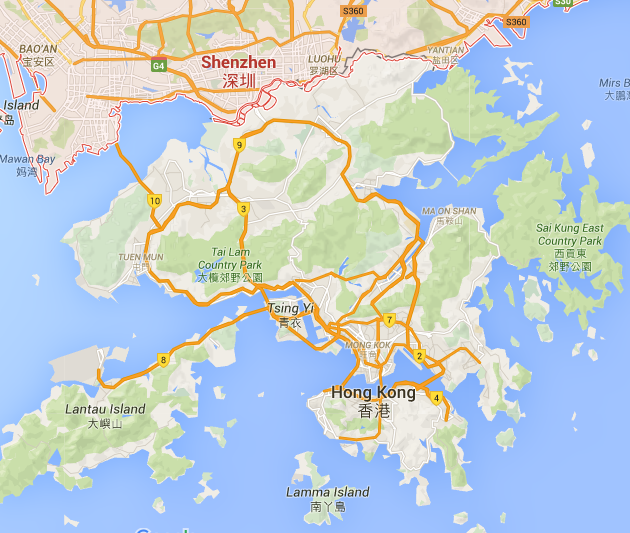
Shenzhen, which borders on Hong Kong, is the focal point of China’s recent development. Shenzhen ChinaFigure 2 – Shenzhen and Hong Kong (Google maps)

Shenzhen was the first, and probably the most successful of China’s Special Economic Zones (SEZs). Its SEZ status was designated in 1979. Prior to that, it was a small, dormant, market town adjacent to the then City-State of Hong Kong (now a part of China) that was (and still is) one of the most economically vibrant places on Earth. Now Shenzhen’s metropolitan area is home to 18 million people, with a 2014 GDP growth of close to 9% – considerably faster than that of China (or Hong Kong). The economics of Shenzhen have become tightly integrated with those of Hong Kong and many of the citizens of Shenzhen commute daily to jobs in Hong Kong. As in other Chinese megacities, the construction industry is trying hard to catch up and provide living accommodations for the people that are responsible for this economic boom. Planning, environmental impact and safety considerations are taking a back seat.

I will come out with a bit more cheerful news immediately after New Year’s.

Assessment: Since the end of September, on Twitter, I’m up to 348 followers. I also had 14 mentions, 32 retweets and over 62K organic tweet impressions. This is all readily accessible information. On Facebook, in the same time period, my page got an additional 12.7K impressions from 9.6K users.

On my blog itself I’m happy to report that I’ve had had 450 visits from 278 unique computers. To those of you reading, I thank you and (as always) welcome your comments.

Stay tuned. Happy New Year!

Posted in Anthropogenic, Climate Change, Education, IPCC, UN, UNFCCC | Tagged , , , , , , , , , , , , , , , , , , , , , , , , , , , , , , , , , , , , , , , , , , , , , , , , , , , , , , , , , , , , , | Leave a comment

COP21- Anticipations

The COP21 meeting is over, as is my student’s final exam, 60% of which depended on an evaluation of the conference. What’s next for my students and the world at large? My class material for next semester will answer the former. I am the decider :(. It will be much more difficult to predict the global follow-up.

My class will cover both basic science and anthropogenic climate change. Students will gain the skills to evaluate issues in a quantitative way and will try to figure out how they can contribute to mitigation efforts. We will focus on global attempts to follow up on the resolutions of COP21. I will mirror that investigation here.

This agreement has the full potential to eclipse the expired Kyoto Protocol. Unlike the Kyoto Protocol, for the first time, almost every country in the world is part of the agreement. Most of the developed countries have committed to reduction of emissions, while most of the fast-growing developing countries have committed to early peaks in emissions. That said, greenhouse gas emissions have been treated as tightly coupled with development.

The IPAT identity, which governs almost all research scenarios for climate change (see the November 26, 2012 blog), states that carbon dioxide emissions are proportional to five factors. The first two are the most important socioeconomic parameters: population growth and growth of GDP/person. The last three factors are energy terms, including efficiency of energy use (Energy/GDP), the percentage of fossil fuels used to produce the energy (Fossil/GDP), and the kind of fossil fuel that is being used (coal, oil, or natural gas). The thinking has always been that the enormous difference in the wealth per person between developed and developing countries spurs developing countries to do everything in their power to grow. The global GDP per person will continue to increase. Indeed, that growth in GDP is the leading contributor to global greenhouse gas emissions. The population also continues to grow globally, although at a considerably reduced rate compared to the GDP. The essence of the global energy transition is to facilitate economic growth through a shift of energy sources away from fossil fuels. 2014 was the first recorded year in which there was a (small) decline in emissions of greenhouse gases while the global economy kept growing. The COP21 mission fits perfectly with the goal of achieving emissions declines simultaneously with growing economies.

COP21 also achieved a key agreement to help developing countries finance both mitigation – via the shift of their energy sources away from fossil fuels – and adaptation to the consequences of climate change that are already taking place.

The COP21 agreement includes three key articles that specifically address these issues:

COP21 Article 2

  1. This Agreement, in enhancing the implementation of the Convention, including its objective, aims to strengthen the global response to the threat of climate change, in the context of sustainable development and efforts to eradicate poverty, including by:

(a) Holding the increase in the global average temperature to well below 2 °C above pre-industrial levels and to pursue efforts to limit the temperature increase to 1.5 °C above pre-industrial levels, recognizing that this would significantly reduce the risks and impacts of climate change;

(b) Increasing the ability to adapt to the adverse impacts of climate change and foster climate resilience and low greenhouse gas emissions development, in a manner that does not threaten food production;

(c) Making finance flows consistent with a pathway towards low greenhouse gas emissions and climate-resilient development.

  1. This Agreement will be implemented to reflect equity and the principle of common but differentiated responsibilities and respective capabilities, in the light of different national circumstances.

Article 4

  1. In order to achieve the long-term temperature goal set out in Article 2, Parties aim to reach global peaking of greenhouse gas emissions as soon as possible, recognizing that peaking will take longer for developing country Parties, and to undertake rapid reductions thereafter in accordance with best available science, so as to achieve a balance between anthropogenic emissions by sources and removals by sinks of greenhouse gases in the second half of this century, on the basis of equity, and in the context of sustainable development and efforts to eradicate poverty.
  2. Each Party shall prepare, communicate and maintain successive nationally determined contributions that it intends to achieve. Parties shall pursue domestic mitigation measures with the aim of achieving the objectives of such contributions.
  3. Each Party’s successive nationally determined contribution will represent a progression beyond the Party’s then current nationally determined contribution and reflect its highest possible ambition, reflecting its common but differentiated responsibilities and respective capabilities, in the light of different national circumstances.

Article 14

  1. The Conference of the Parties serving as the meeting of the Parties to the Paris Agreement shall periodically take stock of the implementation of this Agreement to assess the collective progress towards achieving the purpose of this Agreement and its long-term goals (referred to as the “global stocktake”). It shall do so in a comprehensive and facilitative manner, considering mitigation, adaptation and the means of implementation and support, and in the light of equity and the best available science.
  2. The Conference of the Parties serving as the meeting of the Parties to the Paris Agreement shall undertake its first global stocktake in 2023 and every five years thereafter unless otherwise decided by the Conference of the Parties serving as the meeting of the Parties to the Paris Agreement.

Article 2 states the objective – get the temperature to stabilize below 2oC above pre-Industrial Revolution levels (the period we mark as the start of anthropogenic contribution to climate change via greenhouse gas emissions). Any evaluation of the commitments from the UNFCCC will lead to a much higher temperature increase (around 3oC) toward the end of the century. Article 14 rectifies that apparent contradiction. The UNFCCC will periodically take stock of the implementation of this agreement to assess the collective progress. The parties have agreed that depending on the results of the analysis, they will recommit periodically – with each recommitment more demanding than its predecessor. This is as sure a way to progress as one can dream. The first assessment will take place in 2023 and repeated assessments and recommitments will occur in intervals of five years.

How can we monitor our progress until 2023 and what will I do with my class?

For the moment, I don’t plan to look much into our government’s actions, per se, nor at the global political events that will directly follow this accord. Next year we will have presidential elections here in the US. The Republican Party has already declared vociferously that should it win the presidency, it will ignore any and all commitments that President Obama made with regards to the climate and emissions. It is certain that if the US ignores its commitments, most of the other major polluters will follow suit; we will all openly march into the impending disaster with open eyes. To use Pope Francis’ description (which matched mine from three years earlier) – we will commit a global suicide. To accommodate the US, the final resolution was structured not to be an independent international treaty (so as to avoid the necessary senate approval). Nevertheless, it was designed to be compulsory – not voluntary. This trick was accomplished by presenting key elements of the resolution as an extension of the 1992 Rio Earth Summit – the Rio Declaration. More specifically, it comes as part of the UN Convention on Climate Change (UNFCCC). Most lawyers believe that the drafting was such that that it can withstand any scrutiny by the US Supreme Court. It will not, however, withstand a Republican president chosen from the present group of candidates. Regardless, the original Rio Convention doesn’t have serious enforcing powers to penalize countries that do not abide by their commitments. Such is the structure of our global governance that the only serious global enforcing power belongs to the Security Council of the UN, where the US (together with China, Russia, France and England) has veto power. People argue – with some justification – that global public opinion will serve as a strong restorative force to prevent any country from declining to abide by its commitments. In this case, I think that the oft-mentioned NIMBY (Not In My Back Yard) argument will turn out to be the deciding force behind whether or not countries stand behind their commitments in the COP21 agreement or renege, and thus negate the content of the resolution.

This sort of top-down methodology is tricky to focus on. I found the bottom-up approach to be a much more promising and educational terrain, although I will certainly continue to look into the former, as well as its political ramifications.

The bottom-up approach will follow issues such as:

  • What is missing from the agreement
  • Business commitments
  • Subsidies for fossil fuels
  • Movement of money
  • R&D and Bill Gates
  • Adaptation – human intervention through the water cycle to compensate for human intervention through the energy cycle.

Stay tuned.

Posted in Anthropogenic, Climate Change, Conference, Education, IPCC, UN, UNFCCC | Tagged , , , , , , , , , , , , , , , , , , , , , , , , , , , , , , , , , , , , , , , , , , , , , , , , , , , , , , , , , , , , , , , , , , , , , , , , , , , , , , , , , , , , , , , , , , , , , , , , , , , | Leave a comment

COP21 – We Have an Agreement!!!!

This is going to be a long blog and to top it off, I’m posting it a day early. I often write these posts mid-week; this time, I waited to start writing it until the final resolution came out in the late morning on Saturday, NY time. As the title states, the resolution was approved unanimously by all 195 members! The final approval process was mercifully short, due to a surprisingly quick parliamentary maneuver by Laurent Fabius, the French Foreign Minister who acted as chair of the conference. During the plenary session, he asked for any objections. Since none were raised, he declared an official approval. Many had expected that the approval process would consist of a tedious vote by voice, giving each delegate an opportunity to say something. Mr. Fabius didn’t want to run that risk; the world should be grateful.

The last session of my Climate Change class was today (Monday) and fully focused on the COP21 resolution. The class final is on Wednesday, and as my students already know, 60% of the exam will be anchored on the conference.

The English version of the resolution encompasses 31 pages. Anybody interested in reading the full resolution can do so by accessing the UNFCCC site. The first part of the resolution gives some administrative background, while the annex includes the main content of the agreement.

This blog also contains brief quotes from the introductions by the French Foreign Minister and the French President. They deserve full credit for successfully bringing this conference to a positive conclusion. I don’t want to be too political on this, but I hope that their skill in bringing the conference to its successful conclusion will also be rewarded in the ballot box.

The resolution comes in two parts – for very important reasons, which I will enumerate in future blogs. Here, I am citing both the beginning of the preamble (the whole version is 19 pages long), and the entirety of the annex, which includes the full agreement.

For now, I will focus on the agreement itself and the short introductory remarks from the concluding plenary session on Saturday. For the benefit of my students, who are now preparing for their exam, I have marked in red those sections that I regard as especially important. In future blogs I will try to expand on these selections as well as express my own take on the agreement. I will do the same with my students in class.

The French News Agency AFP highlighted Laurent Fabius and French President Francois Hollande’s introductions to the concluding plenary session of the meeting:

Foreign Minister Laurent Fabius, on the brink of tears after presiding over nearly a fortnight of talks in Paris, delivered the proposal to ministers who must now decide whether to approve it, possibly within hours.

“It is my conviction that we have come up with an ambitious… agreement,” Fabius said, telling the ministers they would achieve a “historic turning point” for the world if they endorsed it.

The hoped-for deal seeks to end decades-long rows between rich and poor nations over how to fund the multi-trillion-dollar campaign.

… Fabius said that, if approved, the deal would set a “floor” in funding, in which at least $100 billion (92 billion euros) a year from 2020 would be channeled to help the developing world fight global warming.

It would also aim at limiting warming of the planet since the Industrial Revolution to “well below” 2.0 degrees Celsius (3.6 Fahrenheit) and strive for an even more ambitious goal of 1.5C, he said.

French President Francois Hollande and UN Secretary-General Ban Ki-moon sat on stage alongside Fabius as he made a lengthy speech imploring ministers to approve the blueprint on Saturday.

Raising hopes of a successful conclusion, negotiators stood up and cheered before Fabius spoke, and rose in another standing ovation at the end.

“You have a chance to change the world,” Hollande told delegates.

“You have to take the final step, the decisive step which allows us to reach the goal.”

…Raising hopes of a successful conclusion, negotiators stood up and cheered before Fabius spoke, and rose in another standing ovation at the end.

…The proposed agreement came after negotiators missed an initial deadline of Friday to sign an accord, as feuding ministers refused to budge on entrenched positions.

…As Fabius put forward the proposed deal, green demonstrators lobbied anew, using the geolocalisation feature on their mobile phones to spell out the words “Climate,” “Justice” and “Peace” on an interactive map of the city…

The preamble spans 19 pages. Here is the first part:

ADOPTION OF THE PARIS AGREEMENT

Proposal by the President

Draft decision -/CP.21

I. ADOPTION

  1. Decides to adopt the Paris Agreement under the United Nations Framework Convention on Climate Change (hereinafter referred to as “the Agreement”) as contained in the annex;
  2. Requests the Secretary-General of the United Nations to be the Depositary of the Agreement and to have it open for signature in New York, United States of America, from 22 April 2016 to 21 April 2017;
  3. Invites the Secretary-General to convene a high-level signature ceremony for the Agreement on 22 April 2016;
  4. Also invites all Parties to the Convention to sign the Agreement at the ceremony to be convened by the Secretary-General, or at their earliest opportunity, and to deposit their respective instruments of ratification, acceptance, approval or accession, where appropriate, as soon as possible;
  5. Recognizes that Parties to the Convention may provisionally apply all of the provisions of the Agreement pending its entry into force, and requests Parties to provide notification of any such provisional application to the Depositary;
  6. Notes that the work of the Ad Hoc Working Group on the Durban Platform for Enhanced Action, in accordance with decision 1/CP.17, paragraph 4, has been completed;
  7. Decides to establish the Ad Hoc Working Group on the Paris Agreement under the same arrangement, mutatis mutandis, as those concerning the election of officers to the Bureau of the Ad Hoc Working Group on the Durban Platform for Enhanced Action;
  1. Also decides that the Ad Hoc Working Group on the Paris Agreement shall prepare for the entry into force of the Agreement and for the convening of the first session of the Conference of the Parties serving as the meeting of the Parties to the Paris Agreement;
  1. Further decides to oversee the implementation of the work programme resulting from the relevant requests contained in this decision;
  1. Requests the Ad Hoc Working Group on the Paris Agreement to report regularly to the Conference of the Parties on the progress of its work and to complete its work by the first session of the Conference of the Parties serving as the meeting of the Parties to the Paris Agreement;
  2. Decides that the Ad Hoc Working Group on the Paris Agreement shall hold its sessions starting in 2016 in conjunction with the sessions of the Convention subsidiary bodies and shall prepare draft decisions to be recommended through the Conference of the Parties to the Conference of the Parties serving as the meeting of the Parties to the Paris Agreement for consideration and adoption at its first session;

Annex

PARIS AGREEMENT

The Parties to this Agreement,

Being Parties to the United Nations Framework Convention on Climate Change, hereinafter referred to as “the Convention”,

Pursuant to the Durban Platform for Enhanced Action established by decision 1/CP.17 of the Conference of the Parties to the Convention at its seventeenth session,

In pursuit of the objective of the Convention, and being guided by its principles, including the principle of equity and common but differentiated responsibilities and respective capabilities, in the light of different national circumstances,

Recognizing the need for an effective and progressive response to the urgent threat of climate change on the basis of the best available scientific knowledge,

Also recognizing the specific needs and special circumstances of developing country Parties, especially those that are particularly vulnerable to the adverse effects of climate change, as provided for in the Convention,

Taking full account of the specific needs and special situations of the least developed countries with regard to funding and transfer of technology,

Recognizing that Parties may be affected not only by climate change, but also by the impacts of the measures taken in response to it,

Emphasizing the intrinsic relationship that climate change actions, responses and impacts have with equitable access to sustainable development and eradication of poverty,

Recognizing the fundamental priority of safeguarding food security and ending hunger, and the particular vulnerabilities of food production systems to the adverse impacts of climate change,

Taking into account the imperatives of a just transition of the workforce and the creation of decent work and quality jobs in accordance with nationally defined development priorities,

Acknowledging that climate change is a common concern of humankind,

Parties should, when taking action to address climate change, respect, promote and consider their respective obligations on human rights, the right to health, the rights of indigenous peoples, local communities, migrants, children, persons with disabilities and people in vulnerable situations and the right to development, as well as gender equality, empowerment of women and intergenerational equity,

Recognizing the importance of the conservation and enhancement, as appropriate, of sinks and reservoirs of the greenhouse gases referred to in the Convention,

Noting the importance of ensuring the integrity of all ecosystems, including oceans, and the protection of biodiversity, recognized by some cultures as Mother Earth, and noting the importance for some of the concept of “climate justice”, when taking action to address climate change,

Affirming the importance of education, training, public awareness, public participation, public access to information and cooperation at all levels on the matters addressed in this Agreement,

Recognizing the importance of the engagements of all levels of government and various actors, in accordance with respective national legislations of Parties, in addressing climate change,

Also recognizing that sustainable lifestyles and sustainable patterns of consumption and production, with developed country Parties taking the lead, play an important role in addressing climate change,

Have agreed as follows:

Article 1

For the purpose of this Agreement, the definitions contained in Article 1 of the Convention shall apply. In addition:

  1. “Convention” means the United Nations Framework Convention on Climate Change, adopted in New York on 9 May 1992.
  2. “Conference of the Parties” means the Conference of the Parties to the Convention.
  3. “Party” means a Party to this Agreement.

Article 2

  1. This Agreement, in enhancing the implementation of the Convention, including its objective, aims to strengthen the global response to the threat of climate change, in the context of sustainable development and efforts to eradicate poverty, including by:

(a) Holding the increase in the global average temperature to well below 2 °C above pre-industrial levels and to pursue efforts to limit the temperature increase to 1.5 °C above pre-industrial levels, recognizing that this would significantly reduce the risks and impacts of climate change;

(b) Increasing the ability to adapt to the adverse impacts of climate change and foster climate resilience and low greenhouse gas emissions development, in a manner that does not threaten food production;

(c) Making finance flows consistent with a pathway towards low greenhouse gas emissions and climate resilient development.

  1. This Agreement will be implemented to reflect equity and the principle of common but differentiated responsibilities and respective capabilities, in the light of different national circumstances.

Article 3

As nationally determined contributions to the global response to climate change, all Parties are to undertake and communicate ambitious efforts as defined in Articles 4, 7, 9, 10, 11 and 13 with the view to achieving the purpose of this Agreement as set out in Article 2. The efforts of all Parties will represent a progression over time, while recognizing the need to support developing country Parties for the effective implementation of this Agreement.

Article 4

  1. In order to achieve the long-term temperature goal set out in Article 2, Parties aim to reach global peaking of greenhouse gas emissions as soon as possible, recognizing that peaking will take longer for developing country Parties, and to undertake rapid reductions thereafter in accordance with best available science, so as to achieve a balance between anthropogenic emissions by sources and removals by sinks of greenhouse gases in the second half of this century, on the basis of equity, and in the context of sustainable development and efforts to eradicate poverty.
  2. Each Party shall prepare, communicate and maintain successive nationally determined contributions that it intends to achieve. Parties shall pursue domestic mitigation measures with the aim of achieving the objectives of such contributions.
  3. Each Party’s successive nationally determined contribution will represent a progression beyond the Party’s then current nationally determined contribution and reflect its highest possible ambition, reflecting its common but differentiated responsibilities and respective capabilities, in the light of different national circumstances.
  4. Developed country Parties shall continue taking the lead by undertaking economy-wide absolute emission reduction targets. Developing country Parties should continue enhancing their mitigation efforts, and are encouraged to move over time towards economy-wide emission reduction or limitation targets in the light of different national circumstances.
  5. Support shall be provided to developing country Parties for the implementation of this Article, in accordance with Articles 9, 10 and 11, recognizing that enhanced support for developing country Parties will allow for higher ambition in their actions.
  6. The least developed countries and small island developing States may prepare and communicate strategies, plans and actions for low greenhouse gas emissions development reflecting their special circumstances.
  7. Mitigation co-benefits resulting from Parties’ adaptation actions and/or economic diversification plans can contribute to mitigation outcomes under this Article.
  8. In communicating their nationally determined contributions, all Parties shall provide the information necessary for clarity, transparency and understanding in accordance with decision 1/CP.21 and any relevant decisions of the Conference of the Parties serving as the meeting of the Parties to the Paris Agreement.
  9. Each Party shall communicate a nationally determined contribution every five years in accordance with decision 1/CP.21 and any relevant decisions of the Conference of the Parties serving as the meeting of the Parties to the Paris Agreement and be informed by the outcomes of the global stock-take referred to in Article 14.
  10. The Conference of the Parties serving as the meeting of the Parties to the Paris Agreement shall consider common time frames for nationally determined contributions at its first session.
  11. A Party may at any time adjust its existing nationally determined contribution with a view to enhancing its level of ambition, in accordance with guidance adopted by the Conference of the Parties serving as the meeting of the Parties to the Paris Agreement.
  12. Nationally determined contributions communicated by Parties shall be recorded in a public registry maintained by the secretariat.
  13. Parties shall account for their nationally determined contributions. In accounting for anthropogenic emissions and removals corresponding to their nationally determined contributions, Parties shall promote environmental integrity, transparency, accuracy, completeness, comparability and consistency, and ensure the avoidance of double counting, in accordance with guidance adopted by the Conference of the Parties serving as the meeting of the Parties to the Paris Agreement.
  14. In the context of their nationally determined contributions, when recognizing and implementing mitigation actions with respect to anthropogenic emissions and removals, Parties should take into account, as appropriate, existing methods and guidance under the Convention, in the light of the provisions of paragraph 13 of this Article.
  15. Parties shall take into consideration in the implementation of this Agreement the concerns of Parties with economies most affected by the impacts of response measures, particularly developing country Parties.
  16. Parties, including regional economic integration organizations and their member States, that have reached an agreement to act jointly under paragraph 2 of this Article shall notify the secretariat of the terms of that agreement, including the emission level allocated to each Party within the relevant time period, when they communicate their nationally determined contributions. The secretariat shall in turn inform the Parties and signatories to the Convention of the terms of that agreement.
  17. Each party to such an agreement shall be responsible for its emission level as set out in the agreement referred to in paragraph 16 above in accordance with paragraphs 13 and 14 of this Article and Articles 13 and 15.
  18. If Parties acting jointly do so in the framework of, and together with, a regional economic integration organization which is itself a Party to this Agreement, each member State of that regional economic integration organization individually, and together with the regional economic integration organization, shall be responsible for its emission level as set out in the agreement communicated under paragraph 16 of this Article in accordance with paragraphs 13 and 14 of this Article and Articles 13 and 15.
  19. All Parties should strive to formulate and communicate long-term low greenhouse gas emission development strategies, mindful of Article 2 taking into account their common but differentiated responsibilities and respective capabilities, in the light of different national circumstances.

Article 5

  1. Parties should take action to conserve and enhance, as appropriate, sinks and reservoirs of greenhouse gases as referred to in Article 4, paragraph 1(d), of the Convention, including forests.
  2. Parties are encouraged to take action to implement and support, including through results-based payments, the existing framework as set out in related guidance and decisions already agreed under the Convention for: policy approaches and positive incentives for activities relating to reducing emissions from deforestation and forest degradation, and the role of conservation, sustainable management of forests and enhancement of forest carbon stocks in developing countries; and alternative policy approaches, such as joint mitigation and adaptation approaches for the integral and sustainable management of forests, while reaffirming the importance of incentivizing, as appropriate, non-carbon benefits associated with such approaches.

Article 6

  1. Parties recognize that some Parties choose to pursue voluntary cooperation in the implementation of their nationally determined contributions to allow for higher ambition in their mitigation and adaptation actions and to promote sustainable development and environmental integrity.
  2. Parties shall, where engaging on a voluntary basis in cooperative approaches that involve the use of internationally transferred mitigation outcomes towards nationally determined contributions, promote sustainable development and ensure environmental integrity and transparency, including in governance, and shall apply robust accounting to ensure, inter alia, the avoidance of double counting, consistent with guidance adopted by the Conference of the Parties serving as the meeting of the Parties to the Paris Agreement.
  3. The use of internationally transferred mitigation outcomes to achieve nationally determined contributions under this Agreement shall be voluntary and authorized by participating Parties.
  4. A mechanism to contribute to the mitigation of greenhouse gas emissions and support sustainable development is hereby established under the authority and guidance of the Conference of the Parties serving as the meeting of the Parties to the Paris Agreement for use by Parties on a voluntary basis. It shall be supervised by a body designated by the Conference of the Parties serving as the meeting of the Parties to the Paris Agreement, and shall aim:

(a) To promote the mitigation of greenhouse gas emissions while fostering sustainable development;

(b) To incentivize and facilitate participation in the mitigation of greenhouse gas emissions by public and private entities authorized by a Party;

(c) To contribute to the reduction of emission levels in the host Party, which will benefit from mitigation activities resulting in emission reductions that can also be used by another Party to fulfil its nationally determined contribution; and

(d) To deliver an overall mitigation in global emissions.

  1. Emission reductions resulting from the mechanism referred to in paragraph 4 of this Article shall not be used to demonstrate achievement of the host Party’s nationally determined contribution if used by another Party to demonstrate achievement of its nationally determined contribution.
  2. The Conference of the Parties serving as the meeting of the Parties to the Paris Agreement shall ensure that a share of the proceeds from activities under the mechanism referred to in paragraph 4 of this Article is used to cover administrative expenses as well as to assist developing country Parties that are particularly vulnerable to the adverse effects of climate change to meet the costs of adaptation.
  3. The Conference of the Parties serving as the meeting of the Parties to the Paris Agreement shall adopt rules, modalities and procedures for the mechanism referred to in paragraph 4 of this Article at its first session.
  4. Parties recognize the importance of integrated, holistic and balanced non-market approaches being available to Parties to assist in the implementation of their nationally determined contributions, in the context of sustainable development and poverty eradication, in a coordinated and effective manner, including through, inter alia, mitigation, adaptation, finance, technology transfer and capacity-building, as appropriate. These approaches shall aim to:

(a) Promote mitigation and adaptation ambition;

(b) Enhance public and private participation in the implementation of nationally determined contributions; and

(c) Enable opportunities for coordination across instruments and relevant institutional arrangements.

  1. A framework for non-market approaches to sustainable development is hereby defined to promote the nonmarket approaches referred to in paragraph 8 of this Article.

Article 7

  1. Parties hereby establish the global goal on adaptation of enhancing adaptive capacity, strengthening resilience and reducing vulnerability to climate change, with a view to contributing to sustainable development and ensuring an adequate adaptation response in the context of the temperature goal referred to in Article 2. 2. Parties recognize that adaptation is a global challenge faced by all with local, subnational, national, regional and international dimensions, and that it is a key component of and makes a contribution to the long-term global response to climate change to protect people, livelihoods and ecosystems, taking into account the urgent and immediate needs of those developing country Parties that are particularly vulnerable to the adverse effects of climate change.
  2. The adaptation efforts of developing country Parties shall be recognized, in accordance with the modalities to be adopted by the Conference of the Parties serving as the meeting of the Parties to the Paris Agreement at its first session.
  3. Parties recognize that the current need for adaptation is significant and that greater levels of mitigation can reduce the need for additional adaptation efforts, and that greater adaptation needs can involve greater adaptation costs.
  4. Parties acknowledge that adaptation action should follow a country-driven, gender-responsive, participatory and fully transparent approach, taking into consideration vulnerable groups, communities and ecosystems, and should be based on and guided by the best available science and, as appropriate, traditional knowledge, knowledge of indigenous peoples and local knowledge systems, with a view to integrating adaptation into relevant socioeconomic and environmental policies and actions, where appropriate.
  5. Parties recognize the importance of support for and international cooperation on adaptation efforts and the importance of taking into account the needs of developing country Parties, especially those that are particularly vulnerable to the adverse effects of climate change.
  6. Parties should strengthen their cooperation on enhancing action on adaptation, taking into account the Cancun Adaptation Framework, including with regard to:

 (a) Sharing information, good practices, experiences and lessons learned, including, as appropriate, as these relate to science, planning, policies and implementation in relation to adaptation actions;

(b) Strengthening institutional arrangements, including those under the Convention that serve this Agreement, to support the synthesis of relevant information and knowledge, and the provision of technical support and guidance to Parties;

(c) Strengthening scientific knowledge on climate, including research, systematic observation of the climate system and early warning systems, in a manner that informs climate services and supports decision making;

(d) Assisting developing country Parties in identifying effective adaptation practices, adaptation needs, priorities, support provided and received for adaptation actions and efforts, and challenges and gaps, in a manner consistent with encouraging good practices;

(e) Improving the effectiveness and durability of adaptation actions.

  1. United Nations specialized organizations and agencies are encouraged to support the efforts of Parties to implement the actions referred to in paragraph 7 of this Article, taking into account the provisions of paragraph 5 of this Article.
  2. Each Party shall, as appropriate, engage in adaptation planning processes and the implementation of actions, including the development or enhancement of relevant plans, policies and/or contributions, which may include:

(a) The implementation of adaptation actions, undertakings and/or efforts;

(b) The process to formulate and implement national adaptation plans;

(c) The assessment of climate change impacts and vulnerability, with a view to formulating nationally determined prioritized actions, taking into account vulnerable people, places and ecosystems;

(d) Monitoring and evaluating and learning from adaptation plans, policies, programmes and actions; and

(e) Building the resilience of socioeconomic and ecological systems, including through economic diversification and sustainable management of natural resources.

  1. Each Party should, as appropriate, submit and update periodically an adaptation communication, which may include its priorities, implementation and support needs, plans and actions, without creating any additional burden for developing country Parties.
  2. The adaptation communication referred to in paragraph 10 of this Article shall be, as appropriate, submitted and updated periodically, as a component of or in conjunction with other communications or documents, including a national adaptation plan, a nationally determined contribution as referred to in Article 4, paragraph 2, and/or a national communication.
  3. The adaptation communications referred to in paragraph 10 of this Article shall be recorded in a public registry maintained by the secretariat.
  4. Continuous and enhanced international support shall be provided to developing country Parties for the implementation of paragraphs 7, 9, 10 and 11 of this Article, in accordance with the provisions of Articles 9, 10 and 11.
  5. The global stock-take referred to in Article 14 shall, inter alia:

(a) Recognize adaptation efforts of developing country Parties;

(b) Enhance the implementation of adaptation action taking into account the adaptation communication referred to in paragraph 10 of this Article;

(c) Review the adequacy and effectiveness of adaptation and support provided for adaptation; and

(d) Review the overall progress made in achieving the global goal on adaptation referred to in paragraph 1 of this Article.

Article 8

  1. Parties recognize the importance of averting, minimizing and addressing loss and damage associated with the adverse effects of climate change, including extreme weather events and slow onset events, and the role of sustainable development in reducing the risk of loss and damage.
  2. The Warsaw International Mechanism for Loss and Damage associated with Climate Change Impacts shall be subject to the authority and guidance of the Conference of the Parties serving as the meeting of the Parties to the Paris Agreement and may be enhanced and strengthened, as determined by the Conference of the Parties serving as the meeting of the Parties to the Paris Agreement.
  3. Parties should enhance understanding, action and support, including through the Warsaw International Mechanism, as appropriate, on a cooperative and facilitative basis with respect to loss and damage associated with the adverse effects of climate change.
  4. Accordingly, areas of cooperation and facilitation to enhance understanding, action and support may include:

(a) Early warning systems;

(b) Emergency preparedness;

(c) Slow onset events;

(d) Events that may involve irreversible and permanent loss and damage;

(e) Comprehensive risk assessment and management;

(f) Risk insurance facilities, climate risk pooling and other insurance solutions; (g) Non-economic losses;

(h) Resilience of communities, livelihoods and ecosystems.

  1. The Warsaw International Mechanism shall collaborate with existing bodies and expert groups under the Agreement, as well as relevant organizations and expert bodies outside the Agreement.

Article 9

  1. Developed country Parties shall provide financial resources to assist developing country Parties with respect to both mitigation and adaptation in continuation of their existing obligations under the Convention.
  2. Other Parties are encouraged to provide or continue to provide such support voluntarily.
  3. As part of a global effort, developed country Parties should continue to take the lead in mobilizing climate finance from a wide variety of sources, instruments and channels, noting the significant role of public funds, through a variety of actions, including supporting country-driven strategies, and taking into account the needs and priorities of developing country Parties. Such mobilization of climate finance should represent a progression beyond previous efforts.
  4. The provision of scaled-up financial resources should aim to achieve a balance between adaptation and mitigation, taking into account country-driven strategies, and the priorities and needs of developing country Parties, especially those that are particularly vulnerable to the adverse effects of climate change and have significant capacity constraints, such as the least developed countries and small island developing States, considering the need for public and grant-based resources for adaptation.
  5. Developed country Parties shall biennially communicate indicative quantitative and qualitative information related to paragraphs 1 and 3 of this Article, as applicable, including, as available, projected levels of public financial resources to be provided to developing country Parties. Other Parties providing resources are encouraged to communicate biennially such information on a voluntary basis.
  6. The global-stock take referred to in Article 14 shall take into account the relevant information provided by developed country Parties and/or Agreement bodies on efforts related to climate finance.
  7. Developed country Parties shall provide transparent and consistent information on support for developing country Parties provided and mobilized through public interventions biennially in accordance with the modalities, procedures and guidelines to be adopted by the Conference of the Parties serving as the meeting of the Parties to the Paris Agreement, at its first session, as stipulated in Article 13, paragraph 13. Other Parties are encouraged to do so.
  8. The Financial Mechanism of the Convention, including its operating entities, shall serve as the financial mechanism of this Agreement.
  9. The institutions serving this Agreement, including the operating entities of the Financial Mechanism of the Convention, shall aim to ensure efficient access to financial resources through simplified approval procedures and enhanced readiness support for developing country Parties, in particular for the least developed countries and Small Island developing States, in the context of their national climate strategies and plans.

Article 10

  1. Parties share a long-term vision on the importance of fully realizing technology development and transfer in order to improve resilience to climate change and to reduce greenhouse gas emissions.
  2. Parties, noting the importance of technology for the implementation of mitigation and adaptation actions under this Agreement and recognizing existing technology deployment and dissemination efforts, shall strengthen cooperative action on technology development and transfer.
  3. The Technology Mechanism established under the Convention shall serve this Agreement.
  4. A technology framework is hereby established to provide overarching guidance for the work of the Technology Mechanism in promoting and facilitating enhanced action on technology development and transfer in order to support the implementation of this Agreement, in pursuit of the long-term vision referred to in paragraph 1 of this Article.
  5. Accelerating, encouraging and enabling innovation is critical for an effective, long-term global response to climate change and promoting economic growth and sustainable development. Such effort shall be, as appropriate, supported, including by the Technology Mechanism and, through financial means, by the Financial Mechanism of the Convention, for collaborative approaches to research and development, and facilitating access to technology, in particular for early stages of the technology cycle, to developing country Parties.
  6. Support, including financial support, shall be provided to developing country Parties for the implementation of this Article, including for strengthening cooperative action on technology development and transfer at different stages of the technology cycle, with a view to achieving a balance between support for mitigation and adaptation. The global-stock take referred to in Article 14 shall take into account available information on efforts related to support on technology development and transfer for developing country Parties.

Article 11

  1. Capacity-building under this Agreement should enhance the capacity and ability of developing country Parties, in particular countries with the least capacity, such as the least developed countries, and those that are particularly vulnerable to the adverse effects of climate change, such as small island developing States, to take effective climate change action, including, inter alia, to implement adaptation and mitigation actions, and should facilitate technology development, dissemination and deployment, access to climate finance, relevant aspects of education, training and public awareness, and the transparent, timely and accurate communication of information.
  2. Capacity-building should be country-driven, based on and responsive to national needs, and foster country ownership of Parties, in particular, for developing country Parties, including at the national, subnational and local levels. Capacity-building should be guided by lessons learned, including those from capacity-building activities under the Convention, and should be an effective, iterative process that is participatory, cross-cutting and gender-responsive.
  3. All Parties should cooperate to enhance the capacity of developing country Parties to implement this Agreement. Developed country Parties should enhance support for capacity-building actions in developing country Parties.
  4. All Parties enhancing the capacity of developing country Parties to implement this Agreement, including through regional, bilateral and multilateral approaches, shall regularly communicate on these actions or measures on capacity-building. Developing country Parties should regularly communicate progress made on implementing capacity-building plans, policies, actions or measures to implement this Agreement.
  5. Capacity-building activities shall be enhanced through appropriate institutional arrangements to support the implementation of this Agreement, including the appropriate institutional arrangements established under the Convention that serve this Agreement. The Conference of the Parties serving as the meeting of the Parties to the Paris Agreement shall, at its first session, consider and adopt a decision on the initial institutional arrangements for capacity-building.

Article 12

Parties shall cooperate in taking measures, as appropriate, to enhance climate change education, training, public awareness, public participation and public access to information, recognizing the importance of these steps with respect to enhancing actions under this Agreement.

Article 13

  1. In order to build mutual trust and confidence and to promote effective implementation, an enhanced transparency framework for action and support, with built-in flexibility which takes into account Parties’ different capacities and builds upon collective experience is hereby established.
  2. The transparency framework shall provide flexibility in the implementation of the provisions of this Article to those developing country Parties that need it in the light of their capacities. The modalities, procedures and guidelines referred to in paragraph 13 of this Article shall reflect such flexibility.
  3. The transparency framework shall build on and enhance the transparency arrangements under the Convention, recognizing the special circumstances of the least developed countries and small island developing States, and be implemented in a facilitative, non-intrusive, non-punitive manner, respectful of national sovereignty, and avoid placing undue burden on Parties.
  4. The transparency arrangements under the Convention, including national communications, biennial reports and biennial update reports, international assessment and review and international consultation and analysis, shall form part of the experience drawn upon for the development of the modalities, procedures and guidelines under paragraph 13 of this Article.
  5. The purpose of the framework for transparency of action is to provide a clear understanding of climate change action in the light of the objective of the Convention as set out in its Article 2, including clarity and tracking of progress towards achieving Parties’ individual nationally determined contributions under Article 4, and Parties’ adaptation actions under Article 7, including good practices, priorities, needs and gaps, to inform the global stocktake under Article 14.
  6. The purpose of the framework for transparency of support is to provide clarity on support provided and received by relevant individual Parties in the context of climate change actions under Articles 4, 7, 9, 10 and 11, and, to the extent possible, to provide a full overview of aggregate financial support provided, to inform the global stock-take under Article 14.
  7. Each Party shall regularly provide the following information:

(a) A national inventory report of anthropogenic emissions by sources and removals by sinks of greenhouse gases, prepared using good practice methodologies accepted by the Intergovernmental Panel on Climate Change and agreed upon by the Conference of the Parties serving as the meeting of the Parties to the Paris Agreement;

(b) Information necessary to track progress made in implementing and achieving its nationally determined contribution under Article 4.

  1. Each Party should also provide information related to climate change impacts and adaptation under Article 7, as appropriate.
  2. Developed country Parties shall, and other Parties that provide support should, provide information on financial, technology transfer and capacity-building support provided to developing country Parties under Article 9, 10 and 11.
  3. Developing country Parties should provide information on financial, technology transfer and capacity-building support needed and received under Articles 9, 10 and 11.
  4. Information submitted by each Party under paragraphs 7 and 9 of this Article shall undergo a technical expert review, in accordance with decision 1/CP.21. For those developing country Parties that need it in the light of their capacities, the review process shall include assistance in identifying capacity-building needs. In addition, each Party shall participate in a facilitative, multilateral consideration of progress with respect to efforts under Article 9, and its respective implementation and achievement of its nationally determined contribution.
  5. The technical expert review under this paragraph shall consist of a consideration of the Party’s support provided, as relevant, and its implementation and achievement of its nationally determined contribution. The review shall also identify areas of improvement for the Party, and include a review of the consistency of the information with the modalities, procedures and guidelines referred to in paragraph 13 of this Article, taking into account the flexibility accorded to the Party under paragraph 2 of this Article. The review shall pay particular attention to the respective national capabilities and circumstances of developing country Parties.
  6. The Conference of the Parties serving as the meeting of the Parties to the Paris Agreement shall, at its first session, building on experience from the arrangements related to transparency under the Convention, and elaborating on the provisions in this Article, adopt common modalities, procedures and guidelines, as appropriate, for the transparency of action and support.
  7. Support shall be provided to developing countries for the implementation of this Article.
  8. Support shall also be provided for the building of transparency-related capacity of developing country Parties on a continuous basis.

Article 14

  1. The Conference of the Parties serving as the meeting of the Parties to the Paris Agreement shall periodically take stock of the implementation of this Agreement to assess the collective progress towards achieving the purpose of this Agreement and its long-term goals (referred to as the “global stock take”). It shall do so in a comprehensive and facilitative manner, considering mitigation, adaptation and the means of implementation and support, and in the light of equity and the best available science.
  2. The Conference of the Parties serving as the meeting of the Parties to the Paris Agreement shall undertake its first global stock take in 2023 and every five years thereafter unless otherwise decided by the Conference of the Parties serving as the meeting of the Parties to the Paris Agreement.
  3. The outcome of the global stock take shall inform Parties in updating and enhancing, in a nationally determined manner, their actions and support in accordance with the relevant provisions of this Agreement, as well as in enhancing international cooperation for climate action.

Article 15

  1. A mechanism to facilitate implementation of and promote compliance with the provisions of this Agreement is hereby established.
  2. The mechanism referred to in paragraph 1 of this Article shall consist of a committee that shall be expert-based and facilitative in nature and function in a manner that is transparent, non-adversarial and non-punitive. The committee shall pay particular attention to the respective national capabilities and circumstances of Parties.
  3. The committee shall operate under the modalities and procedures adopted by the Conference of the Parties serving as the meeting of the Parties to the Paris Agreement at its first session and report annually to the Conference of the Parties serving as the meeting of the Parties to the Paris Agreement.

Article 16

  1. The Conference of the Parties, the supreme body of the Convention, shall serve as the meeting of the Parties to this Agreement.
  2. Parties to the Convention that are not Parties to this Agreement may participate as observers in the proceedings of any session of the Conference of the Parties serving as the meeting of the Parties to this Agreement. When the Conference of the Parties serves as the meeting of the Parties to this Agreement, decisions under this Agreement shall be taken only by those that are Parties to this Agreement.
  3. When the Conference of the Parties serves as the meeting of the Parties to this Agreement, any member of the Bureau of the Conference of the Parties representing a Party to the Convention but, at that time, not a Party to this Agreement, shall be replaced by an additional member to be elected by and from amongst the Parties to this Agreement.
  4. The Conference of the Parties serving as the meeting of the Parties to the Paris Agreement shall keep under regular review the implementation of this Agreement and shall make, within its mandate, the decisions necessary to promote its effective implementation. It shall perform the functions assigned to it by this Agreement and shall:

(a) Establish such subsidiary bodies as deemed necessary for the implementation of this Agreement; and

(b) Exercise such other functions as may be required for the implementation of this Agreement.

  1. The rules of procedure of the Conference of the Parties and the financial procedures applied under the Convention shall be applied mutatis mutandis under this Agreement, except as may be otherwise decided by consensus by the Conference of the Parties serving as the meeting of the Parties to the Paris Agreement.
  2. The first session of the Conference of the Parties serving as the meeting of the Parties to the Paris Agreement shall be convened by the secretariat in conjunction with the first session of the Conference of the Parties that is scheduled after the date of entry into force of this Agreement. Subsequent ordinary sessions of the Conference of the Parties serving as the meeting of the Parties to the Paris Agreement shall be held in conjunction with ordinary sessions of the Conference of the Parties, unless otherwise decided by the Conference of the Parties serving as the meeting of the Parties to the Paris Agreement.
  3. Extraordinary sessions of the Conference of the Parties serving as the meeting of the Parties to the Paris Agreement shall be held at such other times as may be deemed necessary by the Conference of the Parties serving as the meeting of the Parties to the Paris Agreement or at the written request of any Party, provided that, within six months of the request being communicated to the Parties by the secretariat, it is supported by at least one third of the Parties.
  4. The United Nations and its specialized agencies and the International Atomic Energy Agency, as well as any State member thereof or observers thereto not party to the Convention, may be represented at sessions of the Conference of the Parties serving as the meeting of the Parties to the Paris Agreement as observers. Anybody or agency, whether national or international, governmental or non-governmental, which is qualified in matters covered by this Agreement and which has informed the secretariat of its wish to be represented at a session of the Conference of the Parties serving as the meeting of the Parties to the Paris Agreement as an observer, may be so admitted unless at least one third of the Parties present object. The admission and participation of observers shall be subject to the rules of procedure referred to in paragraph 5 of this Article.

Article 17

  1. The secretariat established by Article 8 of the Convention shall serve as the secretariat of this Agreement.
  2. Article 8, paragraph 2, of the Convention on the functions of the secretariat, and Article 8, paragraph 3, of the Convention, on the arrangements made for the functioning of the secretariat, shall apply mutatis mutandis to this Agreement. The secretariat shall, in addition, exercise the functions assigned to it under this Agreement and by the Conference of the Parties serving as the meeting of the Parties to the Paris Agreement.

FCCC/CP/2015/L.9 30

Article 18

  1. The Subsidiary Body for Scientific and Technological Advice and the Subsidiary Body for Implementation established by Articles 9 and 10 of the Convention shall serve, respectively, as the Subsidiary Body for Scientific and Technological Advice and the Subsidiary Body for Implementation of this Agreement. The provisions of the Convention relating to the functioning of these two bodies shall apply mutatis mutandis to this Agreement. Sessions of the meetings of the Subsidiary Body for Scientific and Technological Advice and the Subsidiary Body for Implementation of this Agreement shall be held in conjunction with the meetings of, respectively, the Subsidiary Body for Scientific and Technological Advice and the Subsidiary Body for Implementation of the Convention.
  2. Parties to the Convention that are not Parties to this Agreement may participate as observers in the proceedings of any session of the subsidiary bodies. When the subsidiary bodies serve as the subsidiary bodies of this Agreement, decisions under this Agreement shall be taken only by those that are Parties to this Agreement. 3. When the subsidiary bodies established by Articles 9 and 10 of the Convention exercise their functions with regard to matters concerning this Agreement, any member of the bureaux of those subsidiary bodies representing a Party to the Convention but, at that time, not a Party to this Agreement, shall be replaced by an additional member to be elected by and from amongst the Parties to this Agreement.

Article 19

  1. Subsidiary bodies or other institutional arrangements established by or under the Convention, other than those referred to in this Agreement, shall serve this Agreement upon a decision of the Conference of the Parties serving as the meeting of the Parties to the Paris Agreement. The Conference of the Parties serving as the meeting of the Parties to the Paris Agreement shall specify the functions to be exercised by such subsidiary bodies or arrangements.
  2. The Conference of the Parties serving as the meeting of the Parties to the Paris Agreement may provide further guidance to such subsidiary bodies and institutional arrangements.

Article 20

  1. This Agreement shall be open for signature and subject to ratification, acceptance or approval by States and regional economic integration organizations that are Parties to the Convention. It shall be open for signature at the United Nations Headquarters in New York from 22 April 2016 to 21 April 2017. Thereafter, this Agreement shall be open for accession from the day following the date on which it is closed for signature. Instruments of ratification, acceptance, approval or accession shall be deposited with the Depositary.
  2. Any regional economic integration organization that becomes a Party to this Agreement without any of its member States being a Party shall be bound by all the obligations under this Agreement. In the case of regional economic integration organizations with one or more member States that are Parties to this Agreement, the organization and its member States shall decide on their respective responsibilities for the performance of their obligations under this Agreement. In such cases, the organization and the member States shall not be entitled to exercise rights under this Agreement concurrently.
  3. In their instruments of ratification, acceptance, approval or accession, regional economic integration organizations shall declare the extent of their competence with respect to the matters governed by this Agreement. These organizations shall also inform the Depositary, who shall in turn inform the Parties, of any substantial modification in the extent of their competence.

Article 21

  1. This Agreement shall enter into force on the thirtieth day after the date on which at least 55 Parties to the Convention accounting in total for at least an estimated 55 percent of the total global greenhouse gas emissions have deposited their instruments of ratification, acceptance, approval or accession.
  2. Solely for the limited purpose of paragraph 1 of this Article, “total global greenhouse gas emissions” means the most up-to-date amount communicated on or before the date of adoption of this Agreement by the Parties to the Convention.
  3. For each State or regional economic integration organization that ratifies, accepts or approves this Agreement or accedes thereto after the conditions set out in paragraph 1 of this Article for entry into force have been fulfilled, this Agreement shall enter into force on the thirtieth day after the date of deposit by such State or regional economic integration organization of its instrument of ratification, acceptance, approval or accession.
  1. For the purposes of paragraph 1 of this Article, any instrument deposited by a regional economic integration organization shall not be counted as additional to those deposited by its member States.

Article 22

The provisions of Article 15 of the Convention on the adoption of amendments to the Convention shall apply mutatis mutandis to this Agreement.

Article 23

  1. The provisions of Article 16 of the Convention on the adoption and amendment of annexes to the Convention shall apply mutatis mutandis to this Agreement.
  2. Annexes to this Agreement shall form an integral part thereof and, unless otherwise expressly provided for, a reference to this Agreement constitutes at the same time a reference to any annexes thereto. Such annexes shall be restricted to lists, forms and any other material of a descriptive nature that is of a scientific, technical, procedural or administrative character.

Article 24

The provisions of Article 14 of the Convention on settlement of disputes shall apply mutatis mutandis to this Agreement.

Article 25

  1. Each Party shall have one vote, except as provided for paragraph 2 of this Article.
  2. Regional economic integration organizations, in matters within their competence, shall exercise their right to vote with a number of votes equal to the number of their member States that are Parties to this Agreement. Such an organization shall not exercise its right to vote if any of its member States exercises its right, and vice versa.

Article 26

The Secretary-General of the United Nations shall be the Depositary of this Agreement.

Article 27

No reservations may be made to this Agreement.

Article 28

  1. At any time after three years from the date on which this Agreement has entered into force for a Party, that Party may withdraw from this Agreement by giving written notification to the Depositary.
  2. Any such withdrawal shall take effect upon expiry of one year from the date of receipt by the Depositary of the notification of withdrawal, or on such later date as may be specified in the notification of withdrawal.
  3. Any Party that withdraws from the Convention shall be considered as also having withdrawn from this Agreement.

Article 29

The original of this Agreement, of which the Arabic, Chinese, English, French, Russian and Spanish texts are equally authentic, shall be deposited with the Secretary-General of the United Nations.

DONE at Paris this twelfth day of December two thousand and fifteen. IN WITNESS WHEREOF, the undersigned, being duly authorized to that effect, have signed this Agreement.

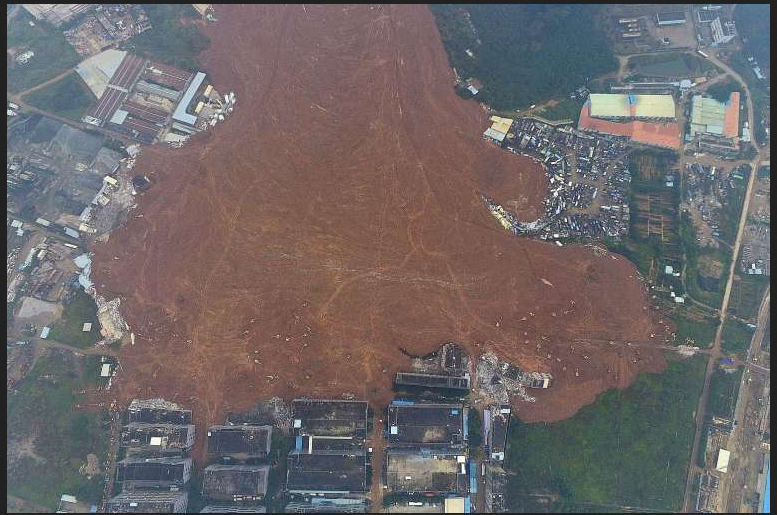
Posted in Climate Change | Tagged , , , , , , , , , , , , , , , , , , , , , , , , , , , , , , , , , , , , , , , , , , , | Leave a comment

Mini-Post: 15 Links From the Week of December 7th

I’ve decided to try something new today. With all of the fervor around COP21, stories about the meeting and climate change have been everywhere. Of course, I share links regularly on my social media accounts (Twitter, Facebook), but I thought I’d gather some of the stories that I have found over the week for you to enjoy here. Have a great weekend!

Disputes at Paris climate talks push conference into weekend

Climate Negotiators Face Hurdles on Key Issues as Deadline Looms

Activists to defy protest ban with giant civil disobedience at end of Paris climate talks

The six key road blocks at the UN climate talks in Paris

As U.S. and Europe Pass the Hat at Climate Talks, China Clings to Developing-Nation Status

COP21: International Rights of Nature Tribunal Finds Corporations, Governments Guilty of Crimes Against Nature

Much Of The World Perplexed That Climate Debate Continues In U.S.

India To U.S.: Cut Back On Your Consumption!

Climate coalition breaks cover in Paris to push for binding and ambitious deal

Opening the Canadian Arctic: Inuit Worry About Waning Sea Ice and Rising Ship Traffic in the Northwest Passage

UN head warns at Paris talks of ‘climate catastrophe’

Paris climate talks: biggest polluters back tougher warming target

Five Reasons to Smile About Paris Climate Talks

At climate talks, African nations pledge to restore forests

Uruguay makes dramatic shift to nearly 95% electricity from clean energy

Posted in Climate Change | Tagged , , , , , , , , , , , , , , , , , , , , , , , , , , , | Leave a comment

Paris: COP21-Decisions and Issues

I am starting to write this blog on Thursday, December 3, four days after the opening of COP21 in Paris, which will conclude on December 11. Expectations are very high for this conference to finally decide upon a global response to anthropogenic climate change. Pope Francis recently shocked the world with his statements about climate change:

“…I am not sure, but I can say to you ‘now or never’,” he told a group of reporters aboard the papal plane, en route home from Africa, according to Reuters. “Every year the problems are getting worse. We are at the limits. If I may use a strong word I would say that we are at the limits of suicide…”

This is directly equivalent to an expression that I have used throughout the last three years, in which I have defined global anthropogenic climate change as “self-inflicted genocide” (as of my very first blog post).

The urgency and expectations for mitigating actions that the conference will require are widespread. Copenhagen’s COP15 in December 2009 established that future global warming should be held to an upper limit of 2oC. That number is used broadly as a reference point for the effectiveness of planned actions. I will warn, however, that these expectations are not likely to be met within COP21.

In my opinion, it is very unlikely that the UNFCCC conference will yield a decision that will limit future warming to 2oC – mainly because any decision requires unanimous agreement by all the delegates.

I was born in Poland but never had the opportunity to go to school there, so my knowledge of Polish history is not much better than that of most of my readers. However, any time I think of a governing body that requires a unanimous decision, I immediately recall a certain methodology of government that the Polish of yore are (in)famous for. In Latin, it was called “Liberum Veto”:

The liberum veto (Latin for “the free veto”) was a parliamentary device in the Polish–Lithuanian Commonwealth. It was a form of unanimity voting rule that allowed any member of the Sejm (legislature) to force an immediate end to the current session and nullify any legislation that had already been passed at the session by shouting Sisto activitatem! (Latin: “I stop the activity!”) or Nie pozwalam! (Polish: “I do not allow!”). The rule was in place from the mid-17th to the late 18th century in the Sejm’s parliamentary deliberations. It was based on the premise that since all Polish noblemen were equal, every measure that came before the Sejm had to be passed unanimously. The principle of liberum veto was a key part of the political system of the Commonwealth, strengthening democratic elements and checking royal power, going against the European-wide trend of having a strong executive (absolute monarchy).

Many historians hold that the principle of liberum veto was a major cause of the deterioration of the Commonwealth political system—particularly in the 18th century, when foreign powers bribed Sejm members to paralyze its proceedings—and the Commonwealth’s eventual destruction in the partitions of Poland and foreign occupation, dominance and manipulation of Poland for the next 200 years or so. Piotr Stefan Wandycz wrote that the “liberum veto had become the sinister symbol of old Polish anarchy.” In the period of 1573–1763, about 150 sejms were held, out of which about a third failed to pass any legislation, mostly due to liberum veto. The expression Polish parliament in many European languages originated from this apparent paralysis.

It is very difficult to get any real binding decisions under these conditions.

Indeed, as I was writing this piece, Bloomberg came out with the following bulletin:

Poland just added one more hurdle to the climate talks in Paris by saying it may not endorse a new climate deal unless it guarantees pollution cuts that are truly global.

It seems that the Polish parliamentary woes of history have been resurrected.

COP21 started in a very impressive way. At least 147 heads of states showed up; they gave encouraging speeches. By now, four days after the opening, most of them have returned to their countries, leaving the negotiations to their representatives. If this conference goes as the previous several have, the negotiations will continue past the closing deadline, running late into the last nights. Hopefully, there will not be a repeat of the “Sisto Activitatem” that blocked the Copenhagen meeting from reaching any binding decisions. The Rules and Procedure of the Conference of the Parties maintain that draft resolutions and other documents must be communicated to the Secretariat 150 days before a meeting. Indeed, the draft resolution is already available for public inspection.

At this stage, the working versions of the agreement being presented are rather broad. Eventually, if an agreement is reached, the final draft will be pruned to represent a clear message. Sizeable disagreements persist throughout the process. Most of them focus on the disparities between developed and developing countries. The developing countries, headed by India and China, argue that since the greatest contributions to climate change came from richer, developed countries, those same countries ought to supply a large transfer of resources to help developing countries adapt to its consequences.

As India’s Prime Minister Narendra Modi said, “the prosperity and progress of an industrial age powered by fossil fuels” enriched the developed countries. If they want the cooperation of the developing countries, they should share the wealth. While the rich countries continue to make commitments, the money doesn’t flow. The US and Europe want full accountability, transparency and verification of compliance by independent experts. China and India feel that they are being shortchanged.

The latest draft version contains 50 pages with about 26 articles and background materials. Here is one section of Article 3 that focuses on mitigation:

Draft agreement and draft decision on workstreams 1 and 2 of the Ad Hoc Working Group on the Durban Platform for Enhanced Action

Work of the ADP contact group

Version of 3 December 2015@08:00hrs1

A DRAFT AGREEMENT

{Collective long-term goal}

Article 3 (MITIGATION)

  1. [Parties [collectively][cooperatively] aim to reach the global temperature goal referred to in Article 2 through:

a)   [a peaking of global greenhouse gas emissions as soon as possible[, recognizing that peaking requires deeper cuts of emissions of developed countries and will be longer for developing countries]]

b)   [rapid reductions thereafter [in accordance with best available science] to at least a X [-Y] per cent reduction in global [greenhouse gas emissions][CO2[e]] compared to 20XX levels by 2050]];

c)   [achieving zero global GHG emissions by 2060-2080]

d)   [a long-term low emissions transformation] [toward [climate neutrality][decarbonization] [over the course of this century] [as soon as possible after mid-century];

e)   [equitable distribution of a global carbon budget based on historical responsibilities and [climate] justice]

[on the basis of equity and common but differentiated responsibilities and respective capabilities] [in the context of sustainable development and eradication of poverty][while ensuring that food security, production and distribution is not threatened][informed by the best available science].

1bis. [To achieve this, policies and measures should take into account different socio-economic contexts, be comprehensive, cover all relevant sources, sinks and reservoirs of greenhouse gases and adaptation, and comprise all economic sectors [for developed countries]] {Individual efforts}

  1. Each Party shall regularly prepare, communicate   [and maintain] [successive]   [NDMCs*2][INDC] and [shall][should][other] [take appropriate domestic measures] [have in place][identify and] [pursue] [implement] [domestic laws, [nationally determined] policies or other measures] [designed to] [implement][achieve][carry out][that support the implementation of] its [NDMCs*][INDC]].

[Placeholder for article 3.8 and 3.9] [Placeholder for context CBDRCC[, in the light of different national circumstances]] [Placeholder referring to article 4 of the Convention]

[Placeholder for support] {Differentiated efforts}

Option I:

  1. In accordance with Article 4, paragraph 2, of the Convention, developed country Parties and other Parties included in Annex I shall undertake quantified economy-wide absolute emission reduction commitments/targets, which are comparable, measurable, reportable and verifiable, cover all greenhouse gases and are implemented domestically without any conditions.

Option II:

  1. Option a: Each Party that has previously [communicated] [implemented] absolute economy-wide emissions reduction or limitation targets should continue to do so and all Parties should aim to do so over time.

Option b: Developed country Parties [and other Parties [in a position][that determine] to do so] should take the lead in mitigation efforts, including by [communicating] [and implementing] absolute economy-wide emissions reduction [or limitation] targets and all other Parties should aim to do so over time.

3bis   [Developed country Parties should continue to take the lead].

{Flexibility}

  1. LDCs [and SIDS][and African states] may communicate their [NDMC*][INDC] at their discretion, including information on strategies, plans and actions for low GHG development, reflecting their special circumstances.

{Progression/ambition}

  1. Each Party’s successive [NDMC*][INDC] [shall][should][will] represent a progression beyond the Party’s previous efforts and reflect its highest possible ambition [based on common but differentiated responsibilities and respective capabilities [in light of different national circumstances [and best available science]] [based on provision of finance, technology and capacity-building to developing countries]{Information}
  2. In communicating their [proposed] [intended] [NDMC*][INDC], Parties shall provide the information necessary for clarity, transparency and understanding, in accordance with [decision 1/CP.21][decision 1/CP.20 ] [and any subsequent decisions of the CMA.] [Article 12 of the Convention and the relevant arrangement for reporting information adopted by the Conference of the Parties to the Convention (COP) including those resulting from the Bali Action Plan and the information listed in decision 1/CP.20.]{Features5}
  3. Option 1: Each Party’s [NDMC*][INDC] [shall][should] be quantified or quantifiable, [be unconditional, at least in…….

A final draft is expected by next week, at which point we will analyze it along with the rest of the world.

Of course, even with the best case scenario, in which all the parties agree on the steps that will lead to the desired mitigation of climate change, true enforcement is next to impossible unless the agreement acquires the status and weight of a treaty. Here is what the American constitution says about ratification of international treaties: “The President…shall have Power, by and with the Advice and Consent of the Senate, to make Treaties, provided two thirds of the Senators present concur.”

Ratification in the US requires confirmation by two thirds of the Senate. In order to accomplish that at the moment, we would essentially need a political revolution – a fact of which the rest of the world is fully aware.

I believe that the global energy transition is happening and will continue to happen. But, as I have said repeatedly, it is a stuttering global energy transition that is mainly driven by bottom-up, grassroots implementation, not top-down. It will take time.

On another note, here is a wonderful carbon clock based on the Keeling and Whorf curve that I discussed in the last blog. Bloomberg has extrapolated the curve to real time electronically, based on the measurements from the last three years. They have supplemented it with a very thorough and well-put-together explanation. Please wake up every morning and have a look.

Posted in Climate Change | Tagged , , , , , , , , , , , , , , , , , , , , , , , , , , , , , , , , , , , , , , , , , , , , , , , , , , , , , , | Leave a comment

Paris – The Beginning


Windmill on the Champs-Élysées in Paris,  Credit Patrick Kovarik/Agence France-Presse — Getty Images Figure 1 – New windmill being installed on the Champs-Élysées in Paris
(Photo by Patrick Kovarik/Agence France-Presse — Getty Images)

This blog will be posted one day after the scheduled opening of the COP21 meeting in Paris. The last two blogs, which I dedicated to this conference, also addressed the ramifications of the terrorist attack that happened on Friday, November 13.

This blog is going to be a bit longer than usual because in addition to further discussing the consequences of the attack, I need to conclude my description of the methods being used to measure and report greenhouse gas levels, since that will be a central topic of discussions during the conference.

Following the attack, the French government declared that the meeting would take place as planned but with a considerable tightening of security. As a result, all of the major demonstrations that environmental groups had scheduled for Sunday were cancelled, upsetting a large number of people worldwide. One response to this ban included setting up over 22,000 pairs of donated shoes in the Place de la Republique to “stand in” for a fraction the masses that would have otherwise attended (estimated 200,000-500,000). UN Secretary-General Ban Ki-moon and Pope Francis even sent a pair each!

 PARIS, FRANCE - NOVEMBER 29:  The place de la Republique is covered with shoes as part of symbolic rally organized by the NGO Avaaz during the forbidden COP21 demonstration on November 29, 2015 in Paris, France. The demonstration was banned after the Paris terror attacks on Friday, November 13th. Nevertheless, thousands of people gathered to protest against global warming ahead of COP21conference and an estimated 200 people were arrested after fighting with police.  (Photo by Patrick Aventurier/Getty Images)Figure 2 – Shoes placed in Place de la Republique in Paris. (Photo by Patrick Aventurier/Getty Images)

The success of the conference has gathered new urgency as many have reemphasized the connections between warming temperatures and the Syrian civil war. That war has not only resulted in millions of refugees but has also been the cause (according to many) of an increase in the global spread of terrorism. In light of the recent Paris attacks, this problem is at the forefront of the public consciousness. This also means that an objective that many (but not all) at the conference share is to produce an effective agreement to limit anthropogenic contributions to the warming.

Negotiations during the conference are expected to focus on the two main aspects of dealing with anthropogenic global climate change: mitigation of human impact on the climate through changes in the chemistry of the atmosphere and adaptation to those changes that are already taking place (e.g. severe droughts, rising ocean levels, etc.) and will be amplified in the coming years.

Background – The Keeling and Whorf Curve:

Focus on the human impact on climate change started with measurements of the Keeling Whorf curve, a modern version of which is shown in Figure 3.

Keeling curve graphFigure 3 –  A recent version of the Keeling and Whorf curve that measures the carbon dioxide concentrations as observed at Mauna Loa, Hawaii.

The original Keeling and Whorf measurements were collected continuously from the same location in Hawaii, starting in 1958. Samples of air were collected four times a day, and the concentration of carbon dioxide was measured by infrared absorption spectroscopy. The measurements showed a steady increase in the concentration of carbon dioxide at the site. Since the original measurements, the monitoring has expanded to other sites at different latitudes. The pattern of a monotonic increase in the carbon concentration is found at every site. You can, for instance, compare the pattern above with the data obtained by NASA through the OCO-2 satellite measurements, as shown in last week’s blog. However, Figure 3 also shows something else: superimposed on the steady CO2 concentrations in Mauna Loa are very regular oscillations. Such oscillations are absent from similar measurements taken in Antarctica and they vary with the latitude of the site. These oscillations directly exemplify the yearly cycle and the difference between each site’s carbon dioxide source and its sink. The fluctuations represent the full complexities of the carbon cycle as it equilibrates between the land, the air, and the ocean. The yearly cycles shown in Figure 3 were attributed to the large percentage of trees in the northern hemisphere that shed their leaves in the fall and regrow them in the spring. The corresponding result is that less carbon dioxide is captured during the winter than in the summer.

Present Practices:

Unlike the satellite measurements that were described in last week’s blog and the Keeling and Whorf measurements, the IPCC guidelines are not based on direct measurements of carbon dioxide or other greenhouse gases. Instead, they focus on the sources (primarily but not exclusively energy sources) of the greenhouse gases. This completely eliminates the issue of attempting to distinguish between anthropogenic sources and natural sources but they rely fully on our full understanding of the science of these sources and full reliance on the performance of governments.

The current measurement and reporting practices are anchored on guidelines that were issued by the IPCC (International Panel on Climate Change) in 2006, and the periodic (almost annual) updates that the same institution issues.


IPCC 2006 guidelines coverpagesFigure 3Coverpages of the IPCC 2006 guidelines for measurements and reporting of greenhouse gases.

These guidelines came in the form of 5 volumes:

Volume 1 (red) – General Guidelines and Reporting (GGR).

Volume 2 (yellow) – Energy

Volume 3 (green) – Industrial Processing and Product Use (IPPU).

Volume 4 (blue) – Agriculture, Forestry and Other Land Use (AFOLU).

Volume 5 (violet) – Waste

Volume 1 includes a short description about the concepts involved in these guidelines:

1 INTRODUCTION TO THE 2006 GUIDELINES

The 2006 IPCC Guidelines for National Greenhouse Gas Inventories (2006 Guidelines) were produced at the invitation of the United Nations Framework Convention on Climate Change (UNFCCC) to update the Revised 1996 Guidelines and associated good practice guidance1 which provide internationally agreed2 methodologies intended for use by countries to estimate greenhouse gas inventories to report to the UNFCCC. This chapter provides an introduction to the 2006 Guidelines for a broad range of users, including countries and inventory compilers setting out to prepare inventory estimates for the first time. Sections 1.1 to 1.3 describe the overarching framework of these Guidelines, focusing on scope, approach, and structure. Sections 1.4 through 1.5 present step-by-step guidance on how to use the 2006 Guidelines for compiling a greenhouse gas inventory.

1.1 CONCEPTS

Inventories rely on a few key concepts for which there is a common understanding. This helps ensure that inventories are comparable between countries, do not contain double counting or omissions, and that the time series reflect actual changes in emissions.

Anthropogenic emissions and removals

Anthropogenic emissions and removals means that greenhouse gas emissions and removals included in national inventories are a result of human activities. The distinction between natural and anthropogenic emissions and removals follows straightforwardly from the data used to quantify human activity. In the Agriculture, Forestry and Other Land Use (AFOLU) Sector, emissions and removals on managed land are taken as a proxy for anthropogenic emissions and removals, and inter annual variations in natural background emissions and removals, though these can be significant, are assumed to average out over time.

National territory

National inventories include greenhouse gas emissions and removals taking place within national territory and offshore areas over which the country has jurisdiction. There are some special issues that are described in Section 8.2.1 of Volume 1. For example, emissions from fuel use in road transport is included in the emissions of the country where the fuel is sold and not where the vehicle is driven, as fuel sale statistics are widely available and usually much more accurate.

Inventory year and time series

National inventories contain estimates for the calendar year during which the emissions to (or removals from) the atmosphere occur. Where suitable data to follow this principle are missing, emissions/removals may be estimated using data from other years applying appropriate methods such as averaging, interpolation and extrapolation. A sequence of annual greenhouse gas inventory estimates (e.g., each year from 1990 to 2000) is called a time series. Because of the importance of tracking emissions trends over time, countries should ensure that a time series of estimates is as consistent as possible.

Inventory reporting

A greenhouse gas inventory report includes a set of standard reporting tables covering all relevant gases, categories and years, and a written report that documents the methodologies and data used to prepare the estimates. The 2006 Guidelines provide standardized reporting tables, but the actual nature and content of the tables and written report may vary according to, for example, a country’s obligations as a Party to the UNFCCC. The 2006 Guidelines provide worksheets to assist with the transparent application of the most basic (or Tier 1)

1.2 ESTIMATION METHODS

As with the 1996 Guidelines and IPCC Good Practice Guidance the most common simple methodological approach is to combine information on the extent to which a human activity takes place (called activity data or AD) with coefficients which quantify the emissions or removals per unit activity. These are called emission factors (EF). The basic equation is therefore:

Emissions = AD • EF

For example, in the energy sector fuel consumption would constitute activity data, and mass of carbon dioxide emitted per unit of fuel consumed would be an emission factor. The basic equation can in some circumstances be modified to include other estimation parameters than emission factors. Where time lags are involved, due for example to the time it takes for material to decompose in a landfill or leakage of refrigerants from cooling devices, other methods are provided, for example first order decay methods. The 2006 Guidelines also allow for more complex modelling approaches, particularly at higher tiers. Though this simple equation is widely used, the 2006 Guidelines also contain mass balance methods, for example the stock change methods used in the AFOLU sector which estimates CO2 emissions from changes over time in carbon content of living biomass and dead organic matter pools. Carbon dioxide from the combustion or decay of short-lived biogenic material removed from where it was grown is reported as zero in the Energy, IPPU and Waste Sectors (for example CO2 emissions from iofuels6,7, and CO2 emissions from biogenic material in Solid Waste Disposal Sites (SWDS)). In the AFOLU Sector, when using Tier 1 methods for short lived products, it is assumed that the emission is balanced by carbon uptake prior to harvest, within the uncertainties of the estimates, so the net emission is zero. Where higher Tier estimation shows that this emission is not balanced by a carbon removal from the atmosphere, this net emission or removal should be included in the emission and removal estimates for AFOLU Sector through carbon stock change estimates. Material with long lifetime is dealt with in the HWP section.

IPCC methods use the following concepts:

Good Practice: In order to promote the development of high quality national greenhouse gas inventories a collection of methodological principals, actions and procedures were defined in the previous guidelines and collectively referred to as good practice. The 2006 Guidelines retain the concept of good practice including the definition introduced with GPG2000. This has achieved general acceptance amongst countries as the basis for inventory development and says that inventories consistent with good practice are those which contain neither over- nor under-estimates so far as can be judged, and in which uncertainties are reduced as far as practicable.

Tiers: A tier represents a level of methodological complexity. Usually three tiers are provided. Tier 1 is the basic method, Tier 2 intermediate and Tier 3 most demanding in terms of complexity and data requirements. Tiers 2 and 3 are sometimes referred to as higher tier methods and are generally considered to be more accurate.

Default data: Tier 1 methods for all categories are designed to use readily available national or international statistics in combination with the provided default emission factors and additional parameters that are provided, and therefore should be feasible for all countries.

Key Categories: The concept of key category8 is used to identify the categories that have a significant influence on a country’s total inventory of greenhouse gases in terms of the absolute level of emissions and removals, the trend in emissions and removals, or uncertainty in emissions and removals. Key Categories should be the priority for countries during inventory resource allocation for data collection, compilation, quality assurance/quality control and reporting.

In future blogs, I will be able to shift from speculations to assessments, as we try to understand and explain the various prevailing currents at the conference.

Posted in Climate Change | Tagged , , , , , , , , , , , , , , , , , , , , , , , , , , , , , , , , , , , , , , , , , , , , , , , , , , , , , , , , , | Leave a comment

Paris: Measurements for the Future

OCO_2

Last week I evaluated the commitments that various countries have made in preparation for the COP21 meeting that is scheduled for the end of this month. Specifically, I looked at the difficulty in converting the commitments from individual countries into practicable (enforceable) global commitments. This transition must include the differentiation between conditional and unconditional commitments while also allowing for the changing variables of population growth, economic growth, rates of energy usage, and the makeup of energy sources. These measurements will mostly come from UN, the World Bank and the European Commission. Almost all of the calculations for building scenarios to accomplish this conversion are anchored on the IPAT identity that I have discussed repeatedly throughout the pages of this blog.

This week and next week I’ll examine an even more fundamental component of the commitments – the measurements themselves. Since the Paris meeting will focus on the future, I will start the discussion with future measurements, largely based on data from satellite monitoring, which is independent of individual countries’ input. I will continue next week with a look at the current uses of this technology, as largely coordinated by the IPCC and the UNFCCC.

The technology for direct global satellite observations of carbon dioxide was recently given a major boost with NASA’s launching of OCO-2, the recent component of NASA’s “Earth Observation Fleet.”:

The OCO-2 Project primary science objective is to collect the first space-based measurements of atmospheric carbon dioxide with the precision, resolution and coverage needed to characterize its sources and sinks and quantify their variability over the seasonal cycle. During its two-year mission, OCO-2 will fly in a sun-synchronous, near-polar orbit with a group of Earth-orbiting satellites with synergistic science objectives whose ascending node crosses the equator near 13:30 hours Mean Local Time (MLT). Near-global coverage of the sunlit portion of Earth is provided in this orbit over a 16-day (233-revolution) repeat cycle. OCO-2’s single instrument incorporates three high-resolution grating spectrometers, designed to measure the near-infrared absorption of reflected sunlight by carbon dioxide and molecular oxygen.

The project is currently limited to two years but we all hope that if successful, it will be extended indefinitely and that other space agencies will expand and double check the coverage.

The data from the satellite observations are being posted on a common site for the GES DISC’s “Earth Observation Fleet.” Below is a section of the site’s front page, including the fleet’s other components.

Here is a short introduction to the data:

An exciting week for us – Sept 6th, 2015 marks one year of operational data collection for OCO-2!
And, we have prepared the year of OCO-2 lite files, with bias correction and warn levels! We will open the portal on Tuesday (9/8/2015) CO2 Data Portal to share those datasets. There is one file per day (much fewer than the standard product), and the number of ancillary data fields are reduced to create smaller files. Documentation will also be on the portal.

Key information in the documentation:

– Descriptions of the data fields and organization in the netcdf files.
– For XCO2, we describe in detail the warn levels, which are an indication of the data quality. The user can trade off data quality and data volume by selection of warn levels. See attached for details.
– Also for XCO2, we describe the process used to calculate the bias correction, and provide characteristics of the corrections that were applied. The uncorrected XCO2 and fields used in the correction are all included in the netcdf files.
– The SIF lite file document describes the data fields and corrections that are applied to that product.
As with the L2Std and L2Dia files, there is a collection for the forward processing stream (v7) and the reprocessing stream (v7r), which runs from Sept 2014 through May 2015. The reprocessing data stream has a larger data volume.

We are happy to hear your comments and questions – please email oco2_feedback@jpl.nasa.gov

A “typical” example of the data and its corresponding caption as they appear in the NASA publication follows:

Averaged Carbon Dioxide Concentration Oct 1-Nov 11, 2014 from OCO-2Figure 1Global atmospheric carbon dioxide concentrations from Oct. 1 through Nov. 11, as recorded by NASA’s Orbiting Carbon Observatory-2. Carbon dioxide concentrations are highest above northern Australia, southern Africa and eastern Brazil. Preliminary analysis of the African data shows the high levels there are largely driven by the burning of savannas and forests. Elevated carbon dioxide can also be seen above industrialized Northern Hemisphere regions in China, Europe and North America

As we saw in an earlier blog (June 25, 2012) where I discussed the Carbon Cycle in another context, the yearly anthropogenic contributions to the carbon dioxide flux between the atmosphere and the land and oceans are less than 4%. NASA claims that OCO-2, has a high enough resolution to differentiate the anthropogenic contributions from the “natural” background contributions. This capability has yet to be demonstrated.

Follow-up on the terrorist attack:

In light of the terrorist attack on Paris that took place on Friday, November 13, I will try to include an update on the impact that the attack is having on the meeting in every blog.

During this first week, the President of France, Francois Hollande declared that the meeting will proceed as planned. The American government has declared that President Obama will also attend as planned.

However, Reuters came out with the following headline: “Green groups re-think massive Paris climate march after attacks.” This was followed the next day by the New York Times article, “Paris Attacks Hit Luxury Hotels Particularly Hard” which included the following paragraph:

And the United Nations conference on climate change, which is scheduled to begin Nov. 30 and run for two weeks, was expected to bring 40,000 visitors to the city and serve as the hub of countless dinners and receptions. But citing security concerns, the French government has ordered the conference to be scaled back to the bare essentials, resulting in the cancellation of more than 200 planned events around the .

Financially, this will have a huge impact because many “green tourists” that would have attended those events, will instead stay away from Paris. This decision will also have a massive effect on how non-politicians around the world participate, whether that means that they take to social media, demonstrate in other countries, or something else entirely.

I will keep you posted.

Posted in Climate Change | Tagged , , , , , , , , , , , , , , , , , , , , , , , , , , , , , , , , , , , , , , , , , , , , , , , , , | Leave a comment

COP21 and Paris – Evaluation of Commitments

Two weeks ago, through this blog, I was “on my way” to Paris. I wish I could actually be there (see the last two paragraphs for my sentiments on Friday’s terrorist attack and its ramifications); I like the city, I have family there, and at the end of the month the city will host what is perhaps the most anticipated climate change conference ever – COP21. I cannot be there physically because I have teaching responsibilities here that can’t be pushed aside. Meanwhile, I have asked my family in Paris to observe their surroundings and write a guest blog on the general atmosphere that accompanies the conference. I have also told my students that the second part of the semester and the final exam will focus on the conference. This blog will be one of the background materials they rely on, along with class discussions and media coverage. I have articulated that they should not take everything that they read at face value, instead requesting that they analyze the conference’s progress and conclusions on their own, based on the tools that they have acquired in class.

The November 3rd blog included short summaries of the commitments from the world’s 10 largest carbon emitters. You can read the full commitments of all 134 participating countries on the UNFCCC site. China’s full commitment includes 14 pages written in Chinese as well as a 20 page English translation. The US commitment meanwhile, consists of 5 pages, along with a referral to the EPA (Environmental Protection Agency) site for full details. In most cases, the countries provide not only their direct commitments but also an up-to-date status report of their economic activities, aspirations for economic growth, population, and energy use. Such information is vital to building accurate scenarios upon which the commitments rest.

Recently, analyses of the sum of the total commitments, and thus their global implications, started to appear throughout the press and on the net. Here are few examples:

A recent IEA (International Energy Agency) report warns that as they stand, the commitments to the UNFCCC will not be enough to achieve the target of limiting the temperature change to below 2o C – the number that many international organizations have aimed for.

Further underscoring that point, the Joint Research Center of the European Commission came out (October 27, 2015) with the following attention-grabbing headline: “Current climate commitments would increase global temperature around 3° C.” Fortunately, in spite of its title, the report itself presents a much more optimistic and balanced picture:

Abstract:

JRC analysis finds that submitted INDCs on climate policy can put the world on a path to reduce emissions in a more anticipated manner compared to current policies. Unconditional INDCs would lead to 56.6 GtCO2e in 2030 (excl. sinks; +17% 2010 with 42.2 GtCO2e) while conditional INDCs combined would lead to a clear peak shortly before 2030 at 54.0 GtCO2e (+12% vs. 2010). These scenarios, if extended to 2050, would already cover 30% to 44% of the emissions reductions needed to remain below a 2 °C temperature increase.

The following scenarios were modelled:

  • No Policy: Assumes no climate action in the future, including a relaxation of currently existing policies before 2020.
  • Reference: Assumes announced policies for 2020 and a relaxation of policies after 2020; emissions are driven by income growth, energy prices and expected technological evolution with no supplementary incentivizing of low-carbon technologies. Emissions continue to grow at a decelerated pace but reach no peak by 2050.
  • Global Mitigation: Assumes a rapid intensification of policies across several world countries from 2015, leading to a peak in emissions as early as 2020. A progressive convergence of underlying carbon prices after 2030, depending on their per capita income, leads to a “below 2 °C-compatible” emissions profile by 2050.
  • INDC-low: All INDCs expressed unconditionally are implemented; countries where the Reference already lead to emissions at or lower than their INDCs, as well as countries with no INDCs or conditional-only INDCs, do not implement additional policies. No commitment was assumed for low-income African countries. Beyond 2030, regional carbon prices increase, including for countries that previously had no climate policies, and progressively converge, at a speed that depends on their per capita income; on average, the world GHG intensity over 2030-2050 decreases at the same rate as for 2020-2030.
  • INDC-high: Similar to INDC-low, but all INDCs are implemented, including all conditional contributions.

The 120 countries that submitted INDCs as of October 13 2015 represented 88.0% of global GHG emissions in 2010 (excluding world bunkers; metrics using World Resources Institute’s CAIT WRI 2014). Most of the INDCs were used in the modelling (see Table 1 in Annex).

Global emissions continue to rise in the Reference scenario throughout 2050, whereas the implementation of INDCs and a prolonged effort after 2030 result in curbing emissions and a peak in 2035 (INDC-low) or 2030 (INDC-high). The emissions in the two INDC scenarios result in a global temperature increase of around 3 °C.

The decrease of emissions intensity per unit of GDP marks a break from the historical trend (-1.8%/year) in all climate policy scenarios:

  • it is slightly above the historical average in the Reference (thanks to the deployment of renewables technologies that is expected to take place even without strong climate policies);
  • it more than doubles in the ambitious Global Mitigation scenario;
  • it ranges from -3 to -3.3%/year in the INDC

The aggregate level of ambition of the INDCs by 2025 and 2030 thus represents a significant deviation from historical trends and will require efforts to implement current and new policies. This will mean a significant transformation of the energy sector and land use policies.

Nevertheless, emissions in both INDC scenarios are above least-cost pathways to limit the global temperature increase below 2 °C (illustrated by the Global Mitigation scenario).

Emissions from world marine and air bunkers continue to rise in all scenarios, as they are not subject to an international climate policy to curb their emissions. They rise at an average of 2.4%/year over 2015-2030 (2.9%/year over 1990-2015), driven by international mobility and trade, and increase from 1.4 GtCO2 in 2013 (i.e. 3% of global emissions) to about 2.1 GtCO2 in 2030 (3.5-4% of global emissions in the INDC scenarios).

JRC97845_Analysis JRC97845_Analysis
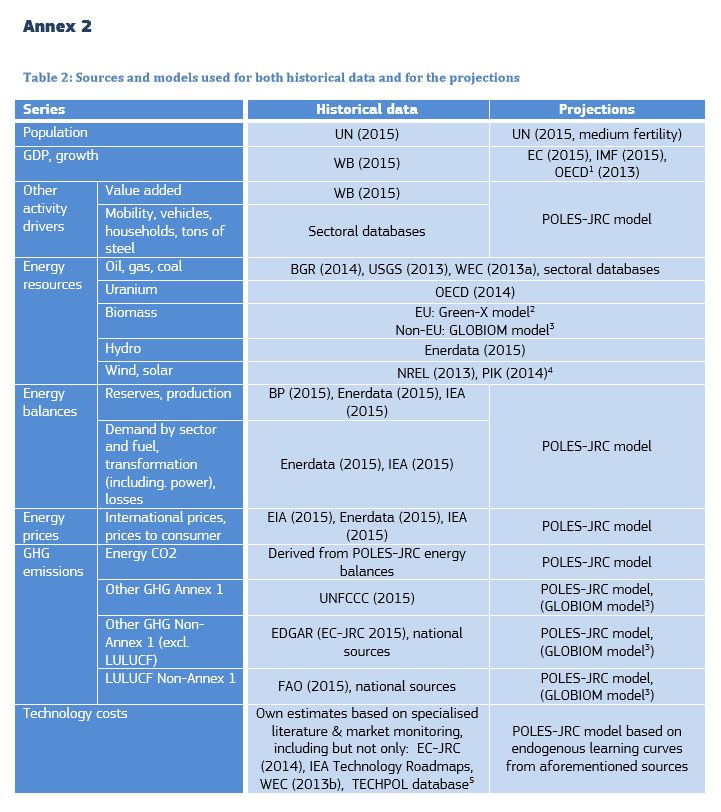
The total emissions in 2030 are 3.5 GtCO2e lower in the INDC-low versus the Reference case, and conditional INDCs lead them 2.5 GtCO2e lower. The majority of emissions reductions are achieved in the power sector (51% from Reference to INDC-high), followed by CO2 in other energy sectors (19%), non-CO2 greenhouse gases in energy and industry (13%), non-CO2 in agriculture (11%) and CO2 in LULUCF (6%; the effect of sinks10 has not been taken into account ).

For educational purposes, the most interesting part of this summary is the attached Annex 2 that lists all of the references that they have used for the analysis.

Annex 2 from JRC policy brief

The UNFCCC has its own summary and analysis of the commitments which I’m sure I will refer to often. Presently, however, I find the JRC European Commission analysis much more transparent and useful for demonstration purposes, which is why I have referenced it more recently. See, for example, the following excerpts that I included in the November 3rd blog:

The submission of the target by the United States was made on the assumption that other Annex I Parties, as well as more advanced non-Annex I Parties, would, by 31 January 2010, associate with the Copenhagen Accord and submit mitigation actions for compilation into an information document in accordance with paragraph 4 or 5 of the Accord, as the case may be. USA

China stated that the above-mentioned autonomous domestic mitigation actions are voluntary in nature and that they will be implemented in accordance with the principles and provisions of the Convention, in particular Article 4, paragraph 7. The Party also stated that its communication is made in accordance with the provisions of Article 12, paragraphs 1(b) and 4, and Article 10, paragraph 2(a), of the Convention. China

None of the commitments at this point are binding. US Secretary of State John Kerry emphasized this point on November 11th, when he stated that whatever decisions are made at the COP21 meeting cannot be implemented like a treaty because they have no chance of being ratified by the US Senate. The response that he got from the international community at large was that while that may be true, the decisions cannot be treated as hot air either.

Another issue that needs to be followed closely is that the negotiations are being conducted by states, and sometimes states don’t tell the full truth. One relevant example is the recent finding that China has been seriously underreporting the extent of its coal use. Since right now all the emissions accounting is done by the states themselves, what is needed is an independent audit. Today’s technology makes that possible and I will cover it in future blogs.

I was about to finish writing this blog on Friday, November 13, when I got a phone call from my family in Paris telling me about the shooting in their neighborhood and reporting that there was an overwhelming police presence everywhere they looked. At that time they had no idea what was going on in the rest of the city but asked me not to call because they were going to sleep (it was 9:30pm there). I stopped my writing and started to follow the news. It was quickly obvious that a major terrorist attack was taking place all over Paris and one of the most deadly focal points was a popular Cambodian restaurant just a few minutes’ walk from their apartment. By the time it was all over, 129 people were counted dead and a few hundred more were injured – 99 of them critically. This was one of the worst attacks in Europe since the Second World War.

There is probably no direct causal connection between the terrorist attack and the upcoming COP21 meeting there in less than two weeks, but there is no question in my mind that the attack will have a direct impact on the meeting itself. We will all keep our eyes open to monitor how the attack affects the Paris meeting and will try to analyze the consequences of that impact.

Posted in Climate Change | Tagged , , , , , , , , , , , , , , , , , , , , , , , , , , , , , , , , , , , , , , , , , , , , , , , , , | Leave a comment

China – Cap and Trade With Babies?

Cute_chinese-baby-boyLast week I started discussing the upcoming COP21 conference in Paris. I talked about the Earth Summit, which sanctioned the IPCCC, and included the near term commitments from the 10 most carbon emitting countries as to reduction of their emissions within the next 10 years or so. I promised that most of my blogs until the end of the year would be dedicated to the analysis of these commitments, along with the discussions and agreements that take place at and result from the Paris meeting. I intend to keep my promise, budgeting in the usual exception of breaking news that I feel I need to address.

Naturally, just as I was starting, something important did happen: a few days ago China decided to change its one child policy to a two child policy. Most of the rest of the world sort of yawned and said, “About time!” But many, including myself, see this as a sign that China still doesn’t understand the failings of its system. We think that in order to ensure a better future, it should follow the rest of the world and completely reject all birth restriction policies. To compound the confusion, the new ruling doesn’t take effect immediately, so the country will have to wait until March 2016 for “implementation.” It is not clear to me at what stage the implementation takes place: the actual birth or the attempts to have an additional baby – usually there is some time difference between the two.

I am not going to try to enumerate all the problems that China has encountered since its introduction of the one child policy. I will let the following graphs speak for themselves:

History and Projection of Relative fraction of elderly population in China and the US Figure 1– History and Projection of Relative fraction of elderly population in China and the US

Cumulative size of working age populationsFigure 2 – Cumulative size of working age populations

Comparison of fertility ratesFigure 3Comparison of fertility rates

Comparative ranking of sex ratio at birth

Figure 4Comparative ranking of sex ratio at birth

I am not sure that all of the demographic issues China is now facing can be traced to the one child policy. As is obvious from Figure 3, the decline in fertility rate didn’t start with the introduction of the one child policy. It is now well below the replacement rate of 2.1 (it has stood at 1.7 over the last few years). Similarly, this decline will not stop with the replacement of the one child policy with a two child policy. It seems to me that the policy is designed to try to provide demographic remedies while still maintaining strict government control over family size and family life. The unique position that China holds in terms of gender ratio as seen in Figure 4 can be traced directly to the wide-spread gender-specific termination of pregnancies. The figures clearly indicate that what China needs is not policies to limit population growth, but rather those that would bring it back to a demographic equilibrium where the fertility rate approaches the replacement rate of 2.1. As we saw in earlier blogs (in particular the January 14, 2014 guest blog by Jim Foreit), money and women’s education are excellent birth control tools to lower fertility rates. On the other hand, we saw that raising fertility rates from below the replacement value back to the replacement value is much more difficult.

China’s change of policy to two children per household might provide some demographic relief and might even reduce gender-driven termination of pregnancies, but it does not address these issues in a way that will provide lasting solutions. I dare to suggest an alternative policy to the Chinese government that will preserve the role of the Chinese bureaucracy in family but might improve the demographic result: employ Cap and Trade policy with babies.

As part of China’s commitment to the IPCCC to limit its carbon emissions, China has recently started to implement Cap and Trade in carbon emission. The technique is simple: the government sets a cap on the total amount of carbon contained in consumed fuels in the country and enforces it by issuing a limited number of allowances. The government can sell the allowances or distribute them for free to gasoline manufacturers and importers. After the distribution, people are able to trade them— the net effect is a rise in prices of carbon-based fuels and a reduction in consumption of these fuels.

Now let’s look at how this process would work when we apply it to babies. Every woman in a certain age bracket gets a certificate from the government that allows her to have two babies. If she wants more she can purchase an allowance from a woman that will want less. My strong suspicion is that there will be a surplus of allowances and that they will not cost much. The main difference between the policy of limiting pollution and the policy of controlling family size is that the state interest in controlling pollution is obvious – to limit it in the most economically viable way. There is no demographic need now in China to limit family size. There is, however, a strong demographic need to both bring the fertility rate back to replacement levels and bring the gender gap back to an equilibrium. The only way that I can think of to bring about these balances is to implement the cap and trade system from above while adding a state bank with the power to grant and subsidize more allowances. The Chinese government is probably the best government in the world to experiment with such a policy, given its proven ability to retain tight control over most aspects of Chinese life.

Posted in Climate Change | Tagged , , , , , , , , , , , , , , , , , , , , , , , , , , , , , , , , , | Leave a comment